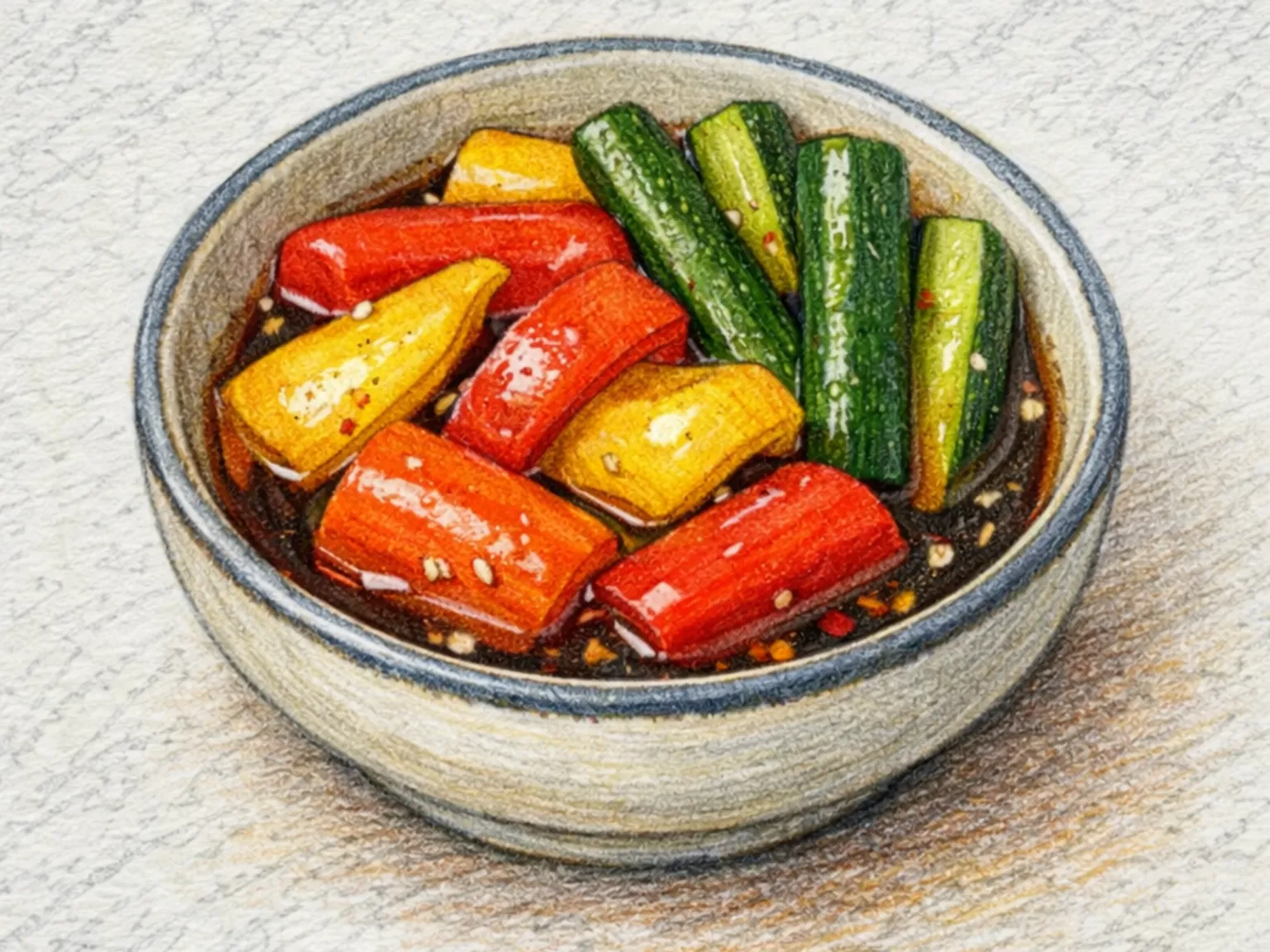
Korean Bell Pepper Pickles
Cut the bell peppers into sturdy 2 cm strips, since thin ones do not stay crisp, dry the sterilized jar completely, and layer in the peppers and cucumber loosely. Bring 90 ml each of soy sauce, vinegar, and water to a boil with 2 tbsp sugar and 1/2 tsp whole black pepper, let it cool for 2 minutes, and pour it slowly over the vegetables until they are covered. Cool the jar completely before sealing and refrigerating, and start eating the next day, keeping in mind that the brine needs 2 to 3 days to reach the center.
Quick answer
- Total time
- 25 min
- Level
- Easy
- Servings
- 2 servings
- Ingredients
- 8
About this dish
Red and yellow bell peppers layered with cucumber make a bright jar, and their thick flesh soaks up the soy brine slowly without losing its crunch.
Read more
Natural sweetness from the peppers balances the salty soy and the vinegar, while whole peppercorns leave a slight spice at the finish. It can be eaten the next day, but two to three days lets the brine reach the center. A jar of peppers alone, without the water-releasing cucumber, keeps two weeks or more chilled. Leftover brine works as a salad dressing.
Ingredients
Instructions
- 1
Seed 120 g red bell pepper and 120 g yellow bell pepper, then cut them into sturdy 2 cm strips.
Slice 100 g cucumber into half-moons, keeping the pieces thick enough to stay crisp after pickling.
- 2
Sterilize the glass jar in boiling water, then let it dry completely before filling.
Check the bottom for trapped water, because leftover moisture can dilute the soy-vinegar brine and weaken the finished flavor.
- 3
Layer the bell peppers and cucumber in the jar, alternating the colors so the pieces pickle evenly.
Do not pack them down hard; leave small gaps so the hot brine can move between the vegetables.
- 4
Add 90 ml soy sauce, 90 ml vinegar, 90 ml water, 2 tablespoons sugar, and 0.5 teaspoon whole black pepper to a pot.
Bring to a boil over medium heat, stirring until the sugar dissolves.
- 5
When the brine boils and no sugar grains are visible, turn off the heat.
Let it cool for 2 minutes, then pour it slowly over the vegetables until the pieces are fully covered.
- 6
Cool the jar completely at room temperature before sealing and refrigerating.
The pickles can be eaten from the next day, but check the flavor after 2 to 3 days, when the brine has reached the center.
Official cooking and safety guidance
Public-agency cooking and food safety guidance that applies to this recipe.
Official cooking and safety guidance
-
Produce preparation
Wash produce under running water before cutting or peeling it. Do not use soap or household detergent.
Source: U.S. Food and Drug Administration. Selecting and Serving Produce Safely
Sources checked 2026-08-03
Use-up ingredient planner
Turn these ingredients into two more meals
The overlap excludes basic seasonings. Open the next recipe and your selected dishes will stay with you.
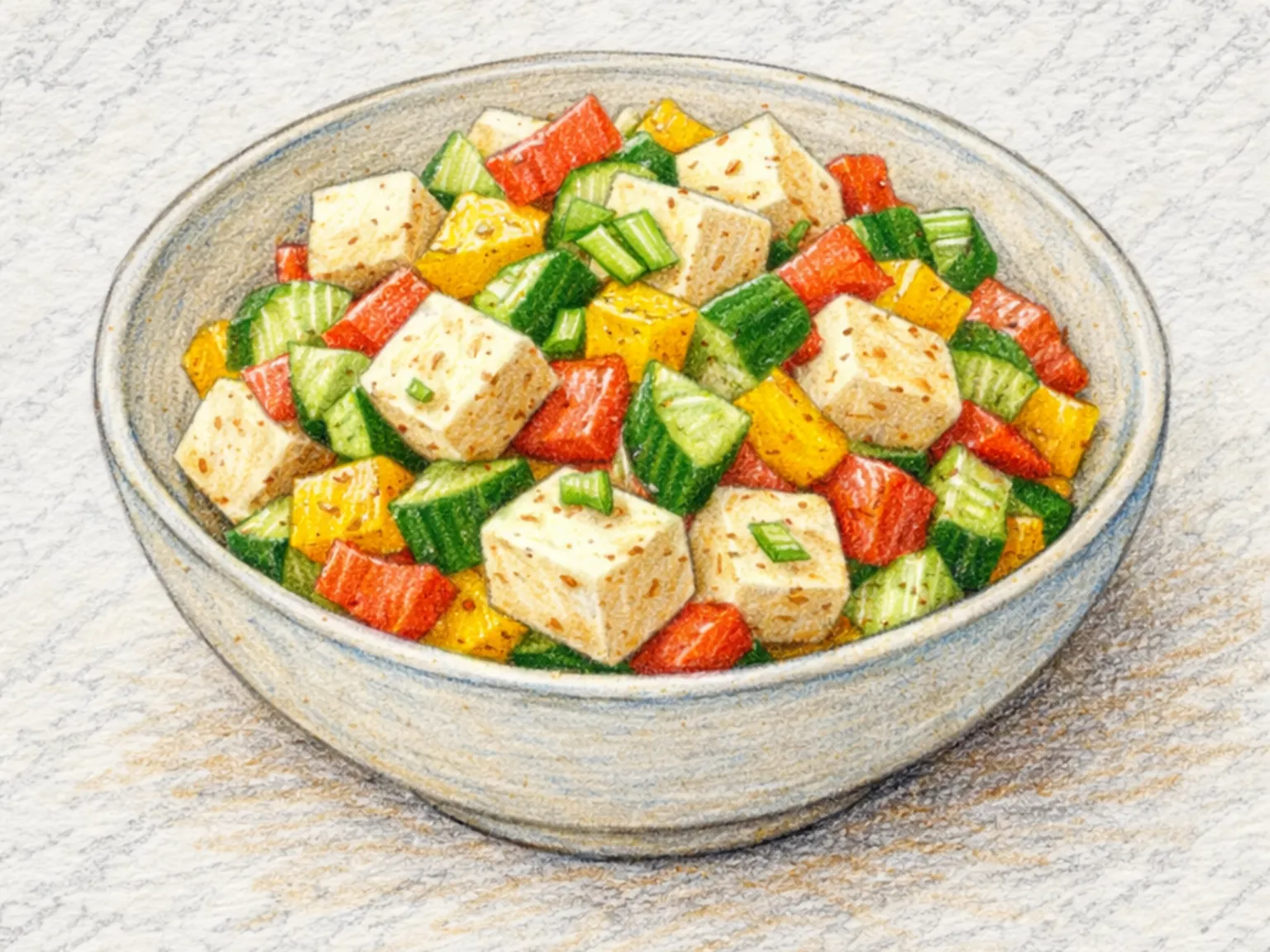
Korean Tofu and Bell Pepper Salad
red bell pepper, yellow bell pepper
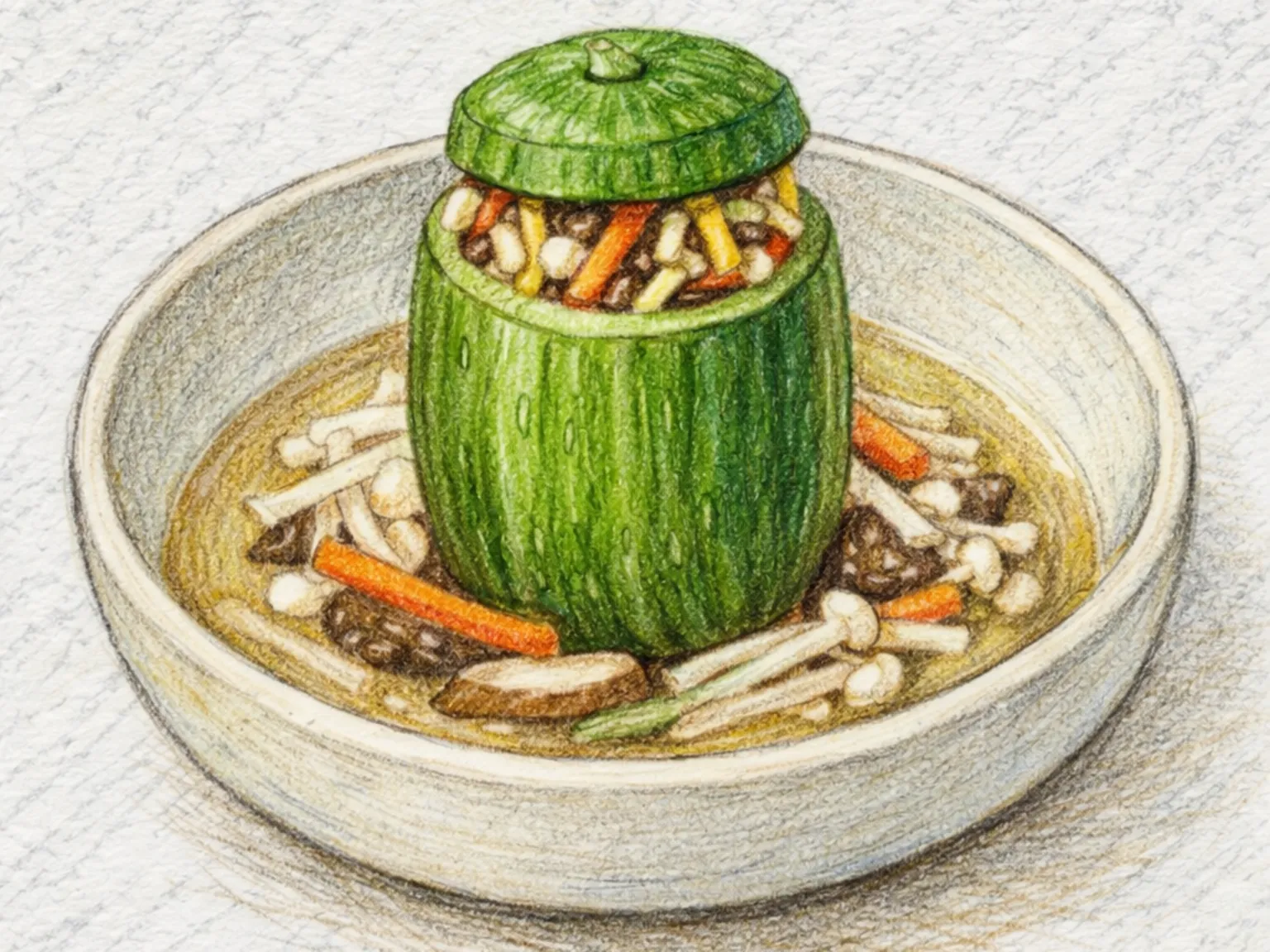
Korean Stuffed Steamed Cucumber
cucumber
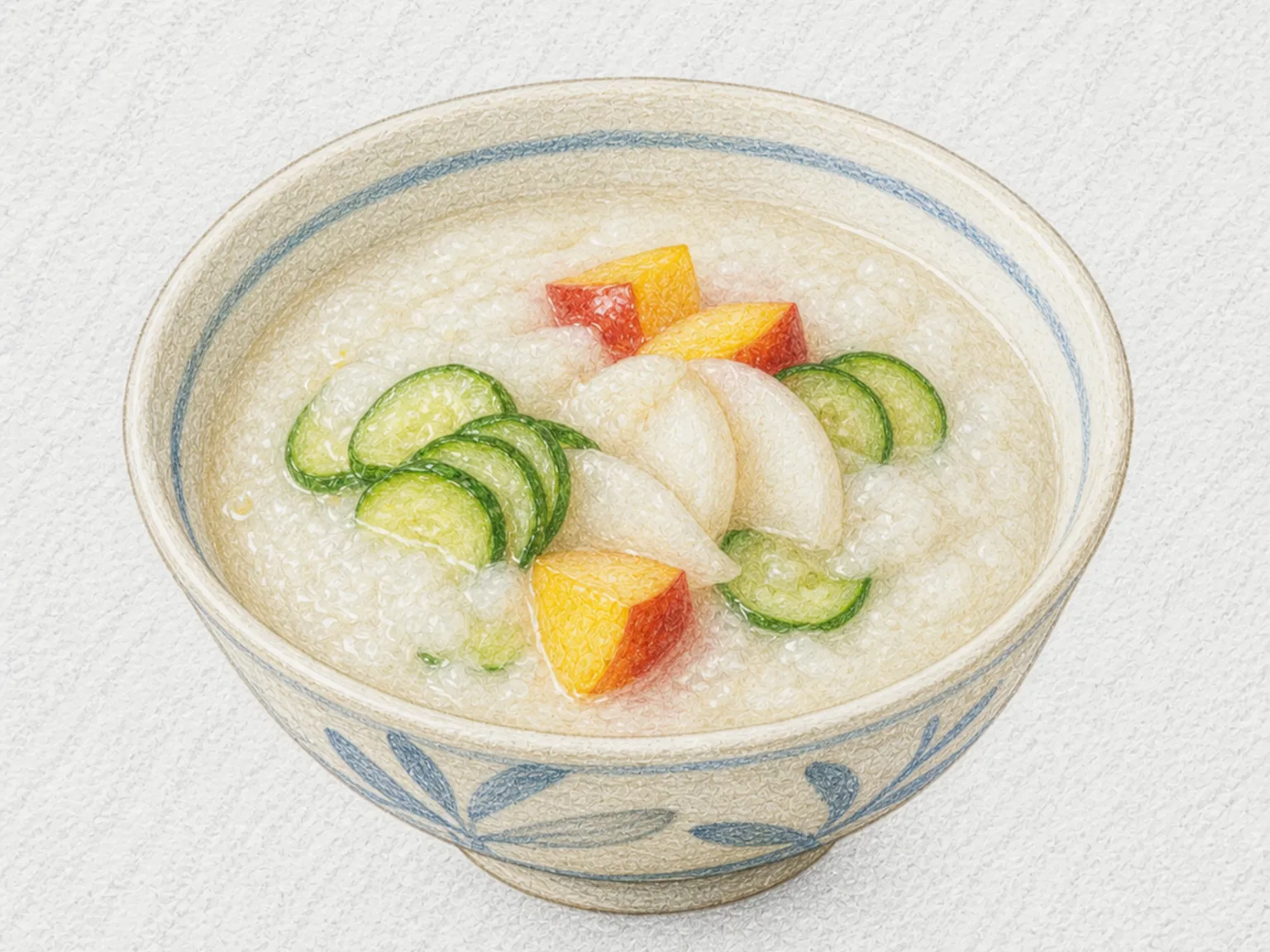
Akita Asazuke (Chilled Sweet-and-Sour Rice)
cucumber