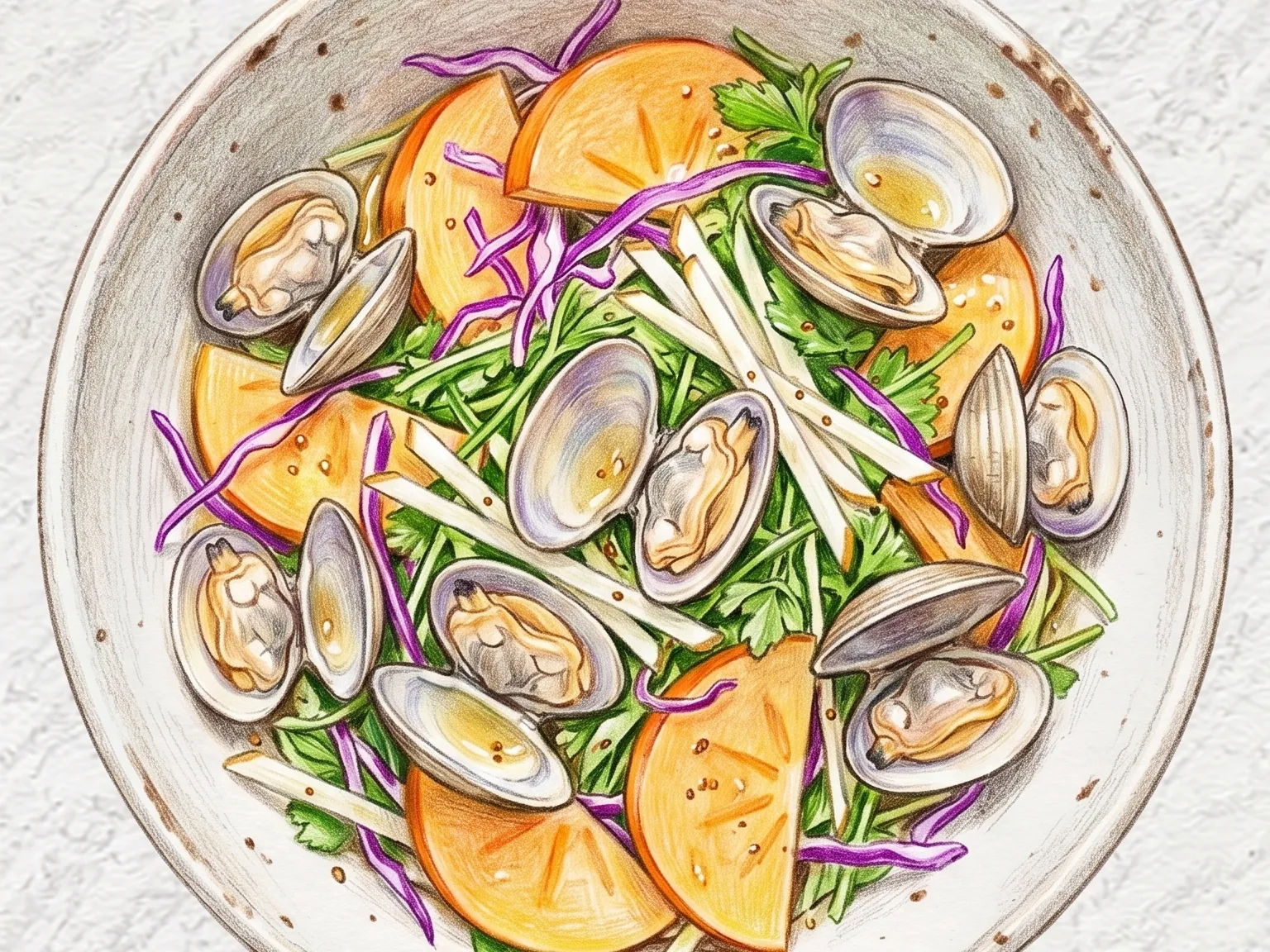
Danggam Jogae Naengchae Salad (Persimmon Clam Chilled Salad)
Blanched clam meat releases briny sea flavor, then layered with thinly sliced sweet persimmon whose honeyed taste creates an unexpected harmony with the shellfish. Minari adds grassy bitterness that anchors the sweet and salty elements, while shredded red cabbage contributes crunch and vivid color. Julienned Korean pear releases enough juice to act as a natural dressing. Vinegar and hot mustard paste bring sharp acidity and nasal heat that complete the clean aftertaste typical of Korean chilled salads.
Adjust Servings
Instructions
- 1
Blanch clam meat in boiling water for 1 minute, then chill in ice water and drain.
- 2
Julienne persimmon and pear, thinly slice red cabbage, and cut water dropwort into 4 cm pieces.
- 3
Mix vinegar, sugar, mustard paste, salt, and sesame oil until sugar dissolves.
- 4
Combine all ingredients in a large bowl and toss gently with the dressing.
- 5
Chill for 5 minutes in the refrigerator, then serve cold.
As an Amazon Associate, we may earn from qualifying purchases.
Tips
Nutrition (per serving)
More Recipes

Lotus Root Persimmon Salad
Blanched lotus root delivers a clean crunch that pairs with sweet persimmon slices to capture autumn's character in a single plate. The dressing keeps to olive oil, honey, and lemon juice, letting the produce speak without distraction. Crumbled feta introduces a salty, tangy dairy note that sharpens the fruit's sweetness. Walnuts, toasted briefly in a dry pan, add earthy fat and a crisp contrast to the softer persimmon. Baby greens form the base layer for color, and splitting the dressing between two additions - tossing two-thirds with the salad, drizzling the rest on top - ensures seasoning reaches every component.

Yuja Mustard Chicken Naengchae Salad
Yuja mustard chicken naengchae salad shreds boiled chicken breast along the grain and tosses it with julienned cucumber, Korean pear, bell pepper, and cabbage in a dressing of yuja marmalade, Korean mustard paste, vinegar, and sesame oil. Soaking the chicken breast in lightly salted water for ten minutes before boiling helps the muscle fibers retain moisture, keeping the shredded meat tender rather than dry. The yuja marmalade brings a bright citrus fragrance, and the Korean mustard delivers a sharp, nasal heat - vinegar binds these two strong personalities into a cohesive dressing. Slicing the pear just before serving preserves its juice and crisp sweetness. Adding two-thirds of the dressing first, then tasting and adjusting, prevents the acidity from overwhelming the delicate balance of the salad.

Korean Potato Salad (Creamy Mashed Potato Ham Cucumber)
Korean potato salad (gamja salad) arrived via Japan's yoshoku tradition but evolved its own identity in Korean home kitchens. Potatoes are boiled and mashed while hot, leaving some lumps for textural contrast - uniformly smooth is not the goal. Diced ham is pan-seared to render excess fat, then mixed with salt-drained cucumber and boiled carrot. The dressing is simply mayonnaise adjusted with sugar and salt, producing the distinctly sweet-creamy profile that separates Korean potato salad from Western versions. Chilling for at least an hour before serving lets the seasoning equalize throughout the mixture.

Korean Water Parsley Salad
Minari-muchim is blanched water parsley (minari) dressed in a gochugaru-soy-vinegar sauce - a spring banchan built entirely around the herb's distinctive fragrance. Minari is a semi-aquatic plant that grows in clean-running paddies and wetlands across Korea, carrying an aroma in a different family from Western parsley or celery. The blanching window determines whether the dish succeeds: past twenty seconds, the volatile aromatic compounds escape with the steam and the entire point of using minari is lost. Trimming the tough lower stems and cutting to 5 cm lengths makes eating easier, and cold-water shocking after blanching locks in the chlorophyll for vivid green color. The vinegar in the dressing amplifies the herbal brightness while suppressing any aquatic mustiness that water-grown plants can carry. International awareness of this ingredient grew after the 2020 film 'Minari.' Dipping raw minari in cho-gochujang (vinegared chili paste) is another popular serving method.

Korean Melon Cucumber Perilla Salad
Korean melon cucumber perilla salad cuts chamae into half-moons and cucumber on the diagonal, centering the dish on their cool, crisp bite. Red onion is soaked in cold water for five minutes to tame its sharpness, and perilla leaves are rolled and chiffonaded to spread their distinctive fragrance evenly. The dressing combines lemon juice, olive oil, honey, and ground perilla seed, where the perilla's nuttiness and lemon's acidity draw out the melon's clean sweetness. Ground perilla is added just before serving to preserve its toasted aroma, and a 10-minute chill lets fruit juices blend with the dressing into a natural sauce.

Tofu Salad (Pan-Seared Tofu on Fresh Greens)
Firm tofu is pressed to remove excess moisture, then pan-seared until the outside turns golden and crisp while the inside stays soft. The seared tofu sits on a bed of baby greens, sliced cucumber, and cherry tomatoes. A dressing of soy sauce, sesame oil, lemon juice, and olive oil straddles Korean and Western flavor profiles. The salad is high in plant protein and low in fat, making it a practical option for a light, clean-tasting meal.