Korean Shiitake Mushroom Rice
Quick answer
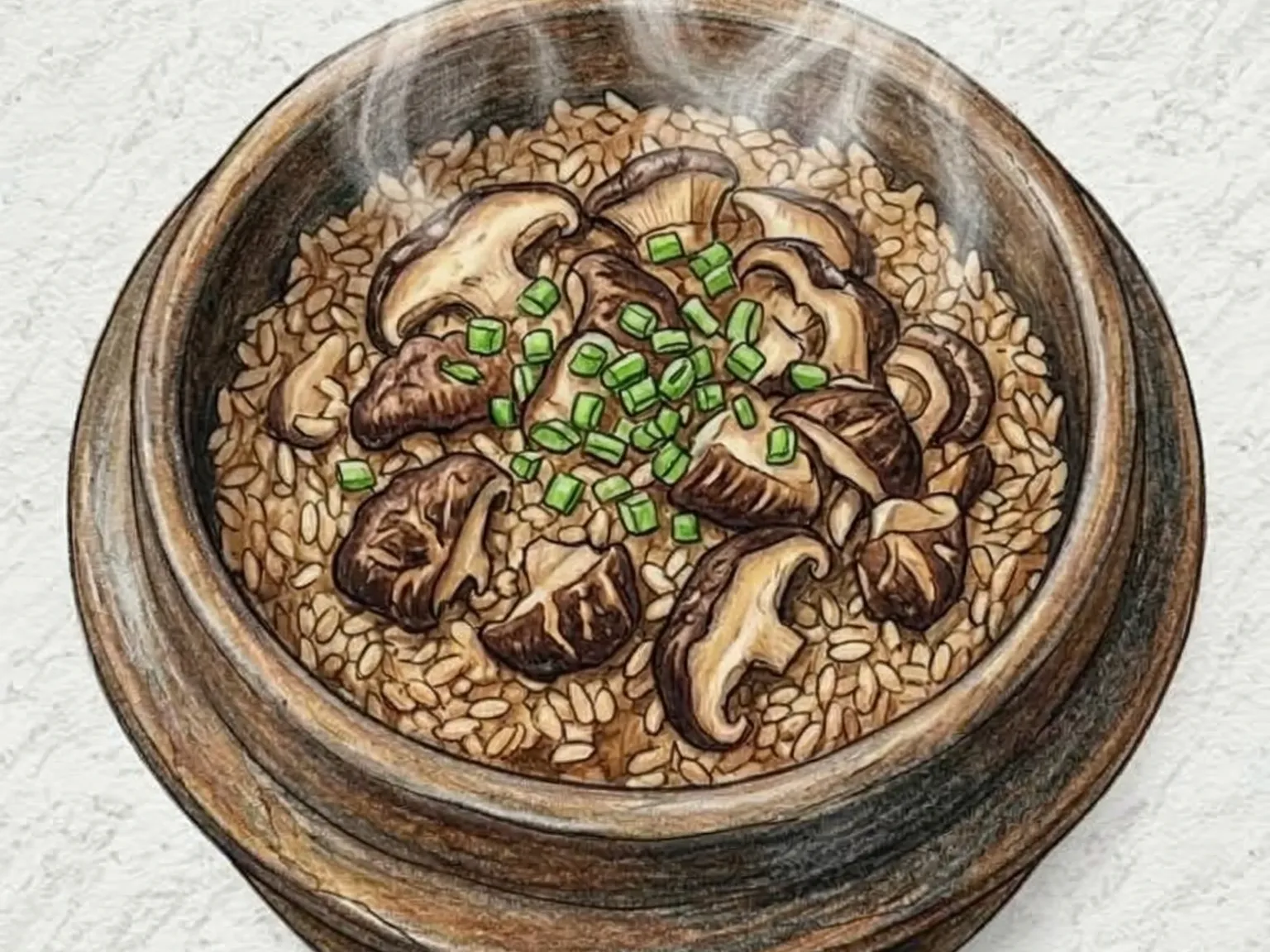
Pyogo-beoseot-bap is a Korean pot rice that cooks thickly sliced fresh shiitake mushrooms directly on top of soaked rice, allowing the mushrooms' concentrated umami and e...
What makes this special
- Fresh shiitake slices steam directly on rice, infusing every grain with concentrated umami.
- 150g fresh shiitake laid on raw rice steams its aroma into each grain
- Using dried shiitake soaking water deepens the umami further
Key ingredients
Core cooking flow
- 1 Rinse 1.5 cups of rice 3 to 4 times until the water runs almost clear.
- 2 Remove the stems from 150 g fresh shiitake mushrooms and slice the caps a li...
- 3 Drain the soaked rice and place it in a pot with 1.5 cups water.
Pyogo-beoseot-bap is a Korean pot rice that cooks thickly sliced fresh shiitake mushrooms directly on top of soaked rice, allowing the mushrooms' concentrated umami and earthy aroma to infuse every grain as steam circulates inside the sealed pot. Once the rice is done, it is mixed with a soy-sesame dipping sauce made from soy sauce, sesame oil, chopped scallion, and toasted sesame seeds, which amplifies the earthy depth already present in the rice and ties all the flavors into a cohesive bowl. The shiitake mushrooms retain a satisfying meaty chew even after the cooking process, giving the dish a substantive bite that rivals meat-based rice bowls and makes the absence of protein go unnoticed. Adding julienned carrot to the pot introduces a subtle natural sweetness and a vivid splash of color to the cross-section when the rice is served. This is a classic vegetarian option in Korean home cooking, valued for the remarkable way a single key ingredient can carry an entire meal without requiring broth, seasoning, or complexity beyond the mushroom itself.
Instructions
Read the steps as a cooking flow: prep, heat, seasoning, doneness control, and finish.
- 1Heat
Rinse 1.5 cups of rice 3 to 4 times until the water runs almost clear.
Drain briefly in a sieve, then soak the rice in fresh water for 30 minutes so the grains cook evenly.
- 2Prep
Remove the stems from 150 g fresh shiitake mushrooms and slice the caps a little thick so they keep their chew.
Cut 40 g carrot into thin julienne, avoiding very thick pieces that may stay firm.
- 3Step
Drain the soaked rice and place it in a pot with 1.5 cups water.
Spread the carrot evenly over the rice, then arrange the shiitake on top so the mushroom aroma steams downward.
- 4Control
Cover the pot and cook over high heat until strong steam appears.
Reduce to low heat and cook for 15 minutes without opening the lid, since lifting it releases steam and can leave the rice uneven.
- 5Control
Turn off the heat and let the pot rest, still covered, for 5 minutes.
Open the lid and check that the shiitake looks moist and the rice grains look glossy rather than wet or chalky.
- 6Season
Mix 2 tablespoons soy sauce, 1 tablespoon sesame oil, 20 g chopped green onion, and 1 teaspoon sesame seeds.
Fluff the rice from bottom to top, then add the sauce little by little so it does not become too salty.
After the steps
Pick a recipe that fits this dish.
Continue with shared ingredients, meal pairings, or a similar method.
Recipes That Go Well With This
More Rice →Based on shared ingredients and meal pairing
Korean Lotus Root Shiitake Pot Rice
Yeongeun-pyogo-sotbap is a Korean pot rice dish that combines short-grain rice with crisp lotus root and chewy shiitake mushrooms. The process begins by soaking the rice for thirty minutes, then draining it. Minced garlic, diced shiitake, and carrots are sautéed in perilla oil to release moisture. The rice and thinly sliced lotus root are added next, coating the grains in oil to ensure a glossy texture and nutty flavor. Water and soy sauce are poured in, and the pot is simmered on low heat for fourteen minutes. Resting the covered pot off the heat for ten minutes is the key step to settle the aroma and finalize the texture. Before serving, fresh scallions and toasted sesame seeds are scattered over the top and fluffed gently to prevent crushing the rice.
Korean Mushroom Porridge (Silky Shiitake Sesame Porridge)
Shiitake mushrooms and onion are sauteed in sesame oil to build a deep aromatic base, then simmered with soaked rice and water for 35 minutes until the grains break down into a silky porridge. Despite containing no meat, the natural glutamates in shiitake produce a full-bodied broth, sharpened with a finish of soy sauce and black pepper. Using rehydrated dried shiitake instead of fresh intensifies the woodsy fragrance further, and adding the soaking liquid to the pot deepens the broth even more. A few drops of sesame oil stirred in just before serving leave a nutty note in each spoonful. Mild and settling, it works as a morning meal or as something to eat when the stomach needs rest.
Kongbiji-tang (Soybean Pulp Kimchi Pork Soup)
Kongbiji-tang is a thick, porridge-like Korean soup made from ground soybean pulp-the byproduct of tofu production-simmered with pork and aged kimchi. The soy pulp gives the broth a creamy, almost grainy body and a pronounced nuttiness that coats the palate. Minced pork renders its fat into the liquid, adding a meaty richness, while the kimchi contributes a sharp acidity that cuts through the heaviness and keeps the flavor lively. Anchovy stock serves as the liquid base, layering an additional umami dimension beneath the soy and pork. The soup is seasoned with soup soy sauce, garlic, and finished with a swirl of sesame oil. It is a winter staple in Korean households, prized for its warmth and substance. The thick texture means it clings to rice rather than flowing around it, making each bite dense with flavor.
Korean Truffle Mushroom Pot Rice
Shiitake and king oyster mushrooms are generously added to a pot of rice and cooked so their released moisture and earthy fragrance infuse every grain. The shiitake stays chewy while thick-sliced king oyster offers a meaty, substantial bite. Once the rice is done, a few drops of truffle oil are drizzled over the top, layering the mushrooms' natural earthiness with the truffle's deep, aromatic intensity. Mixing in a soy-seasoned sauce adds a salty edge that brings the whole bowl into balance. Controlling resting time and grain texture helps the ingredients cook evenly while keeping the final seasoning balanced.
Serve with this
Korean Wild Chive Clam Chili Stew
Dalrae bajirak gochujang-jjigae is a spring stew that brings together wild chives and short-neck clams in a gochujang-spiked anchovy broth. When the clams are added to the simmering stock and begin to open, they release a concentrated brine that deepens the base flavor considerably. Gochujang folds in a fermented heat that runs through the whole bowl. Dalrae, a wild allium that grows in Korean fields from late February through April, goes in near the very end of cooking; its sharp, garlic-like scent stays intact that way and cuts through any marine fishiness. Potato pieces absorb the spicy broth as they cook and give the stew weight, while tofu provides a soft counterpoint to the heat. Before cooking, soaking the clams in salted water for thirty minutes purges any sand so the broth stays clean. The combination of early-spring dalrae with clams makes this a recipe with a narrow seasonal window.
Korean Seasoned Spinach (Garlic Sesame Oil Blanched Namul)
Sigeumchi-namul blanches 300 grams of spinach in salted boiling water for exactly 30 seconds - any longer and the leaves turn mushy. An immediate rinse in cold water stops the cooking and locks in the bright green color. After squeezing out as much water as possible, the spinach is cut into 5-centimeter lengths and dressed by hand with minced garlic, soy sauce, sesame oil, and a pinch of salt. Mixing by hand rather than with utensils ensures the seasoning reaches every fold and crevice of the wilted leaves. Sesame seeds finish the dish with a light crunch, and the result is a clean, nutty-flavored namul that appears on nearly every Korean home-cooked table.
Korean Scallion Kimchi (Whole Stalk Anchovy Shrimp Paste)
Jjokpa kimchi is a traditional Korean scallion kimchi made by briefly brining whole scallions in coarse salt, then coating them from root to tip with a seasoning paste of anchovy fish sauce, fermented shrimp, gochugaru, and sweet rice flour paste. Using both anchovy fish sauce and salted shrimp together is intentional: the two condiments each carry a different profile of seafood umami, and combining them produces a more complex, layered depth than either alone could achieve. The sweet rice flour paste acts as a binder, adhering the seasoning evenly to the surface of each scallion and keeping it in place as moisture releases during fermentation. Without this paste, the pickling liquid would dilute the coating and the flavor would fade over time. The white bulb sections of the scallion hold their crunch through the brining and fermentation process while absorbing the spice of the gochugaru, and the green tops wilt to a silky texture that releases the scallion's characteristic sweet, pungent aroma. After six hours at room temperature followed by a day of refrigeration, the seasoning has fully penetrated the scallion and the kimchi is ready to eat alongside grilled pork belly or bossam. After three or more days of fermentation, a gentle lactic acidity develops that makes the kimchi equally useful as an ingredient in stews or stir-fries.
Similar recipes
Korean Beef and Mushroom Rice Bowl
Sogogi-beoseot deopbap is a Korean beef and mushroom rice bowl that sautees sliced beef with king oyster and shiitake mushrooms in soy-butter sauce. The beef is seared first over high heat to develop a golden crust, then the thickly cut mushrooms go in and absorb the rendered juices, forming a naturally concentrated sauce in the pan. A knob of butter melted in at the end adds a creamy richness, while soy sauce ties everything together with a salty umami backbone. Minced garlic and sliced scallion layered into the stir-fry build an aromatic base that makes the topping fragrant the moment it hits the rice. The mushrooms hold their springy bite against the tender beef, giving each mouthful a satisfying textural contrast.
Korean Mushroom Jangajji (Shiitake Oyster Soy Pickle)
Beoseot jangajji is a Korean fermented mushroom side dish produced by briefly blanching shiitake and king oyster mushrooms, then submerging them in a soy sauce, vinegar, and sugar brine that has been brought to a boil and cooled. The shiitake brings a thick, meaty chew that firms further as it absorbs the pickling liquid, while the king oyster stays springy and dense, so a single batch of this jangajji provides two distinct textures from one marinade. Soy sauce supplies a deep umami foundation and vinegar cuts through with its sharp acidity, creating a balance that tastes substantial and complete without any meat or added stock. The ratio of vinegar to soy sauce can be adjusted to preference: more vinegar produces a brighter, more assertive pickle, while reducing it brings out the soy sauce's savory depth. Stored in the refrigerator, beoseot jangajji keeps well for over a week, making it one of the more practical banchan to prepare in advance and draw from throughout the week.
Korean Rice Ball (Sesame Rice Balls with Tuna Mayo Filling)
Jumeokbap are Korean rice balls made by seasoning warm cooked rice with sesame oil, salt, and sesame seeds, packing a tuna-mayonnaise filling with finely diced carrot and cucumber into the center, and shaping everything into compact rounds using plastic wrap. Sesame oil coats each grain and lends a nutty fragrance while helping the rice hold together without falling apart. Inside, the salty tuna and creamy mayonnaise blend together while the carrot and cucumber provide short, crunchy breaks in each bite. Shaping through plastic wrap keeps hands clean, produces a consistent size, and makes it practical to assemble in large batches. No reheating is required, and the rice balls hold well at room temperature, which makes them a natural fit for packed lunches, picnics, and outdoor gatherings.