Spanish Orange Cod Salad (Spanish Salt Cod Salad)
Salads Medium

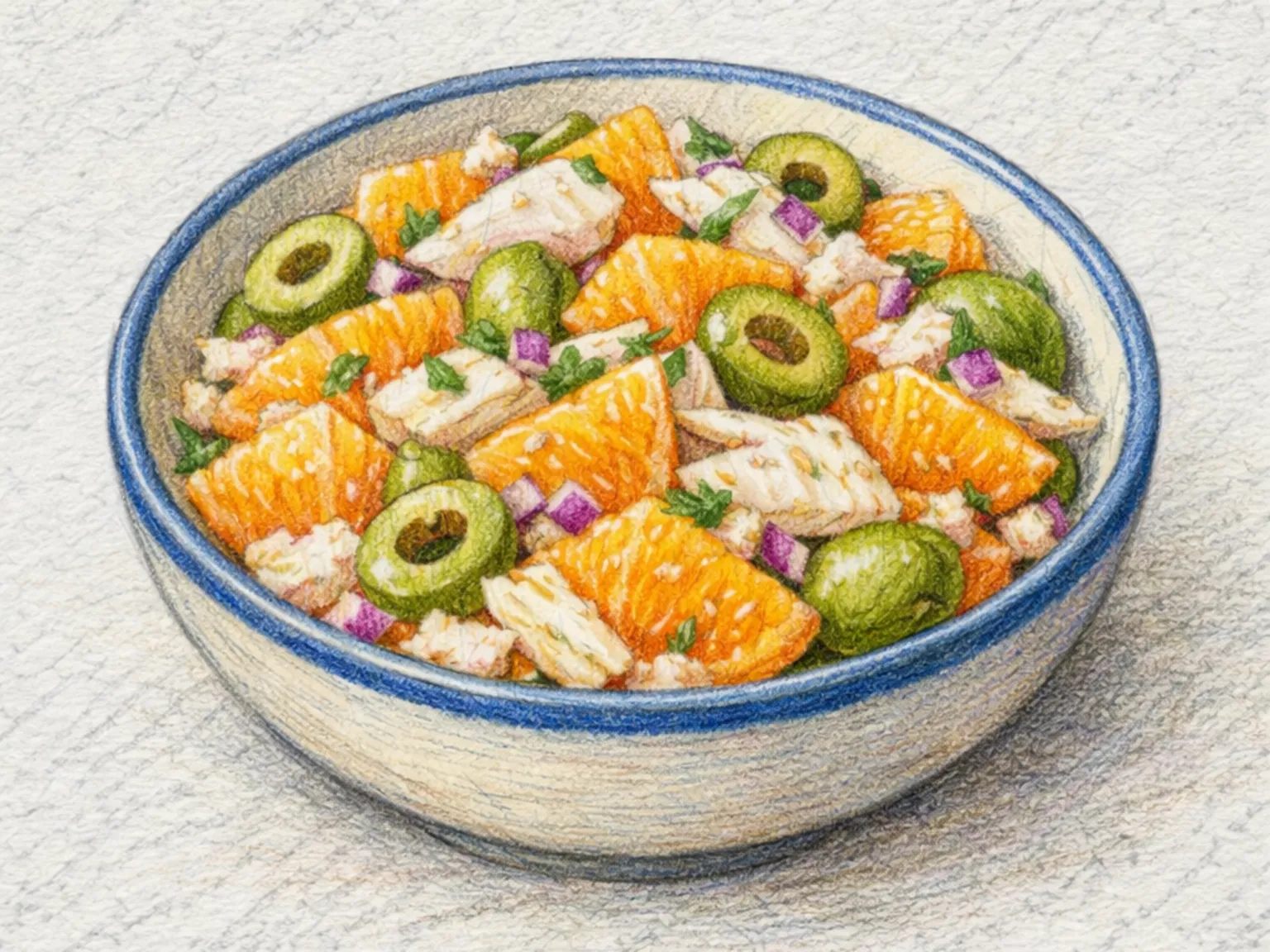
Spanish Orange Cod Salad (Spanish Salt Cod Salad)

Quick answer

Remojon is a traditional spring festival salad from Andalusia in southern Spain, built around salt cod that has been soaked in cold water for at least twenty-four hours t...

What makes this special

  • Traditional Spanish Remojon combines hand-shredded salt cod with fresh orange slices.
  • Salt cod soaks over a day to desalt, then hand-shredded along the grain
  • Orange segments contrast the fish's briny depth with bright citrus
Total time
28 min
Level
Medium
Servings
2 servings
Ingredients
7
Calories
260 kcal
Protein
24 g

Key ingredients

salt codorangered onionblack olivesolive oil

Core cooking flow

  1. 1 Submerge 220 g salt cod fully in cold water for at least 6 hours, preferably overnight.
  2. 2 Place the cod in fresh cold water and warm it over medium-low heat.
  3. 3 Drain the cooked cod and let it cool for about 10 minutes.

Remojon is a traditional spring festival salad from Andalusia in southern Spain, built around salt cod that has been soaked in cold water for at least twenty-four hours to draw out the preserved brine before the fish is shredded along the grain into chewy, light flakes. Thick-cut orange segments provide a burst of sweet, juicy acidity that stands in direct contrast to the residual saltiness of the fish, creating the tension at the center of the dish. Thinly sliced red onion and whole black olives add layers of pungent sharpness and deep brininess that widen the overall flavor profile without competing with each other. Good-quality extra virgin olive oil draws every element together into a cohesive whole, coating each piece with a smooth, fruity richness. A measured splash of white wine vinegar tightens the entire salad and gives it a clean definition, while flat-leaf parsley scattered over the top provides a final note of fresh, green fragrance. The salad is well suited to being served tapas-style alongside wine or dry sherry, and because all the components can be prepared in advance, it assembles quickly at the table and makes a composed, elegant starter for guests.

Prep 20min Cook 8min 2 servings
Recipes by ingredient → olive oil parsley

Instructions

Read the steps as a cooking flow: prep, heat, seasoning, doneness control, and finish.

6 steps
  1. 1
    Season

    Submerge 220 g salt cod fully in cold water for at least 6 hours, preferably overnight.

    Change the water 2 to 3 times, then taste a small piece at the end to check that the saltiness has softened.

  2. 2
    Control

    Place the cod in fresh cold water and warm it over medium-low heat.

    When small bubbles appear, poach for only 6 to 8 minutes, keeping the water barely moving so the fish does not turn tough.

  3. 3
    Heat

    Drain the cooked cod and let it cool for about 10 minutes.

    Flake it by hand along the grain, removing any bones or firm bits, and lightly press with paper towel if the pieces seem watery.

  4. 4
    Finish

    Peel 2 oranges, removing both the outer peel and the white membrane, then separate them into thick pieces of flesh.

    Avoid leaving much membrane because it tastes bitter, and reserve any juice that runs out.

  5. 5
    Season

    Slice 50 g red onion very thinly, and drain 50 g black olives well.

    Remove thick stems from 10 g parsley and chop the leaves finely so the fresh herb flavor spreads evenly through the salad.

  6. 6
    Finish

    Put the cod, orange, onion, and olives in a wide bowl, then drizzle with 2 tbsp olive oil and 1 tbsp white wine vinegar.

    Toss gently, rest 5 minutes for the juices to mingle, and serve cool with parsley on top.

After the steps

Pick a recipe that fits this dish.

Continue with shared ingredients, meal pairings, or a similar method.

Recipes That Go Well With This

More Salads →

Based on shared ingredients and meal pairing

Citrus Fennel Salad (Orange & Shaved Fennel with Arugula)
Shared ingredient: orange Salads

Citrus Fennel Salad (Orange & Shaved Fennel with Arugula)

Fennel is shaved thin to highlight its anise-scented crunch, then paired with segmented orange for juicy acidity. Arugula contributes a peppery bite that offsets the citrus sweetness, and sliced almonds add a toasted crunch. The dressing stays minimal - olive oil and white wine vinegar - so the raw ingredients come through clearly without interference. Dressing should be added just before serving to prevent the fennel from wilting. The salad works well before rich meat or fish courses, since the citrus and fennel combination opens the palate rather than dulling it.

Grapefruit Shiso Shrimp Salad
Shared ingredient: olive oil Salads

Grapefruit Shiso Shrimp Salad

Grapefruit shiso shrimp salad brings together ice-chilled blanched shrimp, membrane-free grapefruit segments, shredded shiso leaves, and thinly sliced cucumber and radish, all tossed in a yuja marmalade dressing. Blanching the shrimp for exactly two minutes and transferring them immediately to ice water locks in a firm, springy texture by contracting the protein rapidly while preventing the rubbery toughness that comes from overcooking. Removing all of the white pith from the grapefruit eliminates bitterness and leaves only the clean, tart juice of the flesh. Cutting the segments free from the membrane also makes the pieces easier to eat in a single bite. The dressing is built from yuja marmalade, rice vinegar, olive oil, and pepper, and the yuzu's floral acidity layers on top of the grapefruit to create a pronounced citrus profile that is bright but not harsh. The mint-like herbal quality of shiso leaves neutralizes any trace of fishiness from the shrimp and ties the Japanese-influenced flavor framework together. The crisp bite of cucumber and radish contrasts with the softness of the shrimp and grapefruit segments. Serving the salad well chilled is necessary to keep every texture and fragrance sharp and distinct rather than muted.

Gambas al Ajillo (Garlic Shrimp)
Serve together Western

Gambas al Ajillo (Garlic Shrimp)

Gambas al ajillo cooks peeled shrimp in a generous pool of olive oil infused with thinly sliced garlic and dried red chili over low heat, a method that turns the oil itself into the flavor foundation of the dish. The garlic must be coaxed slowly to release its sweetness into the oil without crossing into bitterness - the moment it turns golden, the shrimp go in and cook for two to three minutes until pink and just cooked through. A seasoning of salt, black pepper, and a scatter of chopped parsley finishes the pan. The dried chili adds a gentle warmth that sharpens both the garlic-scented oil and the natural sweetness of the shrimp, while the olive oil absorbs and carries all these flavors together. Sliced baguette served alongside is not optional - it exists to soak up the deeply flavored oil, and mopping the pan completely clean is the traditional way to end the dish. Keeping the heat consistently low throughout is the one non-negotiable rule: high heat burns the garlic in seconds and toughens the shrimp.

Gazpacho
Similar recipe Western

Gazpacho

The secret to an authentic gazpacho lies in the interaction between stale bread and fresh garden vegetables. While tomatoes, cucumbers, and red bell peppers form the base, the addition of water-soaked bread creates a thick, velvety consistency that distinguishes this Andalusian specialty from a simple puree. Blending these ingredients with red onion, garlic, extra virgin olive oil, and red wine vinegar produces a smooth texture where the oil emulsifies the vegetable juices and the vinegar sharpens the natural sugars of the tomatoes. Patience is required after the blending is complete; the soup must rest in the refrigerator for at least two hours to allow the flavors to settle and integrate, a process that does not occur effectively at room temperature. Serving requires a final touch of drizzled olive oil and a handful of finely diced vegetables to create a crisp contrast against the liquid base. For the most refined results, passing the mixture through a fine-mesh sieve ensures a silky finish. Using fully ripened summer tomatoes provides the ideal acidity levels, and storing the leftovers in the fridge for a day or two often leads to a more developed profile.

Serve with this

Korean Grilled Dried Pollack
Grilled Medium

Korean Grilled Dried Pollack

Dried pollack strips are briefly moistened, coated in a paste of gochujang, soy sauce, and oligosaccharide syrup, then grilled low and slow. The slow heat lets the glaze seep into the chewy dried fish without charring, building layers of spicy-sweet flavor. A touch of sesame oil applied at the finish adds a toasted aroma that rounds out the dish. The sweet-spicy glaze filling the kitchen with fragrance as the fish grills is part of what makes this a beloved home-cooked snack. Controlling surface browning and internal doneness helps the ingredients cook evenly while keeping the final seasoning balanced.

🍺 Bar Snacks 🏠 Everyday
Prep 15min Cook 8min 2 servings
Doenjang Clam Spinach Orzo
Pasta Medium

Doenjang Clam Spinach Orzo

Doenjang clam spinach orzo is a one-bowl pasta built by cooking orzo in doenjang-seasoned vegetable stock alongside clams in a method borrowed directly from risotto technique. The clams are first purged in salt water to remove sand, then steamed open in white wine so they release their briny cooking liquid into the pan. That liquid merges with the already-present fermented depth of doenjang to form a layered savory base that carries the pasta from the very first minute of cooking. Toasting the orzo in butter or oil before adding any liquid coats the starch on each grain, a step that slows its release and produces a consistently creamy sauce by the end rather than a gluey mass or a watery broth. The stock goes in two or three additions rather than all at once, each addition added only once the previous one has been absorbed, and the pasta is stirred throughout so the released starch works into the liquid rather than sinking to the bottom. Spinach added in the final thirty to sixty seconds of cooking wilts just enough to turn tender without losing its bright green color or dissolving into the sauce. A knob of cold butter stirred in off heat as the finishing touch emulsifies into the sauce, adding a glossy sheen and a rounded, buttery richness that ties all the flavors together.

🥗 Light & Healthy 🏠 Everyday
Prep 12min Cook 18min 2 servings
Sichuan Spicy Tofu (Mapo Tofu)
Asian Medium

Sichuan Spicy Tofu (Mapo Tofu)

Mapo tofu is the dish that defines Sichuan cooking for much of the world, and it earns that reputation through an uncompromising combination of heat and numbing spice. Blocks of silken tofu are slid carefully into a wok with ground pork, doubanjiang (fermented chili bean paste), and a generous measure of ground Sichuan pepper, then cooked at high heat until the sauce tightens and coats every cube completely. The doubanjiang provides fermented depth and an unmistakable rusty-red color that signals its flavor before the first bite, while the Sichuan pepper delivers the numbing, tingling sensation known as ma that separates this dish from any other spicy food. Each cube of tofu absorbs the sauce at its edges while remaining silken at the center, creating a contrast between the spiced exterior and the cool, neutral interior that makes each bite dynamic. Spooned generously over steamed rice, the thick sauce penetrates between every grain, pulling together the entire bowl into a single cohesive experience. The interplay of ma (numbing) and la (spicy heat) is the defining characteristic of Sichuan cuisine, and mapo tofu demonstrates that pairing with more clarity and intensity than almost any other dish in the repertoire.

🍺 Bar Snacks 🏠 Everyday
Prep 12min Cook 15min 2 servings

Similar recipes

Fideua (Toasted Noodle Seafood Paella)
Western Medium

Fideua (Toasted Noodle Seafood Paella)

Fideua is a Valencian dish that mirrors paella in technique but replaces rice with short, thin pasta called fideos. The noodles are toasted in olive oil until golden before being cooked in a seafood broth made from shrimp shells, mussels, and fish stock. As the pasta absorbs the broth, it concentrates the flavor of the sea into each strand. The bottom layer develops a crispy crust called socarrat, prized for its caramelized, toasty crunch. Saffron colors the broth golden and contributes a subtle floral note. The dish is traditionally cooked in a wide, shallow pan to maximize surface area and crust formation. Served with alioli on the side, the garlic-infused mayonnaise adds richness and a pungent kick that amplifies the seafood character.

🎉 Special Occasion 🍱 Lunchbox
Prep 20min Cook 25min 4 servings
Paella Valenciana (Spanish Saffron Rice with Chicken and Rabbit)
Western Hard

Paella Valenciana (Spanish Saffron Rice with Chicken and Rabbit)

Paella Valenciana is a traditional rice dish from the Valencia region of Spain, cooked in a wide, shallow steel pan with saffron-tinted short-grain rice, chicken, rabbit, and green beans. The chicken and rabbit are seared first to build a fond on the pan's surface, which the rice absorbs as it cooks in the broth. Saffron must be bloomed in hot stock beforehand to extract its color and aroma evenly across every grain. Once the rice goes in, it is never stirred - the undisturbed bottom layer forms the socarrat, a caramelized crust of toasted rice that defines an authentic paella. In the final three minutes, the heat is raised to drive off remaining moisture, leaving grains that are firm on the outside and moist within, sitting atop a crackling golden crust.

🎉 Special Occasion
Prep 20min Cook 45min 4 servings
Basque Burnt Cheesecake
Baking Medium

Basque Burnt Cheesecake

Basque burnt cheesecake originates from La Vina bar in San Sebastian, Spain, and is defined by a deliberately scorched top and an intentionally underset center. Cream cheese, sugar, eggs, heavy cream, and a small amount of flour are blended smooth, poured into a parchment-lined pan, and baked at above 220 degrees Celsius until the surface reaches a deep, near-black caramelization. That blackened layer contributes a pronounced bittersweet edge that cuts through the richness underneath. The interior remains loose and custardy - closer in texture to a very dense panna cotta than to a conventional baked cheesecake. Served at room temperature, the contrast between the firm, caramelized shell and the barely-set, creamy core is at its sharpest and most satisfying.

🎉 Special Occasion 🧒 Kid-Friendly
Prep 20min Cook 35min 8 servings

Tips

You can use grilled white fish if salt cod is unavailable.
Remove orange membranes thoroughly to avoid bitterness.

Nutrition (per serving)

Calories
260
kcal
Protein
24
g
Carbs
16
g
Fat
12
g