Roasted Eggplant Pomegranate Salad
Quick answer
Eggplant is halved and roasted until the flesh turns silky-sweet and almost cream-like.
What makes this special
- Roasted Eggplant Pomegranate Salad pairs silky-soft eggplant with tart, bursting seeds.
- Oven-roasted eggplant turns cream-soft inside with concentrated sweetness
- Pomegranate seeds burst with juice that cuts through eggplant's heaviness
Key ingredients
Core cooking flow
- 1 Slice the eggplant into 1.5 cm half-moons, then sprinkle evenly with 2 g of the salt.
- 2 Preheat the oven to 220C. Brush the eggplant with 15 ml of the olive oil, th...
- 3 Roast the eggplant for 12 minutes, then flip when the edges turn lightly browned.
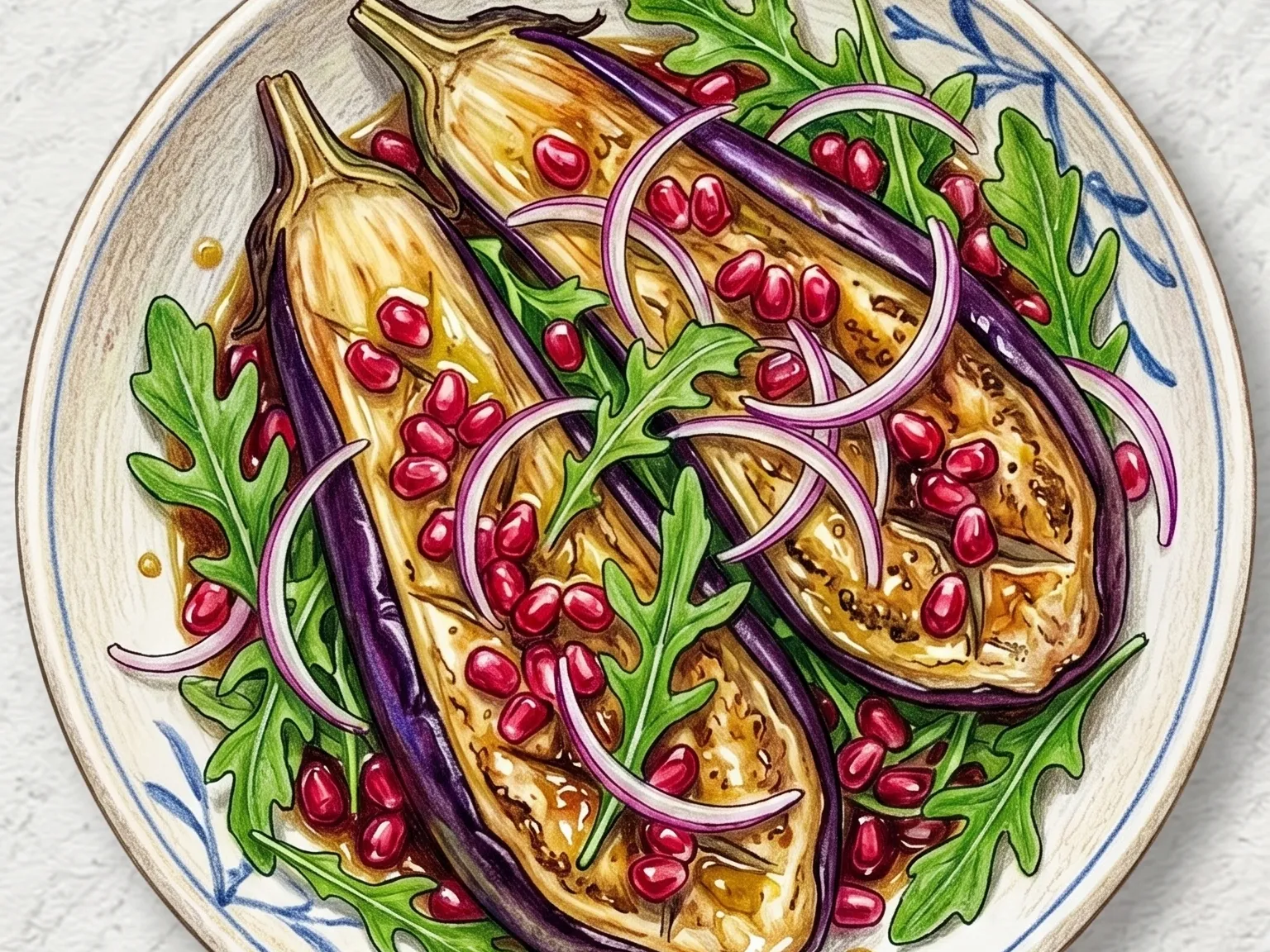
Eggplant is halved and roasted until the flesh turns silky-sweet and almost cream-like. Pomegranate seeds burst with tart juice that cuts through the eggplant's rich depth. Arugula adds peppery bitterness preventing sweetness from dominating, and red onion contributes a sharp, lingering bite. A vinaigrette of red wine vinegar and honey layers sweet-acid notes across the plate, while the contrast of ruby pomegranate, purple onion, and green arugula makes the dish visually striking. It can be served as a light side dish, with simple accompaniments chosen to match the sauce, broth, or topping.
Instructions
Read the steps as a cooking flow: prep, heat, seasoning, doneness control, and finish.
- 1Season
Slice the eggplant into 1.5 cm half-moons, then sprinkle evenly with 2 g of the salt.
Rest for 10 minutes, and when moisture beads on the surface, press it dry with paper towels.
- 2Step
Preheat the oven to 220C.
Brush the eggplant with 15 ml of the olive oil, then spread the pieces without overlapping so steam can escape and the edges roast instead of turning soggy.
- 3Prep
Roast the eggplant for 12 minutes, then flip when the edges turn lightly browned.
Roast 3 minutes more, stopping when the flesh feels soft but the slices still hold their shape.
- 4Prep
Slice the red onion very thinly and soak it in cold water.
When the sharp aroma softens, drain it well so excess water does not wilt the 70 g of arugula during tossing.
- 5Season
Whisk the remaining 15 ml olive oil with 15 ml red wine vinegar, 10 g honey, 2 g salt, and black pepper.
Stir until the honey dissolves and the dressing tastes balanced, bright, and lightly sweet.
- 6Finish
Toss the arugula and drained red onion lightly with the dressing first.
Add the warm eggplant and 90 g pomegranate seeds on top, mix gently once, and serve right away while the eggplant still absorbs flavor.
After the steps
Pick a recipe that fits this dish.
Continue with shared ingredients, meal pairings, or a similar method.
Recipes That Go Well With This
More Salads →Based on shared ingredients and meal pairing
Halloumi Persimmon Arugula Salad
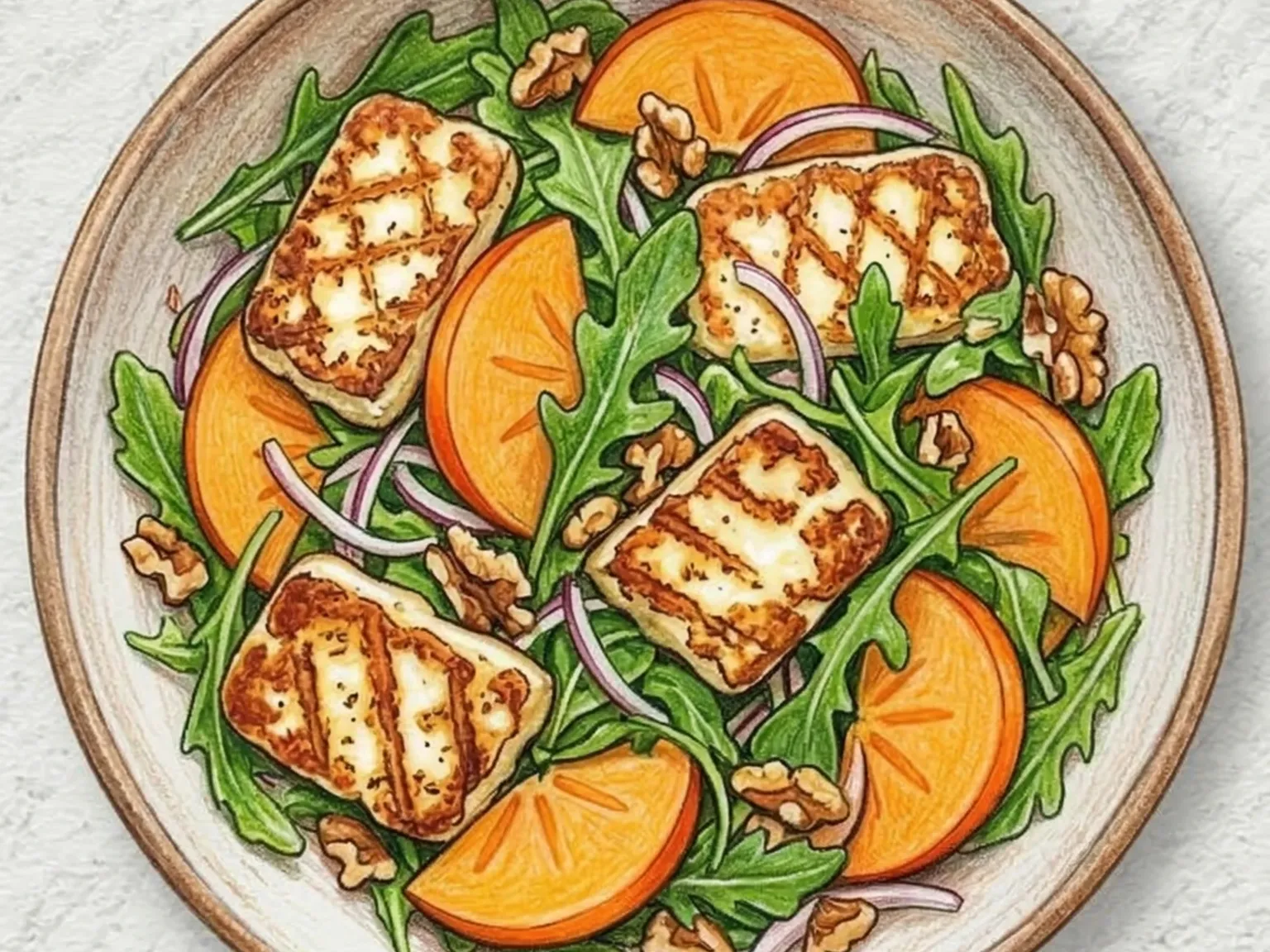
Halloumi persimmon arugula salad combines golden pan-seared halloumi cheese, thinly sliced sweet persimmon, peppery arugula, soaked red onion, and walnuts in a white balsamic dressing. Halloumi's unusually high melting point allows it to be seared directly in a dry pan without softening into a puddle; two to three minutes per side is the right window to build a golden, lightly crisp crust while keeping the interior dense and chewy. Cooking beyond that point makes the cheese rubbery and unpleasant. The natural fructose in sweet persimmon creates a pronounced sweet-salty contrast against the brined cheese, and arugula's sharp, peppery bite anchors the balance between those two poles. Red onion should be soaked in cold water for at least ten minutes before adding it, which draws out most of the bitterness and raw pungency while leaving behind a mild, fresh sweetness that does not overwhelm the other ingredients. The dressing of white balsamic vinegar, olive oil, honey, and black pepper is lighter in color and noticeably gentler in acidity than dark balsamic, so it ties all the components together without masking the persimmon's pale gold or the arugula's deep green.
Mediterranean Chickpea Salad
This Mediterranean salad centers on cooked chickpeas for their starchy, satisfying chew, surrounded by diced cucumber, halved cherry tomatoes, black olives, and thinly sliced red onion. A stripped-down vinaigrette of red wine vinegar and olive oil keeps the dressing from overpowering any single ingredient, and crumbled feta added at the end provides a salty, creamy contrast that pulls the whole bowl together. The red onion should soak in cold water for five minutes before going in so its sharpness softens and it blends smoothly with the milder components. No heat is needed anywhere in the preparation, and the whole salad takes about twelve minutes to assemble. A twenty-minute rest in the refrigerator allows the vinaigrette to distribute evenly and deepens the overall flavor. Pita bread for dipping or grilled chicken laid across the top turns this easily into a full meal.
Korean Grilled Hard Clams with Doenjang Sauce
Baekhap doenjang gui is a Korean grilled clam dish where hard clams are topped with a doenjang sauce and cooked over direct flame or in an oven. The clams must be purged in salt water for at least three hours before cooking, then shucked so that only the half shell carrying the meat remains. The sauce -- doenjang, minced garlic, cheongyang chili, and sesame oil -- is spread in a thin layer over each clam; too thick a coating and the fermented salt of the doenjang drowns out the natural brininess of the shellfish itself. Over high direct heat for three to four minutes, the doenjang surface scorches lightly, developing a caramelized, roasted aroma while the clam meat contracts and concentrates its juices within the shell. Finely sliced scallion scattered on top adds a green visual accent against the brown doenjang glaze. Timing is critical: the moment the liquid pooled in the concave shell begins to bubble, the clams should be lifted off the heat immediately, because even one additional minute toughens the meat to the point of unpleasantness. The dish depends on the interplay between two distinct kinds of salt -- the oceanic brine of the clam and the fermented depth of the doenjang -- which converge into a single concentrated bite that rewards restraint in the sauce application.
Couscous Herb Salad
Couscous is hydrated in hot water for five minutes until each grain separates and fluffs up, then mixed with a generous quantity of flat-leaf parsley, diced cucumber, and halved cherry tomatoes. The dressing is intentionally sparse - lemon juice, olive oil, salt, and pepper - letting the grain absorb the citrus brightness without competing flavors getting in the way. Because herbs make up a significant portion of the volume, this reads more like a tabbouleh than a heavy grain salad, with a clean freshness that makes it easy to eat in large portions. Couscous holds its texture at room temperature better than most grains, meaning the salad does not go soggy in a packed lunch container or on a picnic spread. Adding fresh mint, a handful of chopped cilantro, or a pinch of lemon zest shifts the flavor toward something sharper and more aromatic, while crumbled feta adds a salty, creamy contrast that transforms it into a more substantial dish.
Serve with this
Socca Niçoise (French Chickpea Flour Flatbread)
Socca nicoise is a chickpea-flour flatbread from Nice, France, made by whisking chickpea flour with water, olive oil, salt, pepper, and rosemary, then baking the thin batter in a preheated oven-safe pan at 220 degrees Celsius for twelve to fifteen minutes. Resting the batter for ten minutes allows the flour to hydrate fully, which produces the characteristic texture - crisp and almost shatteringly crunchy at the edges, soft and slightly custardy in the center. The pan must be fully preheated and generously oiled so the batter sizzles on contact and releases cleanly. Sliced red onion and halved cherry tomatoes placed on top before baking lose their moisture in the oven and concentrate into sweet, slightly charred toppings. A final grind of coarse black pepper emphasizes the nutty, earthy flavor of the chickpea base.
Doenjang Clam Spinach Orzo
Doenjang clam spinach orzo is a one-bowl pasta built by cooking orzo in doenjang-seasoned vegetable stock alongside clams in a method borrowed directly from risotto technique. The clams are first purged in salt water to remove sand, then steamed open in white wine so they release their briny cooking liquid into the pan. That liquid merges with the already-present fermented depth of doenjang to form a layered savory base that carries the pasta from the very first minute of cooking. Toasting the orzo in butter or oil before adding any liquid coats the starch on each grain, a step that slows its release and produces a consistently creamy sauce by the end rather than a gluey mass or a watery broth. The stock goes in two or three additions rather than all at once, each addition added only once the previous one has been absorbed, and the pasta is stirred throughout so the released starch works into the liquid rather than sinking to the bottom. Spinach added in the final thirty to sixty seconds of cooking wilts just enough to turn tender without losing its bright green color or dissolving into the sauce. A knob of cold butter stirred in off heat as the finishing touch emulsifies into the sauce, adding a glossy sheen and a rounded, buttery richness that ties all the flavors together.
Sichuan Spicy Tofu (Mapo Tofu)
Mapo tofu is the dish that defines Sichuan cooking for much of the world, and it earns that reputation through an uncompromising combination of heat and numbing spice. Blocks of silken tofu are slid carefully into a wok with ground pork, doubanjiang (fermented chili bean paste), and a generous measure of ground Sichuan pepper, then cooked at high heat until the sauce tightens and coats every cube completely. The doubanjiang provides fermented depth and an unmistakable rusty-red color that signals its flavor before the first bite, while the Sichuan pepper delivers the numbing, tingling sensation known as ma that separates this dish from any other spicy food. Each cube of tofu absorbs the sauce at its edges while remaining silken at the center, creating a contrast between the spiced exterior and the cool, neutral interior that makes each bite dynamic. Spooned generously over steamed rice, the thick sauce penetrates between every grain, pulling together the entire bowl into a single cohesive experience. The interplay of ma (numbing) and la (spicy heat) is the defining characteristic of Sichuan cuisine, and mapo tofu demonstrates that pairing with more clarity and intensity than almost any other dish in the repertoire.
Similar recipes
Quinoa Salad
Quinoa is boiled until fluffy and cooled to preserve its distinctive pop-when-bitten texture. Diced cucumber and halved cherry tomatoes mix in juicy crunch that energizes the mild grain base. Thinly sliced red onion adds sharpness, and generous chopped parsley pushes the herbal character forward. The dressing stays minimal - olive oil and lemon juice - letting raw ingredients speak clearly. As a complete protein containing all essential amino acids, quinoa makes this a nutritionally balanced light meal in a single bowl.
Danza Noodle Soup (Tomato Chickpea Pasta Soup)
Danza noodle soup is a light Mediterranean-style soup that simmers diced tomatoes and chickpeas together in vegetable broth with dried oregano and thin pasta noodles. Sauteing onion in olive oil until translucent before adding the tomatoes builds a deeper, more aromatic base than starting with raw aromatics. Chickpeas soften gradually as the soup cooks, contributing a nutty richness and satisfying substance without making the broth heavy. Stirring in fresh parsley just before serving lifts the finished soup with a clean herbal brightness against the tomato backdrop. Cooking the pasta separately and adding it at serving keeps the broth clearer and prevents the noodles from absorbing too much liquid.
Greek Salad (Chunk-Cut Vegetable Toss with Feta)
Greek salad, known as horiatiki, is a traditional dish that arranges large-cut tomatoes, cucumber, bell pepper, and red onion with Kalamata olives, topped with a whole block of feta cheese and finished with extra virgin olive oil and dried oregano. The vegetables are intentionally cut into large chunks rather than finely diced, preserving each ingredient's distinct texture and flavor. The olive oil coats the fresh vegetables in richness, while a small amount of red wine vinegar adds a sharp acidity that balances the natural sweetness of the tomatoes. Feta is placed whole on top in the traditional Greek manner - diners break it themselves, and as the crumbled cheese mixes with the olive oil, it forms a natural dressing that clings to the vegetables.