Roasted Kabocha Miso Nut Salad
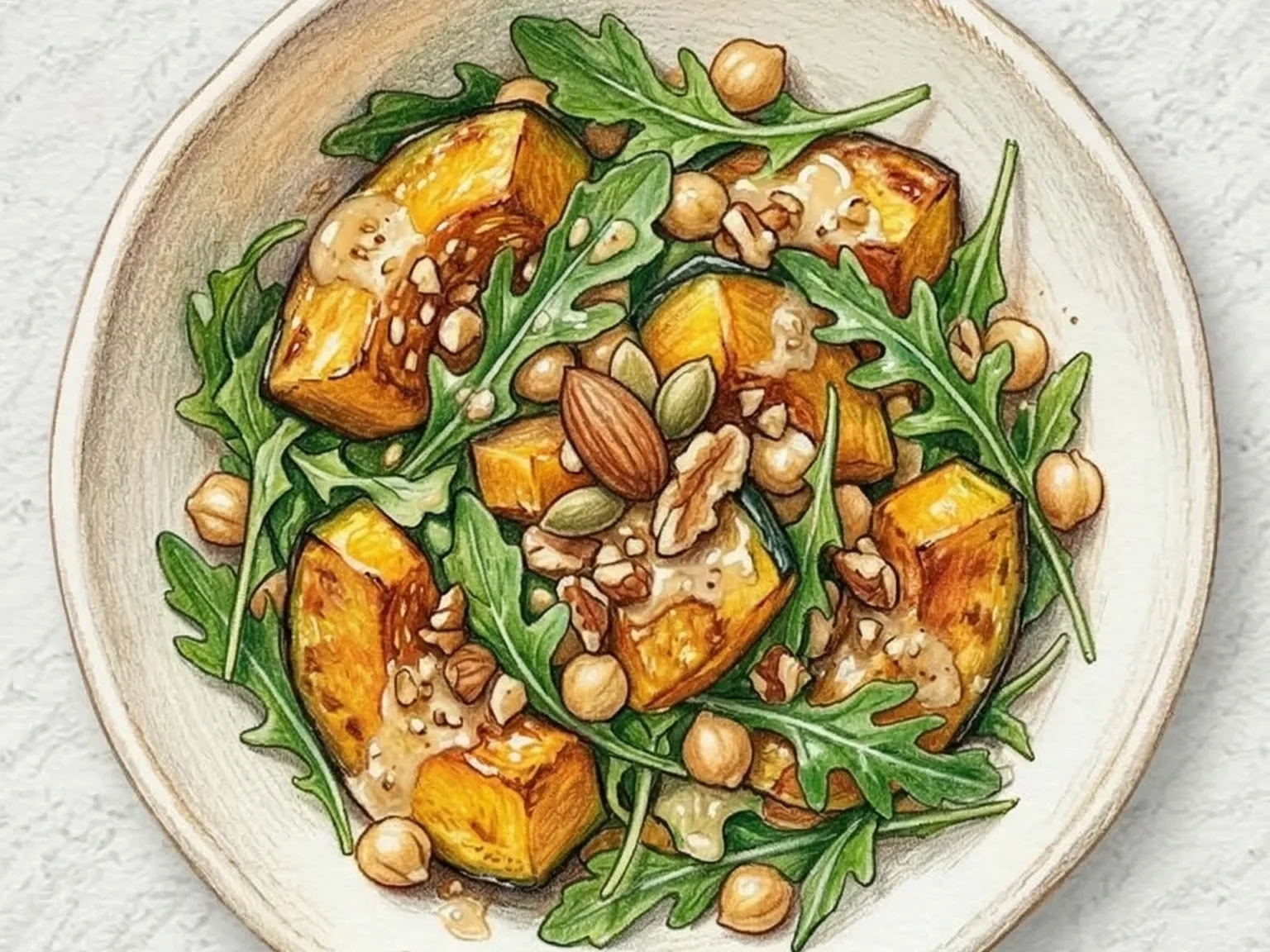
Kabocha squash is sliced into half-moons and roasted in a hot oven until the cut surfaces caramelize and the flesh turns chestnut-soft and dry in the best possible way. The dressing combines white miso, rice vinegar, and maple syrup into a mixture where salt, acid, and a restrained sweetness reinforce each other and amplify the roasted squash underneath. Arugula provides the peppery, slightly bitter base that keeps the salad from tipping too sweet. Chickpeas add lean protein and a firm, satisfying chew that holds up against the tender squash. Walnuts, crushed roughly rather than chopped fine, contribute crunch and a deep, roasted nuttiness that layers well with the soft squash in each forkful. The contrast between textures, tender squash against resistant walnut, is what makes this salad interesting across every bite. Autumn kabocha, at the peak of its natural sugar content, delivers the most pronounced sweetness, and the dish is filling enough to stand as a vegetarian main course with nothing else alongside it. If using refrigerated squash, adjust oven time and temperature to ensure even caramelization.
Adjust Servings
Instructions
- 1
Preheat oven to 210C and cut seeded kabocha into 2 cm wedges.
- 2
Coat kabocha with some olive oil, salt, and pepper, then spread on a tray.
- 3
Roast for 22-25 minutes until edges caramelize.
- 4
Whisk white miso, rice vinegar, maple syrup, and remaining olive oil into dressing.
- 5
Toast walnuts in a dry pan for about 2 minutes to enhance nuttiness.
- 6
Toss arugula and chickpeas with half of the dressing.
- 7
Plate greens, top with roasted kabocha and walnuts, and drizzle remaining dressing.
As an Amazon Associate, we may earn from qualifying purchases.
Tips
Nutrition (per serving)
Goes Well With

Classic Tonkotsu Ramen (Pork Bone Milky Broth Noodles)
Tonkotsu ramen is the iconic pork bone noodle soup from Kyushu, Japan, most closely associated with the city of Hakata. Pork back bones and trotters are boiled vigorously for eight hours or more, a sustained rolling boil that breaks down collagen and fat into a milky, opaque emulsion. The resulting broth has a rich, almost gelatinous body that coats the lips with each sip. Thin, firm noodles specific to the Hakata style hold up against this heavy broth, absorbing just enough flavor while maintaining a springy chew. Chashu pork belly, braised separately in soy sauce and mirin, drapes across the top alongside a marinated soft-boiled egg with a jammy yolk.

Gazpacho
The secret to an authentic gazpacho lies in the interaction between stale bread and fresh garden vegetables. While tomatoes, cucumbers, and red bell peppers form the base, the addition of water-soaked bread creates a thick, velvety consistency that distinguishes this Andalusian specialty from a simple puree. Blending these ingredients with red onion, garlic, extra virgin olive oil, and red wine vinegar produces a smooth texture where the oil emulsifies the vegetable juices and the vinegar sharpens the natural sugars of the tomatoes. Patience is required after the blending is complete; the soup must rest in the refrigerator for at least two hours to allow the flavors to settle and integrate, a process that does not occur effectively at room temperature. Serving requires a final touch of drizzled olive oil and a handful of finely diced vegetables to create a crisp contrast against the liquid base. For the most refined results, passing the mixture through a fine-mesh sieve ensures a silky finish. Using fully ripened summer tomatoes provides the ideal acidity levels, and storing the leftovers in the fridge for a day or two often leads to a more developed profile.

Chamnamul Walnut Pesto Trofie
Chamnamul walnut pesto trofie is a fusion pasta that coats twisted trofie in a pesto made from Korean chamnamul (wild parsley), walnuts, Parmigiano, and olive oil. Chamnamul has a lighter, more herbaceous quality than basil, with a faintly bitter finish that gives the pesto a distinctly Korean aromatic character. Walnuts contribute a heavier, more assertive nuttiness than pine nuts, thickening the sauce and anchoring the savory depth together with the aged cheese. The spiral grooves of trofie hold the pesto in every ridge, releasing an even concentration of flavor with each bite. Adding sufficient olive oil during blending slows oxidation and prevents the chamnamul's green color from darkening too quickly. The pasta is best eaten immediately after tossing, when both the color and fragrance are at their peak.

Korean Meatball Jeon (Beef and Tofu Pan-Fried Meatball Patty)
Ground beef is kneaded with pressed tofu, minced onion, chopped scallion, and soy sauce until the mixture becomes sticky enough to hold its shape. Bite-sized balls are flattened slightly, dredged in flour, dipped in beaten egg, and pan-fried on both sides over medium heat. The egg wash forms a thin golden casing that seals in moisture, and the tofu in the filling makes each bite softer and lighter than an all-meat patty. Wanja-jeon is a fixture on Korean holiday tables and ancestral rite spreads, and it travels well in lunch boxes since the flavor and texture hold up at room temperature.
More Recipes

Sunomono Cucumber Salad (Japanese Sweet Vinegar Cucumber Slices)
Sunomono cucumber salad slices cucumber paper-thin, salts the slices for five minutes to draw out excess moisture, then squeezes them firmly dry before tossing with rehydrated wakame in a dressing of rice vinegar, sugar, and a touch of soy sauce. Squeezing the cucumber after salting is what keeps the vinegar dressing sharp and concentrated through the whole dish rather than gradually diluting into a watery pool. The crisp, snappy texture of the cucumber and the slippery, silky texture of the wakame sit beside each other in every bite, and toasted sesame seeds scattered over the top add a nutty fragrance that rounds out the clean, acidic finish. Blanching the wakame briefly after soaking removes any residual sea smell and keeps its color vivid green. Cutting the cucumber as thinly as possible, in rounds or half-moons, helps the dressing penetrate quickly and gives the salad an even, delicate texture throughout. The preparation requires no heat at all and takes under fifteen minutes, making it a practical and refreshing side dish for summer meals or as a palate-cleanser alongside grilled meats.

Wafu Daikon Salad (Shredded Radish with Japanese Soy Dressing)
Wafu daikon salad shreds daikon radish into very fine julienne strips and dresses them with a Japanese wafu dressing made from soy sauce, rice vinegar, and sesame oil, finished with bonito flakes and torn nori. Soaking the shredded daikon in cold water for five minutes draws out excess starch and maximizes its crisp, snappy texture - draining and drying thoroughly afterward prevents the dressing from becoming diluted. The dressing layers soy salt over the gentle acidity of rice vinegar and the nuttiness of sesame oil, giving depth to the otherwise neutral radish. Bonito flakes placed on top wave gently in the residual heat and release a smoky umami that permeates the salad. Shredded nori adds a briny crunch that creates textural contrast throughout the bowl.

Roasted Mushroom Perilla Potato Salad
Potatoes are boiled skin-on and roughly mashed with a fork to keep a mix of fluffy interior and chunky structure rather than a smooth puree. King oyster mushrooms are torn lengthwise into thick strips and pan-roasted in olive oil until chewy and deeply savory, developing color on the cut surfaces. Perilla seed powder and Greek yogurt create a nutty, creamy binder that unifies the two main components without masking their individual flavors. Shredded perilla leaves release their bold, anise-like fragrance across the entire plate, while lemon juice and minced garlic cut through the richness and sharpen the overall aroma. Two distinctly Korean aromatics, perilla seed and perilla leaf, give the familiar potato salad format a flavor profile that diverges significantly from its Western counterpart. The salad is best at room temperature, where the potato texture stays fluffy and the mushrooms hold their chew; if refrigerated, pulling it out 30 minutes before serving restores the right consistency.

Moroccan Carrot Chickpea Salad
Carrots are roasted with cumin and paprika until the edges caramelize while the centers stay tender and sweet. Cooked chickpeas add enough protein to make the salad substantial on its own. A lean dressing of lemon juice and olive oil tempers the warm spice notes with bright acidity, while raisins tucked throughout provide pockets of fruity sweetness. Chopped parsley lifts the bowl with fresh herbal contrast. The sweet-savory balance characteristic of Moroccan cooking makes this versatile alongside bread, rice, or grilled meat.

Saba Misoni (Japanese Miso Mackerel Recipe)
Saba miso-ni is a cornerstone of Japanese home cooking, a dish most cooks can make from memory. Mackerel fillets are first doused with boiling water to remove surface proteins and odor, then placed skin-side up in a shallow pan with a sauce of white or red miso, soy sauce, mirin, sake, and sugar. Thick slices of ginger go in alongside the fish, neutralizing any remaining fishiness and lending a clean, sharp note to the broth. The pan is covered with a drop lid so the simmering liquid bastes the fillets continuously, building a glossy, caramelized miso coating on the surface. The finished fish is so tender it flakes at the touch of chopsticks, and the reduced sauce has concentrated into a thick glaze that clings to each piece. Served over steamed rice, a single fillet and a spoonful of sauce make a complete meal.

Sapporo Miso Ramen (Hokkaido-Style Rich Miso Broth Ramen with Pork)
Sapporo miso ramen was born in Hokkaido's capital as a way to warm up against brutal northern winters, and everything about the bowl reflects that purpose. The broth starts with chicken stock fortified with a generous amount of miso paste, giving it a thick, opaque body and a deep fermented savoriness. Ground pork, cabbage, and bean sprouts are stir-fried in a wok before being added to the broth, which picks up smoky wok flavor in the process. Sweet corn kernels and a pat of butter melt into the surface, adding richness that feels earned rather than excessive. The noodles are thick and curly, engineered to trap the heavy broth in every coil. Garlic and chili oil variations are common in Sapporo's ramen shops.