Roasted Mushroom Perilla Potato Salad
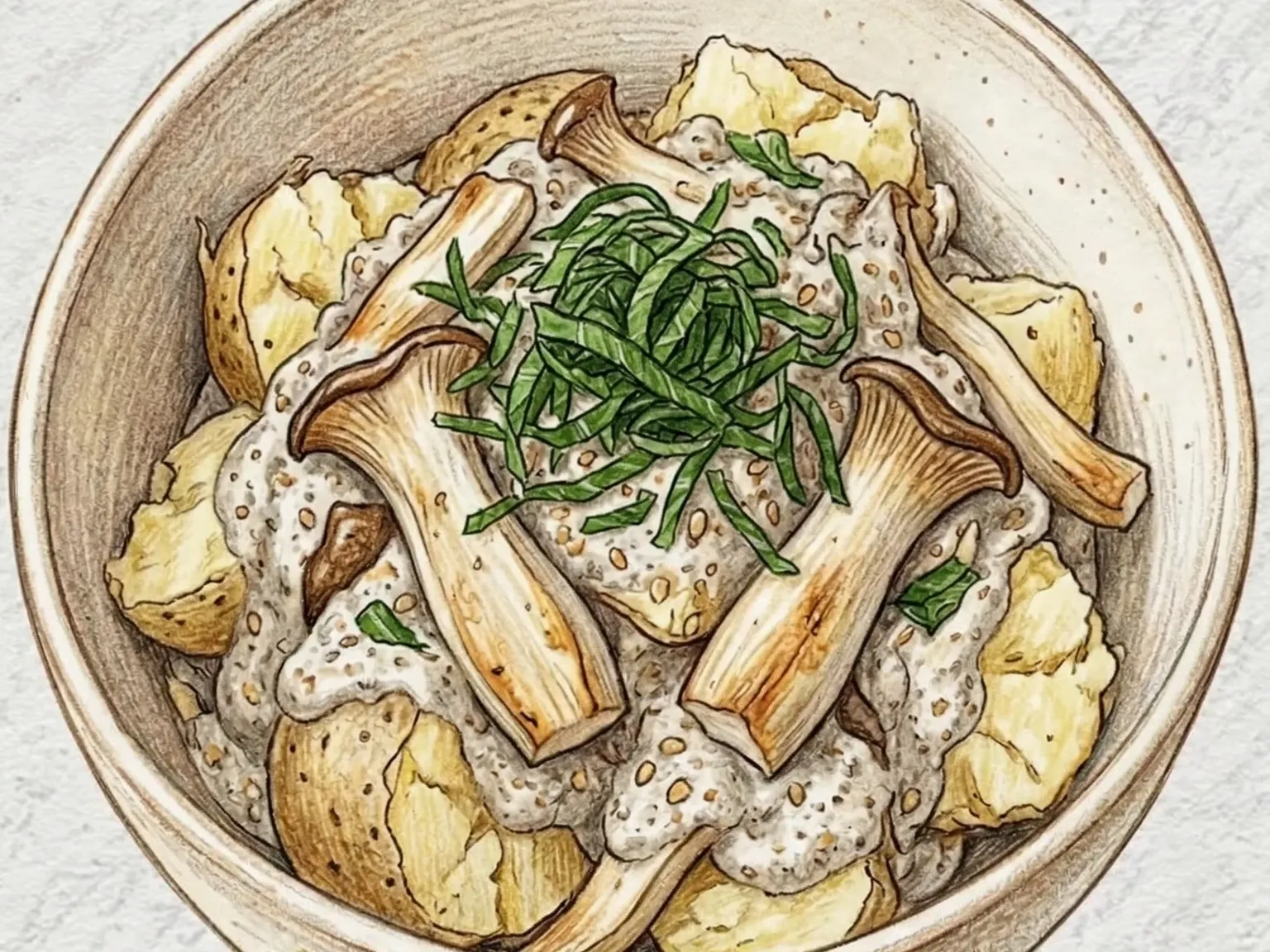
Potatoes are boiled skin-on and roughly mashed to keep a mix of fluffy interior and chunky structure. King oyster mushrooms are torn lengthwise and pan-roasted until chewy and deeply savory. Perilla seed powder and Greek yogurt create a nutty, creamy binder unifying the two main components. Shredded perilla leaves release their bold fragrance across the plate, while lemon juice and garlic cut through the richness. Two distinctly Korean aromatics - perilla seed and perilla leaf - give the familiar potato salad format a flavor profile unlike its Western counterpart.
Adjust Servings
Instructions
- 1
Boil potatoes with skin until fork-tender, then cut into large chunks.
- 2
Tear king oyster mushrooms lengthwise and coat with 1 tbsp olive oil and a little salt.
- 3
Roast mushrooms at 200C for 12 minutes to remove moisture and deepen flavor.
- 4
Mix Greek yogurt, perilla powder, lemon juice, garlic, and remaining olive oil for the dressing.
- 5
Roll perilla leaves and slice into thin chiffonade.
- 6
Toss potatoes, mushrooms, and perilla leaves with dressing, then rest 10 minutes before serving.
As an Amazon Associate, we may earn from qualifying purchases.
Tips
Nutrition (per serving)
More Recipes

Tuna Potato Salad (Japanese Creamy Tuna and Potato Mix)
Tuna potato salad mashes boiled potatoes while still hot, then folds in drained canned tuna, salt-pressed cucumber, carrot, and onion with mayonnaise and whole grain mustard. Mashing the potatoes warm keeps the starch active, which bonds more effectively with the mayonnaise for a creamier result - but over-mashing turns the texture gluey, so leaving some chunks is ideal. Salting the chopped vegetables for five minutes and squeezing out the released moisture is essential to prevent a watery salad. The tuna must also be drained thoroughly in a strainer to keep the flavor clean. Whole grain mustard adds a peppery sharpness that cuts through the richness of the mayonnaise, and a twenty-minute chill in the refrigerator lets all the flavors meld evenly.

Lotus Root Crab Yuja Salad
Thinly sliced lotus root, blanched until just crisp-tender, provides the structural crunch at the center of this salad, while gently separated crab meat drapes a delicate sweetness and umami over each bite. The yuja mayo dressing - yuja marmalade folded into mayonnaise with lemon juice - delivers citrus fragrance and creamy richness simultaneously. Half-moon cucumber slices and thin red onion add contrasting crunch, and a bed of mixed baby greens brings color and freshness to the plate. Keeping the blanching time under four minutes is critical; even a minute longer turns the lotus root soft and robs it of its signature snap.

Korean Perilla-Grilled Mushrooms
Songhwa mushrooms have thick caps with high moisture content, so they stay succulent and chewy when grilled. Sliced into thick pieces and tossed with a simple mix of perilla oil, soy sauce, garlic, salt, and pepper, they cook for about three minutes per side on a hot pan. The perilla oil imparts a distinctly nutty, toasted aroma that differs from sesame. Ground perilla seed is sprinkled on just before the heat is turned off, releasing fragrance without scorching. Finished with chopped chives, this vegetarian dish works equally well as a rice side or a drinking snack.

Korean Mushroom Japchae (Shiitake Glass Noodle Stir-Fry)
This meatless japchae replaces beef with shiitake - a staple of Buddhist temple cuisine. Sweet potato noodles are soaked, boiled, and rinsed for glassy sheen, then stir-fried with soy-sugar-garlic seasoning. Shiitake provides the umami backbone, while spinach and sautéed carrot add color and texture. Each vegetable cooks separately because mushrooms release water and onions need time to sweeten. Resting ten minutes lets seasonings equalize.

Bellflower Root, Chestnut & Perilla Salad
Blanched doraji retains a clean, mild bitterness that pairs with the warm sweetness of boiled chestnuts and the cool juiciness of Korean pear. Ground perilla seeds coat everything in a nutty, toasty layer that softens the root's edge. The dressing balances apple cider vinegar's acidity with honey, and olive oil smooths the transitions between ingredients. Both chestnuts and bellflower root peak in autumn, making this salad most flavorful during that season.

Dotori-Muk Vegetable Salad (Acorn Jelly Salad)
Dotori-muk (acorn jelly) is cut into bite-sized blocks and served with fresh lettuce, cucumber, and perilla leaves in this Korean salad. The jelly's smooth, firm texture creates a distinct contrast against the crunchy vegetables, while scallion lifts the overall aroma. A seasoning sauce of soy sauce, vinegar, gochugaru, and sesame oil gives the mild-flavored jelly a salty-tangy kick. Acorn jelly is notably low in calories and high in dietary fiber, originating as a foraged food during lean times in Korean history.