Korean Mountain Herb Bibimbap
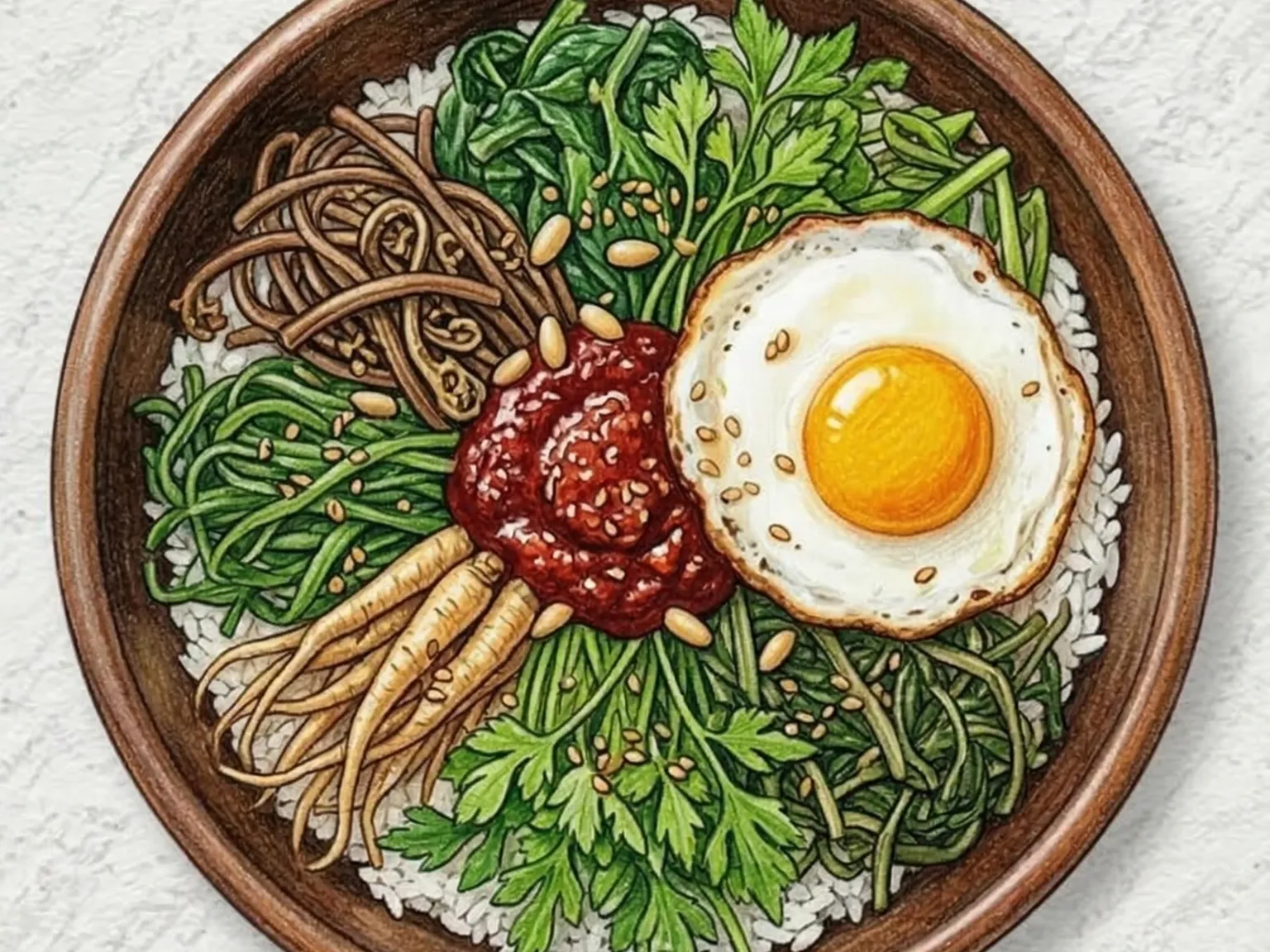
Sanchae bibimbap arranges individually seasoned mountain vegetables - fernbrake, bellflower root, and chwi-namul - over rice, then brings everything together with a spoonful of gochujang. Each wild green carries a distinct character: fernbrake is stir-fried in sesame oil until tender, bellflower root is salted and squeezed to remove bitterness before being left crunchy, and chwi-namul is blanched briefly to preserve its herbal fragrance. Julienned carrot adds a bright visual contrast. When mixed at the table, the spicy-sweet chili paste ties together the earthy, grassy, and slightly bitter notes into a cohesive, satisfying bite. This is a dish rooted in Korean mountain temple cuisine, where foraged greens and simple grains form the foundation of a nourishing, plant-based meal.
Adjust Servings
Instructions
- 1
Trim fernbrake, bellflower root, and greens, then pat dry.
- 2
Sauté each vegetable separately with a pinch of salt and cool.
- 3
Julienne carrot and quickly stir-fry to keep a slight crunch.
- 4
Mix gochujang, sesame oil, garlic, and sesame seeds into bibimbap sauce.
- 5
Place rice in bowls, arrange vegetables by color, and serve with sauce.
As an Amazon Associate, we may earn from qualifying purchases.
Tips
Nutrition (per serving)
More Recipes

Korean Sea Squirt Mixed Rice
Fresh sea squirt is tossed with vinegared gochujang and sesame oil over warm rice for a bold seafood bibimbap. The sea squirt carries an intense, distinctive ocean flavor that fills the palate, tempered by the tangy sweetness of the sauce. Julienned cucumber and torn lettuce provide crisp contrast, while roasted seaweed flakes and sesame seeds add a nutty undertone. Mixing should happen right before eating to preserve the sea squirt's volatile aroma.

Korean Mixed Rice Bowl (Colorful Vegetables & Gochujang)
Bibimbap is one of Korea's most iconic one-bowl meals, built by arranging individually seasoned vegetables - spinach, bean sprouts, zucchini, and carrots - alongside marinated beef and a fried egg over steamed rice, then mixing everything together with gochujang. Each component keeps its own texture and flavor until the moment you stir, creating a lively medley of crisp, soft, and spicy in every spoonful. It works well as a weeknight dinner using whatever leftover namul you have on hand, and when prepared in a hot stone pot, the rice forms a golden, crunchy crust at the bottom that adds another layer of enjoyment.

Korean Deodeok Gochujang Bibimbap
Deodeok gochujang bibimbap is a Korean mixed rice bowl that highlights mountain root dressed in a spicy-sweet gochujang sauce. The deodeok is peeled, lightly pounded, and torn into strips along the grain, then briefly stir-fried with the sauce to mellow its bitter edge while keeping its fibrous crunch intact. Julienned cucumber, carrot, and torn lettuce are arranged over rice alongside the glazed root, providing crisp, fresh counterpoints. Plum syrup and vinegar in the sauce add a tangy brightness that prevents the gochujang from feeling heavy. When everything is mixed together with a generous pour of sesame oil, the dressing coats each grain of rice and vegetable strand evenly. The dish showcases deodeok's distinctive herbal aroma against the backdrop of Korea's most iconic condiment, and it works best in spring when the roots are at their most fragrant and tender.

Korean Herb Mushroom Pot Rice
Chamnamul beoseot sotbap is a Korean pot rice cooked with fragrant chamnamul herbs, oyster mushrooms, and shiitake mushrooms in kelp stock. The chamnamul infuses the rice with a fresh, slightly herbaceous scent, while the two types of mushroom contribute contrasting textures - the oyster mushrooms soft and springy, the shiitake firm and woodsy - along with layers of umami. Served with a soy-sesame dipping sauce drizzled over the top and mixed in, it becomes a complete, aromatic meal. Even without any meat, the combination of mushroom depth and herbal brightness makes every bowl feel substantial. The nurungji crust that forms at the bottom of the pot adds a toasty crunch that is one of the small joys of eating pot-cooked rice.

Korean Garlic Sesame Broccoli Muchim
Garlic broccoli muchim is a modern Korean namul that emerged as broccoli became a staple in Korean grocery stores from the 2000s onward. Blanching the florets and peeled stems for ninety seconds in salted water, then shocking in cold water, locks in a vivid green color and a firm snap. The dressing is minimal - soup soy sauce, minced garlic, sesame oil, and sesame seeds - letting the garlic's sharpness build a flavor layer over the broccoli's mild bitterness without overwhelming it. Using the stems, peeled and sliced thin, ensures nothing goes to waste. Ready in five minutes and keeps refrigerated for two days.

Korean Spicy Seasoned Deodeok
Deodeok - Codonopsis lanceolata - is a mountain root used in Korean cooking and folk medicine for centuries. Its flesh is fibrous and sticky, with a ginseng-like bitterness. Peeled and pounded with a mallet to split fibers into ribbon-like shreds, then soaked in cold water to draw out bitterness. A gochujang-vinegar dressing with garlic, sugar, and gochugaru clings to each strand's rough surface. The finished dish is chewy and resinous, with a sweet-sour-spicy glaze.