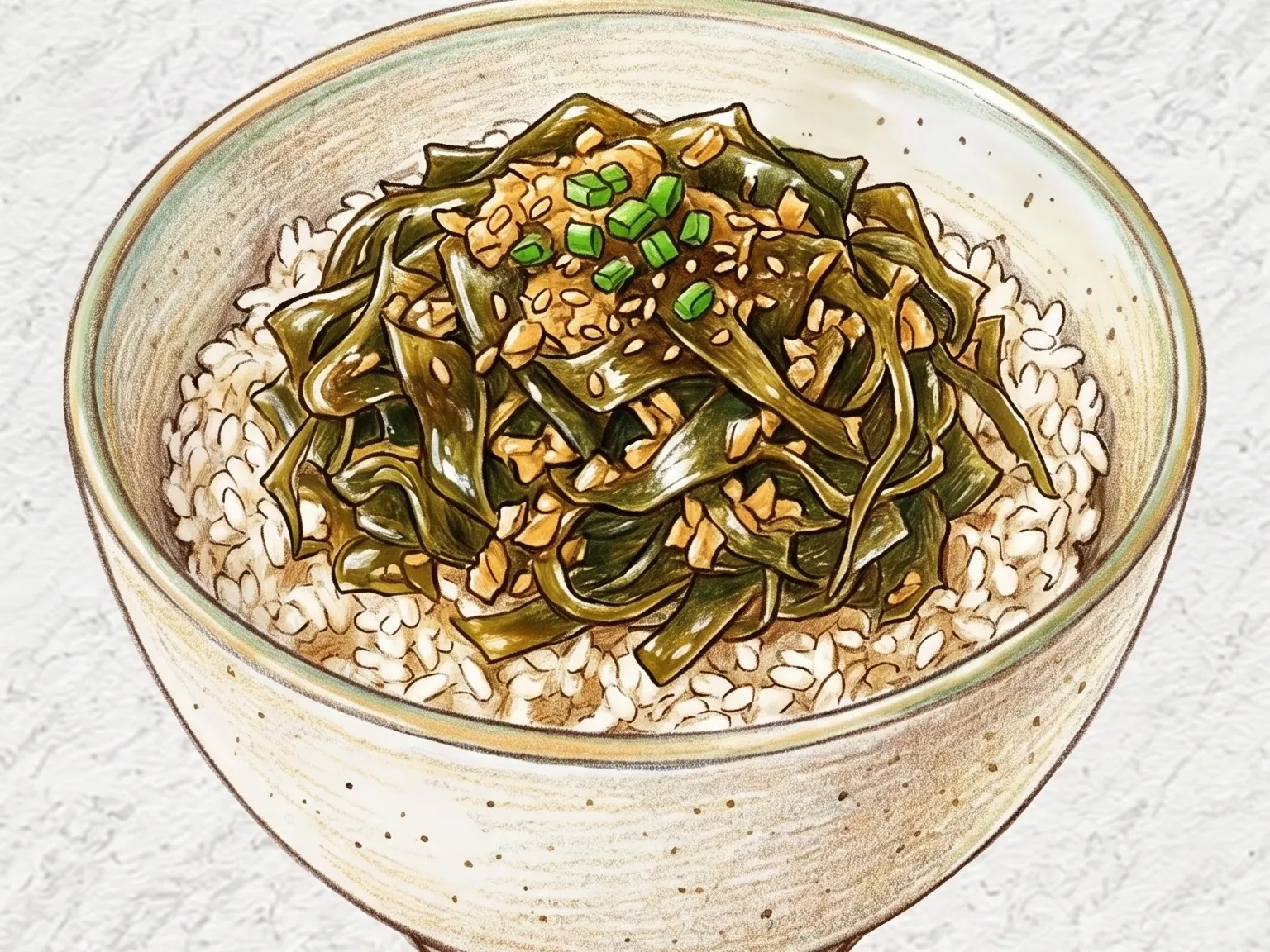
Korean Seasoned Seaweed Rice Bowl
This seasoned seaweed rice bowl stir-fries rehydrated wakame with garlic in sesame oil, seasons it with soy sauce, and serves it over steamed rice. Soaking the seaweed until fully softened gives it a slippery yet slightly chewy texture that glides across the palate when eaten with rice. Toasting the garlic and seaweed together in sesame oil layers a nutty warmth over the sea-mineral base flavor. Soy sauce adds a savory edge that makes the bowl satisfying without any additional side dishes. With only five ingredients and minimal cooking time, this is one of the quickest Korean rice bowls to prepare, yet the mineral-rich character of the seaweed gives it a depth that belies its simplicity.
Adjust Servings
Instructions
- 1
Rehydrate seaweed for 20 minutes and cut into pieces.
- 2
Stir-fry garlic in sesame oil.
- 3
Add seaweed and stir-fry with soy sauce.
- 4
Serve over hot rice.
As an Amazon Associate, we may earn from qualifying purchases.
Tips
Nutrition (per serving)
More Recipes

Korean Seafood Rice Bowl (Shrimp Squid Clam Starchy Sauce Bowl)
Shrimp, squid, and clams are stir-fried with garlic, then seasoned with oyster sauce and soy sauce before being thickened with a cornstarch slurry. The slurry gives the sauce a glossy sheen and helps it cling to each piece of seafood, so when ladled over rice the sauce gradually seeps downward rather than pooling. Adding the seafood last and cooking briefly keeps each piece plump, while the natural liquor from the clams forms the umami backbone of the sauce. The entire dish comes together in about 25 minutes from start to finish.

Korean Salmon Rice Bowl (Marinated Raw Salmon over Warm Rice)
Fresh salmon is sliced thin and briefly marinated in a dressing of soy sauce, sesame oil, and wasabi so the seasoning just barely coats each piece. Laid over warm rice, the heat gently firms the salmon's surface while the center remains raw and buttery. Perilla leaves or shredded nori on top bring a herbal, aromatic note that cuts through the richness of the fish. The sweet-salty balance of the dressing meets the salmon's natural fat in a way that makes the bowl disappear quickly.

Korean Kimchi Rice Bowl (Stir-Fried Aged Kimchi over Steamed Rice)
Stir-frying aged kimchi drives off moisture and triggers caramelization, mellowing the sourness into a deeper, sweeter intensity. A splash of soy sauce and sesame oil adds salty nuttiness to the charred edges. Topped over plain rice with a single fried egg, this bowl is deceptively simple - yet using well-fermented kimchi (mukeunji) introduces layers of tangy complexity that elevate it beyond its minimal ingredient list. The entire dish comes together in under fifteen minutes, making it the go-to Korean rice bowl when the pantry is nearly bare.

Korean Gimbap-Style Rice Bowl
All the classic gimbap fillings - egg strips, imitation crab, blanched spinach, and stir-fried carrot - are arranged over sesame-oil-seasoned rice in a bowl instead of being rolled in seaweed. Skipping the rolling step cuts preparation time significantly while preserving the familiar flavor combination, and serving in a bowl lets you adjust each topping to your preference. Adding pickled radish and fish cake on the side brings the taste even closer to traditional gimbap. The sesame-scented rice acts as a unifying base that ties all the separate components together.

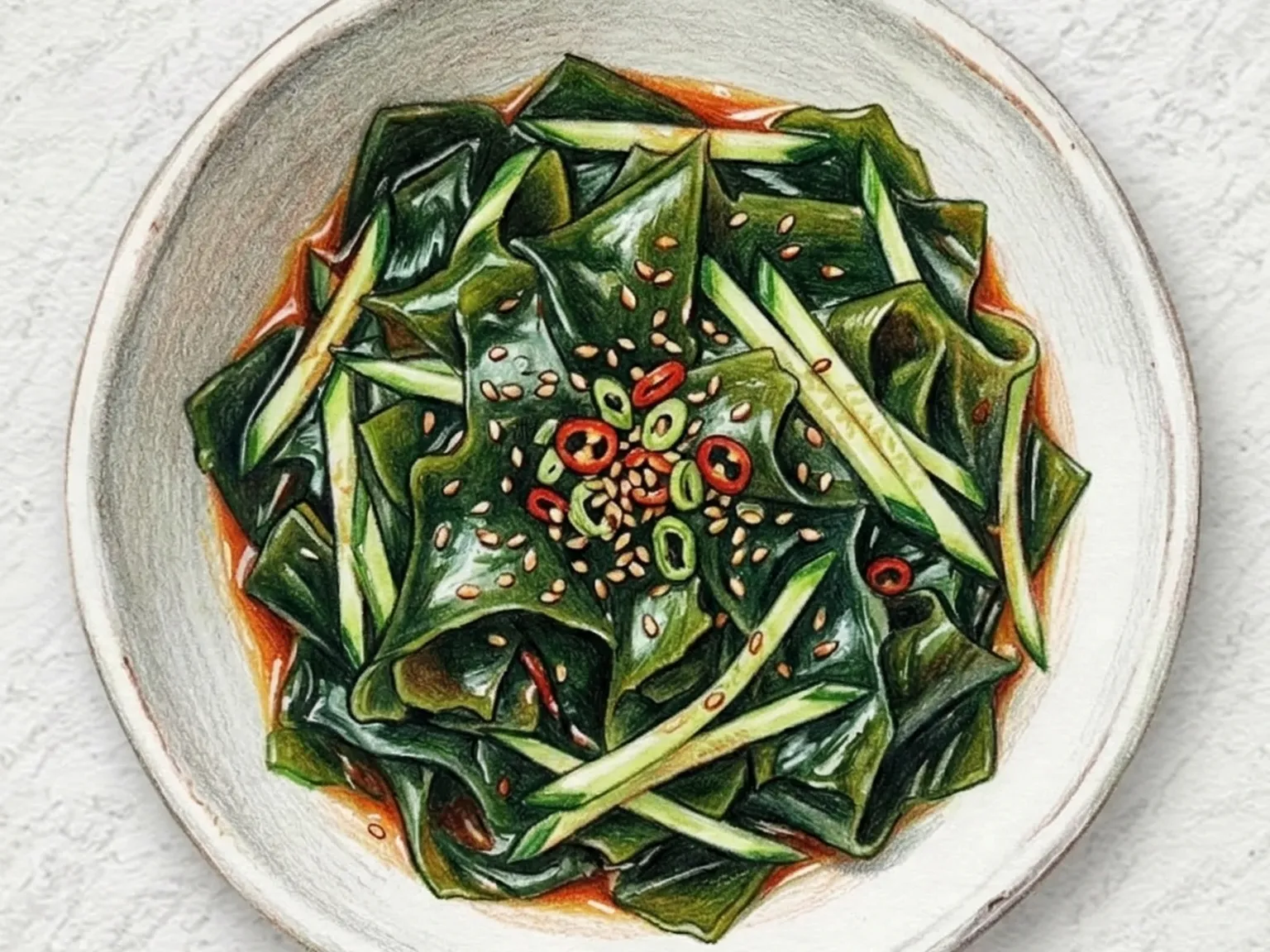
Korean Seaweed Salad (Tangy Chili-Vinegar Dressed Miyeok)
Miyeok-muchim is rehydrated seaweed dressed in cho-gochujang (vinegared chili paste) or cho-ganjang (vinegared soy sauce) - one of the most common ways Koreans consume miyeok outside of birthday soup. Thirty grams of dried miyeok expands eight to ten times its volume when soaked for twenty minutes, easily serving two - the most common beginner mistake is adding far too much dried seaweed. A brief blanch in boiling water deepens the color to a vivid green, reduces the marine odor, and a cold rinse afterward sets the slippery yet bouncy texture. Cho-gochujang dressing (gochujang mixed with vinegar and sugar) adds a sweet-sour-spicy layer that tempers the seaweed's natural brininess. Mixing in julienned cucumber creates a textural contrast between the silky seaweed and crunchy vegetable. At roughly fifty kilocalories per serving and rich in dietary fiber and iodine, this banchan is a mainstay of Korean health-conscious eating. Served chilled from the refrigerator, it is particularly refreshing in summer.

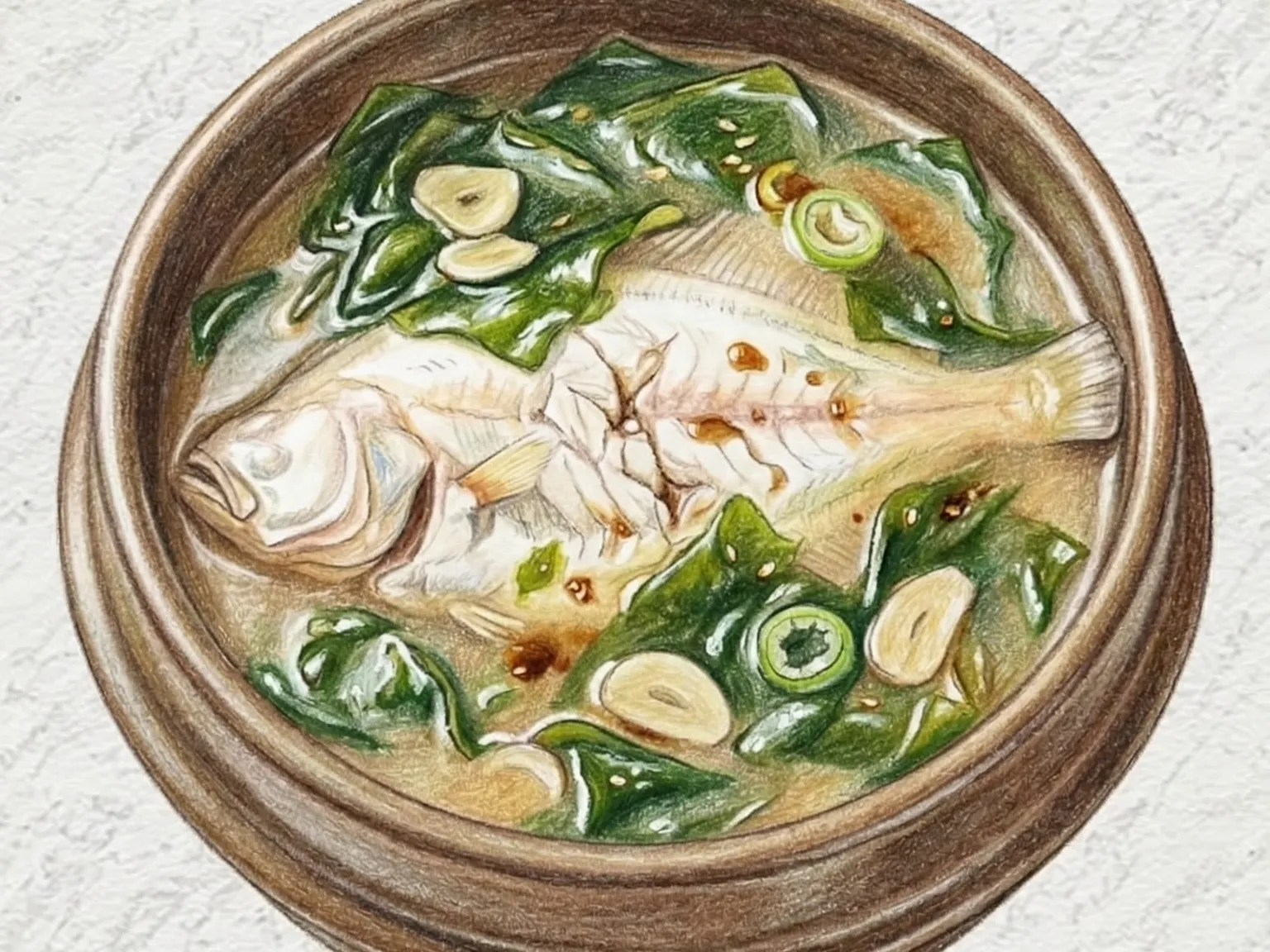
Korean Flounder Seaweed Soup
Gajami miyeok-guk is a seaweed soup centered on a whole flounder. Rehydrated seaweed is stir-fried in sesame oil first to deepen its fragrance, then the fish is added with water and simmered until the broth turns milky from the gelatin in the bones. Soy sauce and garlic are the only seasonings, keeping the focus on the flounder's mild sweetness and the mineral taste of the seaweed. Blanching the fish briefly before adding it to the pot removes any lingering fishiness, leaving a clean, nourishing bowl.