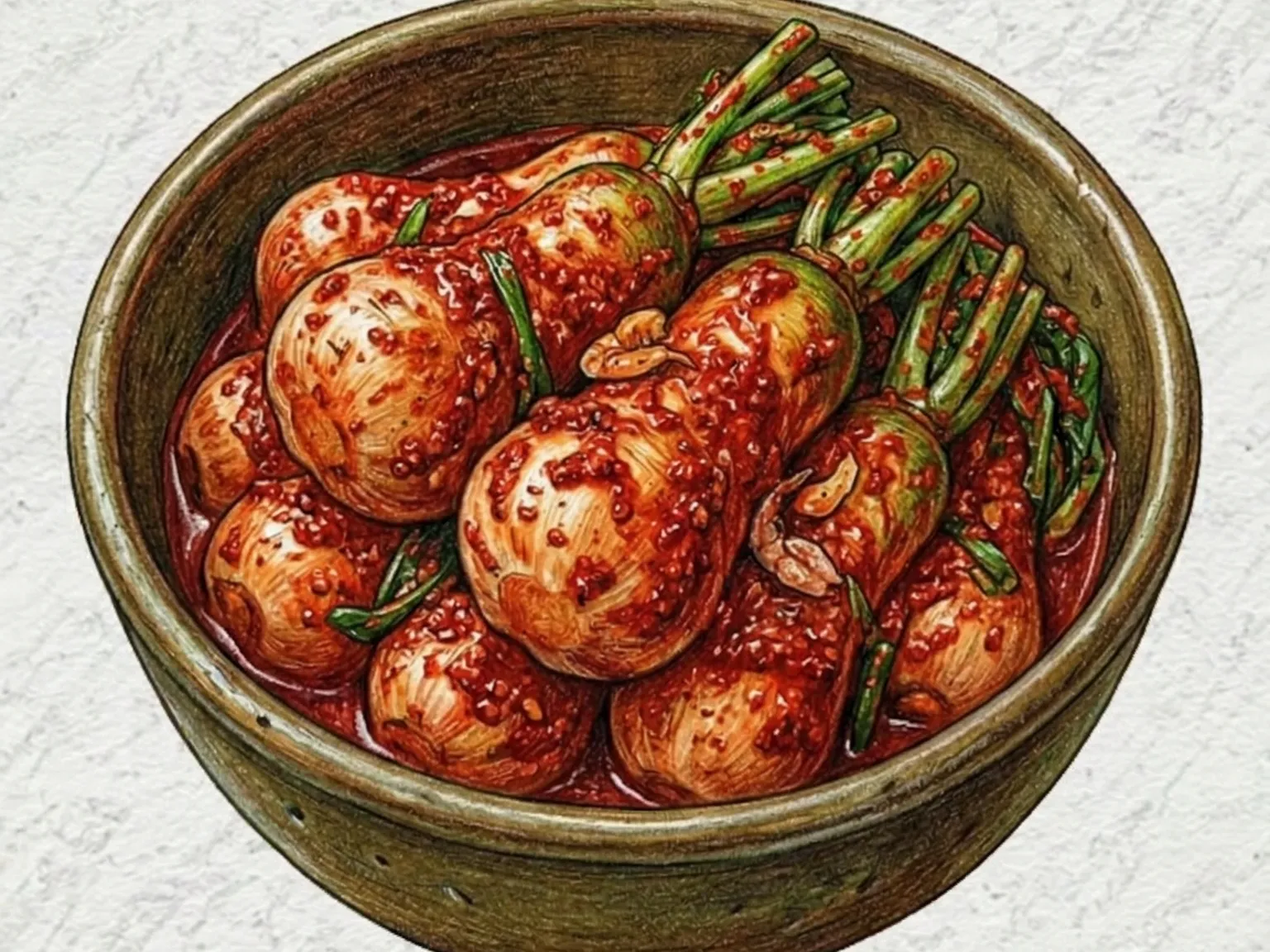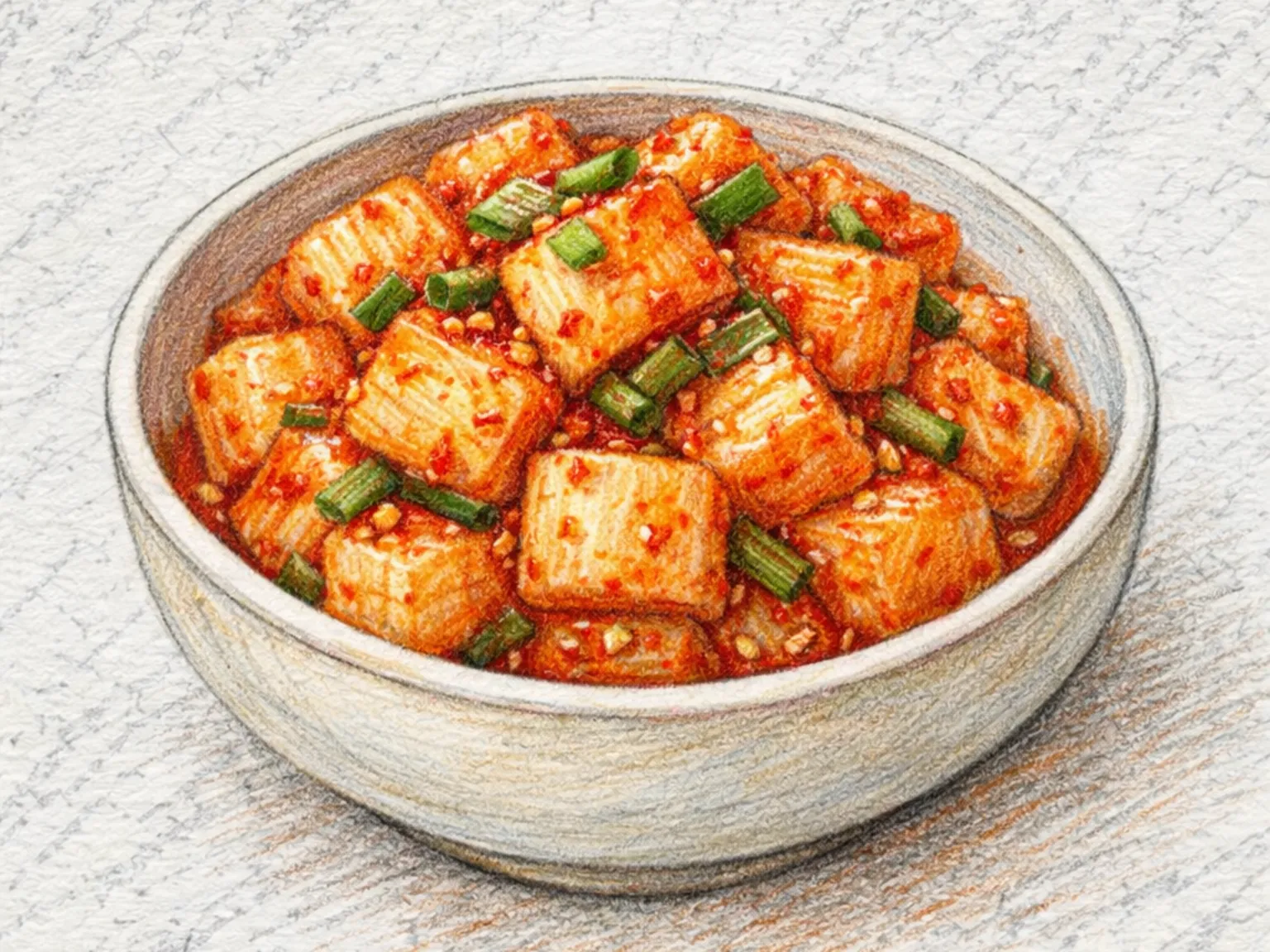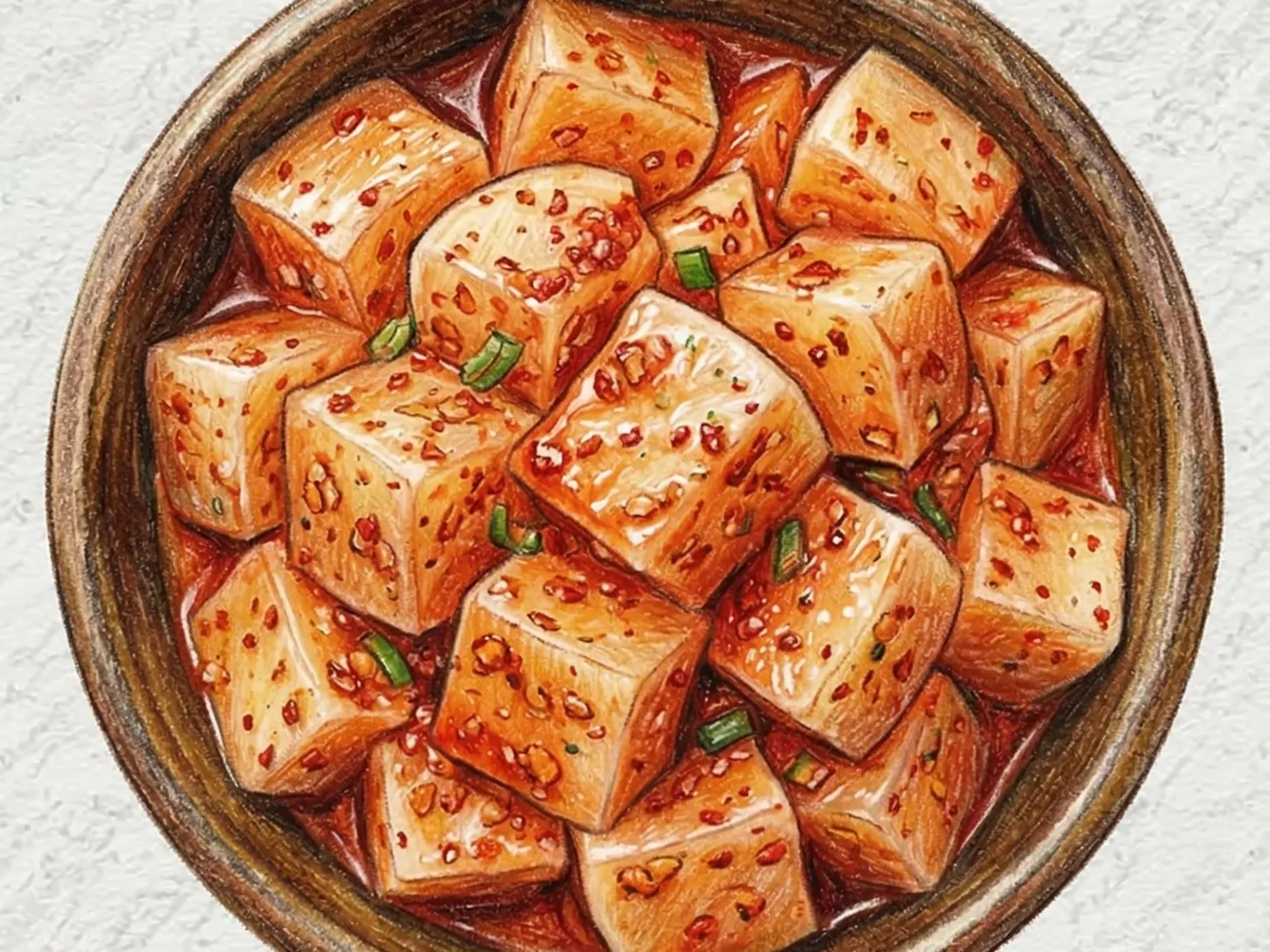
Korean Seokbakji Radish Kimchi
Quick answer
Seokbakji is a traditional Korean radish kimchi in which large-cut radish cubes are salted for one hour, drained, and tossed with a seasoning of gochugaru, salted shrimp...
What makes this special
- Large cube-cut pieces ensure Seokbakji radish kimchi stays firm throughout the fermentation.
- Keeping large cube-cut pieces is key; smaller cuts go soft during fermentation
- Fermented shrimp paste lays a deep umami base beneath the chili seasoning
Key ingredients
Core cooking flow
- 1 Trim the Korean radish and cut it into large cubes so it stays firm during fermentation.
- 2 Pour off the liquid released from the radish, but do not rinse it, because t...
- 3 Mix 5 tablespoons gochugaru, 2 tablespoons salted shrimp, minced garlic, and...
Seokbakji is a traditional Korean radish kimchi in which large-cut radish cubes are salted for one hour, drained, and tossed with a seasoning of gochugaru, salted shrimp, minced garlic, ginger, and scallion pieces before being set aside to ferment. The size of the radish pieces is the most important factor in this kimchi - smaller cuts turn mushy during fermentation as salt and acid break down the cell structure, while large cubes maintain their firm, satisfying crunch throughout the entire maturation period. Salted shrimp here does far more than add salt: its fermented depth provides an umami backbone that gochugaru alone cannot deliver. After one day of fermentation at room temperature, two more days in the refrigerator allow lactic acid bacteria to develop a clean, refreshing sourness. The liquid that the radish releases during this process becomes a flavorful brine - this brine is one of seokbakji's most prized characteristics. Placed alongside a bowl of seolleongtang or gukbap, the cold, crunchy kimchi and its tangy liquid cut directly through the richness of the bone broth, refreshing the palate between spoonfuls. Compared to kkakdugi, seokbakji pieces are larger and more liquid-forward.
Instructions
Read the steps as a cooking flow: prep, heat, seasoning, doneness control, and finish.
- 1Season
Trim the Korean radish and cut it into large cubes so it stays firm during fermentation.
Toss 1400 g radish evenly with 70 g coarse salt, then let it sit for 1 hour, turning once halfway through.
- 2Control
Pour off the liquid released from the radish, but do not rinse it, because the seasoning depends on that salting.
Let the cubes drain in a colander for about 10 minutes until only the surface moisture is reduced.
- 3Season
Mix 5 tablespoons gochugaru, 2 tablespoons salted shrimp, minced garlic, and minced ginger before adding the radish.
Let the paste stand briefly until the chili flakes look moist and slightly darker, which helps it coat evenly.
- 4Season
Add the drained radish and 70 g scallions to the seasoning.
Toss by lifting from the bottom rather than pressing down, so the large radish cubes stay intact and the scallions do not bruise.
- 5Season
Pack the seasoned radish into a container, reducing large air gaps without crushing it.
Press the top lightly until some brine rises, and leave headspace because the radish will release more liquid during room temperature fermentation.
- 6Finish
Leave the container at room temperature for 1 day, until a light sourness begins and more brine appears.
Move it to the refrigerator for 2 more days, then serve cold when the liquid tastes clean and refreshing.
After the steps
Pick a recipe that fits this dish.
Continue with shared ingredients, meal pairings, or a similar method.
Recipes That Go Well With This
More Kimchi →Based on shared ingredients and meal pairing
Korean Cubed Radish Kimchi
Kkakdugi is a staple Korean kimchi made from radish cut into 2 cm cubes, brined in coarse salt, then seasoned with gochugaru, salted shrimp, garlic, and ginger before fermentation. Salting draws out moisture from the cubes, creating a contrast between the damp interior and the snappy outer surface. Salted shrimp layers its briny seafood depth beneath the chili heat, and as fermentation progresses, the radish's natural sugars emerge to balance the spice with a clean sweetness. Brining time should be kept to thirty minutes to one hour since over-salting softens the radish and robs it of its characteristic crunch. Adding a small drizzle of perilla oil during the seasoning step deepens the nutty undertone of the finished kimchi, and substituting grated pear or apple for sugar provides a gentler, fruit-derived sweetness that integrates more seamlessly into the overall flavor. The accumulated brine at the bottom of the jar develops a refreshing tang that makes kkakdugi the essential companion to rich, milky soups like seolleongtang and gomtang.
Korean Ponytail Radish Kimchi
Chonggak kimchi is a traditional Korean kimchi made with whole young ponytail radishes salted for two hours, then coated in a paste of gochugaru, anchovy fish sauce, garlic, ginger, and scallions before fermenting. Blooming the chili flakes in fish sauce first softens their texture and intensifies the red color, and garlic and ginger are added afterward to build aromatic depth into the heat. Radish tops that are left too long turn fibrous, so trimming them short before seasoning keeps the kimchi crisp from root to leaf. One day at room temperature produces light carbonation and a cool, refreshing tang that signals the fermentation is alive. Refrigerating after that preserves the radish crunch and spicy umami for weeks. A year-round staple, this kimchi appears at Korean tables across every season.
Korean Braised Eggplant in Seasoned Soy Sauce
Gaji yangnyeom jorim is a Korean braised eggplant side dish made with soy sauce, gochugaru, garlic, and sesame oil. Briefly sauteing the eggplant in oil before adding the braising liquid is important: pre-cooking the surface prevents the eggplant from releasing too much water into the sauce, which keeps the seasoning concentrated and helps it penetrate evenly. A small amount of sugar or plum extract is added to the sauce, giving the finished dish its characteristic glossy sheen. Scallions are stirred in only after the heat is off to preserve their color and texture. The result is a compact, salty-spicy banchan with a deep lacquered surface on each piece. Keeping a batch in the refrigerator means it is available as a side dish for three or more days, and the leftover braising liquid works well as seasoning in bibimbap.
Korean Radish Greens Kimchi
Mucheong kimchi is made from the leafy greens and stems of Korean radish, cut into 5 cm lengths, salted in coarse brine, then coated in a paste of sweet rice flour, gochugaru, anchovy fish sauce, minced garlic, ginger, and onion. The thick, fibrous stems grip the seasoning and hold up through fermentation without turning mushy, keeping a firm chew even after weeks in the refrigerator. Sweet rice flour acts as a glue that prevents the coating from sliding off the stems as the kimchi ages. Anchovy fish sauce lays down a deep seafood umami as the base layer, while onion moderates the chili heat with natural sweetness. The greens are a practical use of the entire radish rather than just the root, and the finished kimchi works beyond the banchan role: torn into pieces and added to siraegi soup, it enriches the broth; stirred into doenjang jjigae, it deepens the fermented soybean flavor with another layer of fermented complexity.
Serve with this
Korean Sesame Porridge (Toasted Sesame Silky Rice Porridge)
Kkaejuk is a traditional Korean porridge made by grinding toasted sesame seeds to a fine powder and simmering them with soaked rice, water, and milk until the mixture reaches a silky, cream-soup consistency. Toasting the seeds before grinding is not optional -- raw sesame lacks the deep, roasted fragrance that defines the dish, and the heat of toasting develops oils and aroma compounds that grinding alone cannot produce. Constant stirring over low heat prevents the mixture from scorching and coaxes the rice grains into breaking down completely, merging with the sesame base so no distinct texture remains. Milk enriches the body beyond what water alone provides and gives the finished porridge a warm ivory color. The simplest version is seasoned with nothing but salt and served with a drizzle of honey or rice syrup, letting the roasted sesame flavor carry the bowl without distraction. Easily digestible and gentle on the stomach, kkaejuk has a long tradition as a morning meal, a recovery food for the sick, and a postpartum nourishment dish in Korean households.
Korean Soy-Glazed Grilled Lotus Root
This side dish features lotus root sliced into rounds and pan-grilled with a sweet and salty soy glaze. The peeled root is sliced and soaked in vinegar water for ten minutes, then blanched in boiling water for two minutes to eliminate astringency while locking in its signature crunch. After draining, the slices are seared in a pan with cooking oil for two minutes on each side until lightly browned. The glaze, composed of soy sauce, oligosaccharide syrup, minced garlic, and sesame oil, is poured in over medium-low heat. It is critical to turn the slices quickly and remove the pan from the heat as soon as they become glossy, before the syrup hardens. The holes of the lotus root capture the glaze, distributing the savory-sweet flavor evenly in every bite. Sprinkled with sesame seeds, it is left to cool briefly to let the coating settle, making it a clean, non-sticky addition to daily meals.
Korean Sigeumchi Dubu Jjigae (Spinach Tofu Stew)
Sigeumchi-dubu-jjigae is a Korean stew built from fresh spinach and soft tofu simmered in anchovy-kelp stock, seasoned with soup soy sauce and perilla oil. The process starts by warming perilla oil in the pot and softening minced garlic until its sharpness mellows into a rounded fragrance that transfers into the oil, giving the broth a subtle depth that would be absent if the garlic were added raw. Zucchini and onion release their natural sweetness as they cook, rounding out the broth and preventing it from tasting flat or austere. Soft tofu, added mid-way, absorbs the seasoned liquid gradually as it heats through, holding its shape while taking on the flavor of the broth around it. Spinach goes in last, only long enough to wilt, because extended cooking destroys the color and reduces the leaves to a limp, dull mass that works against the dish. The iron-forward earthiness of spinach pairs naturally with the mild creaminess of tofu and the nutty undercurrent of perilla oil, producing a stew that reads as simple but carries enough layered flavor to satisfy. This is a standard of Korean home cooking that earns its place at the table for being genuinely easy on the stomach, particularly welcome when appetite is low or the body calls for something clean.
Similar recipes
Korean Bitter Herb Kimchi
Sseumbagwi kimchi is a traditional spring fermented side dish made from sseumbagwi, a wild bitter herb that grows in Korea during early spring. The herb is soaked in cold water for at least twenty minutes to pull back its pronounced bitterness before being salted to soften the stalks. It is then dressed in a seasoning paste built from gochugaru, sand lance fish sauce, minced garlic, ginger, sweet rice paste, and plum syrup, mixed together with cut scallions. The rice paste adds body to the seasoning so it clings to the herb's thin stems and narrow leaves rather than sliding off. Plum syrup works on both the bitterness and the salt's edge at once, smoothing the overall profile without masking the herb's character. Sand lance fish sauce is preferred over anchovy sauce here because its gentler aroma does not compete with the plant's natural flavor. Five hours of room-temperature fermentation followed by refrigeration sets off lactic acid development, layering tangy depth over the bitter-green base. The flavor peaks around day three when bitterness, acidity, and umami reach the best balance. If the raw herb tastes too sharp, one additional soak in fresh cold water brings it within range before seasoning.
Korean Restaurant-Style Kkakdugi
Sikdang-style kkakdugi is the cubed radish kimchi served as a complimentary banchan at virtually every Korean restaurant, standing alongside baechu-kimchi as a permanent fixture on the Korean table. Cutting Korean radish into chunky 2 cm cubes preserves crunch deep into the flesh even after salting and fermentation. Twenty minutes in coarse salt draws out excess moisture, and the cubes are then coated in a seasoning mixture of gochugaru, anchovy fish sauce, garlic, ginger, and sugar. The fish sauce lays the umami foundation that develops further during fermentation, while ginger suppresses the raw edge of the radish and leaves a clean finish. One day at room temperature initiates lactic acid fermentation, producing the characteristic tingle of an active kimchi, after which refrigeration allows the flavor to mature steadily over two to three weeks. Winter radish carries more natural sugar, so the added sugar can be reduced without sacrificing sweetness. In summer, shortening the room-temperature rest to half a day before refrigerating prevents the kimchi from becoming overly sour. It pairs particularly well alongside grilled pork belly, rice noodle soup, and earthenware pot rice soup, where its acidity cuts through the richness of the main dish.
Korean Seasoned Radish Greens Namul
Dried radish greens are soaked, boiled until pliable, and dressed in a seasoning anchored by doenjang and ground perilla seeds. The drying process concentrates the fiber in the greens, giving them a satisfying chew that persists even after boiling: the outer layer turns silky while the inner stem retains a springy resistance. Doenjang supplies the salty, fermented backbone, and ground perilla seeds melt into a creamy coating that softens the roughness of the greens on the palate. A generous pour of perilla oil ties the dressing together, adding a glossy sheen and a rich, nutty fragrance. Minced garlic and chopped green onion introduce a sharp aromatic layer that cuts through the heaviness. Each bite releases more of the siraegi's own deep, vegetal flavor, a taste that builds rather than fades. Paired with steamed rice, the doenjang's salinity and the perilla's richness draw out the natural sweetness of the grain.