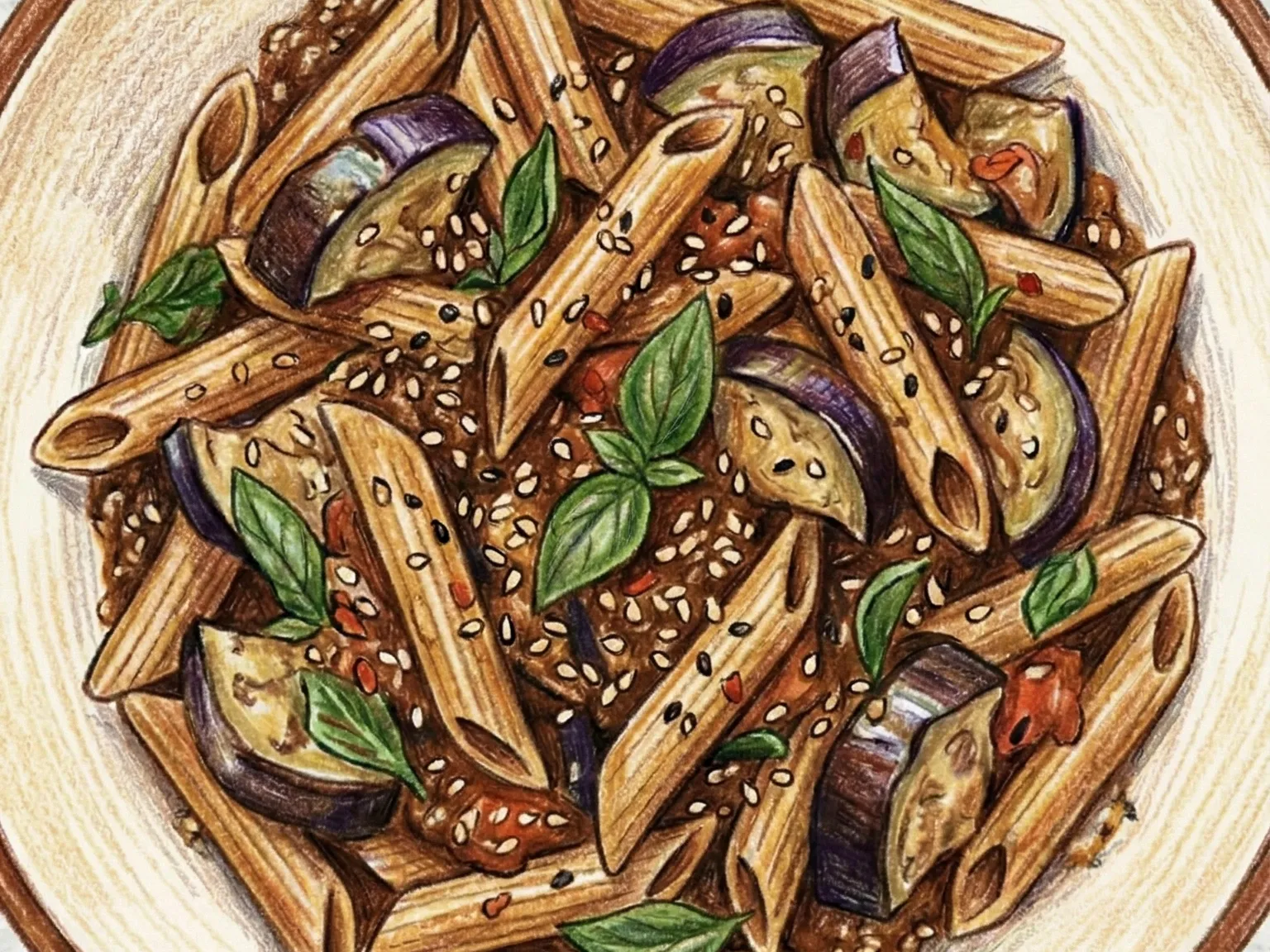
Sesame Soy Eggplant Tomato Penne
Sesame soy eggplant tomato penne combines salt-sweated eggplant with diced tomato and soy sauce over penne for a Korean-Italian vegetable pasta. The eggplant is salted first to draw out moisture, then sautéed in olive oil until soft and absorbent - it soaks up the surrounding sauce like a sponge, concentrating flavor in each piece. Soy sauce adds fermented depth that pairs with tomato's natural glutamate for a double layer of umami. Sesame oil goes on at the end to preserve its raw, toasty fragrance, and toasted sesame seeds scattered on top add crunch. Fresh basil provides an herbal finish, while onion and garlic anchor the aromatic base.
Adjust Servings
Instructions
- 1
Cut eggplant into 2 cm cubes, lightly salt for 10 minutes, then pat dry.
- 2
Cook penne in salted water to al dente and reserve 120 ml pasta water.
- 3
Heat olive oil and sear eggplant over high heat until browned; remove.
- 4
In the same pan, saute onion and garlic, then add crushed tomatoes and soy sauce; simmer 8 minutes.
- 5
Return eggplant, add sesame oil, and simmer 2 minutes to infuse flavor.
- 6
Add penne and 70 ml pasta water, toss 1-2 minutes, then finish with sesame seeds and basil.
As an Amazon Associate, we may earn from qualifying purchases.
Tips
Nutrition (per serving)
More Recipes

Perilla Pesto Chicken Penne
Perilla pesto chicken penne uses Korean perilla leaves (kkaennip) and walnuts blended with olive oil into a thick pesto that coats penne and sliced seared chicken breast. The perilla delivers a grassy, slightly minty aroma that is fundamentally different from basil - closer to shiso but with a stronger sesame-like undertone. Walnuts add creamy body and lingering nuttiness to the pesto base. The chicken breast is seared in olive oil for a golden crust, then sliced thin to distribute evenly. Parmesan contributes salt and umami, and lemon juice provides enough acidity to balance the oil-heavy sauce. Penne's hollow tubes catch pesto inside, so each bite carries full flavor even without visible sauce on the surface.

Spicy Octopus Rose Penne (Octopus Penne in Rose Sauce)
Spicy octopus rose penne sears pre-cooked octopus briefly over high heat to drive off surface moisture, then folds the pieces into a rose sauce made from tomato passata and heavy cream spiked with Korean chili flakes. The chili flakes are bloomed in oil for just 20 seconds to extract heat and color without bitterness, and butter is whisked in at the end to emulsify the sauce into a smooth coat. Penne's short tubular shape captures the thick sauce both inside and outside each piece, delivering cream and spice in every bite. Fresh basil stirred in off the heat adds an herbal lift that cuts through the richness of the cream-tomato base.

Soy Butter Steak Garlic Spaghetti
Soy butter steak garlic spaghetti sears thick-cut sirloin at high heat, then glazes it in soy sauce and butter to create a savory, glossy pan sauce. The fond left from searing is deglazed with soy sauce and butter, then emulsified with pasta water into a thin, shiny coating for the spaghetti. Generous garlic is browned in olive oil beforehand to infuse the entire sauce with roasted garlic flavor, and tsuyu (Japanese seasoning concentrate) adds dashi-based umami from kombu and bonito. The steak is best served medium-rare and sliced, preserving its juices against the hot pasta. Black pepper and sliced scallions provide the finishing layer. Total cook time is about 20 minutes.

Soy-Garlic Chicken Parmesan Spaghetti
Soy-garlic chicken Parmesan spaghetti marinates chicken thigh in soy sauce, minced garlic, and honey, then pan-sears it until the glaze caramelizes into a dark, glossy coating. The soy-honey combination creates a sweet-salty crust on the chicken that pairs with a simple tomato sauce underneath. Garlic drives the aromatic profile throughout the dish, appearing both in the marinade and sautéed into the sauce base. Parmesan cheese, grated generously over the top, adds a nutty umami layer that bridges the Korean marinade with the Italian pasta format. Chicken thigh holds moisture well through the sear, staying juicy against the hot spaghetti. Sliced scallions finish with color and a light allium note.

Korean Grilled Eggplant (Soy Garlic Glazed Charred Eggplant)
Gaji-gui is Korean grilled eggplant, halved lengthwise and scored before cooking over medium heat until the flesh turns creamy while the skin retains slight firmness. Salting the cut surface for ten minutes draws out bitter moisture through osmosis, which also reduces how much oil the eggplant absorbs during grilling, and the score marks let heat penetrate evenly so the interior softens uniformly. A sauce of soy sauce, sesame oil, Korean chili flakes, minced garlic, and sliced green onion is spooned over the hot grilled surface, where the residual heat releases the aroma of garlic and sesame while the liquid seeps into the scored channels. A final scatter of toasted sesame seeds adds a nutty layer that gives the otherwise mild eggplant enough complexity to stand as a proper banchan.

Tofu Avocado Salad (Silken Tofu and Avocado Sesame Bowl)
Tofu avocado salad pairs pan-seared firm tofu with ripe avocado over a bed of mixed greens, dressed in soy sauce, sesame oil, and lemon juice. Pressing the tofu thoroughly before searing allows the surface to develop a golden Maillard crust that holds its shape even after tossing with the dressing. The avocado's creamy fat contrasts with the burst of juice from halved cherry tomatoes, creating textural variety in every bite. The dressing layers three dimensions - soy sauce for salinity, sesame oil for nuttiness, and lemon juice for acidity - giving depth to otherwise mild ingredients. Cutting the avocado just before serving prevents oxidation and keeps the color clean.