Korean Spinach Soybean Paste Porridge
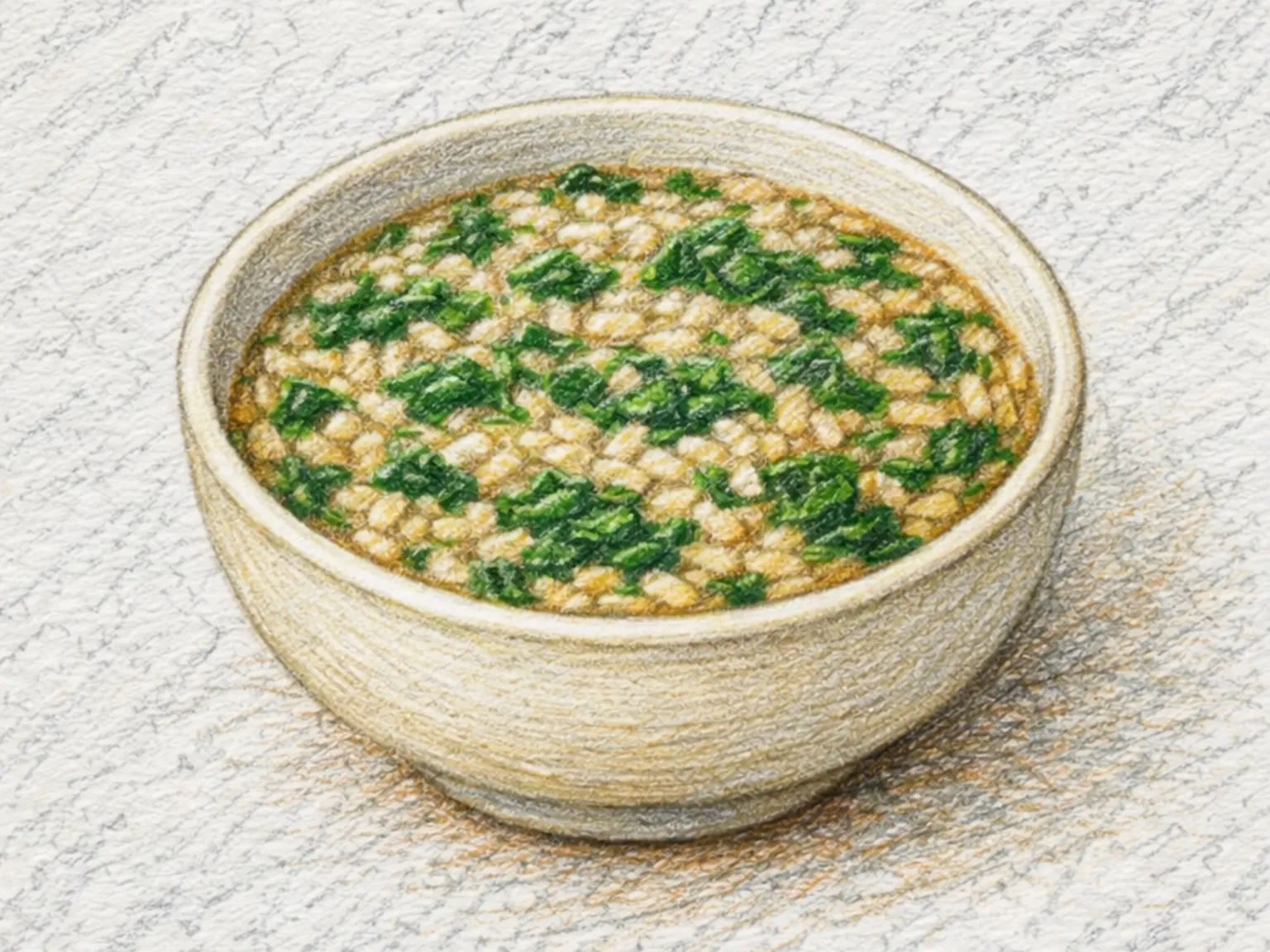
Sigeumchi doenjang-juk is a Korean porridge that marries the deep, fermented savoriness of doenjang (soybean paste) with the mild green flavor of finely chopped spinach. Soaked rice is first toasted in sesame oil to build a nutty base, then simmered in anchovy stock with doenjang and minced garlic until the grains break down into a thick, creamy consistency. Spinach goes in at the very end and cooks just long enough to wilt, preserving its bright color and delicate vegetal aroma. The soybean paste rounds out any slight astringency from the spinach, creating a smooth, easy-to-eat bowl. This porridge is a go-to when the stomach needs something gentle - warm, savory, and quietly nourishing.
Adjust Servings
Instructions
- 1
Soak the rice for 30 minutes, then drain well.
- 2
Blanch spinach for 20 seconds, rinse in cold water, and chop finely.
- 3
Heat sesame oil in a pot and stir-fry soaked rice over medium-low heat for 2 minutes.
- 4
Add anchovy stock in batches while stirring, then dissolve in soybean paste.
- 5
Add spinach and garlic, then simmer 7-8 more minutes to desired thickness.
- 6
Season with soup soy sauce and salt, then simmer 1 more minute.
As an Amazon Associate, we may earn from qualifying purchases.
Tips
Nutrition (per serving)
More Recipes

Korean Spinach Soybean Paste Soup
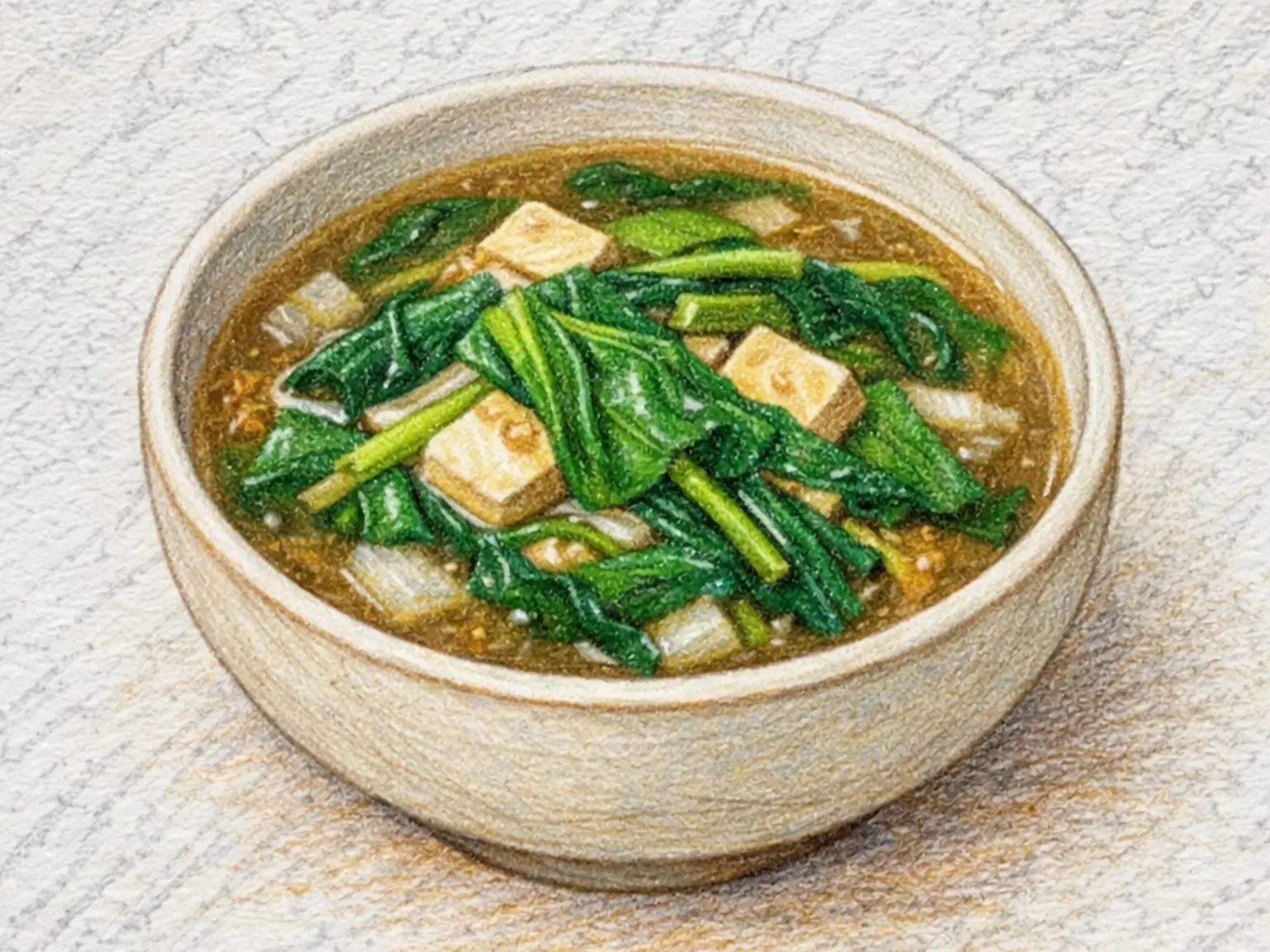
Sigeumchi-doenjang-guk is a foundational Korean soup that combines spinach with soybean paste in anchovy-kelp stock, producing a broth that is earthy, warm, and deeply familiar to anyone who grew up eating Korean home cooking. Doenjang is dissolved into the simmering stock first, establishing a savory, slightly funky baseline. Spinach is added near the end and wilts within seconds, contributing a soft green color and a faint bitterness that, rather than clashing with the fermented paste, amplifies its complexity. Tofu is a common addition that gives the soup more substance and a creamy counterpoint to the leafy greens. Garlic and green onion handle the aromatics, and no chili is used, keeping the soup on the gentle end of the Korean flavor spectrum. The key technical point is timing: spinach left in boiling liquid too long turns dull and mushy, so experienced cooks drop it in and turn off the heat almost immediately. This soup is one of the most frequently prepared versions of doenjang-guk in Korean kitchens precisely because spinach is available year-round, affordable, and cooks in moments. It pairs seamlessly with any banchan spread and never competes for attention on the table.

Korean Napa Cabbage Doenjang Porridge
Baechu doenjang juk is a Korean porridge where soaked rice is first toasted in sesame oil to build a nutty base, then simmered slowly in anchovy stock with dissolved doenjang, napa cabbage, and onion. Toasting the rice grains in oil before adding liquid gives the finished porridge a roasted depth that plain boiled rice cannot achieve. The doenjang is strained through a sieve into the stock so the porridge remains smooth without grainy bits. Finely chopped onion melts into the broth as it cooks, contributing a quiet sweetness, while the napa cabbage softens until it nearly dissolves into the texture of the porridge. Stirring frequently over medium-low heat for at least twenty minutes ensures the rice breaks down evenly. A drop of sesame oil and a seasoning adjustment with guk-ganjang finishes the dish. The result is a bowl that feels gentle on the stomach while carrying the full fermented complexity of doenjang.

Korean Egg Porridge (Silky Sesame-Scented Rice Porridge)
Soaked rice is first stir-fried in sesame oil to release its starch aroma, then simmered in water on low heat for 20 minutes with frequent stirring until the grains dissolve into a smooth base. Beaten eggs are drizzled in at the very end and gently folded for just one minute, creating soft ribbons of egg throughout the porridge without overcooking. Soup soy sauce and salt provide restrained seasoning that lets the sesame fragrance carry the flavor, while chopped green onion on top adds a mild sharpness. The result is a clean, mild bowl that sits easy on the stomach.

Korean Seaweed Rice Porridge
Miyeok-juk is a classic Korean porridge made by sauteing rehydrated seaweed in sesame oil, then simmering it with rice until velvety smooth. Stir-frying the seaweed first tames any brininess and lets the nutty sesame flavor infuse the entire pot. Seasoned lightly with soup soy sauce, the porridge lets the natural depth of the seaweed come through. Its gentle flavor and soft texture have made it a staple for breakfast, recovery meals, and postpartum nourishment across Korea.

Korean Brisket Soybean Paste Stew
This version of doenjang jjigae adds thinly sliced beef brisket to the classic soybean paste stew. The marbled brisket renders its fat into the rice-rinsing water base, giving the broth a richer, more full-bodied character than the standard recipe. Potato, zucchini, tofu, and a cheongyang chili round out the pot, making each spoonful a mix of creamy, starchy, and spicy elements.

Korean Bok Choy Crab Porridge
Cheonggyeongchae gesal juk is a Korean porridge that begins by sauteing onion and ginger in sesame oil to build an aromatic base, then simmering soaked rice with crab meat until the grains soften into a smooth, flowing consistency. Bok choy is stirred in near the end, keeping its vibrant green color and gentle crunch intact. The crab imparts a subtle sweetness that elevates the porridge beyond ordinary, while ginger keeps the flavor clean and free of any fishiness. Light on the stomach and warming from the inside, it serves well as a morning meal or a soothing bowl during seasonal transitions.