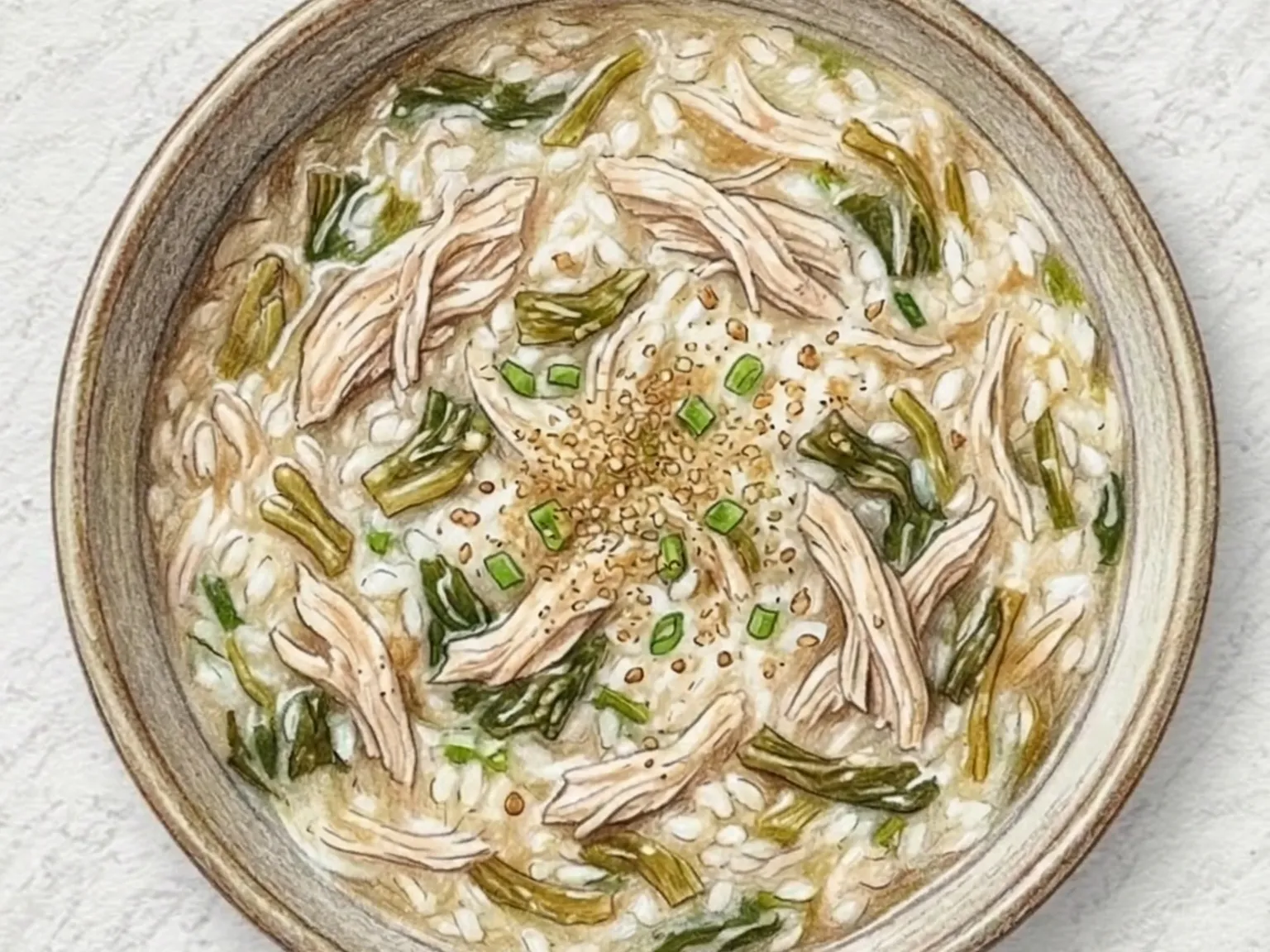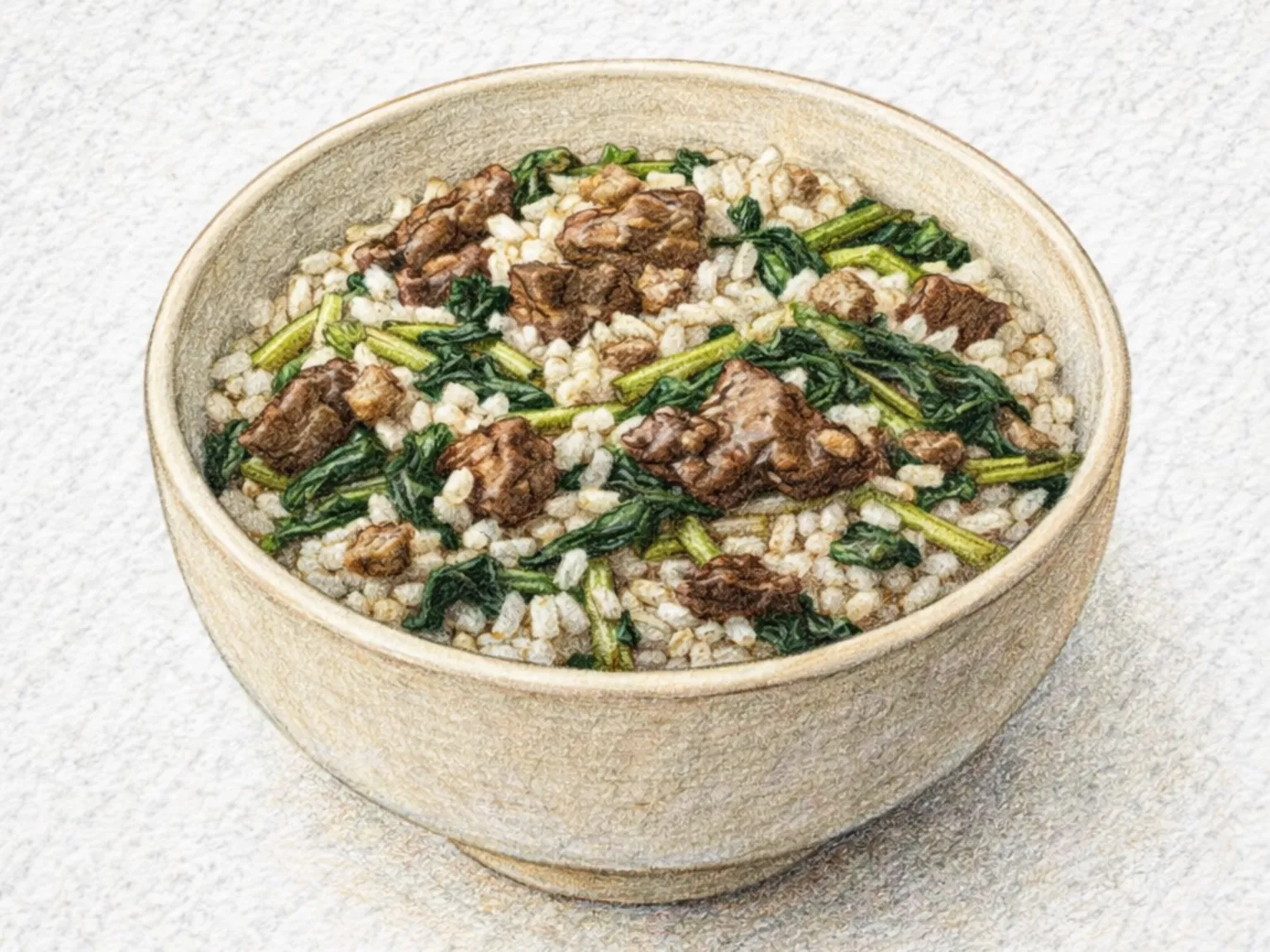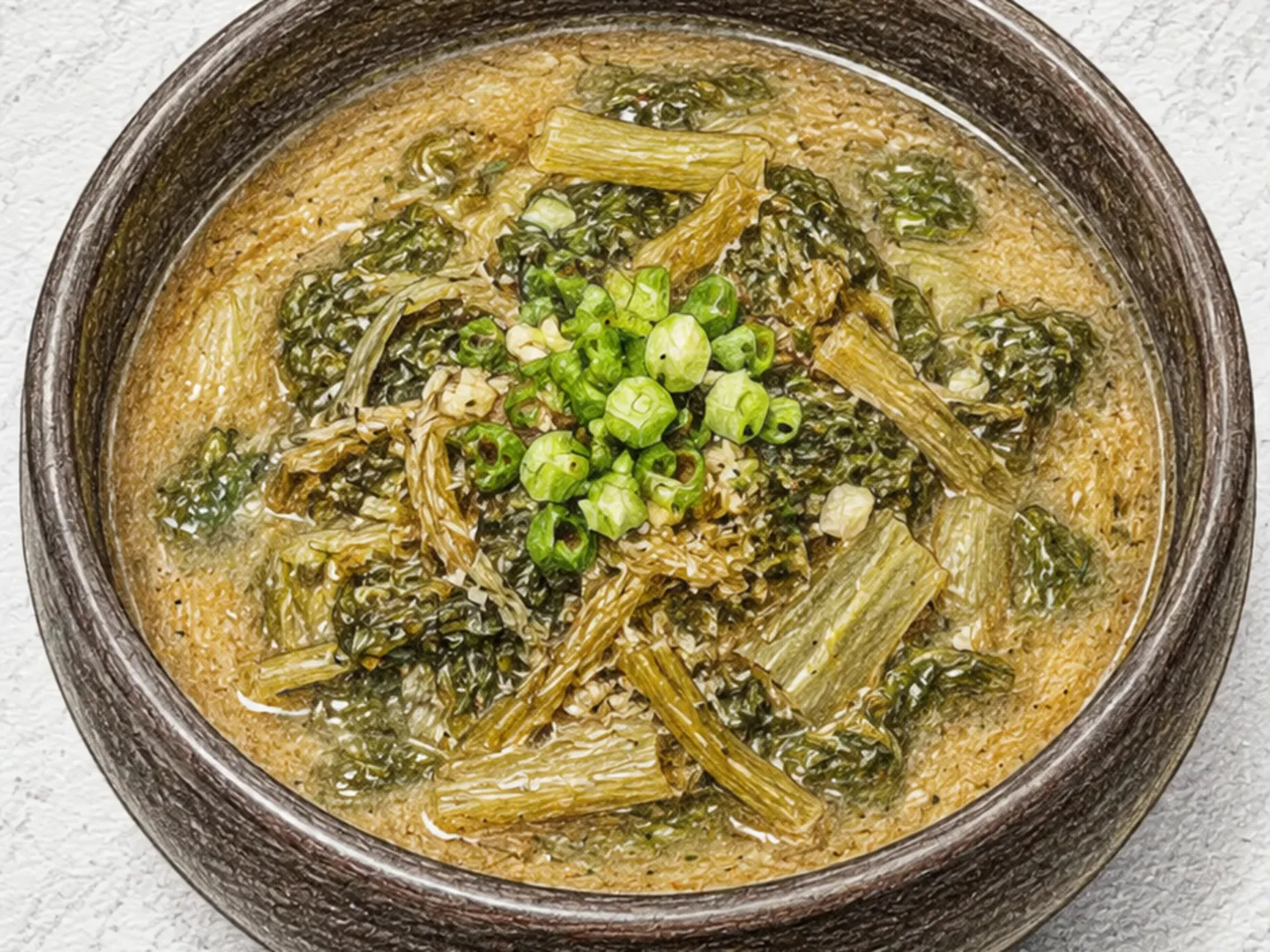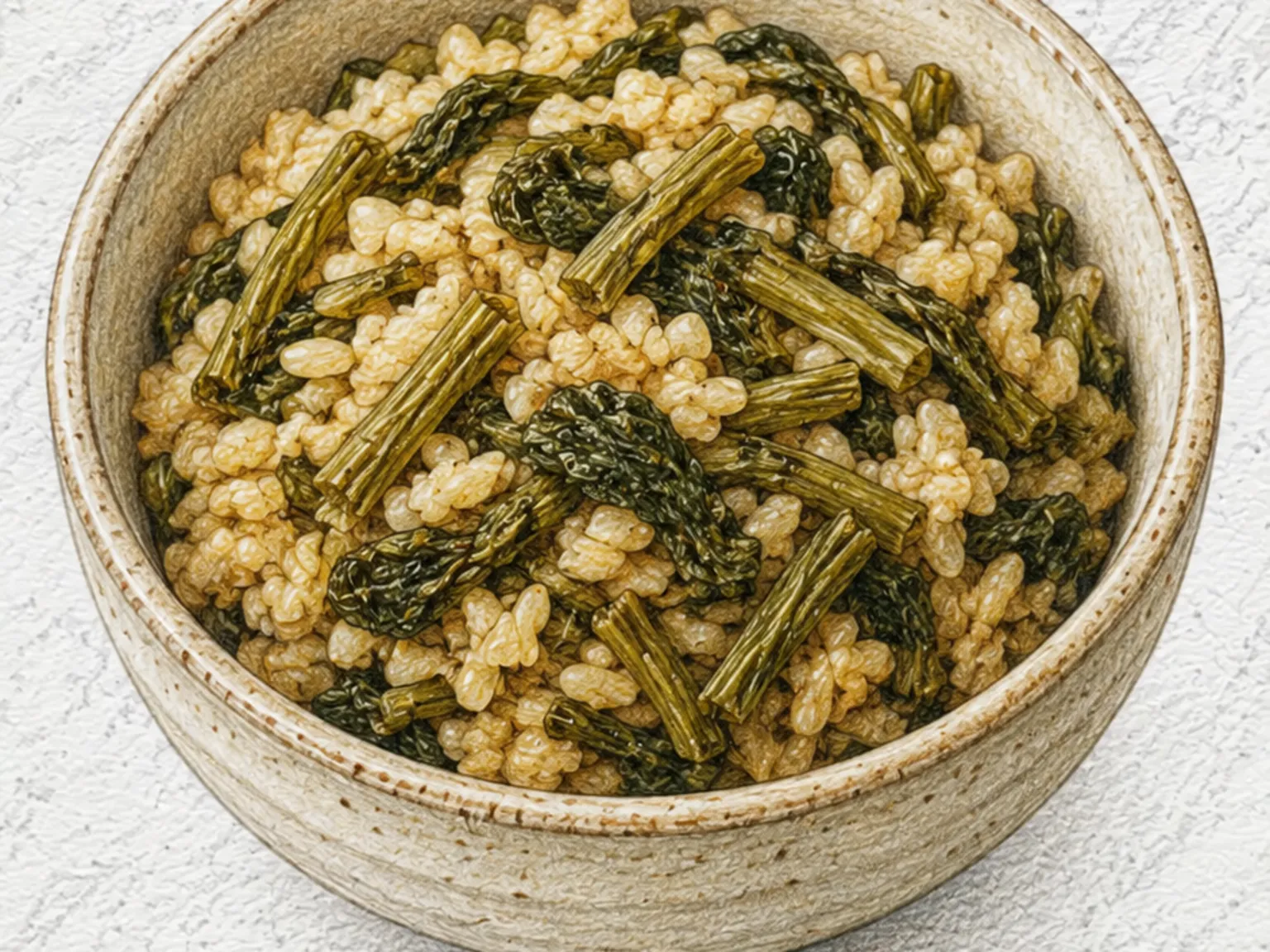
Korean Dried Radish Leaf Rice
Sirae-gi-bap cooks dried radish greens with rice, then mixes everything with a doenjang-based seasoning sauce for a deeply savory bowl. The dried greens are first boiled until soft and pliable, cut into bite-size pieces, and layered over soaked rice before the pot is sealed. As the rice steams, the greens release their concentrated earthy aroma into every grain. The dipping sauce - doenjang, soy sauce, sesame oil, chili flakes, and scallion - is folded in at the table, adding layers of salty, nutty, and mildly spicy flavor. The fibrous texture of the reconstituted greens provides a satisfying chew that makes the meal feel substantial. This is a traditional Korean home-cooked dish that turns humble winter-dried vegetables into a warm, filling meal.
Adjust Servings
Instructions
- 1
Cut boiled radish greens into 5cm lengths.
- 2
Wash and soak rice 30 minutes, then add rice, water, and greens to a pot.
- 3
Bring to a boil, reduce to low, cook 15 minutes, then steam 5 minutes.
- 4
Mix doenjang, soy sauce, sesame oil, pepper flakes, garlic, and green onion for sauce.
- 5
Toss rice with the sauce and serve.
As an Amazon Associate, we may earn from qualifying purchases.
Tips
Nutrition (per serving)
More Recipes

Korean Dried Radish Greens Beef Pot Rice
This pot rice layers soy-garlic marinated beef and softened siraegi over soaked rice, then cooks everything together in a heavy pot so the meat juices and earthy green flavors permeate every grain. Perilla oil is added to the pot, giving the finished rice a glossy sheen and a distinctly nutty aroma. As the rice cooks, the beef releases its savory juices downward while the siraegi steams on top, creating a gradient of flavor from meaty bottom to herbaceous top. A doenjang-based sauce mixed in at the table adds a salty, fermented punch that amplifies both the beef and the greens. The crispy scorched rice - nurungji - that forms at the bottom of the pot provides a crunchy finish to an otherwise soft, deeply flavored meal.

Korean Dried Radish Greens Pancake
Boiled dried radish greens are mixed with soybean paste and pan-fried into a rustic, deeply flavored jeon. The radish greens have a fibrous chew that gives the pancake substance, while the doenjang permeates the batter with rich, fermented savoriness-no dipping sauce needed. Buckwheat flour adds a coarse, earthy texture that complements the greens. Cheongyang chili brings a spicy accent, and minced garlic deepens the overall umami profile.

Korean Radish Rice (Julienned Radish Steamed with Short-Grain Rice)
Mu-bap is Korean radish rice where finely julienned radish steams on top of rice, releasing its natural moisture and sweetness into every grain. The cooked radish-rice is then tossed with a seasoning sauce of soy sauce, sesame oil, chives, red pepper flakes, and sesame seeds right before eating to keep the texture fluffy. Cutting the radish into thin, even strips ensures it cooks at the same rate as the rice. Winter radish, which is at its peak sweetness, makes this simple dish especially flavorful.

Korean Dried Radish Greens Beef Soup
Siraegi-soegogi-guk combines beef brisket or shank with dried radish greens in a doenjang-seasoned broth that is simultaneously meaty, earthy, and fermented. The beef simmers first, building a clear stock with substantial body, before the pre-boiled and softened radish greens are introduced. Doenjang dissolves into the stock and acts as a bridge between the animal richness of the beef and the vegetal, slightly bitter quality of the greens, making both taste more complete than they would alone. An optional spoonful of gochugaru adds warmth and color, shifting the soup from mild to gently spicy. Garlic and green onion handle the aromatic duties, and a scoop of ground perilla seeds - stirred in near the end - gives the broth a creamy, nutty finish that softens the edges. This soup is one of the more filling options in the Korean guk repertoire because both the beef and the fibrous greens provide substance and chew. A single bowl, ladled generously over rice, can replace an entire meal without any additional banchan. The flavors deepen overnight, making leftovers an anticipated breakfast rather than an afterthought.

Korean Dried Radish Greens Doenjang Kalguksu
Siraegi doenjang kalguksu is a Korean noodle soup that combines dried radish greens with a soybean paste broth built on anchovy-kelp stock. The radish greens contribute an earthy, slightly bitter note that complements the fermented depth of doenjang. Onion and zucchini add natural sweetness during simmering, and perilla seed powder stirred in at the end brings a toasted, nutty finish. Fresh kalguksu noodles absorb the broth as they cook, resulting in a soft, chewy texture.

Korean Dried Radish Greens Perilla Stew
This stew simmers rehydrated dried radish greens in rice-rinse water thickened with a generous four tablespoons of perilla seed powder. A small amount of doenjang and gochujang provides savory depth, while the perilla powder creates a creamy, nutty broth with a pale beige hue. The chewy texture of the greens contrasts with the smooth, rich soup. Onion and green onion add layers of sweetness and fragrance, making it a warming winter staple in Korean home cooking.