Smoked Duck Chive Salad (Korean Chive Salad)

Smoked Duck Chive Salad (Korean Chive Salad)

Quick answer

Smoked duck chive salad brings together pan-seared smoked duck and fresh Korean chives in a soy-mustard dressing that cuts through the meat's richness with precision.

What makes this special

  • Smoked Duck Chive Salad pairs pan-seared duck meat with fresh, pungent Korean chives.
  • 2-3 minute pan sear renders excess fat from smoked duck before dressing
  • Chive's pungent green scent confronts and balances the duck's smokiness
Total time
23 min
Level
Easy
Servings
2 servings
Ingredients
10
Calories
390 kcal
Protein
21 g

Key ingredients

smoked duckkorean chivescabbagebell peppersoy sauce

Core cooking flow

  1. 1 Rinse 100 g of buchu and drain it very well so the dressing will not turn watery.
  2. 2 In a bowl, combine 1.5 tablespoons soy sauce, 1 teaspoon mustard, 1 tablespo...
  3. 3 Heat a pan over medium heat, then spread 220 g smoked duck in a single layer.

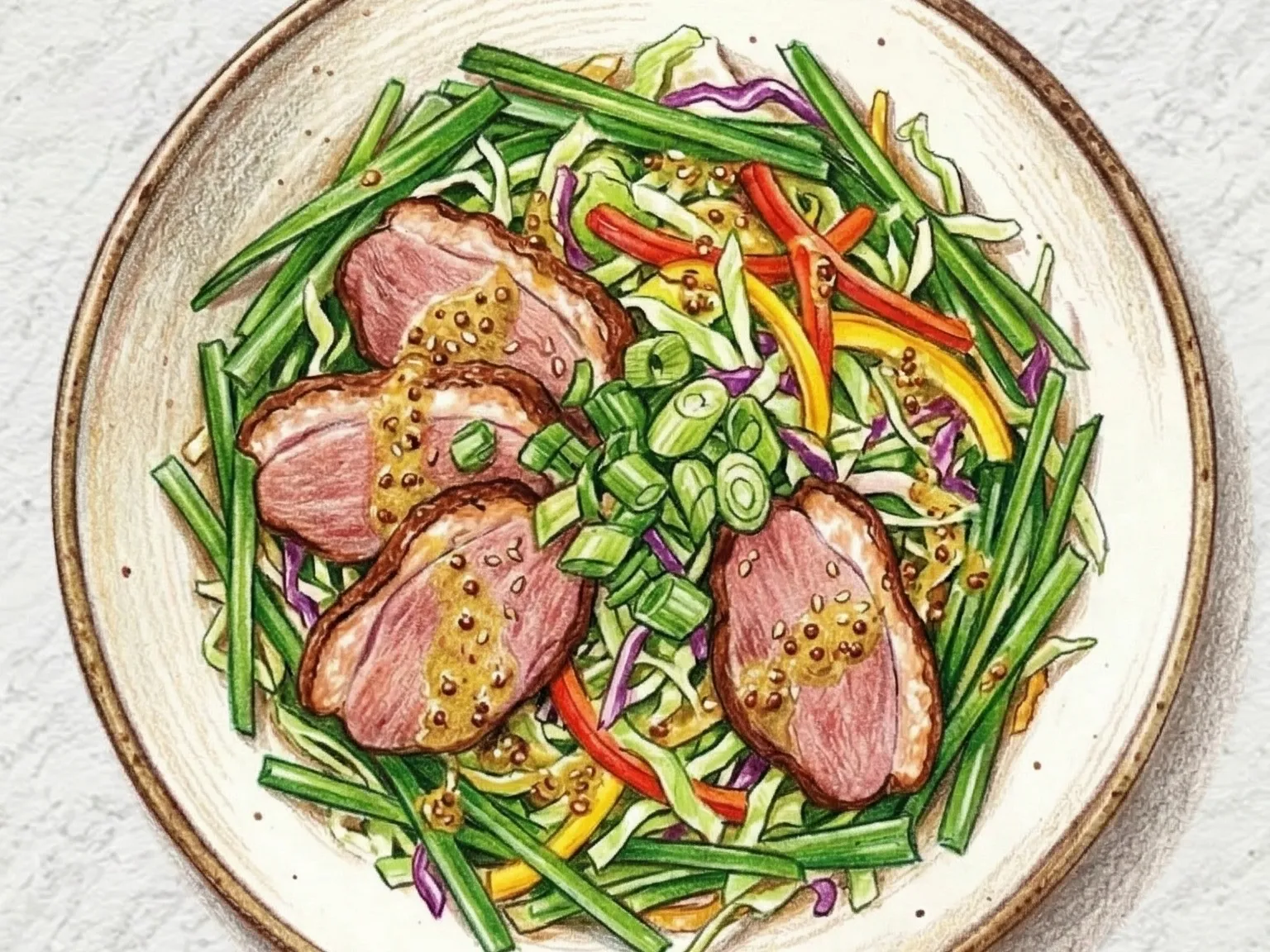
Smoked duck chive salad brings together pan-seared smoked duck and fresh Korean chives in a soy-mustard dressing that cuts through the meat's richness with precision. The duck is seared in a dry or lightly oiled pan for two to three minutes to render off the surface fat before it meets the other ingredients. Korean chives are cut to four-centimeter lengths and combined with shredded cabbage and sliced bell pepper, each element adding its own texture to the finished dish. A dressing of soy sauce, mustard, vinegar, honey, and sesame oil delivers a multi-layered hit of nose-clearing heat, sweet-sour acidity, and roasted depth that cleanses the palate after every fatty bite of duck. The cabbage provides firm, watery crunch against the chewy, smoke-infused meat, while toasted sesame seeds scatter a nutty fragrance across the top. Adding the chives at the very end keeps their herbal aroma vivid rather than grassy, and limiting the searing time prevents the duck from turning tough. The interplay between the dense smokiness of the duck and the sharp freshness of the chives is what gives this salad its character beyond a simple protein-and-greens combination.

Prep 15min Cook 8min 2 servings

Instructions

Read the steps as a cooking flow: prep, heat, seasoning, doneness control, and finish.

6 steps
  1. 1
    Prep

    Rinse 100 g of buchu and drain it very well so the dressing will not turn watery.

    Cut it into 4 cm lengths, then finely shred 80 g cabbage and slice 60 g bell pepper thinly.

  2. 2
    Season

    In a bowl, combine 1.5 tablespoons soy sauce, 1 teaspoon mustard, 1 tablespoon vinegar, 1 teaspoon honey, and 1 teaspoon sesame oil. Whisk until the mustard fully dissolves and the dressing looks even.

  3. 3
    Control

    Heat a pan over medium heat, then spread 220 g smoked duck in a single layer.

    Sear for only 2 to 3 minutes, stopping when the surface fat renders and the edges look lightly browned.

  4. 4
    Prep

    Remove the duck from the pan, shake off excess fat, and cut it into bite-size pieces.

    Do not leave it over heat or it can toughen, and keep it warm for tossing with the vegetables.

  5. 5
    Step

    Put the cabbage and bell pepper in a large bowl first, then toss them lightly with half of the dressing.

    Add the buchu last so it keeps its fresh aroma and does not bruise too much.

  6. 6
    Finish

    Add the warm duck and the remaining dressing, then lift and toss briefly from the bottom so the greens stay crisp.

    Transfer to a plate, sprinkle with 1 teaspoon toasted sesame seeds, and serve immediately.

After the steps

Pick a recipe that fits this dish.

Continue with shared ingredients, meal pairings, or a similar method.

Recipes That Go Well With This

More Salads →

Based on shared ingredients and meal pairing

Gosari Smoked Duck Salad (Smoked Duck & Bracken Fern Salad)
Shared ingredient: smoked duck Salads

Gosari Smoked Duck Salad (Smoked Duck & Bracken Fern Salad)

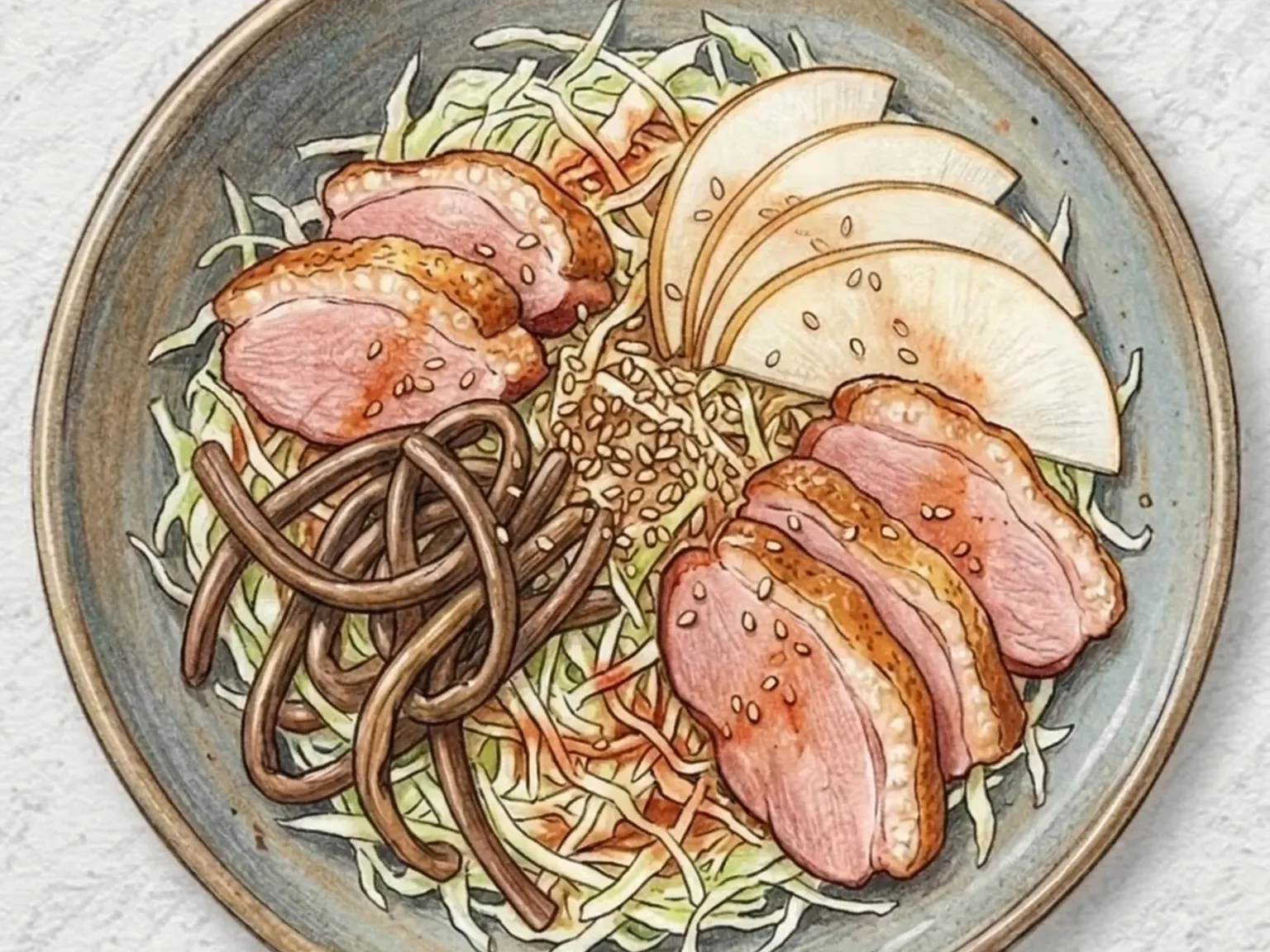
Gosari smoked duck salad is a Korean-style salad that pairs briefly seared smoked duck, blanched bracken fern, shredded cabbage, and thinly sliced Korean pear in a spicy soy-vinegar dressing. The smoked duck is placed skin-side down in a dry pan and cooked over medium heat for about three minutes, just enough time for the surface fat to render and the smoky aroma to intensify without drying out the interior. Going past that point causes the lean meat underneath to tighten and lose its moisture, which flattens the flavor. Bracken fern is blanched in boiling water for one minute and immediately rinsed under cold water to eliminate the slightly bitter, astringent quality it has when raw while preserving the chewy, springy resistance that makes it worth using instead of a softer green. Korean pear slices are added for both texture and function, since the clean, high-water-content fruit releases juice on each bite that washes through the fat left by the duck and refreshes the palate. The dressing combines soy sauce, vinegar, chili oil, and minced garlic into a sharply acidic and mildly spicy mixture that pushes against the deep, sweet smokiness of the duck rather than simply complementing it. Scattered toasted sesame seeds at the end add a final layer of warm, nutty fragrance.

Seaweed Stem and Apple Mustard Salad
Shared ingredient: mustard Salads

Seaweed Stem and Apple Mustard Salad

Salted seaweed stems are soaked to remove excess brine, then blanched briefly to achieve a firm, slightly chewy bite that defines this Korean salad's texture. Julienned apple adds crisp sweetness that contrasts with the seaweed's oceanic mineral flavor. Thinly sliced onion, soaked to mellow its sting, contributes a subtle sharpness. The dressing mixes Korean mustard paste with vinegar and oligosaccharide syrup - the mustard delivers a sharp nasal heat, while the syrup smooths the vinegar's acidity into something rounder. Tossing the apple with lemon juice first prevents browning, and a three-minute rest after dressing lets the flavors meld without overdressing the delicate stems.

Korean Salt-Grilled Croaker
Serve together Grilled

Korean Salt-Grilled Croaker

Mineo-sogeum-gui is a Korean salt-grilled croaker where fillets are seasoned with only coarse sea salt and white pepper, then pan-fried skin-side down in olive oil. Croaker is a lean white-fleshed fish with a subtle but genuine depth of flavor, and restraint with seasoning allows that natural character to come through clearly. Patting the surface completely dry before cooking is critical, since any moisture on the skin prevents it from crisping and causes it to stick to the pan. A whisper-thin coat of flour on the fillet creates a light barrier that forms a delicate crust on contact with the hot oil. Placing the fillet skin-side down and cooking it that way for roughly seventy to eighty percent of the total time allows the flesh to finish gently from residual heat after flipping, which prevents it from drying out. Minced garlic is introduced only in the final minute so it perfumes the oil without burning. A squeeze of lemon juice and a scatter of sliced chives at the table add brightness that frames the clean flavor of the fish rather than competing with it. Fresh croaker is best from July through August, but frozen fillets can be prepared with the same method.

Korean Chive Salad with Doenjang Dressing
Similar recipe Side dishes

Korean Chive Salad with Doenjang Dressing

Garlic chives -- buchu -- carry a sharper, more pungent bite than Western chives, and this banchan keeps them raw to preserve every bit of that intensity. Chives are cut into short segments, rinsed in cold water to crisp up the cell walls, then tossed for no more than twenty seconds in a dressing of doenjang, vinegar, and gochugaru. Going beyond that window draws out moisture from the leaves, leaving the whole dish limp and waterlogged before it even reaches the table. The fermented paste locks onto the flat surface of each blade, releasing a salty, umami-heavy punch with every bite. Vinegar cuts through the richness of the doenjang with a light acidity that keeps the finish clean, and the gochugaru adds a dry, lingering heat. Best assembled minutes before serving and eaten alongside a bowl of rice.

Serve with this

Kimchi Garlic Butter Shrimp Spaghetti
Pasta Easy

Kimchi Garlic Butter Shrimp Spaghetti

Kimchi garlic butter shrimp spaghetti is an oil-based pasta where garlic browned in butter and fermented kimchi together amplify the natural sweetness of shrimp. The shrimp are seared first in olive oil to build fond on the pan, then garlic and chopped kimchi go into the same pan to absorb those flavors. Butter and starchy pasta water are emulsified into a glossy, light coating rather than a heavy sauce. Gochugaru provides a gentle background heat, and a squeeze of lemon at the end lifts the richness. Sliced scallions finish the dish with color and a mild onion note.

🍺 Bar Snacks 🏠 Everyday
Prep 12min Cook 18min 2 servings
Larb Gai (Thai Isan Minced Chicken Herb Salad with Lime)
Asian Easy

Larb Gai (Thai Isan Minced Chicken Herb Salad with Lime)

Larb gai is a minced chicken salad from the Isan region of northeastern Thailand. The chicken is cooked just until it loses its raw color, then dressed while still warm with lime juice, fish sauce, and a generous pinch of toasted rice powder that gives each bite a nutty, sandy crunch. Fresh mint, cilantro, and thinly sliced shallots add layers of brightness, while dried chili flakes bring a slow-building heat. Traditionally scooped up with balls of sticky rice, it works equally well wrapped in lettuce leaves or cabbage cups. The dish is light enough for hot weather yet full-flavored enough to anchor a meal.

🍺 Bar Snacks 🥗 Light & Healthy
Prep 15min Cook 10min 2 servings
Gambas al Ajillo (Garlic Shrimp)
Western Easy

Gambas al Ajillo (Garlic Shrimp)

Gambas al ajillo cooks peeled shrimp in a generous pool of olive oil infused with thinly sliced garlic and dried red chili over low heat, a method that turns the oil itself into the flavor foundation of the dish. The garlic must be coaxed slowly to release its sweetness into the oil without crossing into bitterness - the moment it turns golden, the shrimp go in and cook for two to three minutes until pink and just cooked through. A seasoning of salt, black pepper, and a scatter of chopped parsley finishes the pan. The dried chili adds a gentle warmth that sharpens both the garlic-scented oil and the natural sweetness of the shrimp, while the olive oil absorbs and carries all these flavors together. Sliced baguette served alongside is not optional - it exists to soak up the deeply flavored oil, and mopping the pan completely clean is the traditional way to end the dish. Keeping the heat consistently low throughout is the one non-negotiable rule: high heat burns the garlic in seconds and toughens the shrimp.

🍺 Bar Snacks ⚡ Quick
Prep 10min Cook 10min 2 servings

Similar recipes

Dotori-Muk Vegetable Salad (Acorn Jelly Salad)
Salads Easy

Dotori-Muk Vegetable Salad (Acorn Jelly Salad)

Dotori-muk (acorn jelly) is cut into bite-sized blocks and served with fresh lettuce, cucumber, and perilla leaves in this Korean salad. The jelly's smooth, firm texture creates a distinct contrast against the crunchy vegetables, while scallion lifts the overall aroma. A seasoning sauce of soy sauce, vinegar, gochugaru, and sesame oil gives the mild-flavored jelly a salty-tangy kick. Acorn jelly is notably low in calories and high in dietary fiber, and the tannins from acorn starch are traditionally believed to support digestion. The sesame oil and gochugaru in the dressing add a glossy richness and depth that transforms the otherwise neutral jelly into a cohesive, satisfying dish. Served chilled during summer, it works equally well as a light banchan when appetite runs low or as a refreshing standalone bowl.

🥗 Light & Healthy ⚡ Quick
Prep 15min 4 servings
Ssamjang Tofu Kale Crunch Salad
Salads Easy

Ssamjang Tofu Kale Crunch Salad

Ssamjang tofu kale crunch salad sears firm tofu in olive oil for six to seven minutes until golden and crisp on the outside while staying tender within, then combines it with kale massaged with salt, shredded red cabbage, cucumber, and sliced almonds, all dressed in a ssamjang-based vinaigrette. The dressing blends ssamjang's fermented depth, a mixture of doenjang and gochujang, with lemon juice, honey, and olive oil, layering umami with citrus acidity and a restrained sweetness that tempers kale's natural bitterness. Massaging the kale with salt before adding the dressing breaks down its tough cell walls, making the leaves pliable and far more absorbent. Pressing moisture from the tofu thoroughly before pan-frying is what produces the crisp, golden crust; tofu that still holds water will steam rather than sear and come out pale and soft. Sliced almonds add a light, nutty crunch with every bite, giving the salad a clear contrast in texture throughout.

🥗 Light & Healthy ⚡ Quick
Prep 15min Cook 10min 2 servings
Korean Soybean Sprout Cold Salad
Side dishes Easy

Korean Soybean Sprout Cold Salad

Kongnamul-naengchae is a chilled Korean salad of boiled soybean sprouts and vegetables tossed in mustard dressing - conceptually distinct from regular kongnamul-muchim because it is designed to be served cold. The mustard sauce defines the dish: mustard powder (or tube mustard) mixed with vinegar, sugar, and salt creates a sharp, nose-tingling heat alongside a sweet-sour brightness. Prepared mustard needs five to ten minutes of resting after hydration for the allyl isothiocyanate compound to fully develop its pungency. Julienned cucumber and carrot release moisture, so they should be briefly salted or patted dry to prevent diluting the sauce. Chilling for at least ten minutes before serving maximizes the refreshing effect, and cold temperatures actually sharpen the mustard's bite. This banchan excels as a palate cleanser alongside fatty main dishes like samgyeopsal or bulgogi.

🏠 Everyday 🍱 Lunchbox
Prep 15min Cook 6min 4 servings

Tips

Avoid overcooking smoked duck so it stays tender.
Add chives at the end to keep their fresh aroma.

Nutrition (per serving)

Calories
390
kcal
Protein
21
g
Carbs
10
g
Fat
30
g