Korean Beef and Mushroom Rice Bowl
Rice Easy

Korean Beef and Mushroom Rice Bowl

Quick answer

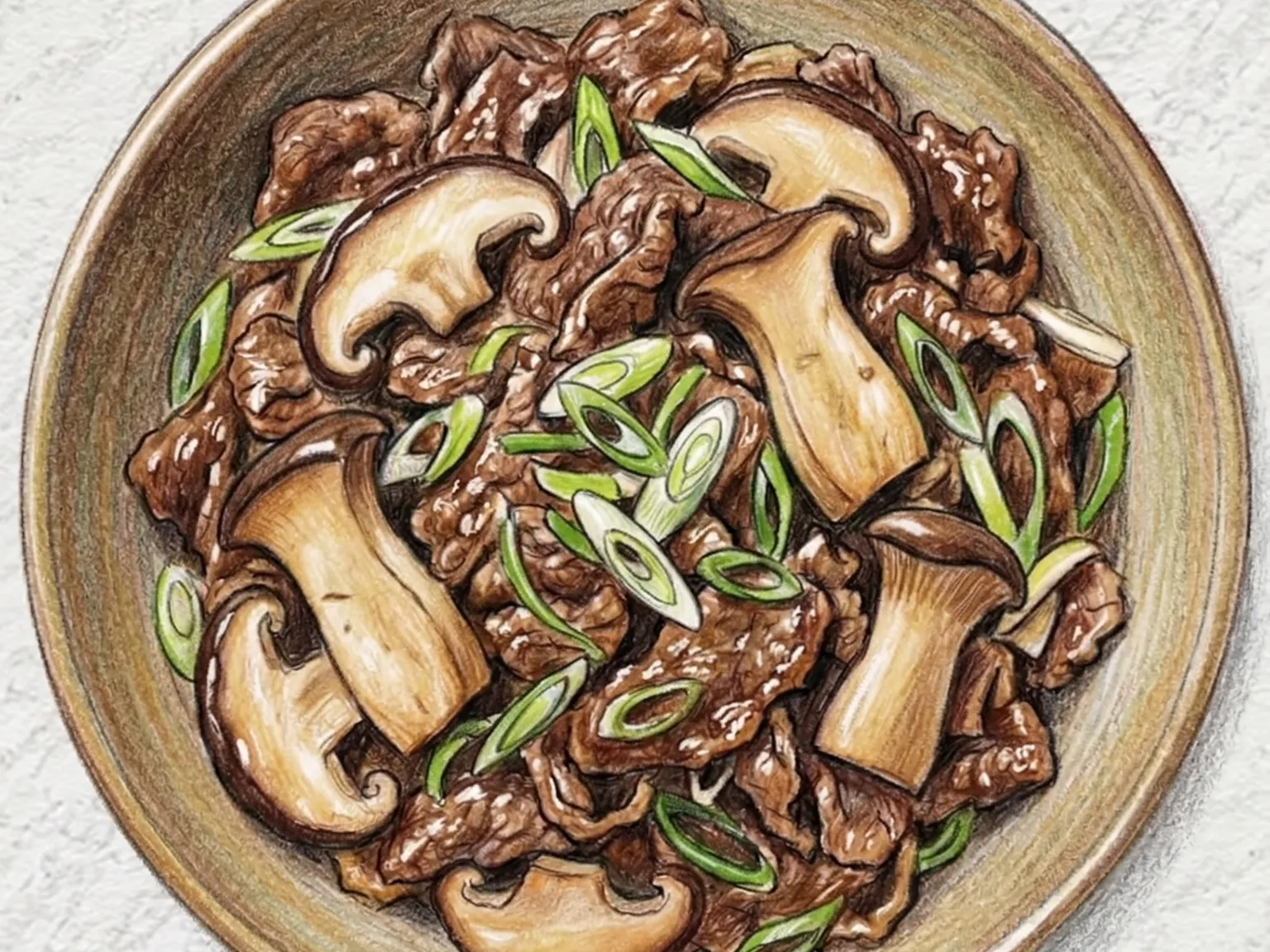
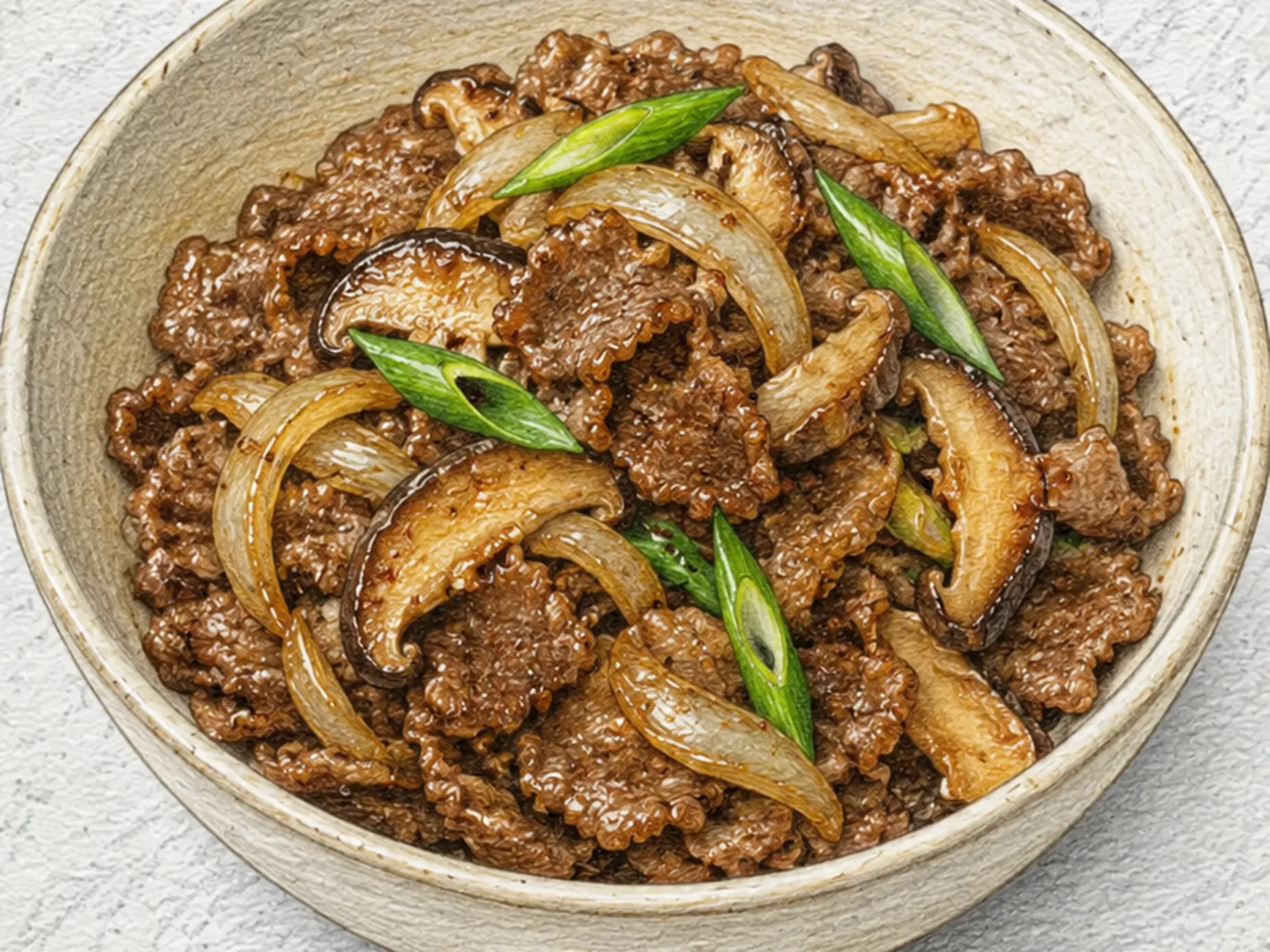
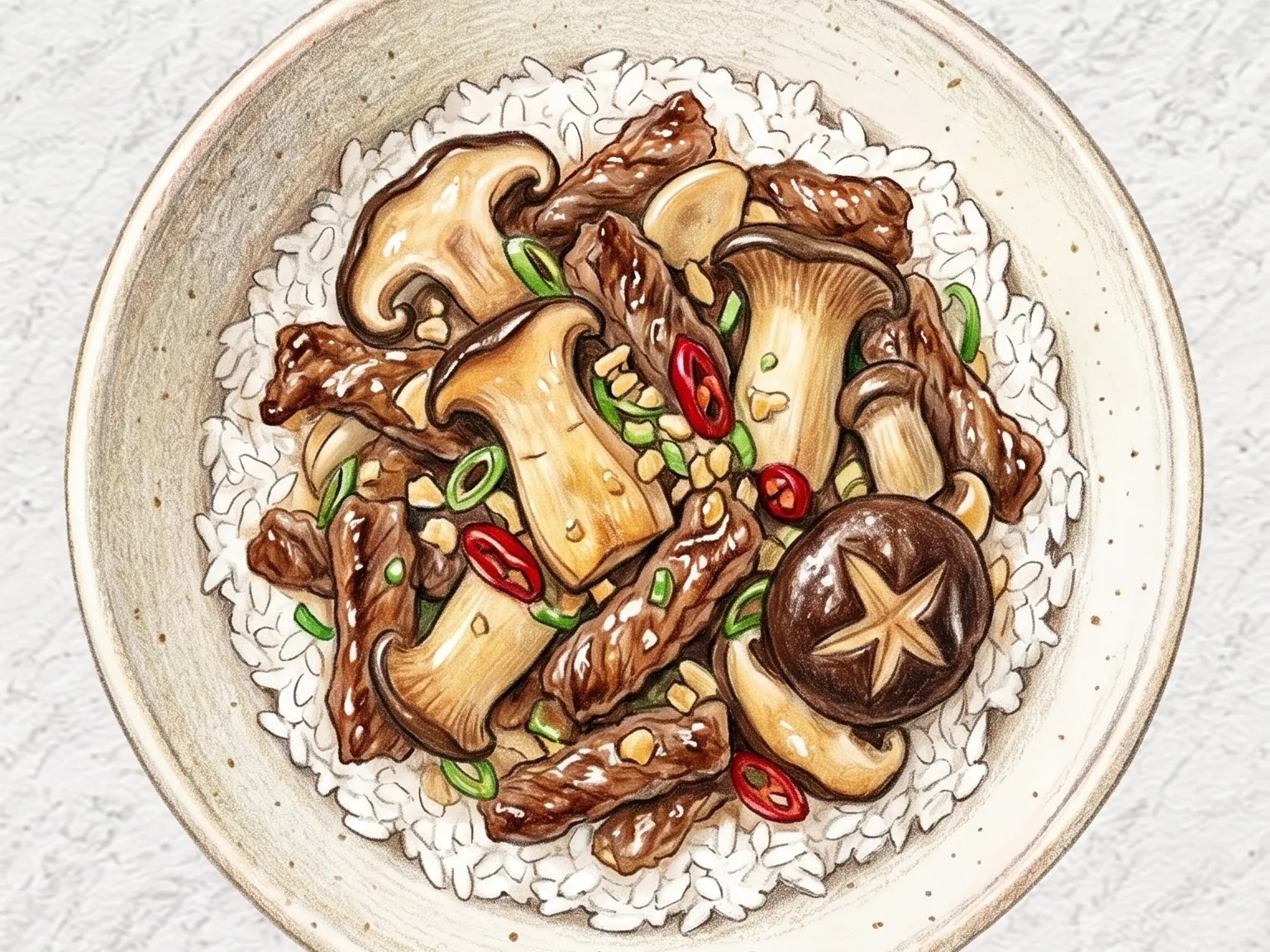
Sogogi-beoseot deopbap is a Korean beef and mushroom rice bowl that sautees sliced beef with king oyster and shiitake mushrooms in soy-butter sauce.

What makes this special

  • High-heat searing locks the nutty aroma and firm texture into beef and mushrooms for this bowl.
  • Stir-frying beef and mushrooms on high heat quickly drives off moisture and keeps the nutty aroma
  • The right ratio of soy sauce, oyster sauce, and sesame oil lets a sweet-savory sauce soak evenly into the rice
Total time
22 min
Level
Easy
Servings
2 servings
Ingredients
9
Calories
560 kcal
Protein
30 g

Key ingredients

Cooked riceBeef (bulgogi cut)King oyster mushroomShiitake mushroomOnion

Core cooking flow

  1. 1 Wipe the king oyster and shiitake mushrooms with paper towels instead of rinsing, then slice them thickly.
  2. 2 Heat a wide pan over high heat for about 1 minute, then melt the 15 g butter.
  3. 3 When most of the beef has changed color, add the onion and 1 tsp minced garlic, then lower to medium heat.

Sogogi-beoseot deopbap is a Korean beef and mushroom rice bowl that sautees sliced beef with king oyster and shiitake mushrooms in soy-butter sauce. The beef is seared first over high heat to develop a golden crust, then the thickly cut mushrooms go in and absorb the rendered juices, forming a naturally concentrated sauce in the pan. A knob of butter melted in at the end adds a creamy richness, while soy sauce ties everything together with a salty umami backbone. Minced garlic and sliced scallion layered into the stir-fry build an aromatic base that makes the topping fragrant the moment it hits the rice. The mushrooms hold their springy bite against the tender beef, giving each mouthful a satisfying textural contrast.

Prep 10min Cook 12min 2 servings

Instructions

Read the steps as a cooking flow: prep, heat, seasoning, doneness control, and finish.

6 steps
  1. 1
    Finish

    Wipe the king oyster and shiitake mushrooms with paper towels instead of rinsing, then slice them thickly.

    Cut the beef into bite-size pieces, thinly slice the onion, and slice the green onion for finishing.

  2. 2
    Control

    Heat a wide pan over high heat for about 1 minute, then melt the 15 g butter.

    Spread the beef in one layer and sear for about 2 minutes, turning only occasionally so the surface browns instead of steaming.

  3. 3
    Control

    When most of the beef has changed color, add the onion and 1 tsp minced garlic, then lower to medium heat.

    Stir-fry for about 1 minute until the garlic smells fragrant, but add the mushrooms before it browns or burns.

  4. 4
    Heat

    Add the king oyster and shiitake mushrooms and raise the heat to medium-high.

    Cook for about 3 minutes, stirring, until their moisture cooks off, the pieces soften slightly, and the edges look glossy rather than wet.

  5. 5
    Season

    Pour the 2 tbsp soy sauce around the edge of the pan so it sizzles, then toss everything for about 1 minute.

    Turn off the heat when only a little sauce remains on the bottom and it coats the beef and mushrooms evenly.

  6. 6
    Finish

    Divide the 2 cups warm cooked rice between bowls and spoon the beef, mushrooms, and pan juices over the top.

    Finish with sliced green onion, then taste and adjust with a few drops of soy sauce only if it needs more salt.

After the steps

Pick a recipe that fits this dish.

Continue with shared ingredients, meal pairings, or a similar method.

Recipes That Go Well With This

More Rice →

Based on shared ingredients and meal pairing

Korean Bulgogi Mushroom Rice Bowl
Shared ingredient: cooked short-grain rice Rice

Korean Bulgogi Mushroom Rice Bowl

Soy-and-pear-juice-marinated beef is stir-fried together with torn oyster mushrooms and served over rice for a deeply savory bowl. Cooking the mushrooms first in the hot pan allows their excess moisture to evaporate, keeping the sauce thick and glossy once the marinated beef goes in rather than pooling at the bottom. Pear juice contains natural tenderizing enzymes that soften the beef fibers noticeably even after a short marinating time, and its understated sweetness bridges the saltiness of the soy sauce without adding a fruity flavor. A drizzle of sesame oil at the end of stir-frying lays a toasted, nutty fragrance over the sweet-salty glaze that rounds out the whole bowl. When pear juice is not available, one teaspoon of sugar dissolved in one tablespoon of water provides a workable substitute that approximates the sweetness without the tenderizing effect.

Korean Beef Brisket Rice Bowl
Shared ingredient: cooked short-grain rice Rice

Korean Beef Brisket Rice Bowl

Chadol deopbap is a Korean rice bowl built on paper-thin beef brisket slices seared in a hot dry pan until the edges turn crisp and caramelized, then finished with a soy-based glaze and placed over steamed rice. The marbling in the brisket renders quickly under high heat, coating the pan in fat that then carries the flavors of soy sauce, sugar, garlic, and sesame oil into a concentrated glaze. A soft-cooked or raw egg yolk placed on top is a standard addition; stirring it in spreads a golden richness across the rice that thickens the sauce and rounds out the saltiness of the soy. Sliced scallions and toasted sesame seeds scattered over the finished bowl add textural contrast and a clean finish. The recipe relies on pantry staples, requires no marinating, and comes together in under ten minutes from start to plate, making it one of the most practical formats for a single-serve weeknight meal without sacrificing depth of flavor.

Seasoned Korean Wild Lettuce
Serve together Side dishes

Seasoned Korean Wild Lettuce

Godeulppaegi muchim is a seasonal Korean side dish prepared with Ixeris dentata, a plant characterized by its thin, slender leaves. This botanical species belongs to the daisy family and has been traditionally foraged across the Korean peninsula for many generations. It serves as a versatile ingredient, often appearing on the dining table as a fermented kimchi or as a freshly seasoned vegetable dish known as banchan. The plant is recognized for a distinct and sharp bitter profile that is significantly more intense than the bitterness typically found in standard garden salad greens. Properly handling this inherent bitterness is the most important technical aspect of preparing the dish correctly. The leaves and stems undergo a brief blanching process in boiling water for a duration of approximately one to two minutes. Following this heat treatment, they are moved immediately to a cold water bath where they remain submerged for a minimum of thirty minutes. If the soaking duration is reduced or omitted entirely, the resulting dish will retain a level of bitterness that cannot be masked or balanced by any amount of additional seasoning. After the soaking period is complete, the greens are squeezed firmly by hand to remove excess moisture and then combined with a bold seasoning base. This dressing consists of a mixture of gochujang, gochugaru, vinegar, sugar, minced garlic, and toasted sesame oil. This specific combination provides a sharp acidity and spicy heat that coats the processed greens. The flavors are intended to complement the lingering bitterness of the plant instead of removing it, which creates a complex and layered taste profile that persists throughout the meal. This side dish is typically available from the beginning of spring through the early weeks of summer. During these months, the plant is a common sight in traditional rural markets located throughout South Gyeongsang and North Jeolla provinces. Individuals who value a strong and assertive flavor profile consider this preparation to be a highly valued seasonal specialty within Korean cuisine.

Korean Garlic Scape and Pork Rice Bowl
Similar recipe Rice

Korean Garlic Scape and Pork Rice Bowl

Crunchy garlic scapes and thinly sliced pork shoulder are stir-fried together in a gochujang-based glaze and piled over steamed rice. The scapes keep their distinctive pungent bite even after cooking, and their fibrous texture holds up against the heat in a way that most vegetables do not, balancing the richness of the pork fat throughout the dish. A quick toss over high heat caramelizes the gochujang and sugar into a glossy, lacquer-like coating that clings to both the meat and the scapes while preserving their snap. Slicing the pork thin ensures it cooks through in the same short window without drying out, and finishing with sliced green onion and a drizzle of sesame oil lifts the overall aroma. Spring-harvested garlic scapes are especially tender and clean-tasting, making this a seasonal favorite worth timing carefully. Fresh pork loses less juice than frozen, which matters when the total cooking time is under five minutes.

Serve with this

Korean Zucchini Kimchi (Summer Fresh Gochugaru Quick)
Kimchi Easy

Korean Zucchini Kimchi (Summer Fresh Gochugaru Quick)

Hobak kimchi represents a seasonal Korean vegetable preparation specifically associated with the summer months. This timing is chosen because domestic aehobak reach their peak levels of natural sweetness and maintain a particularly tender internal structure during this time of year. To prepare the zucchini for seasoning, the vegetable is typically sliced into thin half-moon shapes or uniform rectangular pieces. The salting stage for these slices is kept intentionally brief. This limited salting time serves a specific functional purpose in the recipe by preventing the extraction of excessive moisture from the vegetable cells. If the zucchini remains in salt for an extended period, the individual slices tend to lose their structural integrity and collapse, which eliminates the characteristic crispness that defines the quality of the finished dish. Once the brief salting process is complete, the zucchini pieces are rinsed in cold water and squeezed firmly by hand to remove as much residual liquid as possible. The seasoning phase involves thoroughly tossing the prepared slices with a combination of red chili flakes known as gochugaru, fish sauce, and finely minced garlic. Rather than utilizing refined sugar for seasoning, this recipe relies on the addition of plum extract. The extract provides a balanced and rounded natural sweetness to the profile of the dish without the need for processed additives. Fresh garlic chives are integrated into the mixture to contribute an aromatic and grassy quality that connects the different flavor elements together. Thinly sliced onions are also added to provide a subtle savory depth in the background. This particular variety is a no-fermentation kimchi, meaning it is designed to be consumed on the same day it is made or within two days at the most. Beyond this forty-eight hour window, the texture of the zucchini softens significantly and the initial freshness of the ingredients begins to dissipate. To maintain the best possible quality during this short period, the kimchi should be kept in a tightly sealed container and stored in the refrigerator.

🍱 Lunchbox ⚡ Quick
Prep 22min Cook 5min 2 servings
Korean Soft Tofu Soup (Mild Clear Broth with Silken Tofu)
Soups Easy

Korean Soft Tofu Soup (Mild Clear Broth with Silken Tofu)

Sundubu-guk is the gentler sibling of the more widely known sundubu-jjigae, trading the latter's fiery red broth for a clear, mild soup that puts silken tofu front and center. The base is a simple anchovy and kelp stock, seasoned with soup soy sauce and nothing more assertive, so the broth stays transparent and clean on the palate. Blocks of unpressed soft tofu are slipped into the simmering liquid and heated just until they are warmed through - overcooked sundubu loses the trembling, custard-like texture that defines the dish. Each spoonful collapses gently on the tongue, releasing a faint, sweet soybean flavor that pairs effortlessly with the umami-rich stock. A small addition of salted shrimp paste can be stirred in at the table to introduce a subtle marine depth without disrupting the soup's calm character. This is the soup Koreans turn to when appetite is low, digestion needs rest, or the body simply craves something warm and uncomplicated. It is equally suitable for young children and elderly diners, and its quiet simplicity is precisely its strength.

🏠 Everyday ⚡ Quick
Prep 5min Cook 15min 4 servings
Korean White Kimchi Tofu Stew
Stews Easy

Korean White Kimchi Tofu Stew

Baek kimchi dubu jjigae is a mild Korean stew where the gentle tang of white kimchi takes the place of regular red kimchi as the flavor anchor. Anchovy-kelp stock forms the umami foundation, and finely chopped white kimchi is added so its lactic fermentation acidity gradually dissolves into the broth, creating a refreshingly clean and clear flavor that diverges sharply from the bold heat of standard kimchi jjigae or the earthy weight of doenjang jjigae. Thick tofu slabs are added after the broth comes to a full boil so the blocks hold together rather than crumbling, and enoki mushrooms go in during the final two minutes to preserve their delicate texture. Guk-ganjang adjusts the salinity carefully, since the white kimchi itself already carries a noticeable saltiness from the brining process. Adding a sliced cheongyang chili introduces a measured spicy note into the otherwise gentle broth without overwhelming its clean character. Unlike the intense, opaque red broth of standard kimchi jjigae, this version stays transparent, lightly tart, and nearly fat-free, making it noticeably easy on the stomach. White kimchi is fermented without gochugaru, preserving all the lactic sourness while eliminating the heat and pigment, which makes it particularly well suited as a braising base for delicate ingredients like tofu and enoki.

🏠 Everyday ⚡ Quick
Prep 8min Cook 15min 2 servings

Similar recipes

Korean Beef Fried Rice (Soy-Marinated Ground Beef Stir-fried Rice)
Rice Easy

Korean Beef Fried Rice (Soy-Marinated Ground Beef Stir-fried Rice)

Sogogi bokkeumbap stir-fries soy-marinated ground beef with diced vegetables and day-old rice over high heat for a deeply savory fried rice. The beef goes in first, rendering its fat and leaving behind a flavorful fond that coats the pan. Onion, carrot, and zucchini follow, cooking just until their edges soften and their natural sugars begin to caramelize. Cold rice is added and tossed vigorously to break up clumps, picking up the soy seasoning and meat juices as it fries. A final drizzle of sesame oil right before plating adds a fragrant, nutty finish. The beef infuses the rice with a meaty depth while the vegetables keep the dish from feeling heavy, making it a quick, satisfying meal from everyday pantry ingredients.

🏠 Everyday 🍱 Lunchbox
Prep 10min Cook 10min 2 servings
Korean Kimchi Bulgogi (Kimchi Stir-Fried Marinated Beef)
Stir-fry Medium

Korean Kimchi Bulgogi (Kimchi Stir-Fried Marinated Beef)

Kimchi bulgogi combines soy-marinated sliced beef with aged napa kimchi, cooked together over high heat in a single pan. The beef is marinated with soy sauce, pear juice, and sugar before it ever touches the pan. Pear juice breaks down the muscle fibers to tenderize the meat while adding a subtle fruity sweetness, which the kimchi's sharp acidity and concentrated salt counter-balance to produce a layered, complex seasoning. As the two cook together at high heat, kimchi liquid seeps into the beef and builds a deeper, more rounded umami than standard bulgogi achieves on its own. The tangy lactic sourness from the fermented cabbage layers into the meaty savoriness and gives the dish a character that no amount of seasoning adjustments can replicate in an unfermented substitute. Heating the pan fully before adding the ingredients is important, because a properly hot surface sears rather than steams, preserving the wok-adjacent char that makes this dish more than a simple stir-fry. A final drizzle of sesame oil rounds out the dish with a warm, nutty note. Served over steamed white rice, the pan juices soak into each grain and the combination disappears from the bowl quickly. Well-aged kimchi, ideally stored for several weeks to months, produces the most pronounced result, though ripe freshly made kimchi works as a substitute when no aged version is available.

🏠 Everyday 🌙 Late Night
Prep 30min Cook 10min 2 servings
Korean Beef and Mushroom Soup
Soups Easy

Korean Beef and Mushroom Soup

Soegogi beoseot-guk pairs seared beef with a medley of mushrooms in a clear, deeply savory broth. The beef is first stir-fried in sesame oil to develop a caramelized base, then button mushrooms, cut thick so they hold their shape, join the pot along with water or stock. As the soup simmers, the mushrooms leach glutamate into the liquid, layering umami on top of the beef's own juices without any added MSG or bouillon. Enoki mushrooms go in during the final minutes, contributing slippery strands that contrast with the meatier button slices. Soup soy sauce and minced garlic season the broth, keeping it translucent with a faintly woodsy aroma that lingers after each sip. A finish of sliced scallion and cracked black pepper sharpens the bowl just enough to keep the palate engaged from first spoonful to last. It is an understated soup that proves depth of flavor does not require complexity of technique.

🏠 Everyday 🥗 Light & Healthy
Prep 18min Cook 35min 4 servings

Tips

Wipe mushrooms with paper towels instead of washing for better texture.
A tablespoon of oyster sauce adds extra depth.

Nutrition (per serving)

Calories
560
kcal
Protein
30
g
Carbs
58
g
Fat
22
g