Korean Pickled Radish Wraps
Quick answer
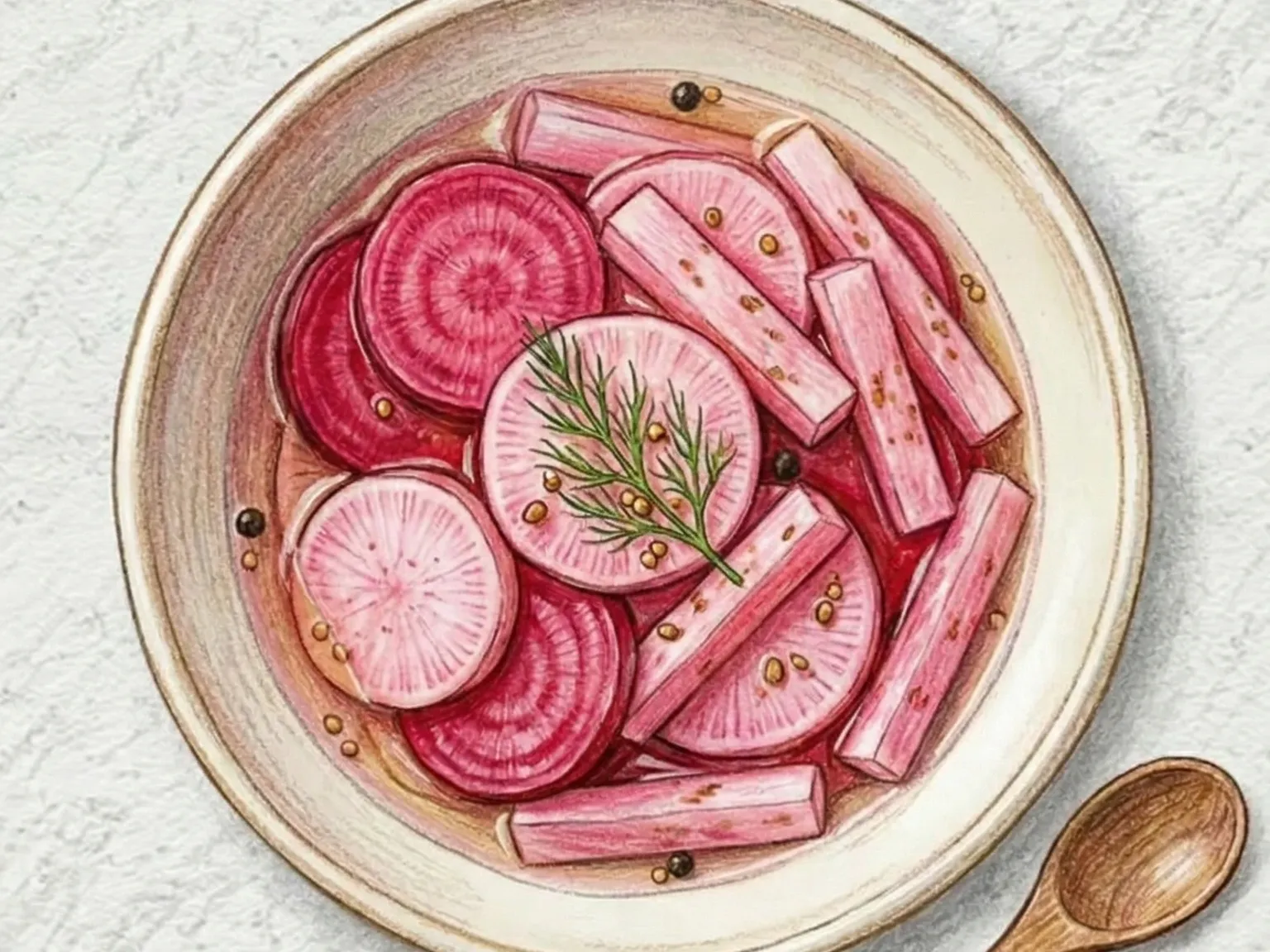
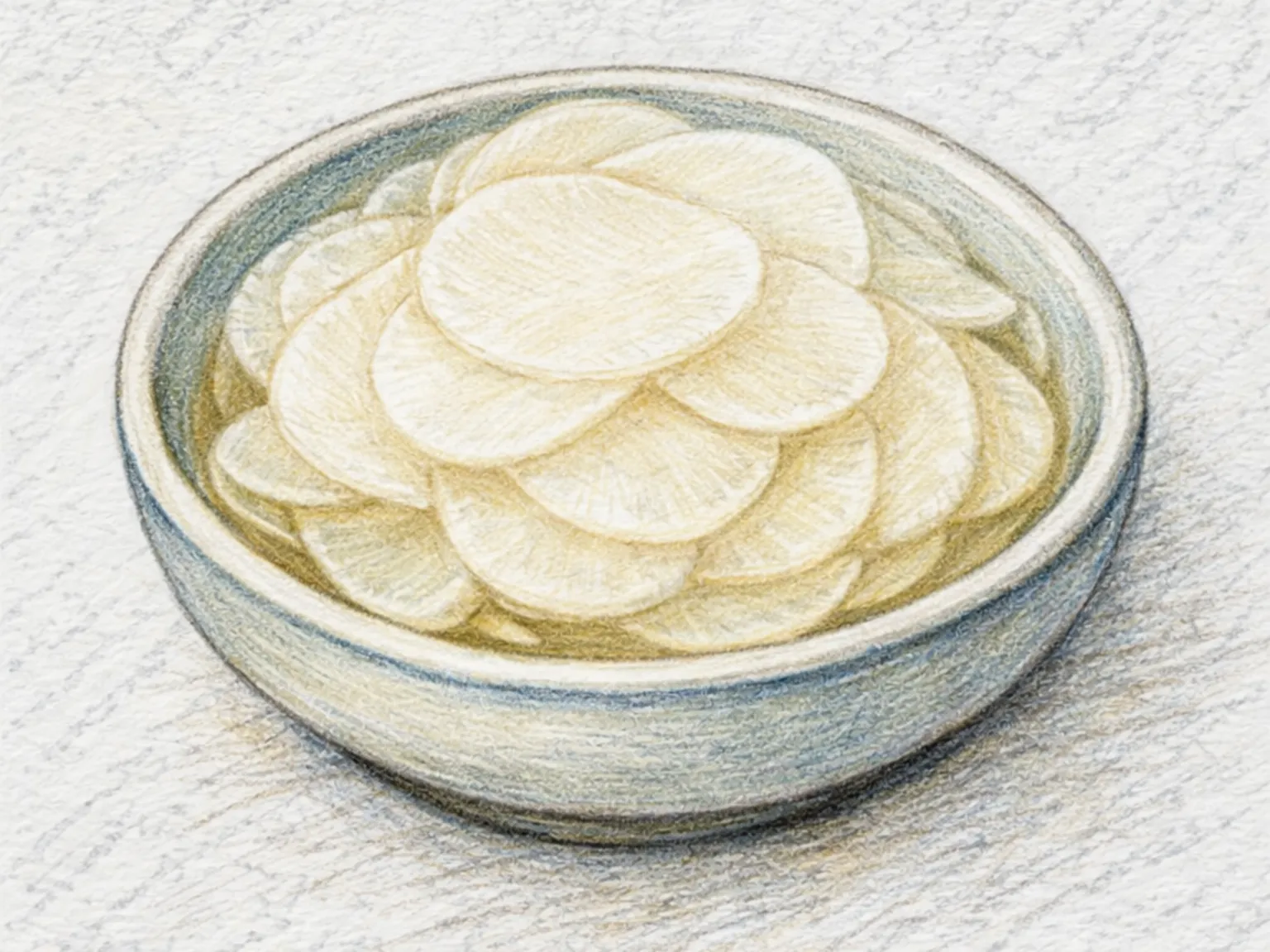
Ssam-mu is a Korean sweet-and-sour pickled radish made by slicing Korean radish into very thin two-millimeter rounds and submerging them in a warm brine of water, vinegar...
What makes this special
- Thinly sliced two-millimeter rounds make Ssam-mu radish wraps flexible for grilled meat.
- 2mm slicing is thin enough to wrap without tearing around grilled meat
- Cooled brine keeps radish firm; hot brine would cook and soften the flesh
Key ingredients
Core cooking flow
- 1 Trim the Korean radish, pat it dry, and slice 700 g into even 2 mm rounds.
- 2 Add 400 ml water, 200 ml vinegar, 140 g sugar, 1 tablespoon salt, and 2 bay leaves to a pot.
- 3 When small bubbles rise around the edge of the brine, boil it for only about...
Ssam-mu is a Korean sweet-and-sour pickled radish made by slicing Korean radish into very thin two-millimeter rounds and submerging them in a warm brine of water, vinegar, sugar, salt, and bay leaves. The slices must be thin enough to wrap around grilled meat without tearing, and the brine is cooled to lukewarm before pouring - boiling hot liquid would cook the radish and destroy its crunch. Ready after one day of refrigeration, the pickle reaches its peak on day three when the vinegar tang and sugar sweetness have fully penetrated each slice. Adding a lemon slice to the jar introduces a fresh citrus note. Wrapped around a piece of grilled pork belly or fried chicken, the sweet-sour radish provides an immediate contrast that lifts the fatty richness of each bite.
Instructions
Read the steps as a cooking flow: prep, heat, seasoning, doneness control, and finish.
- 1Heat
Trim the Korean radish, pat it dry, and slice 700 g into even 2 mm rounds.
Set aside any thick pieces and slice them again, because thick radish will not bend cleanly around grilled meat.
- 2Control
Add 400 ml water, 200 ml vinegar, 140 g sugar, 1 tablespoon salt, and 2 bay leaves to a pot.
Heat over medium heat, stirring until the sugar and salt dissolve before the liquid boils hard.
- 3Season
When small bubbles rise around the edge of the brine, boil it for only about 30 seconds, then turn off the heat.
Avoid prolonged boiling so the vinegar stays bright and the seasoning balance remains clear.
- 4Heat
Let the brine cool until it is lukewarm and no longer gives off strong steam.
Do not pour it while hot, because the radish can partially cook, soften, and lose the crisp texture needed for wraps.
- 5Control
Layer the radish in an airtight container, pressing it down gently without folding the slices sharply.
Pour in enough lukewarm brine to fully cover the radish, and add one small lemon slice if you want a fresher aroma.
- 6Finish
Seal the container and refrigerate it.
The radish can be served after one day, but the flavor is best on day three, when the sweet-sour brine has reached the center of each slice. Serve chilled with grilled pork belly or chicken.
After the steps
Pick a recipe that fits this dish.
Continue with shared ingredients, meal pairings, or a similar method.
Recipes That Go Well With This
More Kimchi →Based on shared ingredients and meal pairing
Braised Korean Radish (Soy Garlic Slow-Cooked Side)
Mu-jjim is a Korean braised radish dish where thick-cut Korean radish is simmered slowly in a covered pot with soy sauce, sugar, and garlic. The radish absorbs the seasoned liquid as it cooks, turning translucent from edge to center and developing a natural sweetness that balances the saltiness of the soy base. A drizzle of sesame oil at the end adds a nutty fragrance, and a single sliced green chili contributes a mild kick to the finish. Despite the short ingredient list, this banchan pairs naturally with rice at any meal and holds up well as a make-ahead side throughout all seasons. Keeping the heat at medium or below for at least twenty minutes allows the radish to soften fully and take in the seasoning without becoming mushy.
Korean Quick Pickled Daikon
Mu-pickle is the yellow pickled daikon that accompanies every order of Korean fried chicken, completing the inseparable trio of chicken, cola, and pickled radish that defines the Korean fried chicken experience. Radish is cut into cubes or half-moons and submerged in a boiled brine of vinegar, sugar, salt, and water. The pickles are edible after thirty minutes, but refrigerating them overnight allows the sweet-sour brine to work its way fully into the core of each piece rather than sitting only on the surface. Commercial chicken-mu gets its vivid yellow color from gardenia extract or turmeric; home versions skip the coloring entirely without any effect on flavor. The vinegar-to-sugar ratio is the single most important variable in the recipe. Too much vinegar and the acidity dominates every bite; too much sugar and the result tastes more like candied fruit than a palate-cleansing pickle. A 1-to-1 ratio is the reliable starting point that most home cooks stick with. When eaten alongside greasy fried chicken or pork cutlet, a single piece of mu-pickle deploys its vinegar sharpness to cut through the oil coating the palate, resetting the mouth for the next bite. Kept refrigerated in a sealed container, the pickles hold their crunch for more than two weeks.
Korean Tofu Jeon (Golden Egg-Coated Pan-Fried Tofu)
Dubu-jeon is a Korean pan-fried tofu dish and a standard side dish in everyday home cooking as well as a fixture on ancestral rite tables. Firm tofu is sliced to about 1 cm thickness, seasoned with salt and pepper, dusted in a thin layer of flour to help the coating adhere, dipped in beaten egg, then fried on each side in a lightly oiled pan until the exterior turns golden and set. Pressing the tofu before cooking is the most important preparatory step: wrapping the slices in paper towels and placing a heavy object on top for at least fifteen minutes removes enough moisture to prevent the oil from splattering and allows the egg coating to bond tightly to the surface. Three to four uninterrupted minutes per side over medium heat are needed to develop an even golden crust without burning the egg; turning the pieces too often strips the batter away and leaves patches of bare tofu. The fried tofu is mild and nutty on its own, but a dipping sauce of soy sauce mixed with a small amount of vinegar and red pepper flakes adds salt, acidity, and heat that transform the simple base into something more complex. Eaten hot, the egg coating is thin and slightly crisp; as it cools the exterior softens while the interior remains tender.
Korean-Style Cabbage Pickle
Yangbaechu pickle is a quick Korean-style vinegar pickle made by pouring a hot brine of vinegar, sugar, salt, and whole black peppercorns over bite-sized pieces of cabbage and carrot. The hot liquid wilts the vegetables just enough to help them absorb the brine while they retain a firm, snappy crunch throughout. Whole peppercorns contribute a subtle, aromatic heat that gives the finished pickle more depth than a plain vinegar soak would produce. After a single day of refrigeration the pickle is ready to eat, and it pairs especially well alongside fried cutlets, burgers, or any dish that benefits from a bright, acidic counterpoint to cut through richness. The carrot adds a note of natural sweetness and keeps the color vivid. Kept in a sealed container, the pickle is at its crunchiest within the first week, though the flavors become more rounded and pronounced as the vegetables continue to absorb the brine over time.
Serve with this
Korean Steamed Tofu with Soy Sauce
Dubu-jjim is firm tofu steamed and topped with a seasoning sauce of soy sauce, gochugaru, chopped green onion, garlic, and sesame oil. Cutting the tofu into thick slabs before steaming lets heat penetrate evenly, producing pieces with slight resistance on the outside and a silky interior. The soy and chili sauce drizzled over the warm tofu seeps into each slice, delivering salty and mildly spicy flavors throughout. Sesame oil and seeds finish with a toasted aroma. Cooked without any added oil, it is a clean, protein-rich banchan that fits well on a vegetarian spread. Lightly salting the tofu before steaming draws out excess moisture, which allows the seasoning sauce to absorb more deeply and firms up the texture.
Korean Garlic Scape and Pork Rice Bowl
Crunchy garlic scapes and thinly sliced pork shoulder are stir-fried together in a gochujang-based glaze and piled over steamed rice. The scapes keep their distinctive pungent bite even after cooking, and their fibrous texture holds up against the heat in a way that most vegetables do not, balancing the richness of the pork fat throughout the dish. A quick toss over high heat caramelizes the gochujang and sugar into a glossy, lacquer-like coating that clings to both the meat and the scapes while preserving their snap. Slicing the pork thin ensures it cooks through in the same short window without drying out, and finishing with sliced green onion and a drizzle of sesame oil lifts the overall aroma. Spring-harvested garlic scapes are especially tender and clean-tasting, making this a seasonal favorite worth timing carefully. Fresh pork loses less juice than frozen, which matters when the total cooking time is under five minutes.
Korean Beoseot Jjigae (Mushroom Stew)
Oyster, shiitake, and enoki mushrooms are simmered in kelp-infused water for a light, clean stew. Soup soy sauce and minced garlic season the broth without overwhelming the mushrooms' own flavor. Tofu and sliced onion add body and gentle sweetness. Because the three mushroom varieties differ in texture and intensity, each spoonful offers a different combination. The broth is completely oil-free, making this a warming and easy-to-digest meal.
Similar recipes
Korean Melon Pickle (Korean Melon Soy Vinegar Brine)
Chamoe jangajji is a Korean summer pickle made by seeding firm Korean melon and slicing it into thin half-moons, then submerging the pieces in a cure of soy sauce, rice vinegar, and sugar. Salting the slices and letting them sit for fifteen minutes before pickling draws out excess moisture, preventing the brine from becoming diluted and keeping the melon's characteristic crunch intact over time. Sliced fresh ginger added to the jar contributes a warm, faintly spicy undertone beneath the melon's cool sweetness. After two or more days in the refrigerator, the sweet, sour, and salty notes permeate the melon evenly throughout, making this a versatile seasonal banchan that can be served alongside rice or used as a sharp, tangy topping for cold noodles and summer salads. The leftover brine can be repurposed as a seasoning base for cold noodle sauce or seasoned vegetable dishes.
Korean Soy Pickled Onions
Yangpa jangajji is a soy-pickled onion made by immersing large-cut onion chunks in a boiled brine of soy sauce, vinegar, and sugar. The hot brine tempers the raw onion's sharp, pungent bite on contact, and as the pickle matures in the refrigerator the sweet-salty seasoning penetrates evenly through each piece. Cutting the onion along its fiber rather than against it keeps the texture firm and crisp after pickling, whereas thin cross-cut slices tend to soften quickly in the acidic brine. Sliced cheongyang chili peppers added to the jar gradually release their heat into the liquid, lending a gentle, lingering spiciness that offsets the sweetness and keeps the flavors from becoming one-dimensional. The pickle is ready after one day of refrigeration but improves noticeably at three days or more as the seasoning continues to deepen. It is a staple accompaniment to grilled meats like samgyeopsal, where its acidity and crunch cut through richness and refresh the palate between bites. It also works well over bibimbap or cold noodles. The brine can be brought back to a boil and reused for a second batch of onions, making this an economical pantry item.
Korean Miyeok Julgi Jangajji (Seaweed Stem Pickles)
Miyeok julgi jangajji is a Korean seaweed stem pickle made by soaking salted seaweed stems long enough to remove the excess salt, blanching them briefly, and submerging them with sliced onion and cheongyang chili in a brine of dark soy sauce, vinegar, and sugar brought to a boil. The stems' characteristic crunchy-chewy bite holds up even as they absorb the brine, and a faint oceanic quality lingers beneath the soy sauce's savory depth and the sharp brightness of the vinegar. Onion adds natural sweetness to the pickling liquid, and the chili delivers a clean, piercing heat at the finish. Reboiling the brine, cooling it fully, and pouring it over a second time significantly extends shelf life, keeping the banchan in good condition in the refrigerator for three to four weeks or longer. After the first pour, allowing twenty-four hours before eating gives the stems enough time to fully absorb the brine and develop their proper flavor.