Ssamjang Tofu Kale Crunch Salad
Quick answer
Ssamjang tofu kale crunch salad sears firm tofu in olive oil for six to seven minutes until golden and crisp on the outside while staying tender within, then combines it...
What makes this special
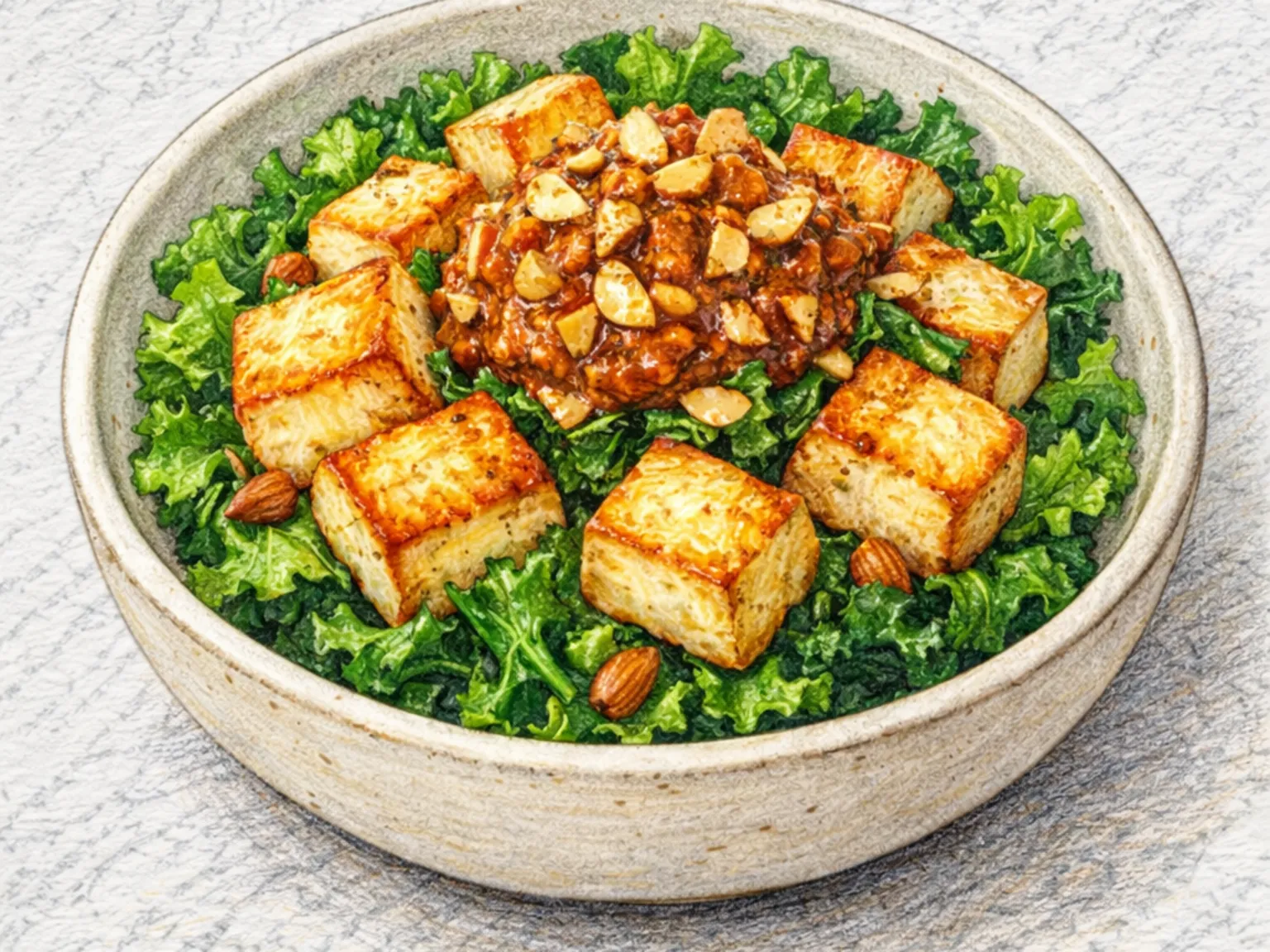
- Ssamjang Tofu Kale Crunch Salad features seared tofu cubes and salt-massaged kale leaves.
- Ssamjang blended with lemon and honey tames kale's bitterness
- Salt-massaging kale breaks its fibrous cell walls for better dressing absorption
Key ingredients
Core cooking flow
- 1 Wrap 200 g firm tofu in paper towels and press out as much moisture as possible.
- 2 Cut the dried tofu into bite-size pieces.
- 3 Sear the tofu for 6 to 7 minutes, turning occasionally, until the edges feel...
Ssamjang tofu kale crunch salad sears firm tofu in olive oil for six to seven minutes until golden and crisp on the outside while staying tender within, then combines it with kale massaged with salt, shredded red cabbage, cucumber, and sliced almonds, all dressed in a ssamjang-based vinaigrette. The dressing blends ssamjang's fermented depth, a mixture of doenjang and gochujang, with lemon juice, honey, and olive oil, layering umami with citrus acidity and a restrained sweetness that tempers kale's natural bitterness. Massaging the kale with salt before adding the dressing breaks down its tough cell walls, making the leaves pliable and far more absorbent. Pressing moisture from the tofu thoroughly before pan-frying is what produces the crisp, golden crust; tofu that still holds water will steam rather than sear and come out pale and soft. Sliced almonds add a light, nutty crunch with every bite, giving the salad a clear contrast in texture throughout.
Instructions
Read the steps as a cooking flow: prep, heat, seasoning, doneness control, and finish.
- 1Step
Wrap 200 g firm tofu in paper towels and press out as much moisture as possible.
If the surface stays wet, it will steam in the pan instead of forming crisp golden edges.
- 2Control
Cut the dried tofu into bite-size pieces.
Heat 1 tablespoon olive oil in a pan over medium heat, then add the tofu in a single layer so the pieces sear instead of trapping steam.
- 3Finish
Sear the tofu for 6 to 7 minutes, turning occasionally, until the edges feel firm and the surfaces are golden.
Transfer it to a plate so it keeps its crust while the salad is prepared.
- 4Season
Remove the tough stems from 120 g kale and tear the leaves into manageable pieces.
Add a pinch of salt and massage for about 1 minute, until the leaves darken, soften, and feel more flexible.
- 5Prep
Thinly slice 60 g red cabbage and 80 g cucumber, then place them with the kale in a large bowl.
Whisk 1.5 tablespoons ssamjang, 1 tablespoon lemon juice, 1 teaspoon honey, and the remaining oil until smooth.
- 6Season
Toss the vegetables with the dressing first so the kale is evenly coated.
Add the seared tofu and fold gently to avoid breaking it, then scatter 20 g sliced almonds over the salad just before serving.
After the steps
Pick a recipe that fits this dish.
Continue with shared ingredients, meal pairings, or a similar method.
Recipes That Go Well With This
More Salads →Based on shared ingredients and meal pairing
Salmon Salad (Seared Salmon over Greens with Soy Vinaigrette)
Salmon salad sears a salmon fillet skin-side down until the exterior is crisp and the interior stays moist, then places it over lettuce, shredded red cabbage, sliced avocado, and peppery radish sprouts, dressed with soy sauce, vinegar, minced garlic, and olive oil. Patting the salmon completely dry and seasoning with black pepper five minutes before cooking prevents the skin from sticking to the pan and allows it to crisp evenly - four minutes skin-side down and two minutes flipped produces a center that retains a pale pink translucency for maximum moisture. The avocado's creamy fat harmonizes with the salmon's omega-3 richness, while radish sprouts add a sharp, mustard-like bite that energizes the bowl. The dressing's combination of soy sauce, vinegar, and garlic creates a salty-tangy base that cuts cleanly through the oily fish.
Gamtae Avocado Shrimp Salad
Gamtae avocado shrimp salad pairs blanched shrimp with sliced avocado, romaine, and cherry tomatoes in a lime-soy dressing, finished with crumbled gamtae seaweed. Blanching the shrimp for exactly two minutes and plunging them immediately into cold water keeps the exterior springy while preserving a moist, tender interior - longer cooking makes them rubbery and dry. The dressing of lime juice, soy sauce, olive oil, and honey layers sharp citrus acidity against soy umami, cutting neatly through the richness of the avocado rather than letting it weigh down the bowl. Gamtae seaweed absorbs moisture rapidly and turns limp within minutes, so it must be crumbled over the salad only at the very moment of serving to retain its crunch and oceanic fragrance. Thinly sliced red onion should be rinsed briefly in cold water to remove the raw, sharp edge, letting it blend more quietly with the other ingredients. Domestic gamtae has a finer, more delicate structure than regular dried laver, so it crumbles cleanly by hand without any tool.
Kimchi Tofu Alfredo Farfalle (Creamy Kimchi Bow-Tie Pasta)
Kimchi tofu Alfredo farfalle is a fusion pasta that counters the richness of a cream-and-Parmesan Alfredo sauce with the lactic acidity of well-fermented kimchi. Garlic bloomed in butter forms the aromatic base, then cream, milk, and Parmigiano are combined into the classic Alfredo sauce, after which chopped kimchi is folded in to introduce fermented tang and a layer of umami that a standard Alfredo lacks. Firm tofu cut into cubes and pan-fried until each side is golden provides a mild, neutral protein element with direct textural contrast against the smooth sauce. Farfalle's pinched center holds pockets of sauce against each piece of pasta, delivering a consistent hit of creaminess in every bite, and freshly ground black pepper draws a sharp line through the richness at the finish. The entire dish moves from pan to plate in about 15 minutes.
Kimbap Salad Bowl (Without the rice)
Kimbap salad bowl strips away the rice and seaweed wrapper from a traditional kimbap roll and presents its core fillings as a deconstructed salad. Blanched spinach, julienned carrot, pickled radish, and thin egg strips are arranged in a bowl and dressed with soy sauce and sesame oil, the same combination that seasons a finished roll. The dressing replicates the savory, nutty quality of kimbap without the rice bulk, and pickled radish brings enough acidity and salt to balance the entire bowl without additional seasoning. Dried seaweed flakes must be added at the last moment before eating; any earlier and they absorb moisture and lose their snap and sea aroma. The bowl delivers a recognizable kimbap experience for anyone managing carbohydrate intake, and its components can be assembled from ingredients prepared in advance, making it a practical weekday lunchbox option.
Serve with this
Korean Euneo Sogeum-gui (Salt-Grilled Sweetfish)
Euneo-sogeum-gui is a salt-grilled freshwater sweetfish dish where whole fish, intestines left intact, are seasoned only with coarse salt and cooked slowly over charcoal or a wire grill until the skin crisps and chars lightly at the edges. Sweetfish carries a distinctive fresh fragrance comparable to cucumber or watermelon rind, a quality that earned it the name 'fragrant fish' in Japanese, and that delicate aroma would be overwhelmed by any marinade or heavy seasoning, making salt the only appropriate choice. The intestines contain a concentrated bitterness balanced by deep umami, and eating the fish whole, organs included, is the traditional approach rather than an afterthought. Grilling slowly over medium heat while turning the fish at intervals prevents the lean flesh from drying out while allowing the skin to develop an even, crackled crispness. Skewering the fish in a wave-like curve before cooking is the classic presentation that allows fat to render and drip naturally during grilling, basting the skin from the inside. A squeeze of lemon at the table brings acidity that tempers the slight bitterness from the organs and brightens the overall finish. Fish caught and grilled the same day is considered ideal, and smaller individuals tend to carry a purer aroma and a milder bitterness.
Soybean Paste Stew with Clams
Doenjang jjigae with clams is one of the most frequently made stews in Korean households, built on the combination of fermented soybean paste's deep, earthy flavor and the clean briny umami of manila clams. The clams are purged of sand before being added to a pot of doenjang-laced broth, where they open and release their salty, seawater-flavored liquor directly into the soup. The result transforms the base from something merely savory into something distinctly oceanic and complex. Zucchini softens in the bubbling broth and contributes a natural sweetness as it breaks down, while blocks of soft tofu act as sponges, soaking up the seasoned liquid and releasing it in a burst of hot, flavorful broth when bitten into. Sliced cheongyang chili peppers are added to interrupt the heaviness of the fermented paste and sharpen the overall flavor. The stew is typically served in an earthenware pot while still bubbling, alongside rice. Many Koreans ladle the broth directly over their bowl of rice. The recipe adapts to any season: assembled with leftover summer vegetables from the refrigerator for a lighter version, or cooked piping hot in a stone pot through winter.
Blackened Chicken Caesar Salad
Blackened chicken Caesar salad starts with chicken breast coated thickly in paprika, cayenne, garlic powder, onion powder, and dried herbs before hitting a very hot, dry pan. The spice coating undergoes rapid charring at high temperature, forming a dark, smoky crust that seals in moisture and concentrates the spice aromatics on the surface of the meat. The interior of the chicken stays juicy because the charred crust acts as an insulating barrier, provided the pan is hot enough from the start. Creamy Caesar dressing, made with anchovy paste, egg yolk, lemon, and Parmesan, wraps around the cold, crisp romaine and the sliced hot chicken alike, moderating the cayenne heat without erasing the spice character entirely. Shaved Parmesan adds sharp, salty depth throughout, while croutons introduce a crunchy textural break against the tender chicken and limp lettuce. Because blackening generates substantial smoke, proper ventilation or an outdoor cooking setup is strongly recommended. The dish functions as a full main course rather than a starter salad.
Similar recipes
Tofu Avocado Salad (Silken Tofu and Avocado Sesame Bowl)
Tofu avocado salad pairs pan-seared firm tofu with ripe avocado over a bed of mixed greens, dressed in soy sauce, sesame oil, and lemon juice. Pressing the tofu thoroughly before searing allows the surface to develop a golden Maillard crust that holds its shape even after tossing with the dressing. The avocado's creamy fat contrasts with the burst of juice from halved cherry tomatoes, creating textural variety in every bite. The dressing layers three dimensions - soy sauce for salinity, sesame oil for nuttiness, and lemon juice for acidity - giving depth to otherwise mild ingredients. Cutting the avocado just before serving prevents oxidation and keeps the color clean.
Korean Green Seaweed Tofu Soup
Cheonggak-dubu-guk is a light Korean seaweed soup made by soaking salted cheonggak sea staghorn in cold water to draw out excess salt, then simmering it with tofu and onion in a clean broth. Onion and garlic are sauteed in perilla oil first to build a nutty base, and the broth is seasoned with tuna extract and soup soy sauce, which together bring a deep oceanic savoriness to every spoonful. The cheonggak seaweed contributes a firm, satisfying crunch that contrasts directly with the soft, mild tofu cubes. At 140 calories per bowl, the soup sits at the lighter end of Korean everyday cooking while still delivering genuine depth. The combination of sea vegetable, perilla oil, and fermented soy seasoning makes a broth that tastes cleaner and more mineral than standard vegetable soups.
Korean Broccoli Doenjang Salad
Blanched broccoli tossed in doenjang dressing is a modern Korean banchan that pairs Western ingredients with traditional fermented seasoning. Florets and thinly sliced stems blanch for ninety seconds in salted boiling water, then shock in cold water to lock in vivid green color and a firm, crisp bite. The dressing is built from doenjang stirred with rice vinegar and oligosaccharide syrup, combining fermented salt depth, acidity, and a gentle natural sweetness that lifts rather than masks the vegetable's mild bitterness. Using the stems alongside the florets eliminates waste and adds textural variety to each bite. Ready in under ten minutes and holds well refrigerated for two days.