Charim

2686 Korean & World Recipes

2686+ Korean recipes, clean and organized. Ingredients to instructions, all at a glance.

Korean Crown Daisy Soy Pickle

Korean Crown Daisy Soy Pickle

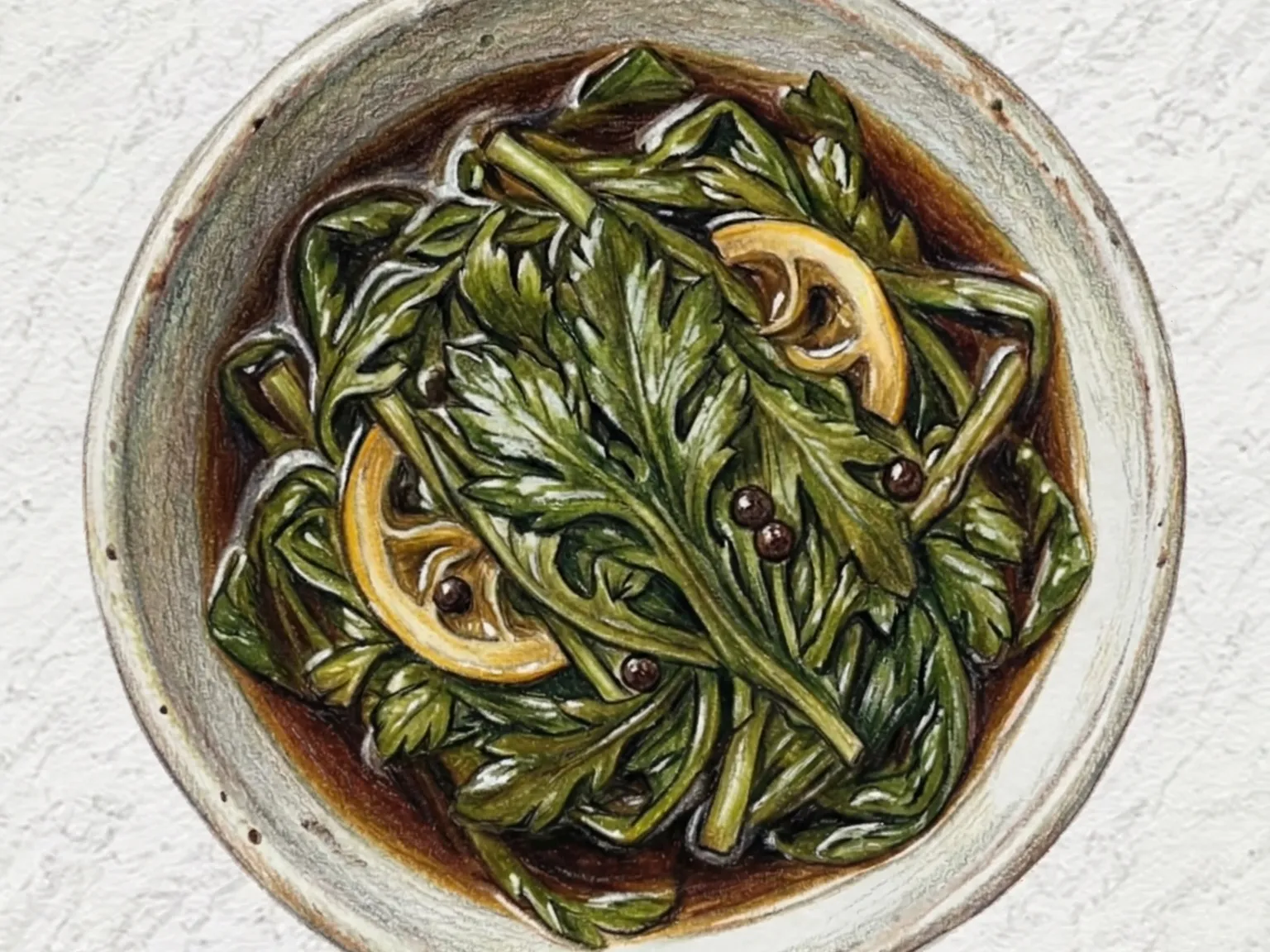
Ssukgat jangajji is a soy-brined pickle that captures the distinctly herbaceous, slightly bitter aroma of crown daisy greens. Pouring a boiling mixture of soy sauce, vinegar, sugar, and whole peppercorns directly over the trimmed greens wilts them just enough to tame any raw grassiness while locking in their aromatic character. Thin lemon slices layered between the greens introduce a citrus brightness that lifts the salty-sweet brine. The pickle is ready after just 24 hours of refrigeration and is best consumed within a week, when the herbal fragrance is at its peak. It works well as a rice topping or alongside grilled meat.

Prep 15min Cook 10min 4 servings

Adjust Servings

2servings
servings

Instructions

  1. 1

    Trim tough stems and cut crown daisy into 5 cm pieces.

  2. 2

    Layer crown daisy and thin lemon slices in a sterilized jar.

  3. 3

    Boil soy sauce, vinegar, water, sugar, and peppercorns.

  4. 4

    Pour the hot brine over greens immediately and seal.

  5. 5

    Cool completely, then refrigerate for 24 hours.

🛒Shop Ingredients on Amazon

As an Amazon Associate, we may earn from qualifying purchases.

Tips

Hot brine reduces raw odor while preserving aroma.
Best eaten within a week for peak herbal flavor.

Nutrition (per serving)

Calories
58
kcal
Protein
2
g
Carbs
11
g
Fat
0
g

More Recipes

Korean Celery Jangajji (Blanched Soy Lemon Pickle)
KimchiEasy

Korean Celery Jangajji (Blanched Soy Lemon Pickle)

Celery jangajji is a Korean soy pickle made by briefly blanching celery stalks to soften their fibrous exterior, then submerging them in a boiled brine of soy sauce, vinegar, and sugar. Peeling the tough outer strings and cutting into five-centimeter pieces before a thirty-second blanch removes the raw grassy edge while preserving the celery's distinctive cool, herbal fragrance. Lemon slices and whole garlic cloves added to the jar contribute a gentle citrus brightness and mild pungency that develop as the pickle rests. After two days in the refrigerator, the brine penetrates fully, producing a crisp, tangy side dish that pairs especially well with rich or oily main courses.

🍱 Lunchbox
Prep 15minCook 8min4 servings
Korean Soy Pickled Beet (Vinegar Soy Brine Jangajji)
KimchiEasy

Korean Soy Pickled Beet (Vinegar Soy Brine Jangajji)

Beet jangajji is a Korean soy-pickled beet prepared by slicing beets thin and submerging them in a cooled brine of soy sauce, vinegar, and sugar. The vinegar cuts through the beet's earthy undertone, leaving a clean sweetness sharpened by acidity, while onion adds a mellow depth to the pickling liquid. As the brine cools, the beet's vivid red pigment bleeds into the liquid, creating a striking appearance. After at least a day of pickling, the flavor penetrates fully, making this a crisp, refreshing side dish alongside rice or grilled meats.

🍱 Lunchbox
Prep 20minCook 10min2 servings
Korean Soy Pickled Cucumber
KimchiEasy

Korean Soy Pickled Cucumber

Oi jangajji is a Korean soy-pickled cucumber made by slicing cucumbers into one-centimeter rounds, lightly salting them, then packing them into a sterilized jar with garlic cloves and green chilies before pouring over a boiling brine of soy sauce, water, vinegar, and sugar. The hot liquid partially cooks the cucumber surface while the center stays crisp, and two days of cold fermentation lets the sweet-salty-sour brine soak through to the core. The green chilies leave a faint heat at the back of each bite, and whole garlic cloves release their aroma into the brine as they soften. Reboiling and re-pouring the brine once extends the pickle's crunch, making this a practical side dish that keeps well over a week in the refrigerator.

🏠 Everyday🍱 Lunchbox
Prep 20minCook 10min4 servings
Korean Water Parsley Soy Pickle
KimchiEasy

Korean Water Parsley Soy Pickle

Minari jangajji is a Korean soy-pickled water parsley made by cutting the stems into 5 cm lengths, drying them thoroughly, and submerging them with garlic and cheongyang chili in a brine of boiled soy sauce, vinegar, and sugar. The water parsley's cool, herbaceous fragrance gains depth when enveloped by the soy sauce's savory character, and the vinegar's tartness keeps the aftertaste refreshing. Cheongyang chili adds a sharp heat while garlic contributes a pungent undercurrent. Flavor and crunch peak around days two to three, so making small batches frequently ensures this pickle is always at its best.

🏠 Everyday🍱 Lunchbox
Prep 15minCook 10min4 servings
Korean Soy-Marinated Soybean Leaves
Side dishesMedium

Korean Soy-Marinated Soybean Leaves

Kongnip-jangajji is soybean leaves preserved in a seasoned soy brine - one of the two major leaf jangajji traditions alongside perilla leaf (kkaennip) jangajji. Soybean leaves are larger and thicker than perilla leaves, taking longer to absorb the pickling liquid but offering a more substantial chew, with each leaf large enough to wrap around a spoonful of rice. The brine - soy sauce, water, vinegar, and sugar boiled together - must cool completely before pouring over the leaves; hot liquid softens them into a limp state, destroying the desired texture. Garlic cloves, cheongyang chili, and onion slices added to the jar infuse the brine with aromatic complexity during the curing process, producing a more layered flavor than plain soy. A minimum of two days of refrigerated aging is needed for the seasoning to reach the leaf interior, and flipping the layers once daily ensures even penetration. The most common way to eat it is draped over hot steamed rice, ssam-style.

🏠 Everyday🍱 Lunchbox
Prep 15minCook 10min4 servings
Korean Seasoned Crown Daisy Namul
Side dishesEasy

Korean Seasoned Crown Daisy Namul

Crown daisy greens are blanched for no more than ten seconds, just long enough to wilt the stems while preserving the leaves' intense herbal fragrance. This chrysanthemum-family herb carries a distinctive aroma that can overwhelm if overcooked but captivates when handled briefly. The dressing is straightforward: soy sauce provides the salty base, sesame oil contributes richness, and toasted sesame seeds burst with a nutty flavor when bitten. Through this simple seasoning, the crown daisy's slightly bitter, almost medicinal character cuts clearly, making the dish taste more vivid than its ingredient list suggests. Minced garlic and chopped green onion layer additional aromatics without competing with the main ingredient. Shocking the greens in ice water immediately after blanching locks in their bright green color, and squeezing out excess moisture before dressing prevents the sauce from diluting. The result is a namul with a clean, sharp personality that pairs well with milder dishes on a Korean table.

🏠 Everyday🍱 Lunchbox
Prep 8minCook 2min4 servings
More Kimchi →