Crown Daisy & Tofu Yuzu Salad
Quick answer
Crown daisy and tofu yuzu salad presses firm tofu dry, sears it in a pan for six to eight minutes until the surface develops a golden crust, and pairs it with crown daisy...
What makes this special
- Crown Daisy and Tofu Yuzu Salad combines seared golden tofu with a zesty, citrus marinade.
- Yuzu's citrus aroma and crown daisy's herbal depth amplify each other
- Leaving tofu undisturbed in the pan builds a proper crust
Key ingredients
Core cooking flow
- 1 Press 200 g firm tofu on all sides with paper towels, then cut it into 1.5 cm cubes.
- 2 Heat a pan well over medium heat, then arrange the tofu in a single layer and sear it for 6 to 8 minutes.
- 3 Spread the seared tofu on a plate and let it cool briefly.
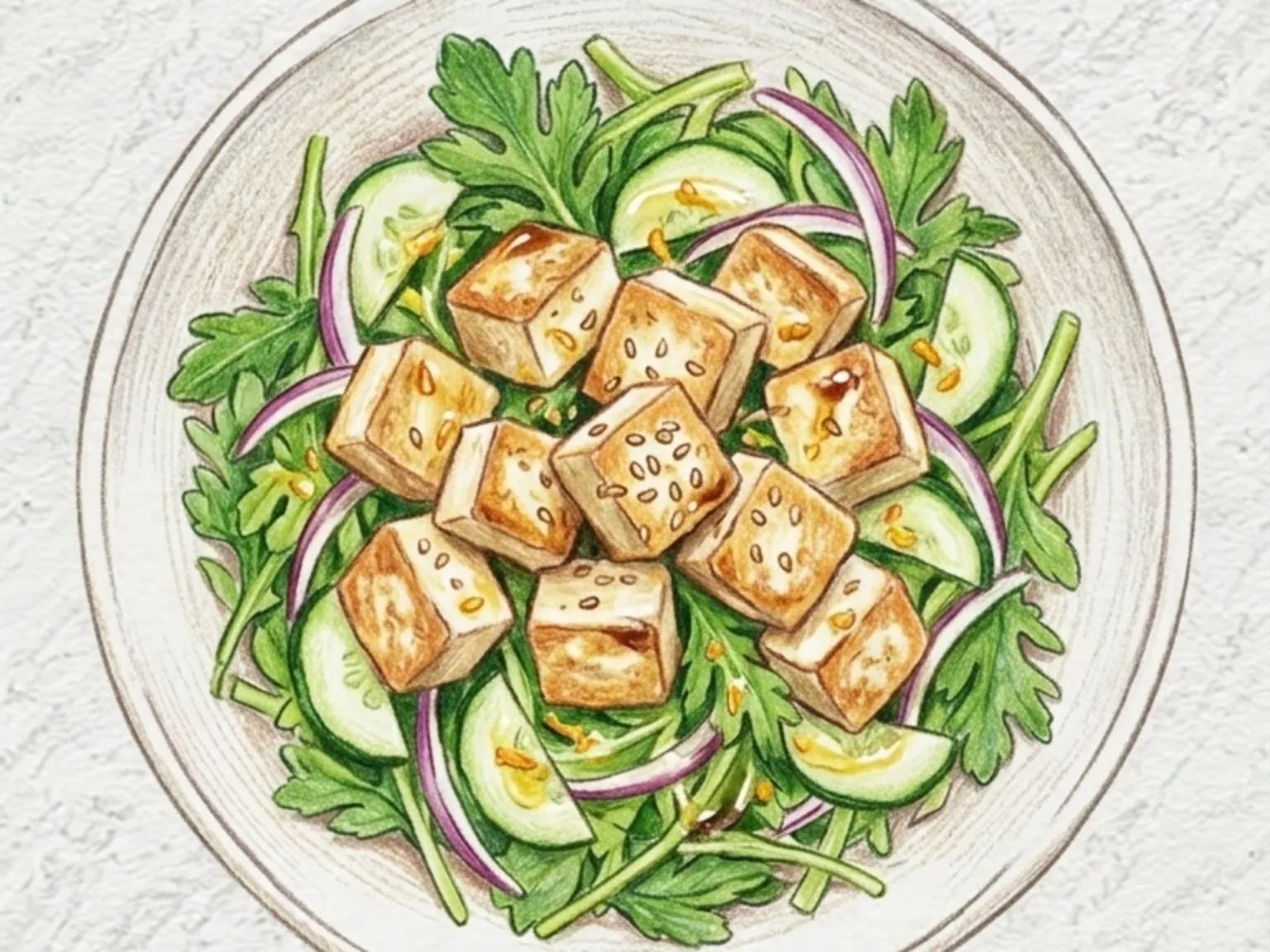
Crown daisy and tofu yuzu salad presses firm tofu dry, sears it in a pan for six to eight minutes until the surface develops a golden crust, and pairs it with crown daisy, half-moon cucumber slices, and thinly sliced red onion in a yuzu marmalade dressing. The yuzu's bright citrus fragrance and subtle bitterness meet crown daisy's bold herbal aroma, and the two botanical notes amplify each other rather than compete. Soy sauce and sesame oil anchor the dressing with fermented depth and nuttiness, preventing the floral top notes from floating untethered. The tofu's soft, creamy interior contrasts with the fibrous crown daisy stems, and cucumber's cool moisture keeps the overall impression light. Avoiding frequent flipping during searing lets a proper crust form on the tofu's surface.
Instructions
Read the steps as a cooking flow: prep, heat, seasoning, doneness control, and finish.
- 1Prep
Press 200 g firm tofu on all sides with paper towels, then cut it into 1.5 cm cubes.
Press once more if the surface still looks wet, because excess moisture makes the tofu break and prevents browning.
- 2Control
Heat a pan well over medium heat, then arrange the tofu in a single layer and sear it for 6 to 8 minutes.
Do not flip often. Turn pieces only when the underside looks golden and has set.
- 3Finish
Spread the seared tofu on a plate and let it cool briefly.
If it is tossed while hot, the crown daisy wilts quickly and the crisp tofu surfaces soften before serving.
- 4Prep
Trim 80 g crown daisy and cut it into 5 cm lengths, then slice 70 g cucumber into half-moons.
Thinly slice 40 g red onion and soak it in cold water for 5 minutes to soften its sharpness.
- 5Season
In a bowl, mix 1.5 tablespoons yuzu marmalade, 1 tablespoon soy sauce, 1 tablespoon lemon juice, and 1 teaspoon sesame oil.
Stop mixing once the marmalade loosens and the dressing looks glossy.
- 6Finish
Place the crown daisy, cucumber, drained onion, and cooled tofu in a large bowl, then pour the dressing around the sides.
Toss gently to avoid breaking the tofu, sprinkle with 1 teaspoon toasted sesame seeds, and serve right away.
After the steps
Pick a recipe that fits this dish.
Continue with shared ingredients, meal pairings, or a similar method.
Recipes That Go Well With This
More Salads →Based on shared ingredients and meal pairing
Crown Daisy & Mung Bean Noodle Salad
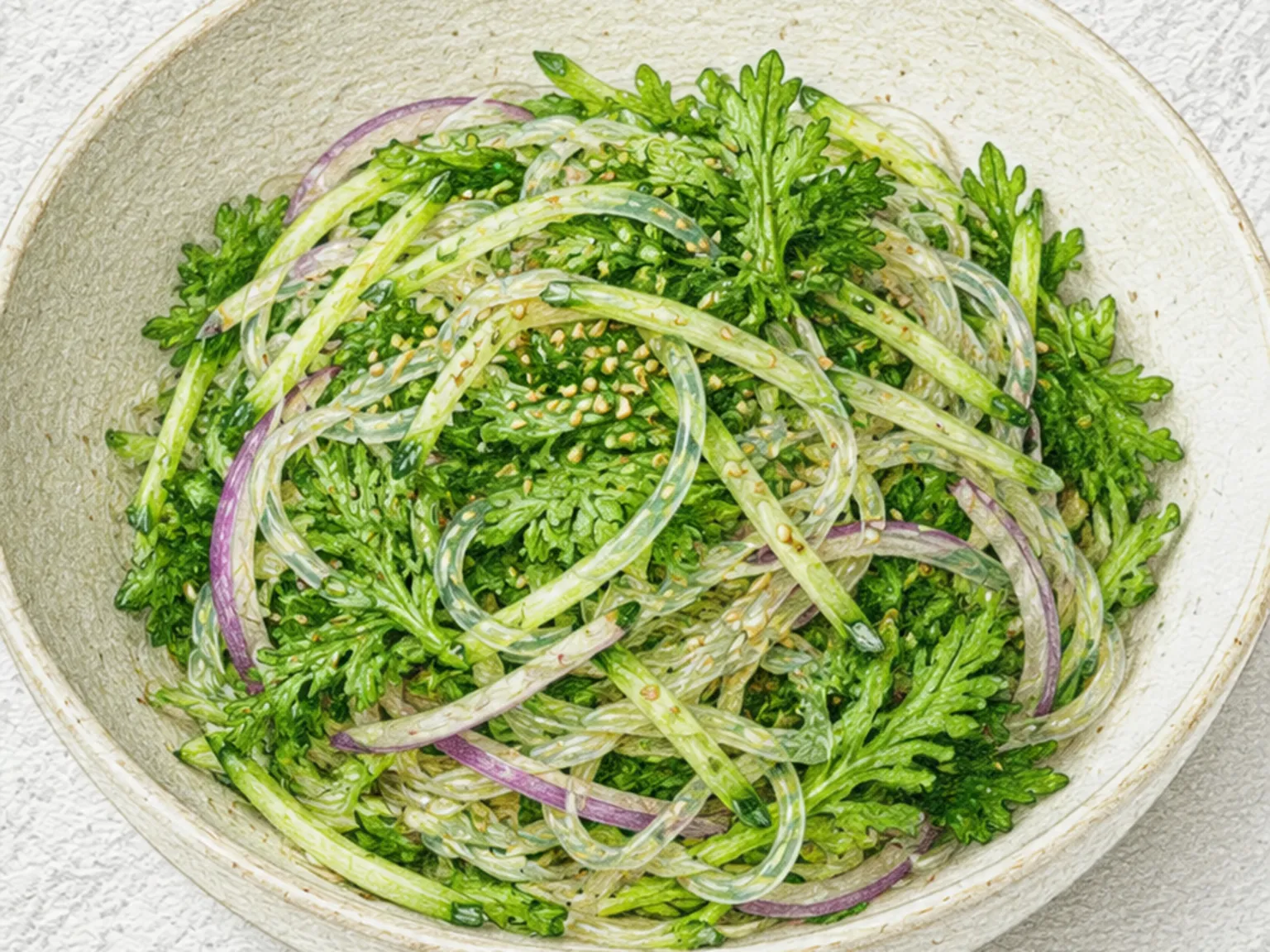
Ssukgat mungbean noodle salad soaks glass noodles in cold water for ten minutes, boils them for five until springy, then tosses them with fragrant crown daisy leaves, julienned cucumber, and thinly sliced red onion in a dressing of soy sauce, vinegar, plum syrup, and sesame oil. Mung bean starch noodles are more translucent and less starchy than wheat-based vermicelli, making them a cleaner canvas for the surrounding vegetables. Crown daisy's assertive, almost medicinal herbal aroma cuts through the neutral noodles and gives the salad a distinctive edge that milder greens cannot replicate. Plum syrup's gentle fruit sweetness layers over the vinegar's acidity to produce a light, clean finish on the palate rather than a sharp one-note sourness. Cucumber adds a cool crunch and red onion contributes a sharp bite between the slippery noodle strands, while toasted sesame seeds bring a roasted, nutty note at the end of each mouthful. Overcooking the noodles makes them sticky and prone to clumping, so pulling them out while still slightly firm is essential, and the salad is best served immediately after tossing so the crown daisy retains its fresh fragrance.
Dallae Shrimp Citrus Millet Salad
Dallae shrimp citrus millet salad builds a Korean-style grain bowl around the sharp, garlic-like bite of wild chive (dallae), tangerine segments, and blanched shrimp, set on a base of cooked millet. Millet grains are smaller than rice and cook quickly; prepared until just fluffy rather than sticky, each grain stays separate, which makes it ideal as a salad base that absorbs dressing without clumping. Dallae should be rinsed and used immediately - prolonged soaking in water dulls its volatile pungency. The dressing combines yuzu syrup and white wine vinegar: the acid from both counteracts any brininess from the shrimp while the citrus notes amplify the wild chive. Arugula added at the end introduces a peppery bitterness that anchors the lighter flavors. Dallae peaks in March through early April, when its aroma is most concentrated. Hallabong or cheonhyehyang can substitute for standard tangerines; torn by hand rather than sliced, the fruit releases juice directly into the dressing.
Kimchi Tofu Alfredo Farfalle (Creamy Kimchi Bow-Tie Pasta)
Kimchi tofu Alfredo farfalle is a fusion pasta that counters the richness of a cream-and-Parmesan Alfredo sauce with the lactic acidity of well-fermented kimchi. Garlic bloomed in butter forms the aromatic base, then cream, milk, and Parmigiano are combined into the classic Alfredo sauce, after which chopped kimchi is folded in to introduce fermented tang and a layer of umami that a standard Alfredo lacks. Firm tofu cut into cubes and pan-fried until each side is golden provides a mild, neutral protein element with direct textural contrast against the smooth sauce. Farfalle's pinched center holds pockets of sauce against each piece of pasta, delivering a consistent hit of creaminess in every bite, and freshly ground black pepper draws a sharp line through the richness at the finish. The entire dish moves from pan to plate in about 15 minutes.
Korean Tofu Yuja Salad (Pan-Fried Tofu Citrus Dressing)
Dubu yuja muchim brings an uncommon citrus dimension to Korean tofu banchan by using yuja-cheong - a preserve of yuzu-like Korean citrus rind in honey or sugar. Soft tofu is blanched briefly to warm through and firm up slightly, then cut into bite-sized pieces and dressed while still warm so the pores open to absorb the vinaigrette. The dressing blends yuja-cheong with soy sauce, vinegar, and sesame oil - the citrus peel's fragrant bitterness cutting through the tofu's blandness in a way that soy sauce alone cannot achieve. Yuja has been cultivated on Korea's southern coast - especially Goheung and Namhae - since the Joseon era. The dish sits in a category between Korean and Western salad sensibilities, light enough to serve as a starter. Best eaten cold or at room temperature within a few hours of assembly, as the tofu's texture begins to soften with prolonged marination. The transparent sweetness of the yuja-cheong combined with the sharp edge of vinegar transforms tofu into something with an entirely different flavor register.
Serve with this
Korean Tofu Jeon (Golden Egg-Coated Pan-Fried Tofu)
Dubu-jeon is a Korean pan-fried tofu dish and a standard side dish in everyday home cooking as well as a fixture on ancestral rite tables. Firm tofu is sliced to about 1 cm thickness, seasoned with salt and pepper, dusted in a thin layer of flour to help the coating adhere, dipped in beaten egg, then fried on each side in a lightly oiled pan until the exterior turns golden and set. Pressing the tofu before cooking is the most important preparatory step: wrapping the slices in paper towels and placing a heavy object on top for at least fifteen minutes removes enough moisture to prevent the oil from splattering and allows the egg coating to bond tightly to the surface. Three to four uninterrupted minutes per side over medium heat are needed to develop an even golden crust without burning the egg; turning the pieces too often strips the batter away and leaves patches of bare tofu. The fried tofu is mild and nutty on its own, but a dipping sauce of soy sauce mixed with a small amount of vinegar and red pepper flakes adds salt, acidity, and heat that transform the simple base into something more complex. Eaten hot, the egg coating is thin and slightly crisp; as it cools the exterior softens while the interior remains tender.
Soybean Paste Stew with Clams
Doenjang jjigae with clams is one of the most frequently made stews in Korean households, built on the combination of fermented soybean paste's deep, earthy flavor and the clean briny umami of manila clams. The clams are purged of sand before being added to a pot of doenjang-laced broth, where they open and release their salty, seawater-flavored liquor directly into the soup. The result transforms the base from something merely savory into something distinctly oceanic and complex. Zucchini softens in the bubbling broth and contributes a natural sweetness as it breaks down, while blocks of soft tofu act as sponges, soaking up the seasoned liquid and releasing it in a burst of hot, flavorful broth when bitten into. Sliced cheongyang chili peppers are added to interrupt the heaviness of the fermented paste and sharpen the overall flavor. The stew is typically served in an earthenware pot while still bubbling, alongside rice. Many Koreans ladle the broth directly over their bowl of rice. The recipe adapts to any season: assembled with leftover summer vegetables from the refrigerator for a lighter version, or cooked piping hot in a stone pot through winter.
Classic Wedge Salad
Classic Wedge Salad features crisp iceberg lettuce wedges topped with a rich blue cheese dressing, crispy bacon, and cherry tomatoes. Preparing this dish requires cutting the lettuce into four wedges while leaving the core intact to hold the leaves together. The dressing is made by mixing half of the blue cheese with sour cream, mayonnaise, and lemon juice, leaving a few small cheese chunks, while the rest is kept for topping. Washing the lettuce and shaking out any water between the layers is essential to prevent the dressing from thinning. The bacon is cooked until crisp and drained well on paper towels. The salad is assembled by placing the cold wedges on a plate, pouring the dressing over, and topping with the bacon, halved tomatoes, remaining blue cheese, and sliced chives.
Similar recipes
Chamnamul Pear Tofu Salad
Chamnamul pear tofu salad pan-sears firm tofu cubes for 6-8 minutes until the exterior turns golden and crisp while the inside stays soft. Chamnamul is cut into 5 cm lengths to preserve its fragrant mountain-herb character, and Korean pear is julienned thin so its clean juice sweetens each bite. A dressing of perilla oil, lemon juice, and soup soy sauce delivers nuttiness and umami in a single drizzle, and halved cherry tomatoes contribute a pop of acidity. Slicing the pear just before assembly minimizes browning, and toasted sesame seeds scattered on top add a final layer of warm, nutty aroma.
Tofu Sesame Salad (Chilled Tofu with Roasted Sesame Dressing)
Tofu sesame salad starts with firm tofu cubes seared until golden on all sides, then placed over baby greens, shredded red cabbage, and julienned carrot, finished with a sesame-soy dressing. Pressing the tofu in paper towels for ten minutes removes enough moisture for the pan to produce a sizzling, nutty crust rather than steaming the surface. This crust absorbs the soy from the dressing while the soft interior provides a contrasting texture. The dressing - soy sauce, sesame oil, and vinegar - balances salt, richness, and acidity, tying the mild tofu and raw vegetables into a cohesive bowl. Tossing only half the dressing with the greens first prevents them from wilting before serving, and a final sprinkle of toasted sesame seeds releases a nutty fragrance with each bite.
Korean Crown Daisy Soy Pickle
Ssukgat jangajji is a soy-brined pickle made with crown daisy greens, capturing the herb's distinctively bitter, aromatic character in a quick-cured form. A boiling mixture of soy sauce, vinegar, and sugar is poured directly over the trimmed greens, which wilts them just enough to expel raw grassiness while locking in the clean, herbal fragrance underneath. Thin slices of lemon layered between the greens as they steep introduce a citrus brightness that cuts through the saltiness of the soy and keeps the brine from tasting flat. Whole black peppercorns contribute a gentle background heat that tidies up the finish. The jar goes into the refrigerator once cooled, and the pickle is ready to eat after just twenty-four hours, making it one of the most practical options when a side dish is needed on short notice. The herbal fragrance is at its sharpest within the first week of refrigeration, after which the aroma gradually fades. It pairs well as a rice topping or served alongside grilled pork or beef.