Steak Rice Bowl (Seared Beef with Soy-Garlic Glaze over Rice)
Quick answer
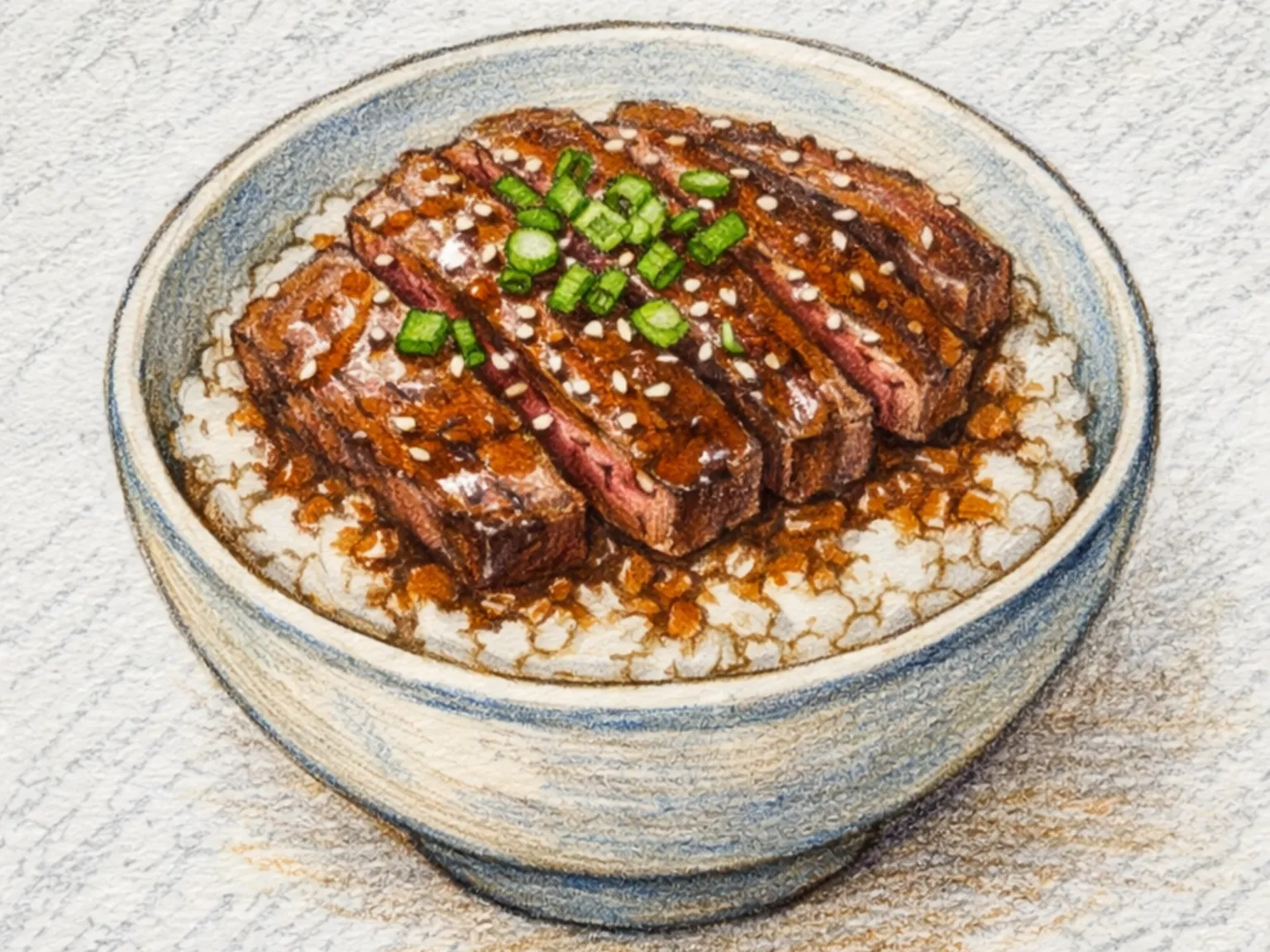
A thick-cut beef steak is seared at high heat until a deep brown crust forms, then sliced and fanned over a bowl of hot rice.
What makes this special
- Resting the steak 3 minutes before slicing keeps juices locked in atop this soy-garlic rice bowl.
- Thick steak seared hard then rested 3 minutes before slicing to retain juices
- Soy-mirin-garlic glaze reduced 1 minute coats each slice with lacquered shine
Key ingredients
Core cooking flow
- 1 Pat the 300 g beef steak dry, then season it evenly with 1/2 teaspoon black pepper.
- 2 Combine 2 tablespoons soy sauce, 1 tablespoon mirin, 1 teaspoon sugar, and 1 teaspoon minced garlic.
- 3 Heat the pan over high heat until very hot, then add 10 g butter.
A thick-cut beef steak is seared at high heat until a deep brown crust forms, then sliced and fanned over a bowl of hot rice. A glaze of soy sauce, garlic, and mirin is spooned over the slices, coating them in a glossy, caramelized finish. As the warm rice absorbs the pan juices, each spoonful carries the full weight of the beef's seared flavor. A runny fried egg or a small dab of wasabi on the side balances the richness with creaminess or heat.
Instructions
Read the steps as a cooking flow: prep, heat, seasoning, doneness control, and finish.
- 1Season
Pat the 300 g beef steak dry, then season it evenly with 1/2 teaspoon black pepper.
Let it stand at room temperature for 10 minutes so it sears instead of steaming, and keep 2 cups cooked rice warm.
- 2Control
Combine 2 tablespoons soy sauce, 1 tablespoon mirin, 1 teaspoon sugar, and 1 teaspoon minced garlic.
Stir until the sugar is no longer visible, so the glaze reduces evenly and the garlic does not clump in the pan.
- 3Control
Heat the pan over high heat until very hot, then add 10 g butter.
When it foams, add the steak and sear without moving it until the surface turns deep brown before flipping.
- 4Finish
Sear the second side over high heat, and hold thick edges against the pan briefly if needed.
Remove the steak when it is slightly under your target doneness, since resting will finish the heat transfer.
- 5Finish
Transfer the steak to a plate and rest it for 3 minutes, then slice thinly across the grain.
If any pan bits are black, wipe them out, but keep the brown juices for the glaze.
- 6Finish
Pour the sauce into the same pan and simmer over medium heat for about 1 minute, until glossy and lightly thickened.
Arrange the steak over warm rice, spoon on the glaze, and serve with wasabi or a runny egg if desired.
After the steps
Pick a recipe that fits this dish.
Continue with shared ingredients, meal pairings, or a similar method.
Recipes That Go Well With This
More Rice →Based on shared ingredients and meal pairing
Pork Rice Bowl (Sweet-Salty Glazed Pork over Rice)
Butadon is a Japanese pork rice bowl that originated in Obihiro, Hokkaido, where thin slices of pork belly or shoulder are simmered with onion in a glaze of soy sauce, mirin, and sugar, then laid over a bowl of steamed rice. The soy salt and sugar sweetness balance precisely as the meat absorbs the sauce, while the onion dissolves gradually into the cooking liquid, contributing a natural sweetness that deepens the glaze. Where the pork meets the pan, the edges caramelize into a slightly charred coating that adds a roasted dimension to the otherwise clean, saucy topping. Hokkaido pork, with its firm texture and higher fat content, is traditional, though any well-marbled cut works. The preparation is genuinely simple - one pan, one sauce, no elaborate knife work - which is exactly why it became a staple weeknight meal across Japan.
Chicken Soboro Rice Bowl (Ground Chicken and Scrambled Egg over Rice)
Soboro-don is a Japanese-style rice bowl that tops steamed rice with two side-by-side mounds: savory minced chicken and sweet scrambled egg. The chicken is seasoned with soy sauce, sugar, mirin, and ginger juice, then stirred constantly with chopsticks over medium heat until it breaks into fine, crumbly grains that are individually coated in glaze. The egg is treated the same way - beaten, poured into a pan, and stirred into soft, fluffy curds. Arranged half-and-half on the rice, the brown chicken and bright yellow egg create a visual contrast that makes the bowl inviting. Both toppings share a gentle sweetness balanced by soy umami, and their fine, loose texture means every bite blends effortlessly with the rice beneath.
Korean Seafood Hot Pot Soup
Haemul-tang is a Korean seafood hot pot that throws together crab, shrimp, clams, and squid in a fiery, brick-red broth. The liquid starts with gochugaru and plenty of garlic, building a spicy base that the seafood then amplifies with its own briny juices. Radish chunks soften as the pot bubbles, thickening the broth slightly and adding a cool sweetness behind the heat. Green onions and cheongyang peppers go in toward the end for a sharp, vegetal bite. The magic of haemul-tang lies in the convergence of flavors: crab shells release a sweet, crustacean stock; clams open to spill their liquor; shrimp and squid contribute distinct textures from snappy to chewy. The pot is brought to the table still at a rolling boil, and diners pick through the shells and tentacles while the broth continues to concentrate.
Yakitori Rice Bowl (Soy-Mirin Glazed Grilled Chicken over Rice)
Direct heat and a repetitive glazing process define the preparation of this chicken skewer bowl. Small pieces of chicken thigh are secured onto skewers and grilled over a flame while a mixture of soy sauce, mirin, and sugar is applied in thin, sequential layers. This technique builds a lacquered surface through caramelization, which directs the sweet and salty flavors to the exterior of the meat. Applying the sauce too heavily in a single pass often leads to burning and an uneven crust. Because chicken thigh contains natural fats, the meat remains moist and tender even under high temperatures. When the cooked pieces are removed from the skewers and placed onto the rice, the excess glaze permeates the grains to provide sufficient seasoning. Sprinkling shichimi togarashi or sansho powder introduces a sharp or citrus-like contrast to the sweetness of the chicken. While chicken breast serves as a leaner alternative, it requires a longer marinating period and a shorter time on the grill to prevent the meat from drying out. The tare sauce can be prepared in advance and stored in the refrigerator for several weeks. Adding a halved soft-boiled egg or sliced scallions provides different textures and prevents the meal from feeling repetitive.
Serve with this
Korean Spicy Blue Crab Hot Pot
Maeun kkotge jeongol is a fiery blue crab hot pot made with two whole crabs broken down and simmered in a gochujang and gochugaru-laced broth. The crab shells and innards gradually release a deep, concentrated shellfish essence into the pot, which layers with the fermented chili paste to produce a broth that is bold and complex rather than simply hot. Daikon radish and tofu absorb the spicy liquid as they cook, becoming flavorful in their own right, while thick green onion stalks add fragrance near the end. This is a communal dish meant to be placed in the center of the table over a portable burner and shared as it simmers, with a little water added as the broth reduces to keep it going through the meal. Stirring the crab innards directly into the broth deepens the umami considerably.
Korean Seasoned Bellflower Root
Doraji -- balloon flower root -- has been used in Korean cooking since the Goryeo dynasty, valued as both a medicinal herb and a staple namul ingredient. Unlike doraji-bokkeum, which stir-fries the root with gochujang and heat, this cold muchim preserves the characteristic firm, snappy crunch that makes doraji distinctive. The roots are shredded along the grain into thin strips, then vigorously rubbed with salt to draw out the saponins responsible for their sharp bitterness, and rinsed multiple times until the water runs clear. A seasoning of gochujang, vinegar, sugar, and sesame oil works into each fibrous strand, layering sweet, sour, and spicy notes over the residual earthiness of the root. This banchan appears on both Chuseok and Seollal holiday tables as one of the five-color namul, where the white of the doraji root represents the metal element in the five-phase system. Because the root holds its crunch well, this dish can be prepared ahead of time without losing texture, making it a practical choice for large gatherings.
Korean Bitter Herb Kimchi
Sseumbagwi kimchi is a traditional spring fermented side dish made from sseumbagwi, a wild bitter herb that grows in Korea during early spring. The herb is soaked in cold water for at least twenty minutes to pull back its pronounced bitterness before being salted to soften the stalks. It is then dressed in a seasoning paste built from gochugaru, sand lance fish sauce, minced garlic, ginger, sweet rice paste, and plum syrup, mixed together with cut scallions. The rice paste adds body to the seasoning so it clings to the herb's thin stems and narrow leaves rather than sliding off. Plum syrup works on both the bitterness and the salt's edge at once, smoothing the overall profile without masking the herb's character. Sand lance fish sauce is preferred over anchovy sauce here because its gentler aroma does not compete with the plant's natural flavor. Five hours of room-temperature fermentation followed by refrigeration sets off lactic acid development, layering tangy depth over the bitter-green base. The flavor peaks around day three when bitterness, acidity, and umami reach the best balance. If the raw herb tastes too sharp, one additional soak in fresh cold water brings it within range before seasoning.
Similar recipes
Chicken and Egg Rice Bowl
Oyakodon simmers bite-size chicken thigh and sliced onion in a soy-mirin broth, then binds everything with a soft-set egg before sliding it over steamed rice. The name means 'parent and child,' referring to the chicken and egg sharing the same bowl. Onion goes into the broth first to release its natural sweetness, followed by the chicken, which cooks just until tender. Beaten eggs are poured in a circular motion and the lid goes on briefly, leaving the egg custardy rather than fully set. That half-cooked egg absorbs the savory-sweet broth and coats each grain of rice. Despite using only a handful of ingredients, the layered umami from soy sauce and mirin gives the dish a satisfying depth.
Mitsuba Oyakodon (Japanese Chicken Egg Rice Bowl with Mitsuba Herb)
Mitsuba oyakodon is a variation of Japan's classic chicken-and-egg rice bowl that adds mitsuba - Japanese wild parsley - as a finishing herb. Chicken thigh and sliced onion are simmered in a sauce of dashi, soy sauce, and mirin until the chicken is cooked through, then beaten eggs are poured over and left to set into a soft, barely-set custard. Mitsuba leaves are scattered on top just before the lid goes on, wilting slightly in the residual heat and releasing a clean, celery-like fragrance that lifts the richness of the egg and chicken. The whole mixture is slid over a bowl of steamed rice. It is everyday home cooking in Japan - quick to prepare yet dependent on timing, since overcooking the egg by even a minute changes the texture entirely.
Japanese Ginger Soy Braised Chicken
Toriniku shigureni is a Japanese-style simmered dish of ground chicken cooked down with julienned ginger, soy sauce, mirin, and sugar until most of the liquid evaporates. The chicken is browned first over medium heat, then ginger is added for its sharp bite before the braising liquid goes in. As the sauce reduces over six minutes, it concentrates into a sweet-salty glaze that clings to the meat. The ginger tames any gamey notes while adding warmth, making this a versatile topping for rice bowls or a compact side dish for packed lunches.