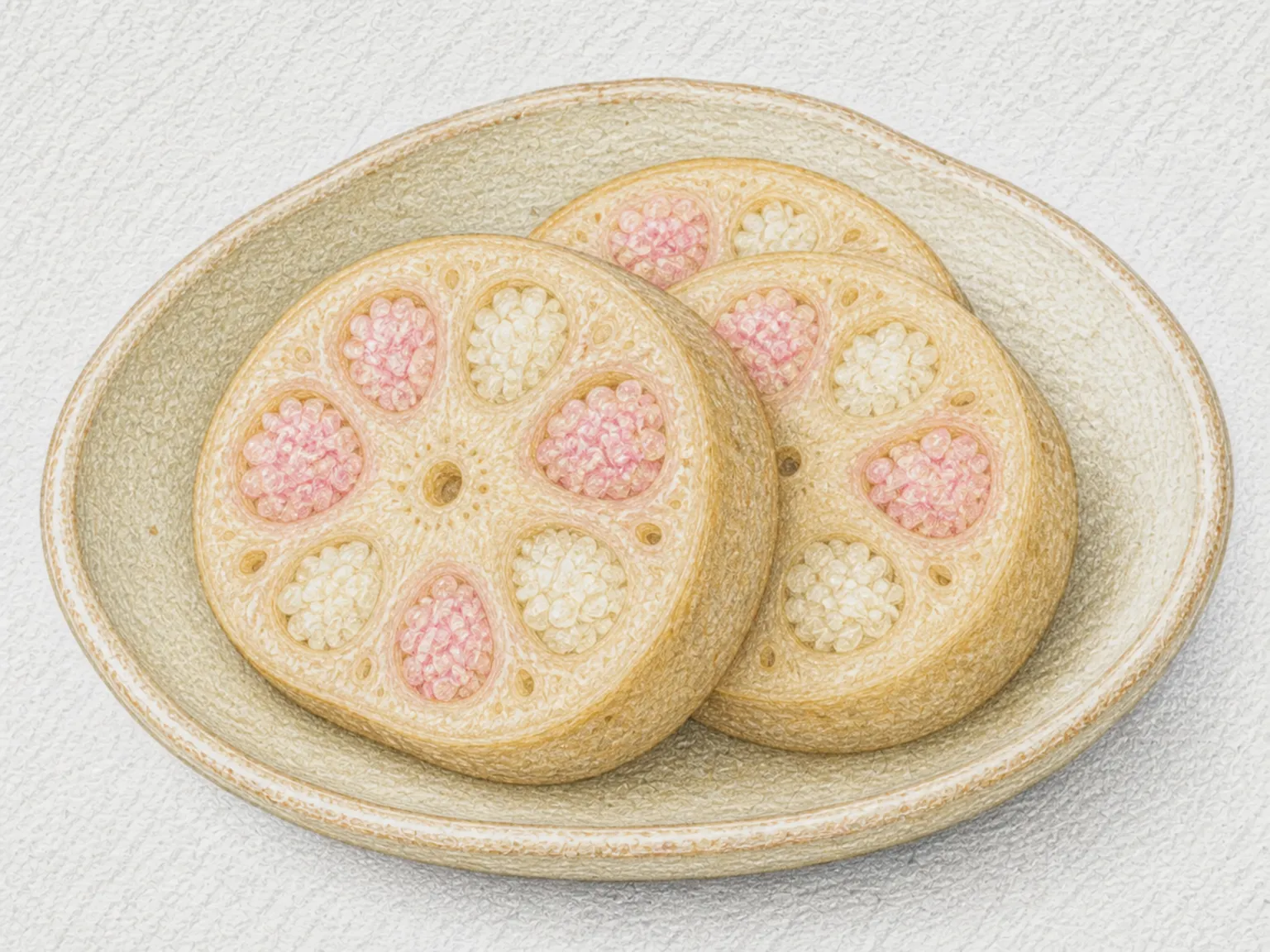
Hasune-mochi (Steamed Lotus Root Stuffed with Rice)
Quick answer
- Total time
- At least 10 hr 30 min
- Level
- Hard
- Servings
- 4 servings
- Ingredients
- 6
About this dish
Sliced, each round shows white and pale pink glutinous rice packed into the channels of the lotus root, a red-and-white pattern meant for celebrations in Kadoma, Osaka.
Read more
Lotus root counts as auspicious because its open holes suggest a clear view of the future, and the clay soil of Kawachi and Kadoma has grown it since the Edo period. After about 2 hours of steaming, the root turns sweet with a light crispness while the rice becomes chewy. Served in 8mm slices with kinako and sweet azuki paste, it eats like a dessert.
Ingredients
Instructions
- 1
Rinse 1 cup glutinous rice twice using part of the 2000ml water and collect the first cloudy rinse in a large container.
Add fresh water to make enough rice-washing liquid to cover 600g lotus root, and soak the rice separately. Refrigerate both at 4°C or below for 8 to 12 hours.
- 2
Prepare two lotus-root sections of similar size, about 300g each, leaving one node closed and cutting only the opposite end straight. Peel, submerge completely in the rice-washing liquid overnight, then rinse once and dry the inside and outside.
- 3
Drain the soaked glutinous rice in a sieve for 20 minutes and divide it exactly in half.
Leave one half white. Dissolve 1 pinch red food coloring in a few drops of water and mix it into the other half for a very pale pink color.
- 4
Fill every channel of one lotus-root section with white rice and the other with pink rice.
Stand the roots upright, tap them gently on the work surface, and guide rice with a chopstick, filling only about 85 percent of each channel so the grains can expand.
- 5
Cover each open cut end with two layers of aluminum foil and tie firmly with cotton kitchen twine.
Line a fully steaming basket with a damp cloth, place the roots side by side, and cover them with another damp cloth.
- 6
Cover and steam over high heat for about 2 hours.
Replenish the steamer with boiling water before it runs dry. From 110 minutes, check that a bamboo skewer enters the thickest lotus root without resistance and no raw rice grains remain at the center.
- 7
Cool the roots for 20 minutes, remove foil and twine, and slice crosswise 8mm thick.
Alternate white and pink rounds on a platter and serve with 40g kinako and 200g sweet azuki paste for dipping. Refrigerate leftovers within 2 hours.
References checked
These references were consulted when this page was prepared or corrected. A source check does not mean the recipe was independently kitchen-tested.
- 일본 농림수산성 うちの郷土料理
『おおさかの郷土料理集~行事食と食文化の伝承』(公益財団法人大阪府学校給食会) · Checked: 2026-08-11
Use-up ingredient planner
Turn these ingredients into two more meals
The overlap excludes basic seasonings. Open the next recipe and your selected dishes will stay with you.
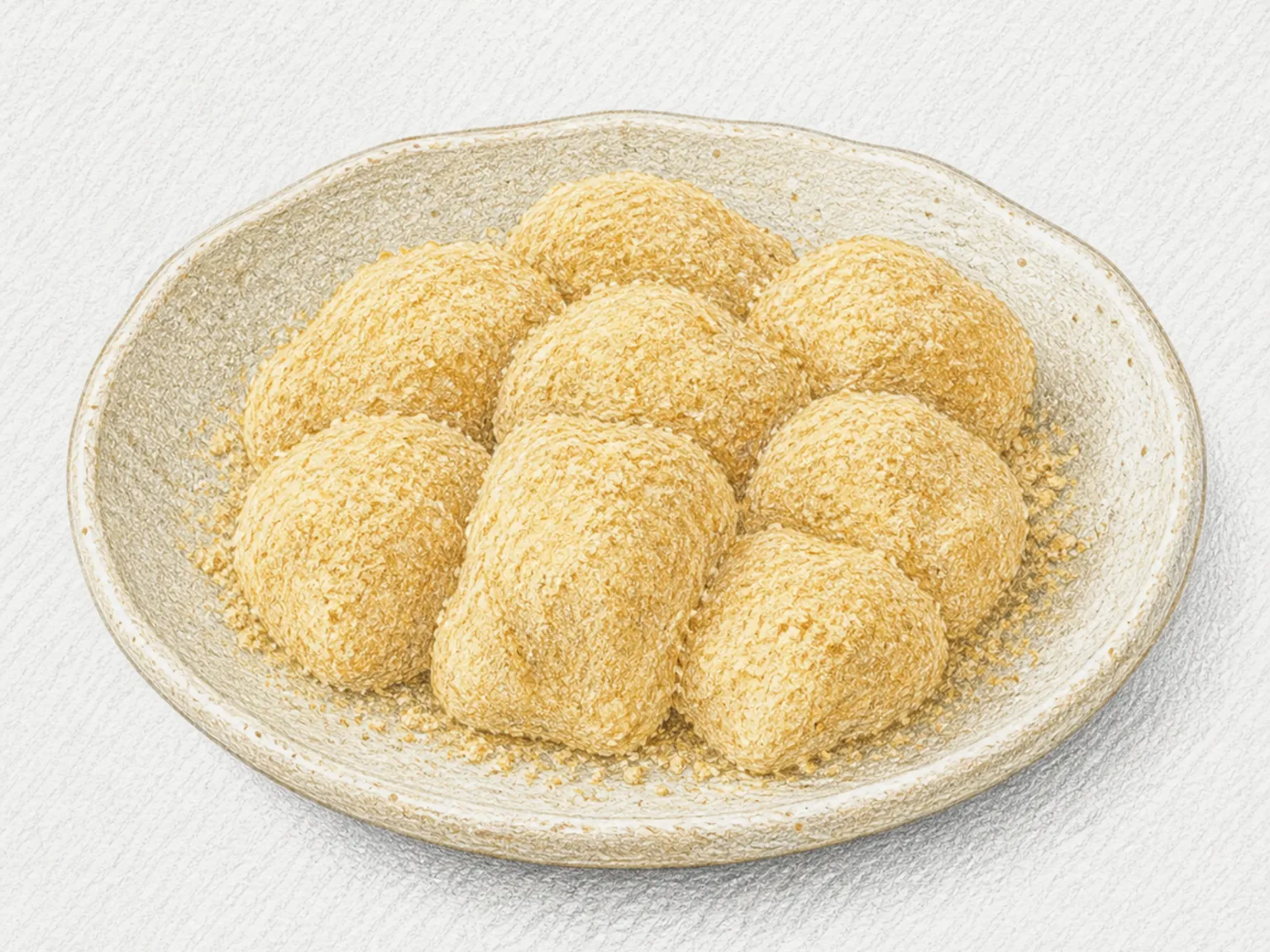
Akaneko (Wheat and Glutinous Rice Mochi)
glutinous rice, kinako roasted soybean flour
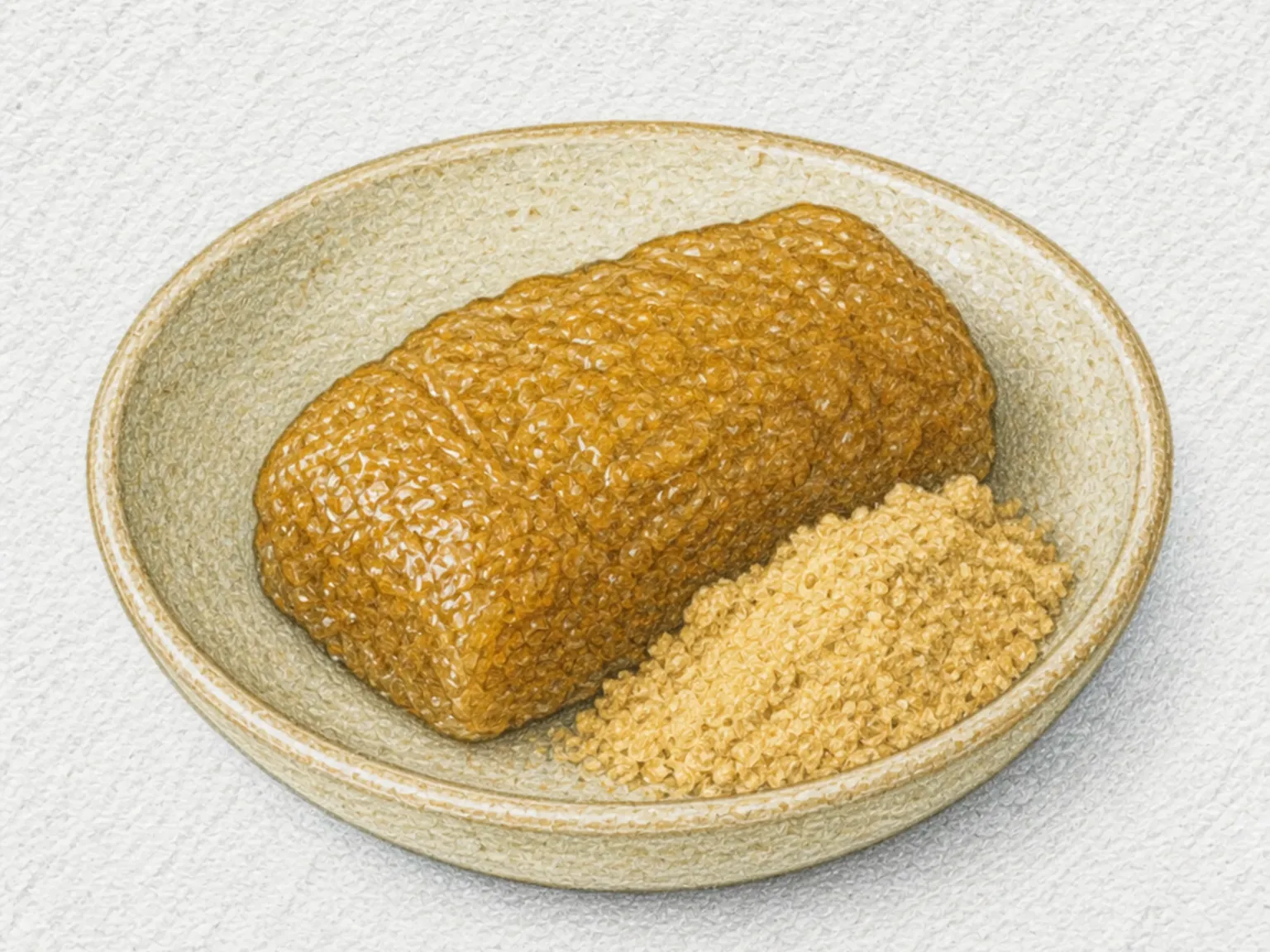
Akumaki (Lye-Cooked Glutinous Rice Cake)
glutinous rice, kinako roasted soybean flour
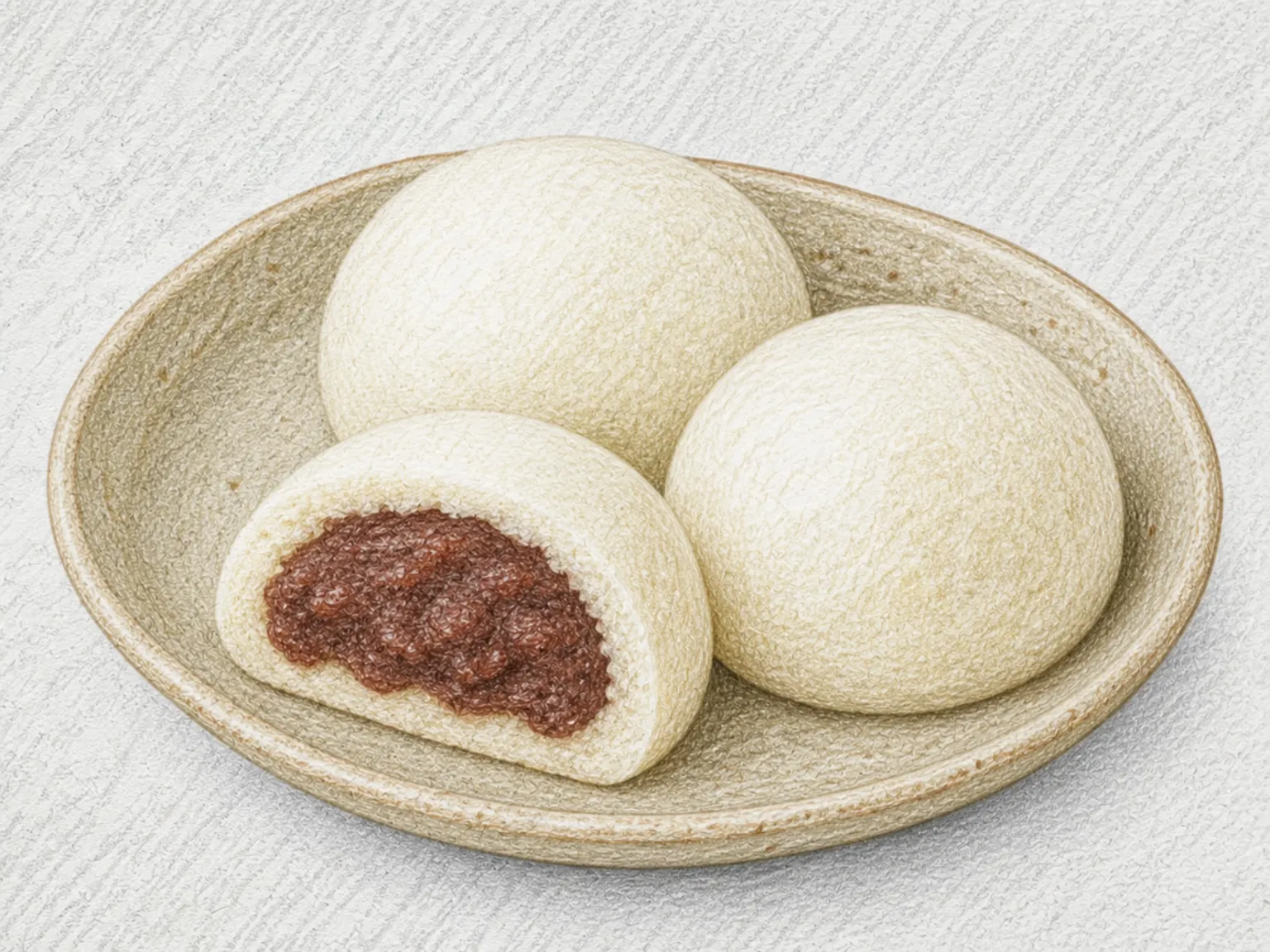
Sake Manju (Koji-Fermented Steamed Buns)
glutinous rice, sweet azuki paste