Sweet Pumpkin Chickpea Salad

Sweet Pumpkin Chickpea Salad

Quick answer

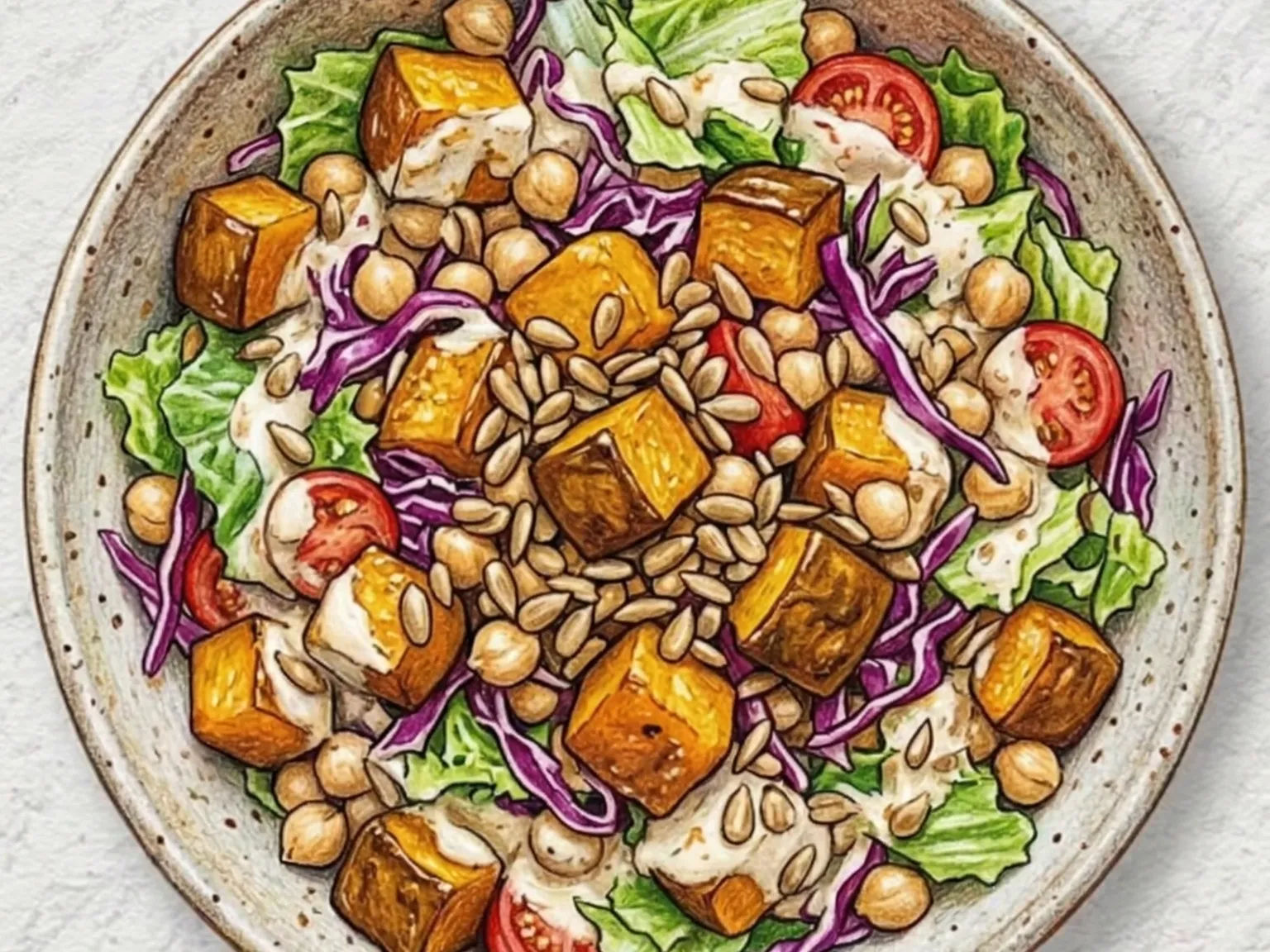
Sweet pumpkin chickpea salad seeds and cubes kabocha squash, roasts it at 200 degrees Celsius for 20 to 22 minutes until the natural sugars concentrate and the flesh soft...

What makes this special

  • Sweet Pumpkin Chickpea Salad features roasted kabocha squash and protein-rich cooked legumes.
  • 200°C roasting for 20-22 minutes maximizes sweet pumpkin's natural sugar
  • Plain yogurt blended with doenjang layers tangy lactic acid over fermented umami
Total time
40 min
Level
Easy
Servings
4 servings
Ingredients
10
Calories
305 kcal
Protein
10 g

Key ingredients

kabocha squashcooked chickpeasred cabbagelettucegrape tomatoes

Core cooking flow

  1. 1 Preheat the oven to 200C. Remove the seeds from 400 g kabocha, cut it into 2...
  2. 2 Spread the kabocha in a single layer so the pieces do not overlap.
  3. 3 Move the roasted kabocha to a wide plate and cool it completely.

Sweet pumpkin chickpea salad seeds and cubes kabocha squash, roasts it at 200 degrees Celsius for 20 to 22 minutes until the natural sugars concentrate and the flesh softens, then tosses it with cooked chickpeas, shredded red cabbage, lettuce, grape tomatoes, and sunflower seeds in a doenjang yogurt dressing. The dressing combines plain yogurt with doenjang, lemon juice, and olive oil, stacking the yogurt's creamy lactic tang over doenjang's earthy fermented depth to build a layered base that holds up against the pumpkin's sweetness without overwhelming it. Chickpeas add a starchy, crumbly texture that contrasts with the soft roasted squash and keeps the salad filling, while sunflower seeds provide a final nutty crunch. Cooling the roasted kabocha completely before mixing is important because residual heat wilts the fresh greens and breaks down their texture. The finished salad is light enough to eat as a standalone meal while still providing genuine staying power.

Prep 18min Cook 22min 4 servings
Recipes by ingredient → doenjang olive oil lemon juice

Instructions

Read the steps as a cooking flow: prep, heat, seasoning, doneness control, and finish.

6 steps
  1. 1
    Prep

    Preheat the oven to 200C.

    Remove the seeds from 400 g kabocha, cut it into 2 cm cubes, and coat the pieces evenly with 1 tbsp olive oil so the edges roast instead of drying out.

  2. 2
    Prep

    Spread the kabocha in a single layer so the pieces do not overlap.

    Roast for 20 to 22 minutes, until the edges darken slightly and a chopstick or fork slides in without hard resistance.

  3. 3
    Finish

    Move the roasted kabocha to a wide plate and cool it completely.

    Do not toss it while warm, because the residual heat will soften the lettuce and red cabbage and make the salad watery.

  4. 4
    Prep

    Shred 120 g red cabbage very thinly.

    Drain 140 g lettuce well and tear it into bite-size pieces, then cut 120 g grape tomatoes into easy-to-eat pieces so the dressing clings evenly.

  5. 5
    Season

    Whisk 120 g plain yogurt with 1 tbsp doenjang, 1 tbsp lemon juice, and the remaining 1/2 tbsp olive oil until smooth.

    If it tastes too salty, loosen it with a little more yogurt.

  6. 6
    Heat

    Place the vegetables, 240 g cooked chickpeas, and cooled kabocha in a large bowl.

    Toss gently with the dressing just until coated, then sprinkle 20 g sunflower seeds on top right before serving for crunch.

After the steps

Pick a recipe that fits this dish.

Continue with shared ingredients, meal pairings, or a similar method.

Recipes That Go Well With This

More Salads →

Based on shared ingredients and meal pairing

Roasted Sweet Potato Chwinamul Salad
Shared ingredient: cooked chickpeas Salads

Roasted Sweet Potato Chwinamul Salad

Roasted sweet potato chwinamul salad combines skin-on sweet potato cubes roasted at 200 degrees Celsius for 22 minutes with chwinamul blanched for just 20 seconds to preserve its distinctive herbaceous bitterness. A dressing of perilla oil, soy sauce, rice vinegar, and minced garlic delivers a rich nuttiness underscored by sharp acidity, which frames the sweet potato's natural sugars without masking them. Chickpeas contribute a mild, starchy body that balances the sweetness, while sunflower seeds and sesame seeds add scattered crunch throughout. Tossing the salad while the sweet potato is still warm rather than fully cooled allows the dressing to absorb into the starchy surface rather than sliding off. Blanching chwinamul longer than 20 seconds causes it to lose its characteristic bitter note and turn dull in color, so transferring it immediately to cold water after blanching is necessary to preserve both flavor and appearance.

Charred Broccolini Doenjang Lentil Salad
Shared ingredient: olive oil Salads

Charred Broccolini Doenjang Lentil Salad

Charred broccolini doenjang lentil salad halves broccolini lengthwise, coats it in olive oil, and chars it in a very hot pan for 4 to 5 minutes until the cut edges darken and take on a bitter, smoky note. Cooked lentils add a starchy, filling body to the bowl. A dressing of doenjang, Dijon mustard, apple cider vinegar, and minced garlic layers fermented depth against sharp acidity. Roughly chopped walnuts break open with each bite and release a fatty, toasted richness. The apple cider vinegar cuts through the salt of the doenjang, keeping the dressing balanced. Draining the lentils thoroughly is necessary to prevent the dressing from diluting, and letting the assembled bowl rest five minutes before serving allows the grains to draw in the seasoning.

Korean Grilled Hard Clams with Doenjang Sauce
Serve together Grilled

Korean Grilled Hard Clams with Doenjang Sauce

Baekhap doenjang gui is a Korean grilled clam dish where hard clams are topped with a doenjang sauce and cooked over direct flame or in an oven. The clams must be purged in salt water for at least three hours before cooking, then shucked so that only the half shell carrying the meat remains. The sauce -- doenjang, minced garlic, cheongyang chili, and sesame oil -- is spread in a thin layer over each clam; too thick a coating and the fermented salt of the doenjang drowns out the natural brininess of the shellfish itself. Over high direct heat for three to four minutes, the doenjang surface scorches lightly, developing a caramelized, roasted aroma while the clam meat contracts and concentrates its juices within the shell. Finely sliced scallion scattered on top adds a green visual accent against the brown doenjang glaze. Timing is critical: the moment the liquid pooled in the concave shell begins to bubble, the clams should be lifted off the heat immediately, because even one additional minute toughens the meat to the point of unpleasantness. The dish depends on the interplay between two distinct kinds of salt -- the oceanic brine of the clam and the fermented depth of the doenjang -- which converge into a single concentrated bite that rewards restraint in the sauce application.

Chwinamul Apple Doenjang Salad
Similar recipe Salads

Chwinamul Apple Doenjang Salad

Chwinamul (aster scaber) is blanched briefly to preserve its herbal, slightly bitter character, then combined with thin-sliced apple and cucumber for crisp sweetness. The dressing is built on doenjang -- Korean fermented soybean paste -- which contributes a depth of savory umami uncommon in typical salad dressings, and a few drops of perilla oil add a nutty, lingering aftertaste. Red onion provides a sharp, pungent edge that keeps the salad from feeling heavy. Blanching time is critical: more than thirty seconds in boiling water strips both the fragrance and the green color, so the chwinamul should be transferred immediately to ice water to stop cooking. When made with freshly harvested spring chwinamul, the herbal aroma comes through at full intensity, and the doenjang dressing makes it a natural fit alongside other dishes on a Korean table.

Serve with this

Kimchi Tofu Alfredo Farfalle (Creamy Kimchi Bow-Tie Pasta)
Pasta Easy

Kimchi Tofu Alfredo Farfalle (Creamy Kimchi Bow-Tie Pasta)

Kimchi tofu Alfredo farfalle is a fusion pasta that counters the richness of a cream-and-Parmesan Alfredo sauce with the lactic acidity of well-fermented kimchi. Garlic bloomed in butter forms the aromatic base, then cream, milk, and Parmigiano are combined into the classic Alfredo sauce, after which chopped kimchi is folded in to introduce fermented tang and a layer of umami that a standard Alfredo lacks. Firm tofu cut into cubes and pan-fried until each side is golden provides a mild, neutral protein element with direct textural contrast against the smooth sauce. Farfalle's pinched center holds pockets of sauce against each piece of pasta, delivering a consistent hit of creaminess in every bite, and freshly ground black pepper draws a sharp line through the richness at the finish. The entire dish moves from pan to plate in about 15 minutes.

🏠 Everyday ⚡ Quick
Prep 10min Cook 15min 2 servings
Soybean Paste Stew with Clams
Asian Easy

Soybean Paste Stew with Clams

Doenjang jjigae with clams is one of the most frequently made stews in Korean households, built on the combination of fermented soybean paste's deep, earthy flavor and the clean briny umami of manila clams. The clams are purged of sand before being added to a pot of doenjang-laced broth, where they open and release their salty, seawater-flavored liquor directly into the soup. The result transforms the base from something merely savory into something distinctly oceanic and complex. Zucchini softens in the bubbling broth and contributes a natural sweetness as it breaks down, while blocks of soft tofu act as sponges, soaking up the seasoned liquid and releasing it in a burst of hot, flavorful broth when bitten into. Sliced cheongyang chili peppers are added to interrupt the heaviness of the fermented paste and sharpen the overall flavor. The stew is typically served in an earthenware pot while still bubbling, alongside rice. Many Koreans ladle the broth directly over their bowl of rice. The recipe adapts to any season: assembled with leftover summer vegetables from the refrigerator for a lighter version, or cooked piping hot in a stone pot through winter.

🏠 Everyday
Prep 12min Cook 25min 2 servings
Blackened Chicken Caesar Salad
Western Easy

Blackened Chicken Caesar Salad

Blackened chicken Caesar salad starts with chicken breast coated thickly in paprika, cayenne, garlic powder, onion powder, and dried herbs before hitting a very hot, dry pan. The spice coating undergoes rapid charring at high temperature, forming a dark, smoky crust that seals in moisture and concentrates the spice aromatics on the surface of the meat. The interior of the chicken stays juicy because the charred crust acts as an insulating barrier, provided the pan is hot enough from the start. Creamy Caesar dressing, made with anchovy paste, egg yolk, lemon, and Parmesan, wraps around the cold, crisp romaine and the sliced hot chicken alike, moderating the cayenne heat without erasing the spice character entirely. Shaved Parmesan adds sharp, salty depth throughout, while croutons introduce a crunchy textural break against the tender chicken and limp lettuce. Because blackening generates substantial smoke, proper ventilation or an outdoor cooking setup is strongly recommended. The dish functions as a full main course rather than a starter salad.

🥗 Light & Healthy 🏠 Everyday
Prep 15min Cook 12min 2 servings

Similar recipes

Chicken Breast Salad (Poached Chicken & Yogurt Dressing)
Salads Easy

Chicken Breast Salad (Poached Chicken & Yogurt Dressing)

Chicken breast is poached slowly at low temperature until fully tender through the center, then pulled apart along the grain and layered over crisp romaine. Bell pepper brings mild sweetness and hard-boiled egg adds substantial richness to the bowl. The dressing combines plain yogurt, mustard, and honey into a coating that sits lightly on the lean chicken while contributing a steady tartness. Corn kernels scatter throughout, releasing a gentle sweetness with each bite and keeping the overall balance from tipping too sharp or too rich. A high-protein, clean-tasting salad that satisfies without heaviness.

🥗 Light & Healthy 🍱 Lunchbox
Prep 20min Cook 12min 2 servings
Korean Sweet Pumpkin Pancake
Pancakes Easy

Korean Sweet Pumpkin Pancake

Danhobak jeon is made by steaming kabocha squash, mashing it, then mixing the puree with glutinous rice flour and a small amount of all-purpose flour before shaping the mixture into rounds and pan-frying them in oil. The glutinous rice flour gives each piece a chewy, mochi-like texture, and the squash provides enough natural sweetness to keep added sugar minimal. The exterior crisps up in oil while the center stays soft and moist, like a compressed squash puree. The squash's natural sugars caramelize lightly against the hot pan, producing a golden color on the surface. Best eaten warm, when the squash's sweet, earthy aroma is most pronounced. Well suited as a snack or dessert.

🍺 Bar Snacks 🧒 Kid-Friendly
Prep 18min Cook 10min 2 servings
Korean Chive Salad with Doenjang Dressing
Side dishes Easy

Korean Chive Salad with Doenjang Dressing

Garlic chives -- buchu -- carry a sharper, more pungent bite than Western chives, and this banchan keeps them raw to preserve every bit of that intensity. Chives are cut into short segments, rinsed in cold water to crisp up the cell walls, then tossed for no more than twenty seconds in a dressing of doenjang, vinegar, and gochugaru. Going beyond that window draws out moisture from the leaves, leaving the whole dish limp and waterlogged before it even reaches the table. The fermented paste locks onto the flat surface of each blade, releasing a salty, umami-heavy punch with every bite. Vinegar cuts through the richness of the doenjang with a light acidity that keeps the finish clean, and the gochugaru adds a dry, lingering heat. Best assembled minutes before serving and eaten alongside a bowl of rice.

🏠 Everyday 🍱 Lunchbox
Prep 8min Cook 2min 2 servings

Tips

Cool roasted kabocha fully before mixing so the salad stays crisp.
If the dressing is too salty, add 1 more tbsp yogurt to balance it.

Nutrition (per serving)

Calories
305
kcal
Protein
10
g
Carbs
39
g
Fat
13
g