Tofu Sesame Salad (Chilled Tofu with Roasted Sesame Dressing)
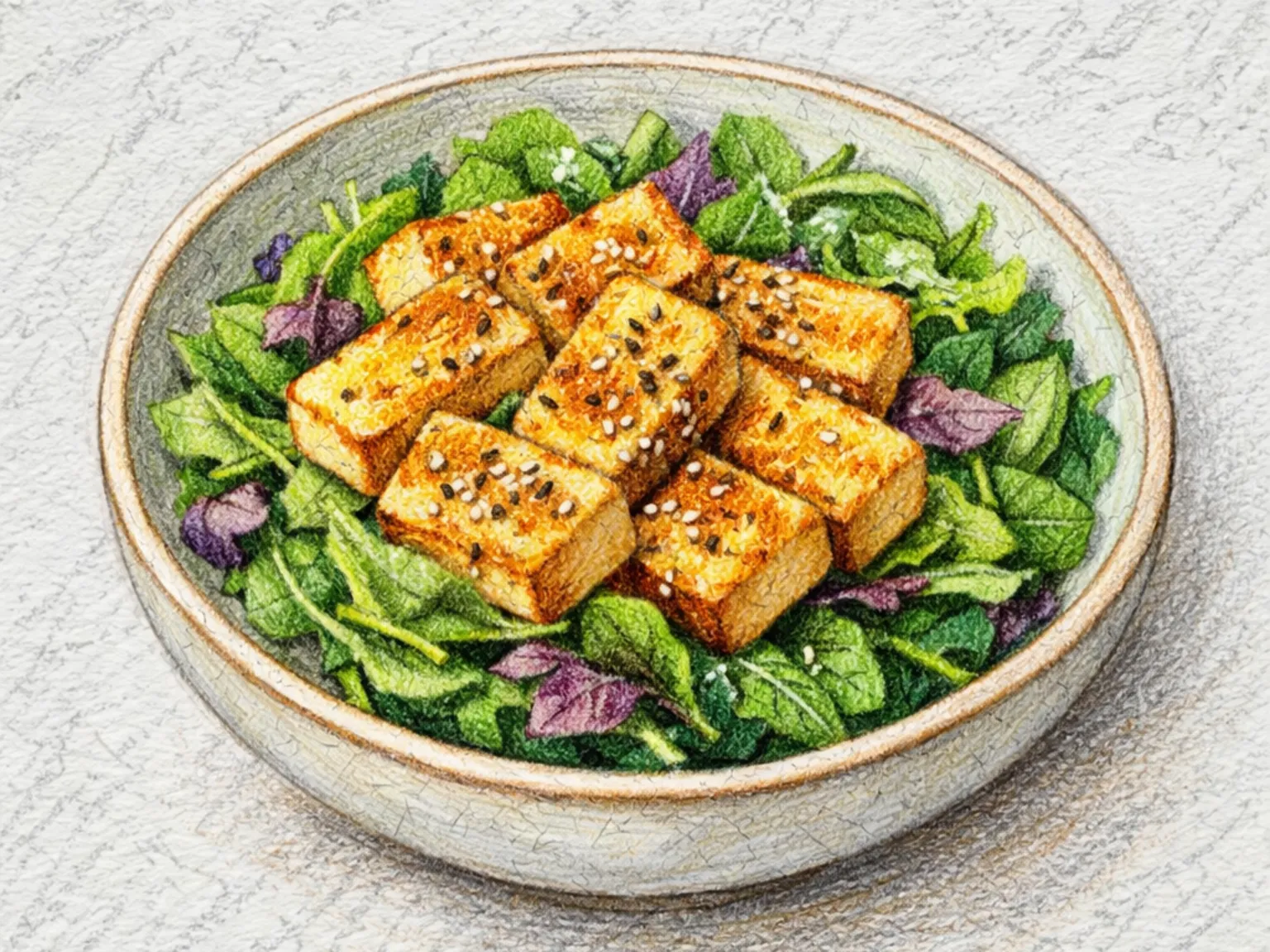
Tofu sesame salad starts with firm tofu cubes seared until golden on all sides, then placed over baby greens, shredded red cabbage, and julienned carrot, finished with a sesame-soy dressing. Pressing the tofu in paper towels for ten minutes removes enough moisture for the pan to produce a sizzling, nutty crust rather than steaming the surface. This crust absorbs the soy from the dressing while the soft interior provides a contrasting texture. The dressing - soy sauce, sesame oil, and vinegar - balances salt, richness, and acidity, tying the mild tofu and raw vegetables into a cohesive bowl. Tossing only half the dressing with the greens first prevents them from wilting before serving, and a final sprinkle of toasted sesame seeds releases a nutty fragrance with each bite.
Adjust Servings
Instructions
- 1
Press tofu in paper towels for 10 minutes, then cut into cubes.
- 2
Lightly oil a pan and sear tofu cubes until golden on all sides.
- 3
Place baby greens, shredded red cabbage, and carrot in a bowl.
- 4
Mix soy sauce, sesame oil, and vinegar; toss half with the vegetables.
- 5
Top with seared tofu and finish with remaining dressing and sesame seeds.
As an Amazon Associate, we may earn from qualifying purchases.
Tips
Nutrition (per serving)
More Recipes

Tofu Salad (Pan-Seared Tofu on Fresh Greens)
Firm tofu is pressed to remove excess moisture, then pan-seared until the outside turns golden and crisp while the inside stays soft. The seared tofu sits on a bed of baby greens, sliced cucumber, and cherry tomatoes. A dressing of soy sauce, sesame oil, lemon juice, and olive oil straddles Korean and Western flavor profiles. The salad is high in plant protein and low in fat, making it a practical option for a light, clean-tasting meal.

Chwinamul Apple Doenjang Salad
Chwinamul (aster scaber) is blanched briefly to preserve its herbal, slightly bitter character, then combined with thin-sliced apple and cucumber for crisp sweetness. The dressing is built on doenjang - Korean fermented soybean paste - which adds a deep umami layer uncommon in typical salad dressings. Perilla oil rounds out the nuttiness, while red onion contributes a sharp edge that keeps the bowl from feeling heavy. The salad is best in spring when chwinamul is freshly harvested and most aromatic.

Chamnamul Pear Tofu Salad
Chamnamul pear tofu salad pan-sears firm tofu cubes for 6-8 minutes until the exterior turns golden and crisp while the inside stays soft. Chamnamul is cut into 5 cm lengths to preserve its fragrant mountain-herb character, and Korean pear is julienned thin so its clean juice sweetens each bite. A dressing of perilla oil, lemon juice, and soup soy sauce delivers nuttiness and umami in a single drizzle, and halved cherry tomatoes contribute a pop of acidity. Slicing the pear just before assembly minimizes browning, and toasted sesame seeds scattered on top add a final layer of warm, nutty aroma.

Bomdong Strawberry Doenjang Salad
Bomdong strawberry doenjang salad pairs the crisp, mild leaves of early-spring bomdong cabbage with ripe strawberries and a dressing built on fermented soybean paste. Doenjang dissolved into olive oil and vinegar creates a savory base that gives the otherwise neutral greens a deep, umami-driven character, while the strawberries' natural acidity neutralizes the paste's saltiness. Walnuts bring a crunchy, toasted contrast between the soft fruit and tender leaves, and sliced cucumber adds a cooling moisture. The salad should be dressed just before serving - tossing too early draws juice from the strawberries and dilutes the bowl.

Korean Tofu Yuja Salad (Pan-Fried Tofu Citrus Dressing)
Dubu yuja muchim brings an uncommon citrus dimension to Korean tofu banchan by using yuja-cheong - a preserve of yuzu-like Korean citrus rind in honey or sugar. Soft tofu is blanched briefly to warm through and firm up slightly, then cut into bite-sized pieces and dressed while still warm so the pores open to absorb the vinaigrette. The dressing blends yuja-cheong with soy sauce, vinegar, and sesame oil - the citrus peel's fragrant bitterness cutting through the tofu's blandness in a way that soy sauce alone cannot. The dish sits in a category between Korean and Western salad sensibilities, light enough to serve as a starter. Yuja has been cultivated on Korea's southern coast - especially Goheung and Namhae - since the Joseon era. Best eaten cold or at room temperature within a few hours of assembly.

Korean Spinach Tofu Soup
Sigeumchi-dubu-guk is a clear, mild Korean soup in which spinach and tofu float in an anchovy-kelp broth seasoned only with soup soy sauce - no fermented paste, no chili. The result is a bowl of quiet transparency where each ingredient's natural flavor is audible: the green, slightly mineral taste of spinach, the neutral creaminess of tofu, and the clean savor of the stock. A small amount of minced garlic builds umami in the background, and a single drop of sesame oil on the surface adds a whisper of richness. This soup is intentionally gentle, which is exactly why Korean families rely on it so heavily - it suits every palate and every age group, from toddlers to grandparents. Cooks often serve it alongside bold, spicy dishes because the clear broth acts as a reset between intense bites. The technique is straightforward but timing matters: tofu should be cut into generous cubes so it holds its shape during simmering, and spinach should enter the pot only at the very end to preserve its color and a touch of texture. The entire preparation takes under fifteen minutes and requires only four or five ingredients, making it one of the most practical everyday soups in Korean cooking.