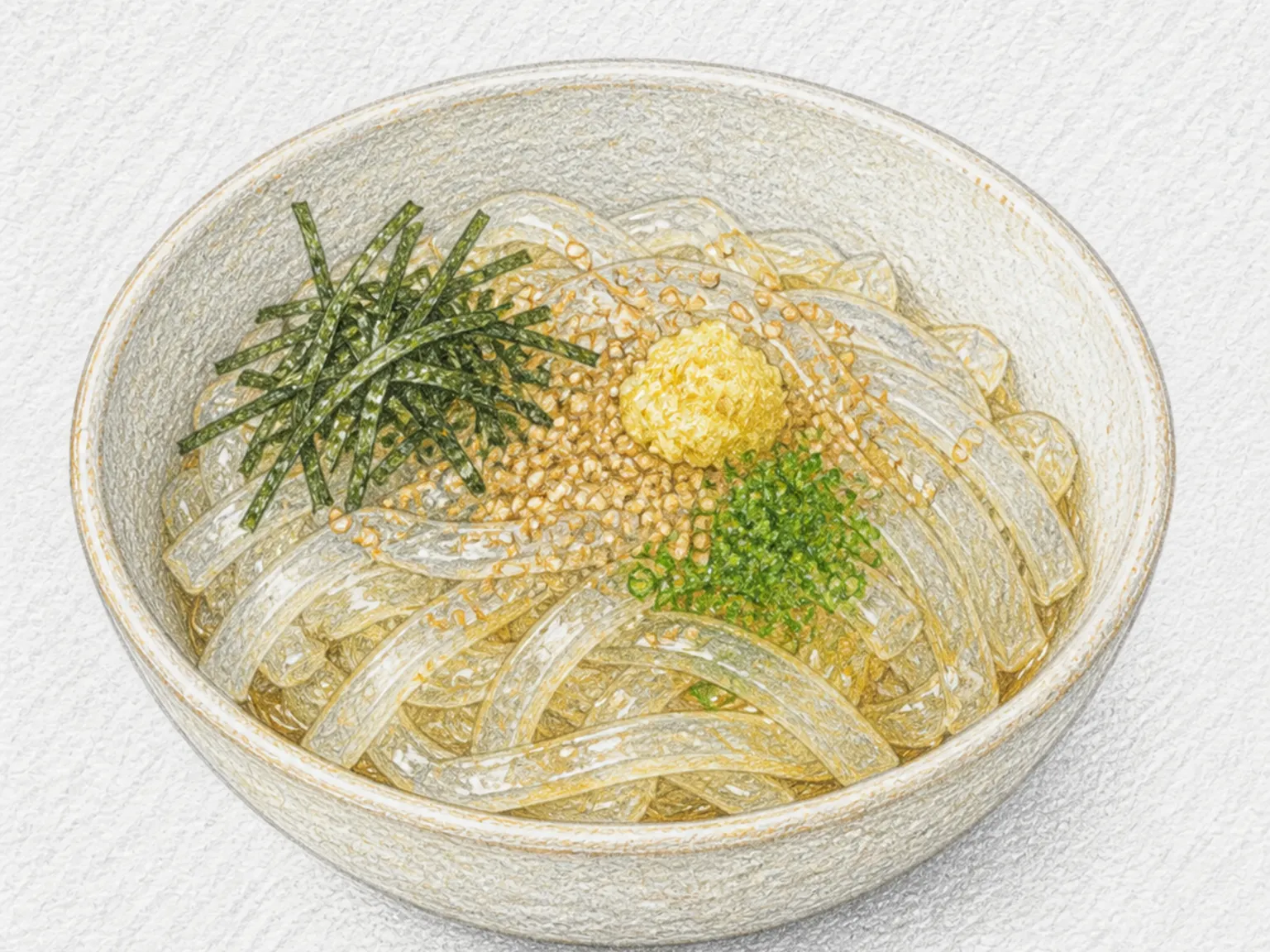
Tokoroten (Pressed Tengusa Jelly Noodles)
Quick answer
- Active time
- 50 min
- Waiting
- See the steps
- Level
- Medium
- Servings
- 12 servings
- Ingredients
- 3
About this dish
Long, translucent strands pushed through a wooden press give tokoroten its noodle shape, though it is really a jelly made from tengusa seaweed.
Read more
Tengusa has been gathered around Shizuoka's Izu Peninsula for centuries, and households and small sweet shops there once sold tokoroten as an everyday children's snack. Local accounts say makusa, common on the west side of Izu, sets soft and slightly sticky, while obusa from the east side gives thicker, firmer strands. On its own it tastes of almost nothing, and the topping decides what it becomes: sweet vinegar, mustard, aonori, and sesame make it savory, while roasted soybean flour and dark sugar syrup turn it into a chilled sweet.
Ingredients
As an Amazon Associate, we may earn from qualifying purchases.
Instructions
- 1
Place the dried tengusa in a large bowl and wash it through several changes of cold water.
Pick out sand, shell fragments, and stray seaweed by hand, then drain in a sieve.
- 2
Combine the tengusa, 3000 ml hot water, and vinegar in a large pot.
Bring to a boil over medium heat, lower the heat to prevent overflow, and simmer for 40 minutes, stirring occasionally, until the seaweed breaks down and the liquid becomes viscous.
- 3
Open a clean cloth bag inside a large bowl and carefully pour in the hot seaweed liquid.
Gather the bag with tongs and strain without squeezing it by hand. Pour the clear liquid into a shallow mold, let steam subside at room temperature, and refrigerate for at least 2 hours until fully set.
- 4
Cut the fully set jelly into bars that fit the tokoroten press.
Place one bar at a time in the cylinder and push slowly over a plate to form fine noodles. Divide among twelve bowls, serve chilled, and add any preferred seasoning immediately before eating.
References checked
These references were consulted when this page was prepared or corrected. A source check does not mean the recipe was independently kitchen-tested.
- 일본 농림수산성 うちの郷土料理
「しずおかのおかず」開港舎 · Checked: 2026-08-11
Use-up ingredient planner
Turn these ingredients into two more meals
The overlap excludes basic seasonings. Open the next recipe and your selected dishes will stay with you.
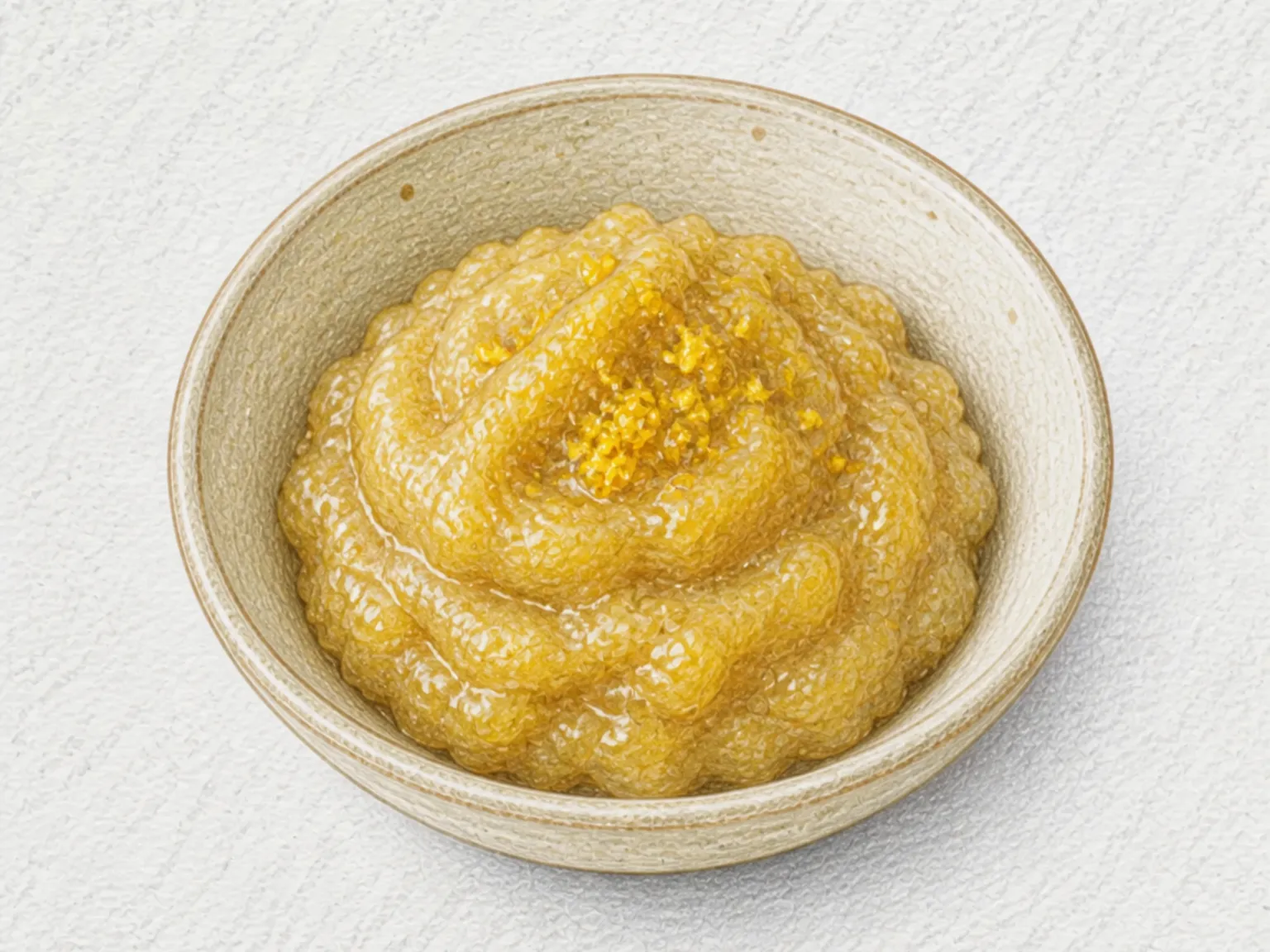
Tanmu Dingaku (Sweet Okinawan Taro Paste)
hot water
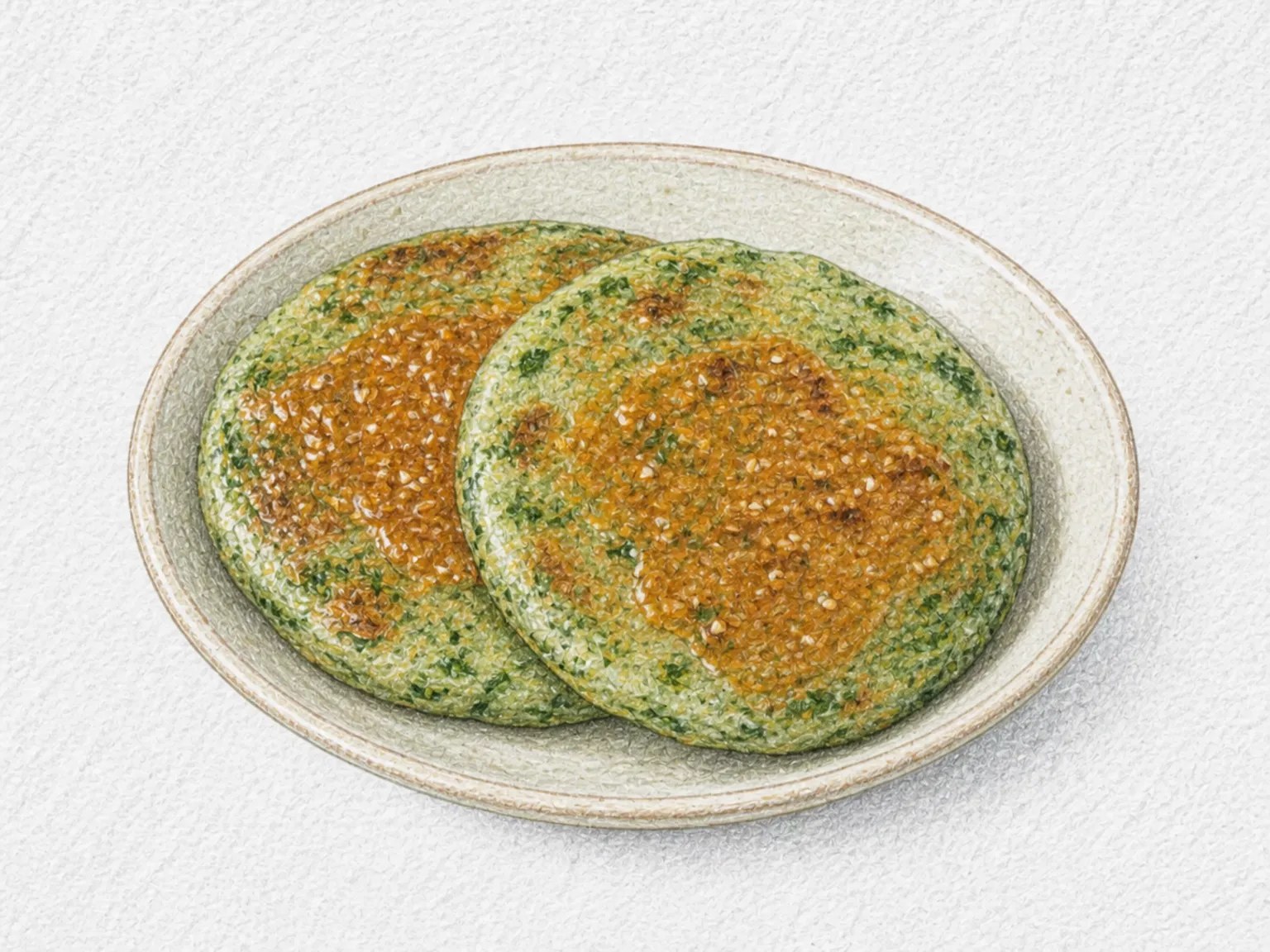
Yakitsuke (Griddled Mugwort Rice Cakes)
hot water
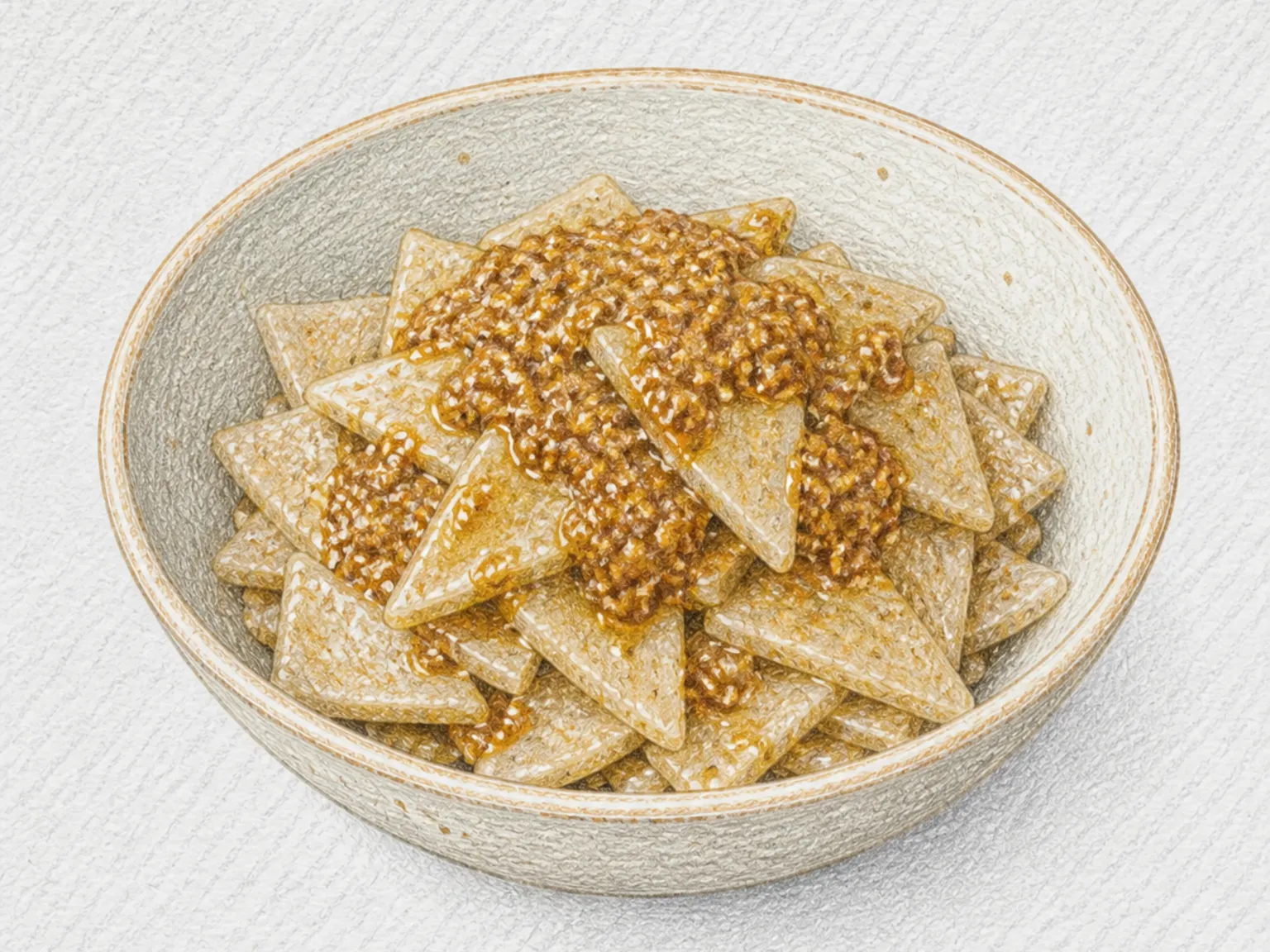
Hatto (Buckwheat Rice-Flour Diamonds with Perilla Miso)
hot water