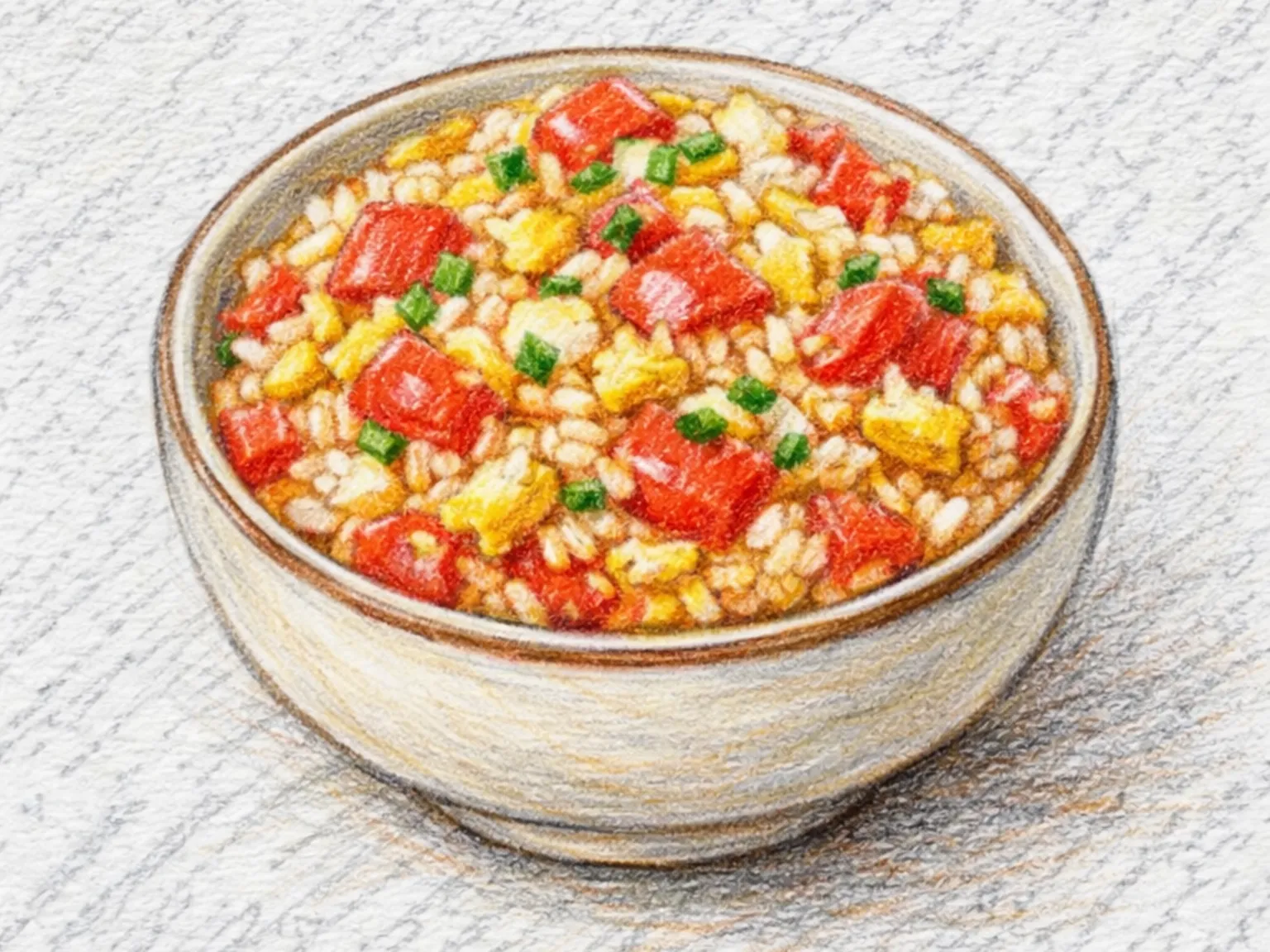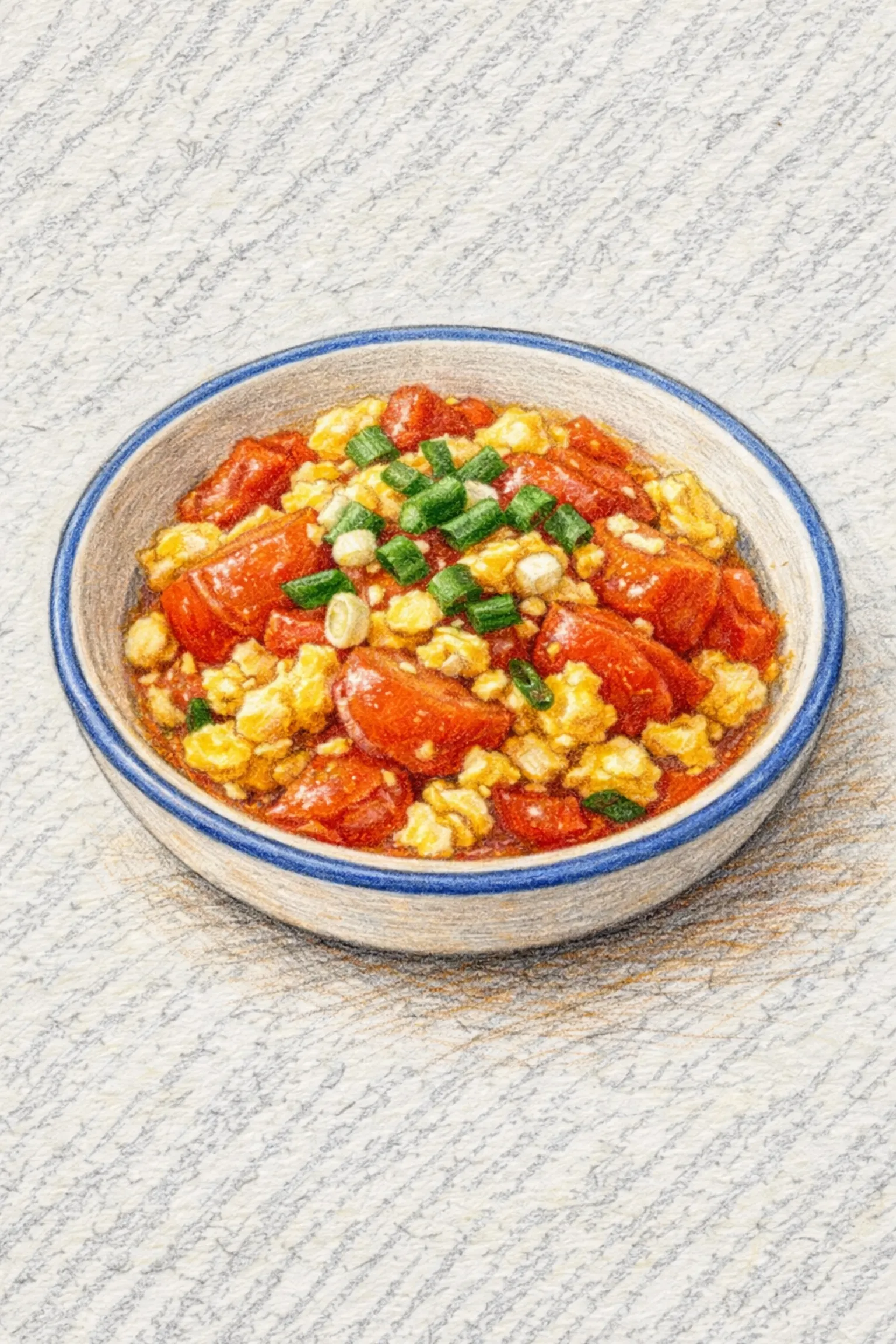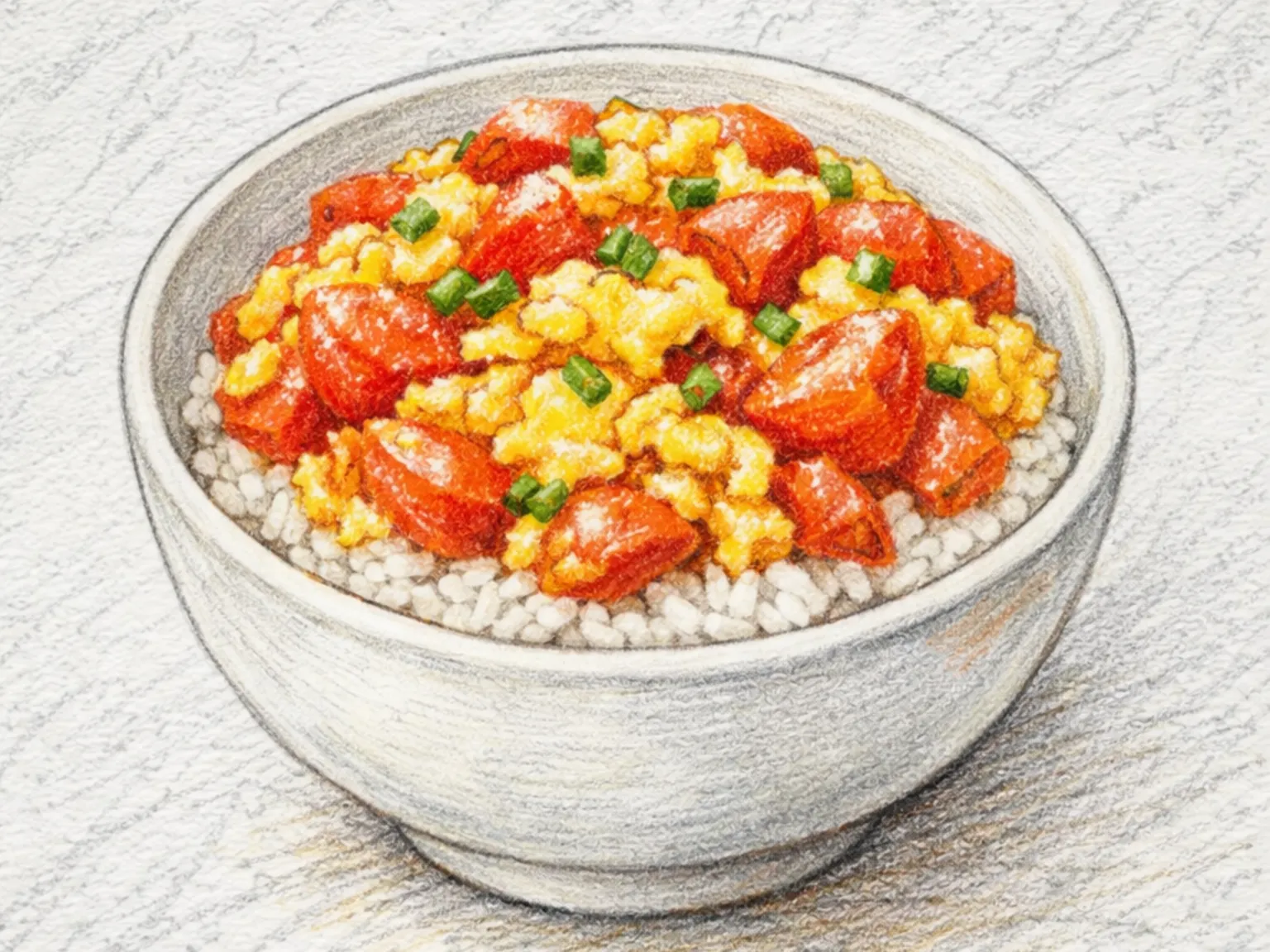
Tomato Egg Rice Bowl (Stir-fried Tomatoes with Soft Scrambled Eggs)
Ripe tomatoes are cut into wedges and stir-fried over high heat until they release their juices and form a natural, tangy sauce. Beaten eggs are poured in and gently folded so they stay soft and barely set, mingling with the tomato pulp. A small amount of sugar and soy sauce brings the sweet-tart balance into focus. Spooned over hot rice, the sauce soaks into the grains and the whole bowl comes together in under ten minutes, drawing on the simplicity of Chinese home cooking.
Adjust Servings
Instructions
- 1
Cut tomatoes into chunks and beat eggs.
- 2
Scramble eggs softly in oil, then set aside.
- 3
Sauté green onion, then add tomatoes.
- 4
Add soy sauce and sugar; cook until tomatoes soften.
- 5
Return eggs and toss for 30 seconds.
- 6
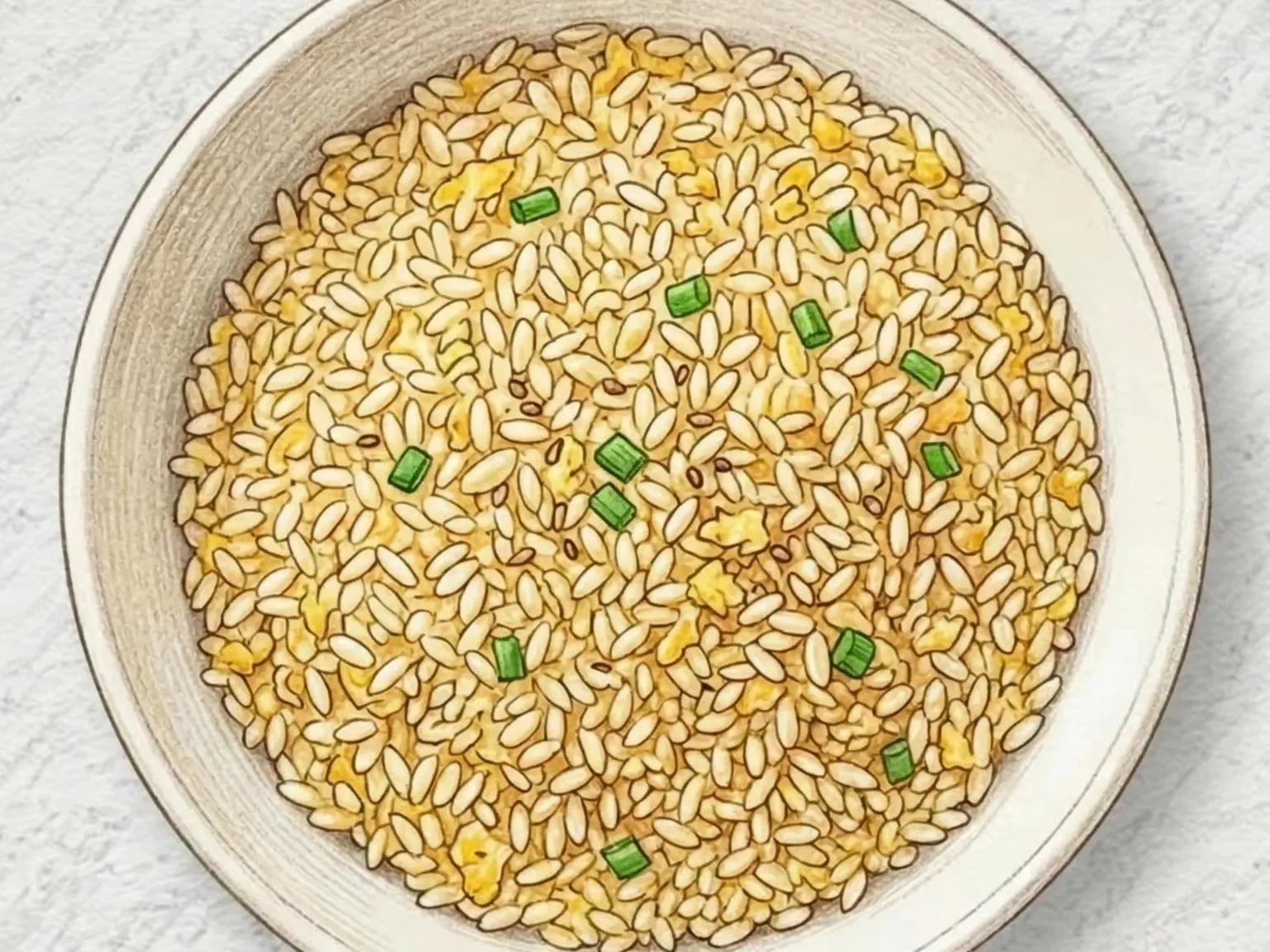
Serve over rice.
As an Amazon Associate, we may earn from qualifying purchases.
Tips
Nutrition (per serving)
More Recipes

Tomato Egg Lamian (Chinese Home-Style Tomato Scrambled Egg Noodle Soup)
Tomato egg lamian is a Chinese home-style noodle soup where ripe tomatoes are sauteed until they break down into a tangy, slightly sweet broth. Soft-scrambled eggs are folded in, adding mild richness. Fresh wheat noodles go directly into the pot, picking up the broth's flavor as they cook. No heavy spices are involved - the dish relies on the natural taste of its few ingredients. It takes about 27 minutes total and is widely eaten across China as an everyday meal.

Korean Eggplant Rice Bowl
Gaji deopbap is a Korean eggplant rice bowl where sliced eggplant is pan-fried quickly in generous oil and then braised briefly with ground pork in a soy-based sauce. Soaking the eggplant in salted water for five minutes before cooking draws out bitterness. High heat is essential - eggplant absorbs oil rapidly, and fast searing creates a lightly crisp exterior while the inside collapses into a silky, almost creamy texture. The soy, sugar, and garlic sauce reduces in two minutes into a dark glaze that coats each piece, while the ground pork adds a savory depth that makes the dish feel more substantial. The sauce pools around the base of the rice and soaks into the grains, ensuring consistent flavor throughout the bowl. Green onion and sesame oil finish the dish. Summer eggplant, when the flesh is at its softest and most yielding, produces the best results.

Korean Kimchi Rice Bowl (Stir-Fried Aged Kimchi over Steamed Rice)
Stir-frying aged kimchi drives off moisture and triggers caramelization, mellowing the sourness into a deeper, sweeter intensity. A splash of soy sauce and sesame oil adds salty nuttiness to the charred edges. Topped over plain rice with a single fried egg, this bowl is deceptively simple - yet using well-fermented kimchi (mukeunji) introduces layers of tangy complexity that elevate it beyond its minimal ingredient list. The entire dish comes together in under fifteen minutes, making it the go-to Korean rice bowl when the pantry is nearly bare.

Korean Tofu Seaweed Egg Rice Bowl
Dubu gim gyeran deopbap is a Korean rice bowl that stacks golden pan-fried tofu and soft scrambled egg over rice, then blankets everything in roasted seaweed flakes. The tofu is pressed dry, cut into cubes, and seared until the edges turn crisp before being tossed briefly with soy sauce and syrup to form a salty-sweet glaze. The eggs are scrambled to a soft, barely-set consistency that contrasts with the tofu's firm bite. Crumbled seaweed scattered on top adds a brittle crunch and a toasty marine aroma, while a final drizzle of sesame oil ties the components together. The dish requires only three common refrigerator staples - tofu, eggs, and dried seaweed - and comes together in about ten minutes, making it one of the most practical everyday meals when time and ingredients are both limited.

Korean Pollock Roe Butter Rice Bowl
Lightly seared pollock roe and a knob of butter are placed on steaming rice and mixed together just before eating. The salty intensity of the roe meets the creamy richness of melted butter, creating a concentrated umami flavor that coats every grain. Cooking the roe for only about a minute in butter keeps its texture from turning dry and crumbly. A garnish of seaweed flakes, chopped chives, and sesame seeds rounds out the bowl with nutty fragrance and a touch of crunch.

Korean-Chinese Chicken Broth Noodles
Gis-myeon is a Korean-Chinese noodle soup where thin wheat noodles sit in a clear chicken broth with delicate egg ribbons floating on the surface. The broth is made by simmering chicken breast, which is then shredded fine and returned as a topping. Beaten egg poured in a thin stream into the boiling stock forms silk-like strands that add a soft, velvety layer to the liquid. Seasoning is kept to soup soy sauce and salt, preserving the broth's clean, light character. A small amount of starch slurry thickens the liquid just enough for it to cling to the noodles, giving each mouthful a gentle viscosity.