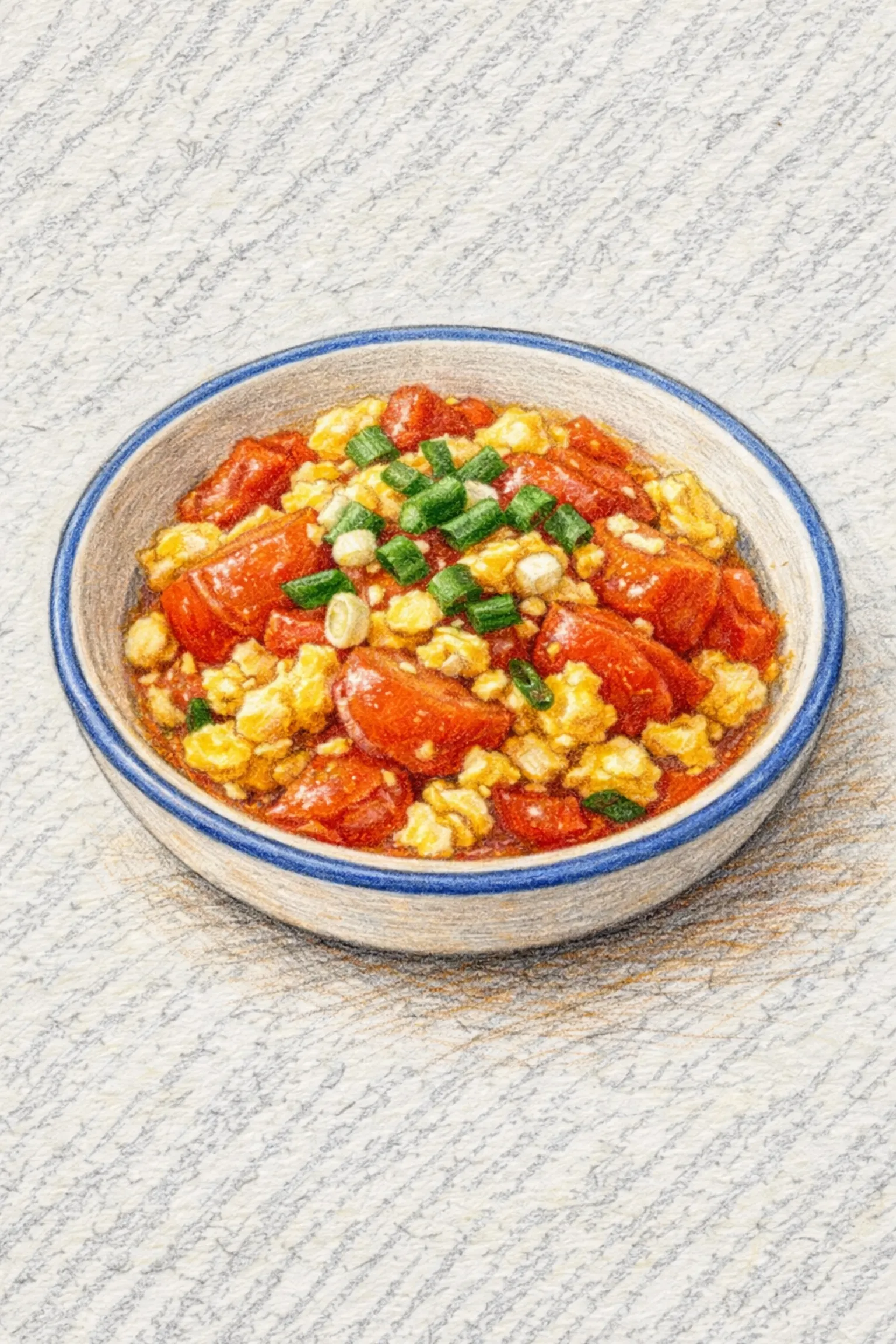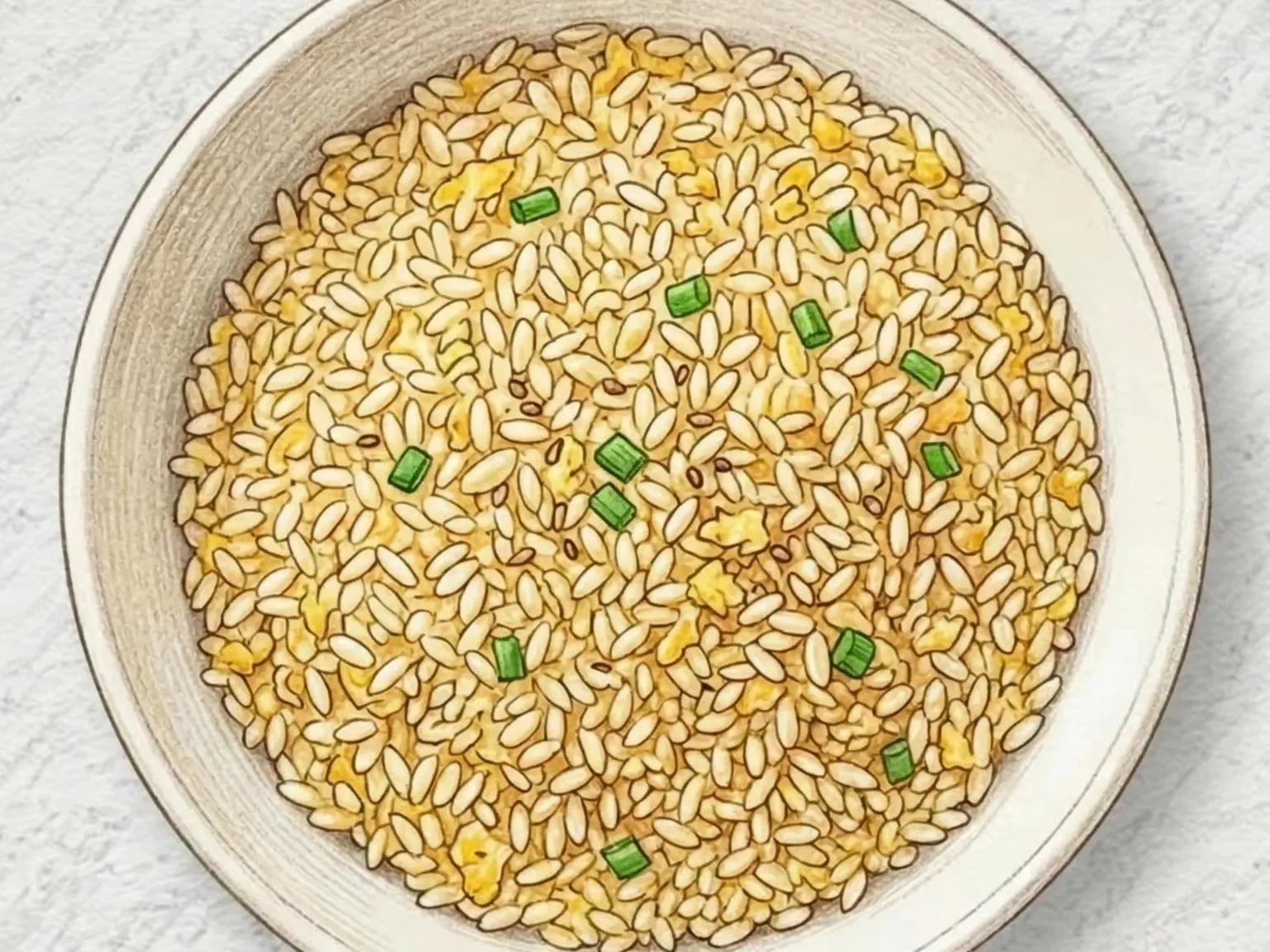
Korean Tomato Egg Fried Rice
Rice Easy

Korean Tomato Egg Fried Rice

Quick answer

Eggs are scrambled first and set aside, then tomatoes are stir-fried in the same pan until their juices burst and coat the wok.

What makes this special

  • Korean tomato egg fried rice absorbs sweet-tart juices while maintaining a light wok char.
  • Eggs scrambled and removed first keeps them fluffy throughout
  • Tomato juice reduced to a sauce coats every rice grain
Total time
20 min
Level
Easy
Servings
2 servings
Ingredients
8
Calories
430 kcal
Protein
15 g

Key ingredients

cooked ricetomatoeseggssaltsugar

Core cooking flow

  1. 1 Remove the cores from 2 tomatoes and cut them into 1.5 cm pieces.
  2. 2 Beat 3 eggs evenly with 0.5 teaspoon salt.
  3. 3 Add the tomatoes to the same pan and stir-fry over medium-high heat for about 2 minutes.

Eggs are scrambled first and set aside, then tomatoes are stir-fried in the same pan until their juices burst and coat the wok. Day-old or freshly cooked rice goes in next, tossed at high heat so the grains absorb the tomato's sweet-tart moisture while staying individually distinct. The scrambled egg is folded back in at the end, distributing soft, fluffy curds throughout the fried rice. Rooted in the Chinese classic of tomato and egg, this version turns those familiar flavors into a satisfying one-bowl fried rice.

Prep 10min Cook 10min 2 servings

Instructions

Read the steps as a cooking flow: prep, heat, seasoning, doneness control, and finish.

6 steps
  1. 1
    Heat

    Remove the cores from 2 tomatoes and cut them into 1.5 cm pieces.

    Thinly slice 1 stalk of green onion, then loosen 2 bowls of cooked rice so clumps break apart before stir-frying.

  2. 2
    Control

    Beat 3 eggs evenly with 0.5 teaspoon salt.

    Heat the pan over medium heat, add the eggs, and cook only until large soft curds form, then remove them before they dry out.

  3. 3
    Control

    Add the tomatoes to the same pan and stir-fry over medium-high heat for about 2 minutes.

    When the edges soften and juice begins to release, add 1 teaspoon sugar to round out the acidity.

  4. 4
    Season

    Pour 1 teaspoon soy sauce around the edge of the pan so it sizzles and smells savory.

    Cook for 1 more minute until the tomato turns saucy and slightly thick, stirring to prevent scorching.

  5. 5
    Step

    Raise the heat to high and add 2 bowls of rice, pressing and tossing with a spatula to separate the grains.

    When the grains are coated red and no excess moisture pools, return the eggs.

  6. 6
    Finish

    Fold gently for about 30 seconds so the egg pieces stay fluffy instead of breaking apart.

    Turn off the heat, add 1 teaspoon sesame oil and the green onion, then serve immediately while moist and hot.

After the steps

Pick a recipe that fits this dish.

Continue with shared ingredients, meal pairings, or a similar method.

Recipes That Go Well With This

More Rice →

Based on shared ingredients and meal pairing

Korean Egg Fried Rice (Quick Wok-Tossed Grain Bowl)
Shared ingredient: cooked short-grain rice Rice

Korean Egg Fried Rice (Quick Wok-Tossed Grain Bowl)

Gyeran-bokkeumbap is the most fundamental Korean fried rice, built from two beaten eggs and one bowl of cooked rice and finished in under ten minutes. The eggs go into a smoking-hot oiled pan, and the rice is added the moment they are half-set, then tossed rapidly so every grain picks up an individual egg coating that makes the rice fluffy and lightly glossy rather than clumped. Cold leftover rice performs best because its lower moisture lets the grains separate cleanly during stir-frying, but freshly cooked rice spread out and briefly cooled reduces sticking enough to be workable. A thin line of soy sauce poured along the rim of the pan caramelizes on contact and carries a trace of smokiness through the rice. A finishing drizzle of sesame oil and a scattering of sliced green onion add a toasty fragrance that completes this simple but satisfying base. The ratio of egg to rice is sturdy enough that a handful of kimchi, diced ham, or refrigerator scraps can be stirred in without changing the essential character of the dish.

Korean Seafood Fried Rice
Shared ingredient: cooked short-grain rice Rice

Korean Seafood Fried Rice

Mixed seafood including shrimp, squid, and mussel meat is stir-fried together on high heat until a smoky wok char develops. Day-old cold rice works best because its lower moisture content lets the grains separate cleanly in the pan, and seasoning with soy sauce and oyster sauce layers additional depth on top of the seafood's own brininess. Cracking the eggs into the pan first and immediately tossing the rice on top coats each grain in a thin shell of egg, yielding a lightly crisp exterior. Sesame oil is drizzled only after the heat is off so its fragrance stays intact.

Korean Seasoned Pollock Roe Banchan
Serve together Side dishes

Korean Seasoned Pollock Roe Banchan

Myeongranjeot-muchim dresses raw salted pollock roe with a near-minimal seasoning - a paradoxical dish where less seasoning produces more flavor, because the roe's own brininess and umami are the point. Korean myeongranjeot differs from Japanese mentaiko in being less aggressively salted and not coated in chili marinade by default. The membrane is peeled away and the loose eggs are placed in a bowl with sesame oil, a pinch of gochugaru, and finely sliced scallion, then folded together gently - vigorous stirring crushes the individual eggs and destroys the pop-on-the-tongue texture that defines the dish. The gochugaru adds a whisper of warmth and color without masking the roe's marine depth. Spooned over hot rice and mixed through, this banchan is an intense rice-thief - a small portion can carry an entire bowl of steamed rice. Substituting perilla oil for sesame oil shifts the flavor profile toward a cleaner, more neutral nuttiness.

Korean Curry Fried Rice (Golden Spiced Chicken Fried Rice)
Similar recipe Rice

Korean Curry Fried Rice (Golden Spiced Chicken Fried Rice)

Curry bokkeumbap is a Korean fried rice where curry powder coats each grain with warm spice and gives the rice a vivid golden color. Chicken breast, onion, carrot, and bell pepper are stir-fried together before the rice goes in, distributing protein and vegetables evenly through every serving. The curry fragrance develops gradually with each bite - more present than plain fried rice but lighter than a curry sauce, landing at a satisfying middle point between the two. Bell pepper adds sweetness and a visual contrast of color against the golden rice. Topping with a fried egg raises the dish further: when the yolk breaks and mixes into the rice, a layer of creaminess runs through each bite. The recipe works well with day-old rice and requires few ingredients, making it a practical weeknight meal.

Serve with this

Korean Young Napa Kimchi (Spring Cabbage Quick Ferment)
Kimchi Medium

Korean Young Napa Kimchi (Spring Cabbage Quick Ferment)

Eolgari kimchi is a spring kimchi made with young napa cabbage, briefly salted for twenty to thirty minutes, then dressed in gochugaru, fish sauce, garlic, and glutinous rice paste before fermenting at room temperature for about a day. Limiting the salting time to no more than thirty minutes is important: the young cabbage's thin leaves and tender stems absorb salt quickly, and over-salting destroys the crisp texture before fermentation even begins. Because the leaves are thinner and more porous than those of mature napa, the seasoning penetrates quickly and fermentation produces a pleasant acidity within twenty-four hours. Salted shrimp compensates for the short fermentation period by adding immediate depth, and the young cabbage itself contributes a clean sweetness that balances the chili heat without any added sugar. Using a generous amount of glutinous rice paste helps the seasoning cling evenly to each leaf, which supports uniform fermentation throughout the batch. This is a seasonal kimchi meant as a lighter, fresher alternative to aged kimchi as temperatures begin to rise in spring.

🏠 Everyday 🍱 Lunchbox
Prep 40min Cook 10min 4 servings
Refreshing Spicy Mulhoe Broth
Soups Easy

Refreshing Spicy Mulhoe Broth

Refreshing Spicy Mulhoe Broth is a Korean cold soup base for raw fish dishes. This recipe combines red pepper paste, red pepper powder, vinegar, sugar, plum syrup, and minced garlic. The mixture of six tablespoons of vinegar and two of plum syrup provides a double acidity that blocks fishy notes from seafood. Adding one hundred milliliters of lemon-lime soda introduces carbonation that lifts a bright, airy note in the broth. Alternatively, using pear juice instead of soda offers a sophisticated sweetness. To prepare, mix the paste first to remove dry pockets, stir in water, and add the soda last to preserve carbonation. Chill the broth for at least two hours or ferment it for a day to deepen the flavor. Serving it semi-frozen as a slushy lets the ice dilute the seasoning gradually as sashimi thaws.

🔥 Trending Now ⚡ Quick
Prep 15min Cook 5min 2 servings
Korean Kimchi Bean Sprout Stew
Stews Easy

Korean Kimchi Bean Sprout Stew

This jjigae simmers fermented kimchi and soybean sprouts in an anchovy-based stock for a broth that is both refreshing and sharply spiced. The soybean sprouts contribute a crisp bite and a clean, neutral flavor that tempers the kimchi's fermented tang and chili heat, keeping the overall taste from feeling one-dimensional. Soft tofu adds creaminess and a gentle texture contrast, while onion provides background sweetness and green onion brings a fresh, aromatic note. Soup soy sauce and gochugaru are used to season, producing a clear, clean spiciness without muddying the broth. In Korean households, this jjigae is frequently eaten in the morning or as a hangover remedy, valued for its simplicity and its ability to settle the stomach while still delivering a satisfying depth of flavor.

🏠 Everyday ⚡ Quick
Prep 10min Cook 20min 2 servings

Similar recipes

Korean Beef Fried Rice (Soy-Marinated Ground Beef Stir-fried Rice)
Rice Easy

Korean Beef Fried Rice (Soy-Marinated Ground Beef Stir-fried Rice)

Sogogi bokkeumbap stir-fries soy-marinated ground beef with diced vegetables and day-old rice over high heat for a deeply savory fried rice. The beef goes in first, rendering its fat and leaving behind a flavorful fond that coats the pan. Onion, carrot, and zucchini follow, cooking just until their edges soften and their natural sugars begin to caramelize. Cold rice is added and tossed vigorously to break up clumps, picking up the soy seasoning and meat juices as it fries. A final drizzle of sesame oil right before plating adds a fragrant, nutty finish. The beef infuses the rice with a meaty depth while the vegetables keep the dish from feeling heavy, making it a quick, satisfying meal from everyday pantry ingredients.

🏠 Everyday 🍱 Lunchbox
Prep 10min Cook 10min 2 servings
Korean Deep-Fried Egg (Battered Boiled Egg with Crispy Golden Shell)
Street food Easy

Korean Deep-Fried Egg (Battered Boiled Egg with Crispy Golden Shell)

Gyeran-twigim is a Korean street snack of peeled boiled egg coated in a thin cold-water batter and fried at 170 degrees Celsius until the shell turns golden and crisp. The batter is mixed minimally, just enough to combine the frying powder and cold water without lumps, because a thinner coat lets the egg's own flavor carry through while a heavy coat buries it. When the egg is soft-boiled, the yolk stays semi-liquid inside the crunchy shell, creating a dramatic contrast the moment the outer crust breaks. Hard-boiling produces a crumbly, dry yolk with a dense, satisfying texture instead. A pinch of coarse salt is the only seasoning needed to bring out the egg's natural richness. Dipping the fried egg into the spicy-sweet broth from a bowl of tteokbokki transforms it entirely, as the porous batter absorbs the sauce and takes on the deep, savory-sweet heat of the stew.

🧒 Kid-Friendly 🌙 Late Night
Prep 10min Cook 8min 2 servings
Korean Snack Bar Omelet Rice
Street food Easy

Korean Snack Bar Omelet Rice

Finely diced onion, carrot, and ham are stir-fried first to drive off moisture and draw out their natural sweetness, then cold leftover rice is added and tossed over high heat until every grain separates cleanly. Ketchup and Worcestershire sauce season the fried rice with a sweet-tangy balance that defines the bunsik-style flavor. The egg, mixed with a pinch of salt, is poured into a lightly oiled pan over low heat and spread into a thin sheet, then the fried rice is placed at the center and the egg is folded around it while still soft and barely set. Low heat is the key to keeping the omelet smooth and unbroken. The roll is shaped into an oval on the plate and finished with a neat zigzag of ketchup across the top. The warm egg shell traps the heat of the rice inside, keeping the filling moist until the first cut.

🧒 Kid-Friendly 🌙 Late Night
Prep 15min Cook 18min 2 servings

Tips

Cooking tomatoes longer brings out sweetness and intensifies the sauce.

Nutrition (per serving)

Calories
430
kcal
Protein
15
g
Carbs
62
g
Fat
14
g