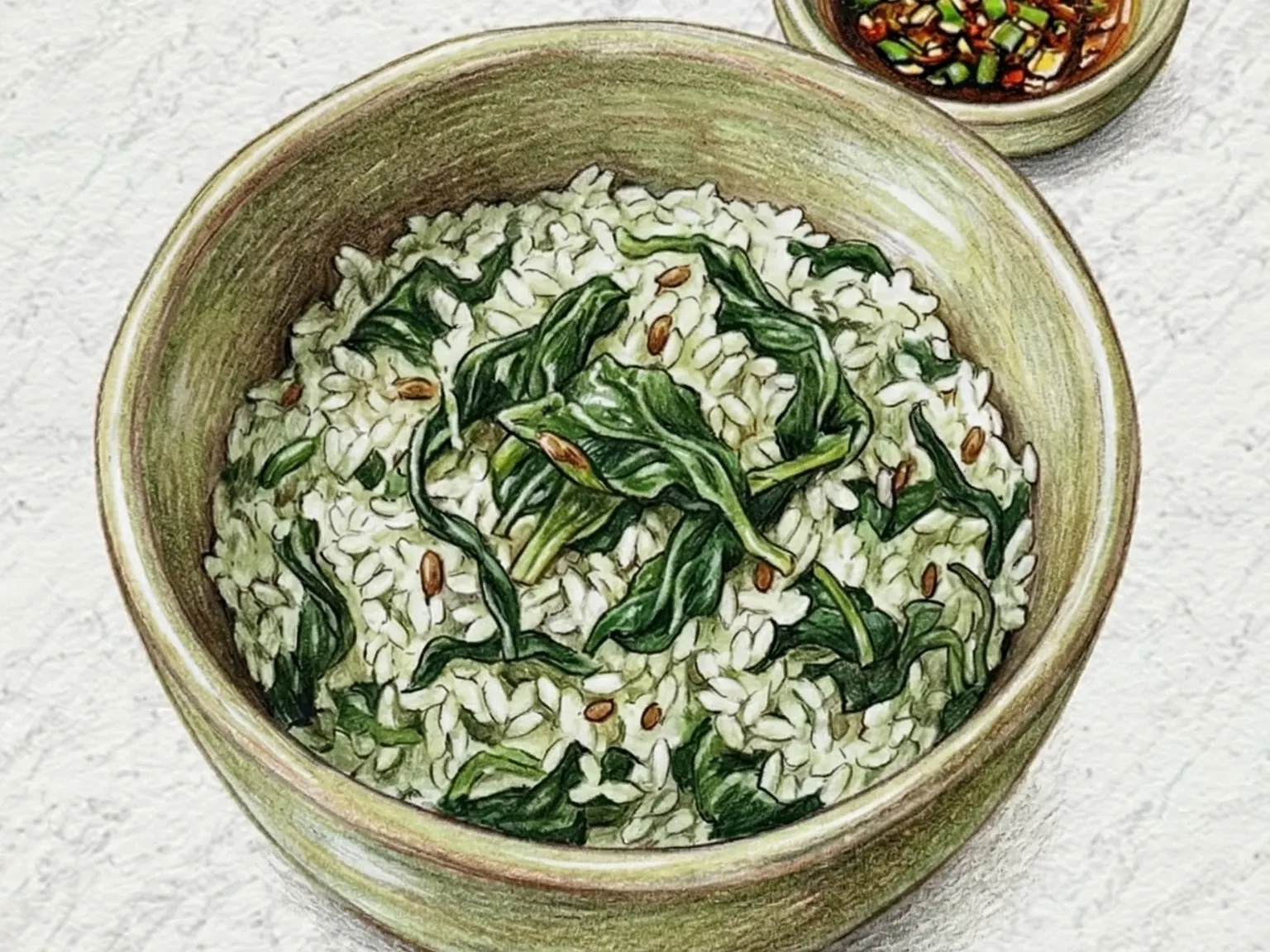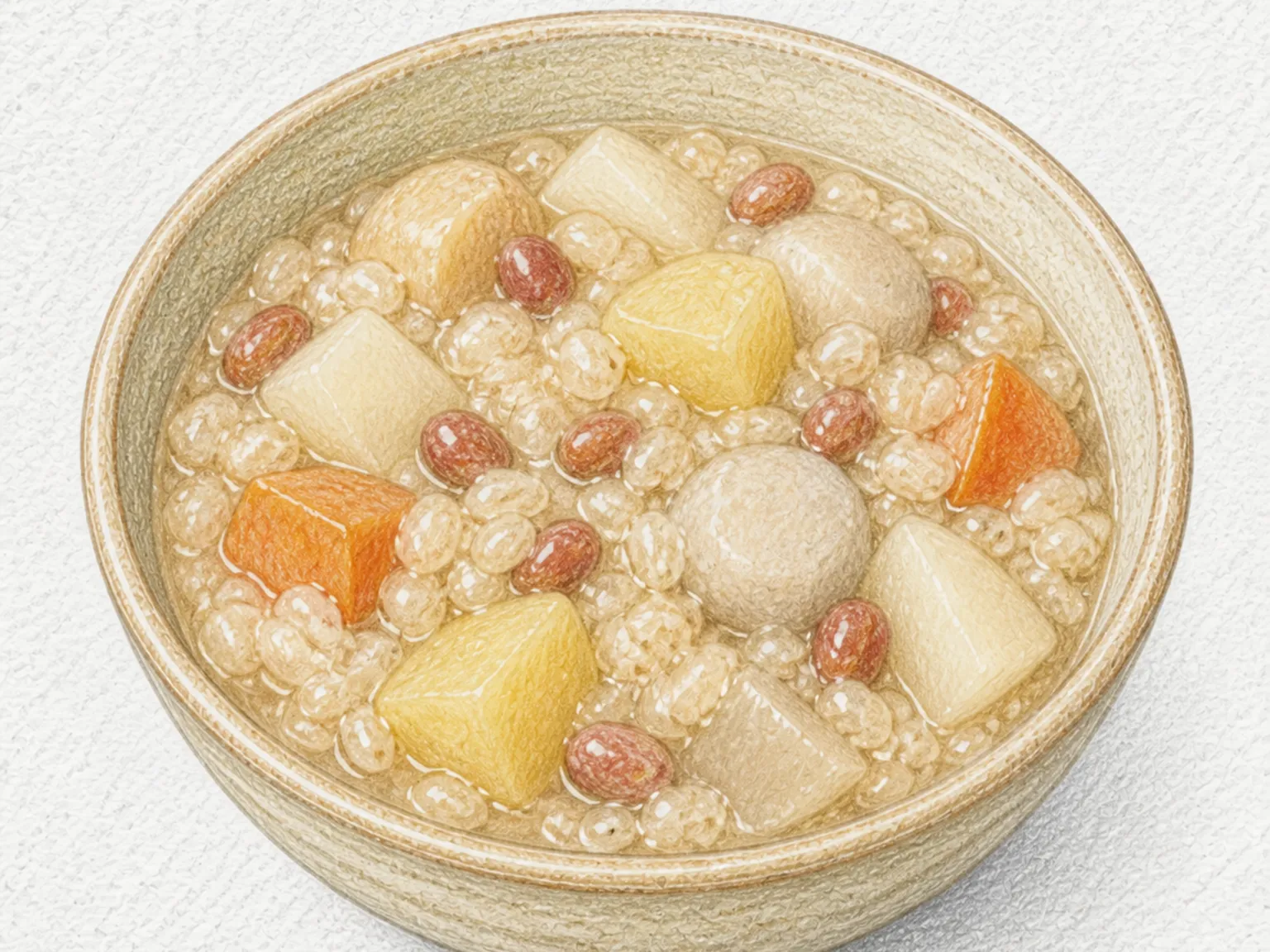
Korean Taro Porridge (Perilla Oil-Toasted Rice with Taro Root)
Quick answer
Soaked rice is toasted in perilla oil until fragrant, then simmered with peeled taro in a generous amount of water until the porridge reaches a thick, flowing consistency.
What makes this special
- Toran juk uses rice toasted in perilla oil and simmered taro for a thick, flowing consistency.
- Rice toasted in perilla oil before simmering adds nuttiness and creaminess
- Taro partially dissolves for natural body; remaining chunks stay mealy
Key ingredients
Core cooking flow
- 1 Soak 1 cup short-grain rice for 30 minutes, then drain it well.
- 2 Add 1 tablespoon perilla oil to a pot and warm it over medium-low heat.
- 3 Pour in 4 cups water first and bring it to a boil over medium heat.
Soaked rice is toasted in perilla oil until fragrant, then simmered with peeled taro in a generous amount of water until the porridge reaches a thick, flowing consistency. Some taro pieces dissolve into the liquid and naturally thicken it, while others hold their shape and offer a starchy, crumbly bite. The gentle nuttiness of perilla oil and the mild earthiness of taro create a soothing combination with no sharp flavors. Seasoning with just salt preserves the delicate taste of the taro without masking it.
Instructions
Read the steps as a cooking flow: prep, heat, seasoning, doneness control, and finish.
- 1Prep
Soak 1 cup short-grain rice for 30 minutes, then drain it well.
Wear gloves while peeling 300 g taro, since it can be slippery, and cut it into even 1 cm cubes.
- 2Control
Add 1 tablespoon perilla oil to a pot and warm it over medium-low heat.
Stir in the drained rice for about 2 minutes, until the grains look slightly translucent and smell nutty, without browning.
- 3Control
Pour in 4 cups water first and bring it to a boil over medium heat.
Once bubbling, reduce to low heat and stir often, scraping the bottom so the rice starch does not stick or scorch.
- 4Control
When the rice grains begin to swell, add the taro and the remaining 2 cups water.
Simmer over low heat for about 15 minutes, stirring gently, until some taro softens into the porridge and some pieces stay crumbly.
- 5Control
Stir in 1 teaspoon minced garlic and 1 tablespoon soup soy sauce until evenly dispersed.
Add the 1/2 teaspoon salt in portions, then simmer 3 more minutes and taste so the seasoning stays gentle.
- 6Finish
Turn off the heat when the porridge flows slowly from a spoon and the rice no longer has a hard center.
Ladle into bowls, top with 2 tablespoons minced scallion, and serve hot while the texture is loose.
After the steps
Pick a recipe that fits this dish.
Continue with shared ingredients, meal pairings, or a similar method.
Recipes That Go Well With This
More Rice →Based on shared ingredients and meal pairing
Korean Danhobak Haemul Juk (Kabocha Seafood Porridge)
Danhobak haemul juk is a traditional Korean rice porridge that uses kabocha squash, shrimp, and squid as its primary ingredients. The foundation of the dish begins with short grain rice that has been soaked in water until it becomes opaque. This rice is then lightly toasted in a pot with a small amount of toasted sesame oil. This initial sauteing process is functional, as the oil forms a thin layer around each grain. This fat coating prevents the rice from disintegrating too quickly during the boiling process and provides a subtle, toasted depth of flavor to the entire dish. Once the rice is prepared, it is simmered in a stock made from either dried anchovies or dried kelp. Diced pieces of kabocha squash are added to the liquid early in the cooking process. As the rice and squash cook together, the squash eventually becomes tender enough to yield under light pressure. At this point, a spoon is used to press several pieces of the squash against the interior wall of the cooking pot, mashing them into a fine pulp. This pulp dissolves into the liquid, providing a natural thickening agent for the porridge and introducing a mild sweetness that intensifies during the simmering period. The seafood components, consisting of cleaned shrimp and sliced squid, are introduced to the pot only during the final minutes of cooking. They are heated just until their proteins set and their flesh becomes firm. This specific timing is necessary to ensure the seafood retains a snappy and tender texture, avoiding the rubbery consistency that results from excessive heat exposure. The inherent salinity of the shrimp and squid provides a direct contrast to the sweetness of the kabocha squash, creating a complex flavor profile. The only seasoning used for this porridge is salt, which is added to taste. This minimalist approach allows the natural flavors of the squash and seafood to remain prominent. From a nutritional perspective, the dish is balanced through the combination of protein from the aquatic ingredients and the high beta-carotene content found in the squash.
Manduguk (Korean Dumpling Clear Broth Soup)
Manduguk is a Korean dumpling soup in which hand-folded dumplings stuffed with ground pork, tofu, scallion, and garlic are dropped into a clear, simmering broth, typically anchovy-kelp stock or beef broth, and cooked until they float. As the dumplings cook, their thin wheat-flour wrappers release a subtle starch that gives the broth a barely perceptible body, while the filling leaks savory juices that enrich the liquid gradually. A thin drizzle of beaten egg stirred in near the finish creates silken wisps on the surface of the broth and gives the bowl a more finished appearance. Shredded egg strips and crumbled dried seaweed scattered on top add a pleasant contrast in color and a faint oceanic note to the flavor. Many Korean households serve manduguk on Lunar New Year as an alternative to tteokguk, and some combine the two by adding sliced rice cakes alongside the dumplings. Dumplings can be made in large batches and frozen raw, which means this soup can be pulled together quickly on weeknights without sacrificing any of the flavor that comes from homemade filling. A small dish of soy-vinegar dipping sauce served alongside lets each person adjust the seasoning at the table, and the light acidity of the sauce cuts through the mild broth in a way that makes the contrast between the two worth trying.
Korean Mushroom Dumpling Hot Pot
Mandu jeongol is a generous hot pot of twelve large dumplings simmered with napa cabbage, shiitake mushrooms, oyster mushrooms, and bok choy in anchovy-kelp stock. The two varieties of mushroom add layers of umami to the clear broth, while the cabbage and bok choy soften and release their natural sweetness as they cook. The dumplings cook directly in the simmering stock, their wrappers gradually turning chewy as the filling flavors seep into the surrounding liquid. Soup soy sauce and garlic provide a clean, understated seasoning that keeps the broth from overshadowing any single ingredient. The right moment to eat is when the vegetables have wilted and the dumplings float to the surface, signaling they are cooked through. The absence of any spice or strong seasoning makes this one of the more universally approachable hot pots, suited for all ages. Leftover broth absorbs cooked rice or soaked glass noodles easily, turning what remains into a satisfying finish to the meal.
Korean Sesame Oil Abalone Porridge
Both abalone flesh and innards are used together with a generous two tablespoons of sesame oil to maximize nuttiness in this porridge. The innards carry a concentrated brininess unique to abalone, and sauteing them with minced garlic in sesame oil infuses the fat with both marine and roasted flavors simultaneously, forming the aromatic foundation for the entire pot. Soaked rice is stirred into that same seasoned oil and cooked until each grain turns translucent, a step that coats the starch in fat and gives the porridge a fuller, rounder flavor. Water is then added and the mixture simmers for 25 minutes while the grains slowly dissolve their starch into a naturally thick consistency. Stirring regularly throughout this stage prevents the rice from settling and scorching on the pot floor. Soup soy sauce and salt are added at the finish, their saltiness anchoring the nuttiness of the sesame oil rather than competing with it. Chopped chives provide both color and a light onion fragrance. An extra drizzle of sesame oil just before serving deepens the aroma and gives the surface a subtle sheen.
Serve with this
Korean Soybean Sprout Cold Salad
Kongnamul-naengchae is a chilled Korean salad of boiled soybean sprouts and vegetables tossed in mustard dressing - conceptually distinct from regular kongnamul-muchim because it is designed to be served cold. The mustard sauce defines the dish: mustard powder (or tube mustard) mixed with vinegar, sugar, and salt creates a sharp, nose-tingling heat alongside a sweet-sour brightness. Prepared mustard needs five to ten minutes of resting after hydration for the allyl isothiocyanate compound to fully develop its pungency. Julienned cucumber and carrot release moisture, so they should be briefly salted or patted dry to prevent diluting the sauce. Chilling for at least ten minutes before serving maximizes the refreshing effect, and cold temperatures actually sharpen the mustard's bite. This banchan excels as a palate cleanser alongside fatty main dishes like samgyeopsal or bulgogi.
Korean Red Cabbage Kimchi
Jeokchae kimchi is made by salting red cabbage leaves, then tossing them in a seasoning of gochugaru, sand lance fish sauce, minced garlic, and Korean pear juice before a short fermentation. Red cabbage has thicker, denser leaves than napa cabbage, so it holds its crunch well after brining rather than going soft. The anthocyanin pigment in the red cabbage reacts with the chili seasoning to produce a vivid purple color rather than the typical red associated with kimchi, making it visually striking on the table. Pear juice provides a gentle fruit sweetness underneath the heat and spice, while sand lance fish sauce builds enough savory depth that even a brief fermentation yields full flavor. Scallions add a fresh, aromatic finish that ties the seasoning together. The result is a kimchi that is crunchy, spicy, and umami-rich simultaneously, with a distinctive character that sets it apart from traditional napa kimchi.
Similar recipes
Korean Abalone Porridge (Jeonbok Juk)
Abalone innards are sauteed in sesame oil until they release a green tint and briny aroma, then simmered with soaked rice on low heat for over 30 minutes into a nourishing porridge. The freshness of the innards dictates both the porridge's color and depth of flavor, with vivid green being the sign of quality. Thinly sliced abalone meat goes in near the end so it stays chewy rather than turning rubbery, and frequent stirring throughout prevents the bottom from scorching. An egg yolk placed on top creates a visual contrast against the greenish porridge and, once broken and mixed in, adds a layer of richness.
Korean Abalone Mugwort Porridge
This seasonal porridge combines the mineral essence of abalone with the herbal freshness of young mugwort. The preparation starts by sautéing abalone innards in sesame oil, creating a concentrated base that anchors the entire dish. Soaked rice is then added and stirred continuously until the starch releases, resulting in a smooth and consistent texture. Using kelp stock instead of plain water adds another layer of oceanic character to the broth. Precise timing is essential when adding the mugwort to the pot. Incorporating the herb only during the final sixty seconds prevents the release of harsh bitter compounds that could otherwise dominate the flavor. This brief cooking period ensures only a subtle, clean bitterness remains to complement the heavy richness of the abalone. A light dusting of ground black pepper at the end provides a warm aromatic finish that highlights the greenery of the herb. Early spring is the ideal time for this dish, as that is when mugwort leaves are at their most tender and fragrant. With iron and taurine from the abalone alongside vitamins and folate from the mugwort, this meal offers significant nutritional value. Its gentle nature makes it an appropriate choice for those needing a restorative meal that is easy on the digestive system. If kept in the refrigerator, the porridge will thicken significantly; reheating it over low heat with a splash of water restores its original silkiness.
Korean Chicken Radish Soup
Dak mu-guk is a Korean chicken and radish soup that produces a clear, deeply flavored broth from two simple main ingredients. Chicken thigh meat, cut into bite-sized pieces, is blanched for one minute in boiling water before the main simmer - this step removes impurities and blood, which is the most reliable way to achieve a transparent broth rather than a cloudy one. Onion and ginger then build the aromatic backbone over twenty minutes of gentle, low heat, allowing the chicken's natural depth to develop without aggressive boiling. The radish is cut into thin, flat squares rather than thick slabs; this shape turns translucent within ten minutes and releases its clean sweetness into the liquid quickly and evenly. Soup soy sauce and salt season the broth, and diagonally sliced green onion goes in just before the heat is turned off to preserve its color and mild bite. The result balances the richness of chicken stock against the cool, vegetal sweetness of radish in a soup that is light enough to eat when recovering from illness yet satisfying as an everyday meal.
Korean Pan-fried Oyster Jeon
Gul-jeon is a Korean dish featuring oysters that are pan-fried in a delicate coating of flour and egg. The preparation starts with fresh seasonal oysters that are rinsed carefully in a mild salt water solution to ensure they are clean. Once the rinsing is complete, it is necessary to pat each oyster until it is thoroughly dry. This particular step is crucial because residual water leads to oil splattering during the frying process and prevents the flour from adhering to the surface in a uniform manner. The intended result is a very thin layer of flour, as a thick coating will muffle the natural oceanic brine of the oyster. After the light dusting of flour, the oysters are submerged in beaten egg. This egg batter serves as an insulating layer that conducts heat slowly into the center of the seafood. This specific cooking method keeps the interior of the oyster plump and moist while the exterior reaches a soft golden color. As the oysters cook, they release a distinct mineral aroma associated with fresh seafood. Adding finely chopped garlic chives shortly before the cooking is finished provides a sharp, garlicky contrast that emphasizes the natural mineral profile of the dish. It is important to cook the oysters over a steady medium flame for approximately two minutes on each side. If the heat is set too high, the egg exterior will scorch before the inside is sufficiently warmed through. When flipping the oysters, you should do so carefully and avoid pressing down on them with a spatula. In instances where the oysters are exceptionally large, pressing them into a flatter shape prior to the start of the cooking process will facilitate more even heat distribution throughout the piece.