Charim

2686 Korean & World Recipes

2686+ Korean recipes, clean and organized. Ingredients to instructions, all at a glance.

Korean Pickled Taro Stems
KimchiMedium

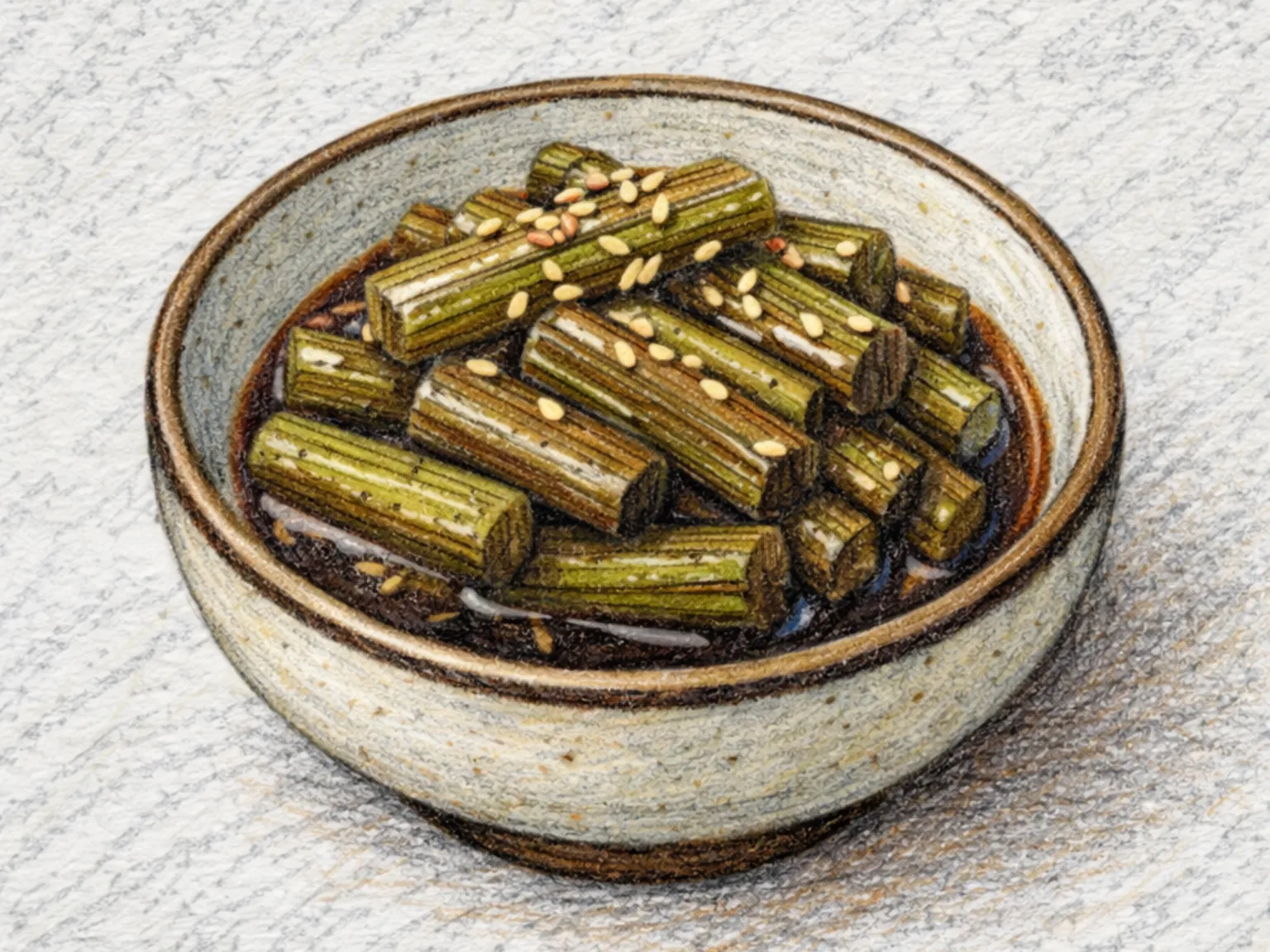
Korean Pickled Taro Stems

Torandae jangajji is a Korean pickle made from taro stems that are peeled, salted, blanched to remove their natural irritants, then soaked in a hot soy-vinegar brine with garlic and ginger. The blanching step eliminates the prickling astringency inherent in raw taro stems while preserving their distinctive fibrous crunch. A brine of soy sauce, vinegar, and sugar infuses each piece with layered savory depth and bright acidity. After two to three days of refrigeration, the stems develop a satisfying chewy-crunchy texture that pairs well with rice or as a drinking snack.

Prep 30minCook 15min4 servings

Adjust Servings

2servings
servings

Instructions

  1. 1

    Peel off tough fibers from taro stems and cut into 5 cm pieces.

  2. 2

    Salt for 20 minutes, rinse thoroughly, and drain.

  3. 3

    Blanch for 4 minutes, then cool in cold water to set texture.

  4. 4

    Boil soy sauce, water, vinegar, sugar, garlic, and ginger for 6 minutes.

  5. 5

    Pack taro stems in a sterilized container and cover with hot brine.

  6. 6

    Cool at room temperature, then refrigerate for 2-3 days before serving.

🛒Shop Ingredients on Amazon

As an Amazon Associate, we may earn from qualifying purchases.

Tips

Wear gloves when handling taro stems to avoid skin irritation.
Reduce vinegar by 10 ml for a milder flavor.

Nutrition (per serving)

Calories
84
kcal
Protein
2
g
Carbs
16
g
Fat
1
g

More Recipes

Korean Pickled Celtuce Stems
Side dishesMedium

Korean Pickled Celtuce Stems

Gungchae is the dried stem of celtuce (Lactuca sativa var. asparagina) - called wosun in Chinese - and its Korean name, meaning 'palace vegetable,' reflects a belief that it was eaten in the royal court. When rehydrated from its dried state, the stems develop a distinctive crunchy, almost cartilaginous snap that is the entire point of the ingredient. Packed into sterilized jars and covered with a boiling brine of soy sauce, vinegar, sugar, and water, the stems pickle quickly: edible within a day, but the sweet-sour-salty balance peaks at three days. The pickle's crisp bite and tangy flavor make it a natural counterpart to rich or oily main dishes, cutting through heaviness with every crunch.

🏠 Everyday🍱 Lunchbox
Prep 20minCook 10min4 servings
Korean Soy Pickled Radish Cubes
KimchiEasy

Korean Soy Pickled Radish Cubes

Mu jangajji is a fundamental Korean soy-pickled radish made by cutting radish into 1.5 cm cubes, packing them in a sterilized jar with dried chili, and pouring over a boiled brine of soy sauce, vinegar, and sugar. The radish's firm flesh absorbs the sweet-salty brine gradually while maintaining its crisp bite, and the dried chili adds a gentle warmth and aroma to the liquid. Vinegar balances the soy's saltiness with a clean tang, and using dense winter radish yields the best texture. This is one of the most versatile Korean pickles, appearing alongside gimbap, bibimbap, and gukbap as a standard table companion.

🍱 Lunchbox
Prep 20minCook 10min4 servings
Korean Soy-Pickled Eggplant
KimchiEasy

Korean Soy-Pickled Eggplant

Gaji jangajji is a Korean pickled eggplant made by blanching eggplant for just over a minute to soften only the surface, then submerging it in a boiled brine of soy sauce, vinegar, and sugar. The blanched eggplant absorbs the pickling liquid rapidly like a sponge while keeping a yielding, silky texture inside. Vinegar gives direction to the eggplant's otherwise neutral flavor, and garlic and cheongyang chili layered into the brine build a quiet complexity beyond simple preservation. Ready to eat after one day, this jangajji holds its texture for over ten days refrigerated, making it a practical banchan to prepare in advance.

🏠 Everyday🍱 Lunchbox
Prep 20minCook 8min4 servings
Korean Stir-Fried Taro Stems
Side dishesMedium

Korean Stir-Fried Taro Stems

Boiled taro stems are stir-fried in perilla oil with soy sauce and garlic to create a banchan prized for its uniquely chewy texture. Dried taro stems, once soaked and simmered, lose their rawness but retain a springy, almost rubbery bite along the center of each stalk, setting them apart from softer namul greens. Stir-frying in perilla oil first builds a nutty base note, and soy sauce with minced garlic layers savory depth onto the stems' neutral flavor. A splash of stock added mid-cook allows the seasoning to penetrate the fibrous interior during a brief simmer. Sliced green onion introduces a fresh aromatic accent, and a finishing spoonful of ground perilla seeds dissolves into the residual moisture, creating a creamy coating that clings to each piece. Mixed into a bowl of steamed rice, the chewy stems provide satisfying resistance with every bite, and their mild character lets them complement bolder dishes like doenjang jjigae without competing for attention.

🏠 Everyday🍱 Lunchbox
Prep 15minCook 12min4 servings
Korean Bamboo Shoot Pickle
KimchiMedium

Korean Bamboo Shoot Pickle

Juksun jangajji is a Korean bamboo shoot pickle made by boiling fresh shoots to tame their raw intensity, then submerging them in a brine of soy sauce, vinegar, and sugar infused with bay leaf and whole black peppercorns. The bamboo's dense, fibrous structure absorbs the sweet-sour-salty brine slowly, holding its signature crunch through days of pickling. Bay leaf and peppercorns add a subtle spice note that lifts the pickle beyond a simple soy-vinegar preparation. Served alongside rich meat dishes, it cuts through fattiness and refreshes the palate, and it doubles as a textured topping for rice bowls or sandwiches.

🏠 Everyday🍱 Lunchbox
Prep 25minCook 20min4 servings
Korean Kohlrabi Soy Pickle
KimchiEasy

Korean Kohlrabi Soy Pickle

Kohlrabi jangajji is a Korean soy pickle made by thickly peeling kohlrabi, cutting it into 2 cm cubes, and submerging the pieces with garlic and dried chili in a brine of boiled soy sauce, vinegar, and sugar. Kohlrabi's dense cellular structure absorbs the brine slowly, holding a firmer crunch and a more pronounced sweetness than radish over several days of pickling. The soy sauce's savory depth and the vinegar's acidity draw out the kohlrabi's natural sugars, and dried chili lays a subtle warm note in the background. This pickle works especially well as a palate cleanser alongside grilled meats or samgyeopsal, cutting through richness with its tart, sweet bite.

🍱 Lunchbox
Prep 20minCook 12min4 servings
More Kimchi