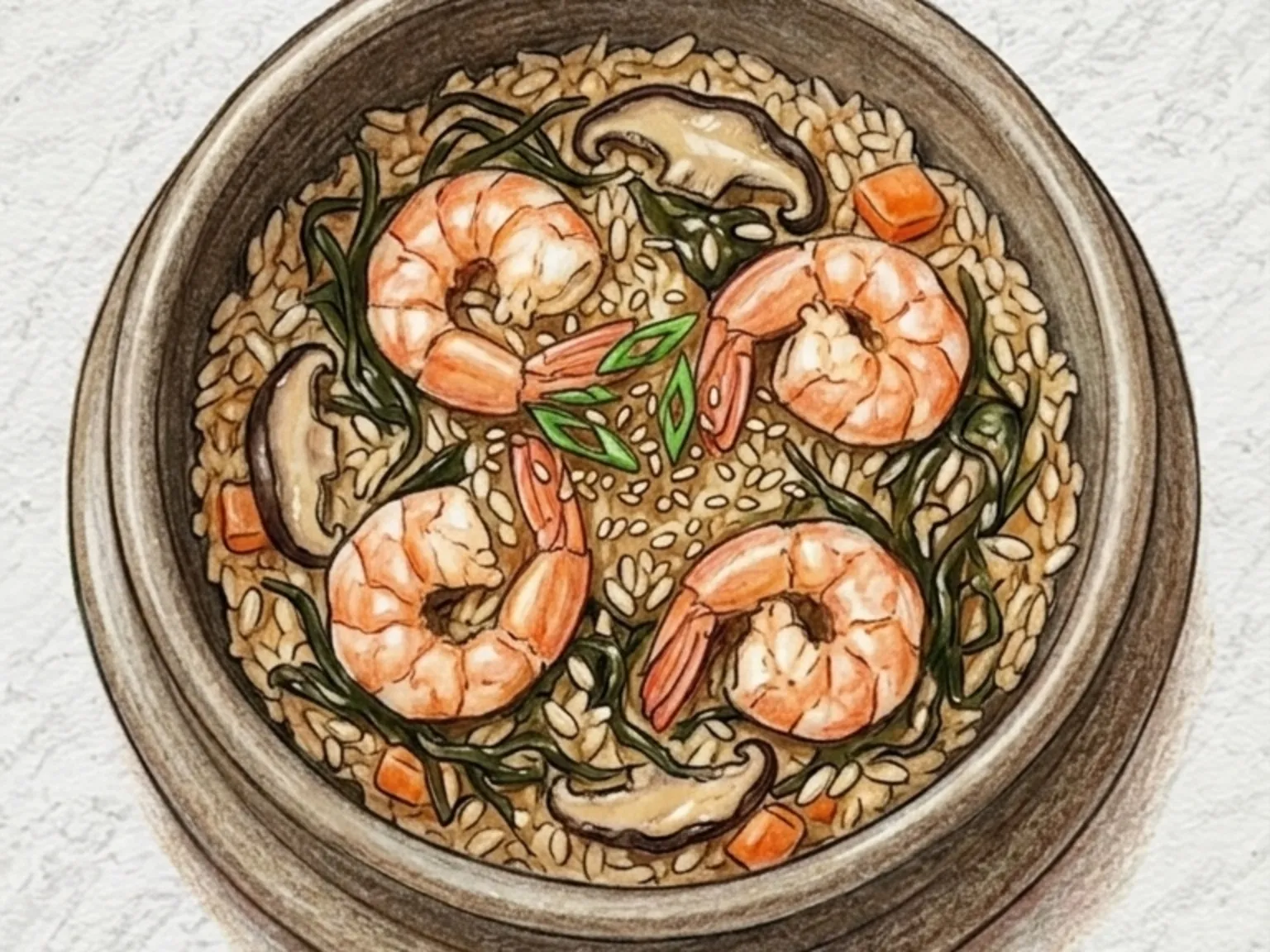
Korean Seaweed and Shrimp Pot Rice
Rehydrated hijiki seaweed and whole shrimp are layered over rice in a heavy pot and cooked together so the briny ocean flavor permeates every grain. Sliced shiitake mushrooms and carrot sit beneath the seafood, lending umami depth and a mild sweetness to the base. When the lid comes off, the concentrated aroma of seaweed and shrimp fills the room. Stirring in a soy-based sauce ties the flavors together, and scraping the crispy rice crust from the bottom adds a toasty finish.
Adjust Servings
Instructions
- 1
Soak the rice for 30 minutes, then drain well.
- 2
Devein shrimp, pat dry, and marinate for 10 minutes with 0.5 tbsp soup soy sauce and garlic.
- 3
Heat sesame oil in a pot and stir-fry shiitake, carrot, and hijiki for 2 minutes.
- 4
Add drained rice, stir for 1 minute, then add water and remaining soy sauce.
- 5
When boiling, place shrimp on top, cook on low for 12 minutes, then rest covered for 10 minutes.
- 6
Top with sliced scallion, gently mix, and serve.
As an Amazon Associate, we may earn from qualifying purchases.
Tips
Nutrition (per serving)
More Recipes

Korean Chwinamul Pot Rice
Chwinamul sotbap is a Korean pot rice made by layering lightly seasoned wild chwinamul greens over soaked rice and cooking everything in kelp stock. The greens release their distinctively herbal, faintly bitter fragrance directly into the rice as it steams, filling the kitchen with an earthy mountain scent when the lid comes off. Mixed with a soy-sesame dipping sauce, the bitterness softens into a pleasant backdrop that makes each spoonful complex and grounding. It is best prepared in spring when chwinamul is in season, offering peak aroma and the most tender stems. Dried chwinamul can be rehydrated for year-round cooking, though the fresh version carries a brightness that the dried form cannot fully replicate.

Korean Seaweed Roe Pot Rice
Rice is cooked in a pot with diced Korean radish and seasoned with soy sauce, then pollock roe and butter are placed on top and steamed by residual heat with the lid on. The roe pops gently between the teeth, releasing briny umami that seeps into the warm grains, while the melting butter coats everything in a thin layer of richness. Crumbled gamtae seaweed and sliced scallion are added just before serving, layering two distinct ocean aromas over the buttery rice. Cooking the roe only with carry-over heat keeps it moist and prevents it from turning dry and crumbly.

Korean Beef and Water Parsley Pot Rice
Soy-marinated beef is layered with rice in a heavy pot and cooked until the meat juices soak into every grain. Onion and beef are first seared on high heat for depth, then soaked rice and water go in for a slow, covered cook. Water parsley added just before resting contributes a fresh, aromatic lift that cuts through the richness of the beef. The heavy-bottomed pot also creates an even layer of crispy scorched rice at the bottom, adding a satisfying crunch to every serving.

Korean Thistle and Mackerel Pot Rice
Sesame oil-sauteed radish lines the bottom of a pot, followed by soaked rice and squeezed gondre greens, with a mackerel fillet marinated in cooking wine and ginger juice placed on top. As the rice cooks over low heat for fourteen minutes and rests covered for five more, the earthy thistle aroma and the deep fish umami meld into every grain. Keeping the mackerel skin-side up prevents the flesh from breaking apart, and the radish layer at the bottom guards against sticking while adding its own mild sweetness. A drizzle of soy sauce and a gentle toss before serving bring all the flavors together.

Korean Tteok and Ramyeon (Instant Ramen with Chewy Rice Cakes)
Tteok-ramyeon is a Korean shortcut dish that adds chewy rice cakes to a pot of instant ramen. The rice cakes absorb the spicy broth as they cook, intensifying the seasoning while providing a bouncy texture that instant noodles alone lack. An egg or a slice of cheese is often cracked in near the end for added richness. The entire dish is ready in about 13 minutes with no knife skills required - just boiling water and timing. It is one of the most common late-night snacks in Korea.

Wild Rice Crispy Seaweed Salad
Wild rice crispy seaweed salad combines cooked and cooled wild rice with julienned red cabbage, carrot, and thawed edamame, dressed in soy sauce, brown rice vinegar, sesame oil, and minced garlic, then topped with crispy seaweed chips. Wild rice takes longer to cook than regular rice due to its tough hull, but cooling it completely is essential - warm grains clump together and lose their distinct chewy bite. The dressing layers soy saltiness and garlic depth over a gentle vinegar acidity and sesame richness, elevating the mild grain base. Edamame contributes soft protein while the raw vegetables provide a crisp, fresh contrast to the chewy rice. The seaweed chips must be added just before serving to preserve their crunch and concentrated umami.