Korean Grilled Short Rib Patty Rice Bowl
Rice Medium

Korean Grilled Short Rib Patty Rice Bowl

Quick answer

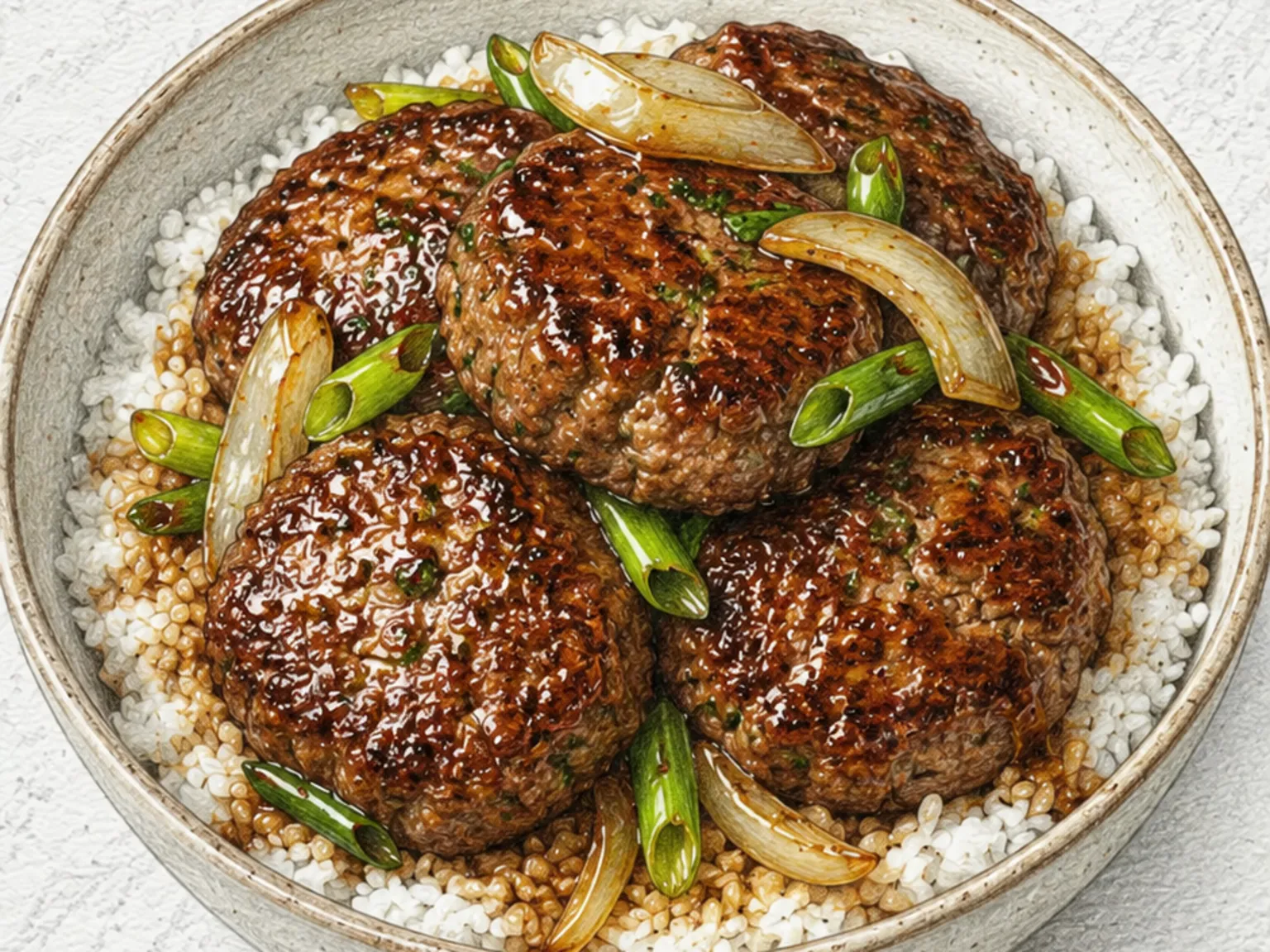
Minced short-rib meat is seasoned with soy sauce, pear juice, and sesame oil, shaped into flat patties, and pan-seared until a caramelized crust forms on both sides.

What makes this special

  • Tteokgalbi deopbap offers short rib patties with a sweet caramelized crust and moist center.
  • High-heat sear caramelizes only the surface, trapping juices inside
  • Oligosaccharide-soy glaze reduces then recoats the patties in a second pass
Total time
38 min
Level
Medium
Servings
2 servings
Ingredients
9
Calories
610 kcal
Protein
27 g

Key ingredients

cooked ricetteokgalbi pattiesoniongreen onionsoy sauce

Core cooking flow

  1. 1 Slice 90 g onion thinly and chop 40 g green onion into small rounds.
  2. 2 Heat a pan over high heat and add 240 g tteokgalbi patties.
  3. 3 Let the patties rest briefly, then cut them into bite-size pieces.

Minced short-rib meat is seasoned with soy sauce, pear juice, and sesame oil, shaped into flat patties, and pan-seared until a caramelized crust forms on both sides. The exterior turns sweet and slightly charred while the interior stays moist and full of juice. Sauteed onion and green onion are added to sharpen the meat's savory depth and bring a fragrant note. Placed over hot rice with a spoonful of the pan sauce, the patty's sweetness melds with the warm grains for a quickly disappearing bowl.

Prep 20min Cook 18min 2 servings

Instructions

Read the steps as a cooking flow: prep, heat, seasoning, doneness control, and finish.

6 steps
  1. 1
    Heat

    Slice 90 g onion thinly and chop 40 g green onion into small rounds.

    Keep 2 bowls of cooked rice hot, and have the eggs ready so the bowl can be assembled while everything is warm.

  2. 2
    Control

    Heat a pan over high heat and add 240 g tteokgalbi patties.

    Sear briefly on both sides until the surface browns and firms, then remove them. Do not press the patties, or the juices will run out.

  3. 3
    Control

    Let the patties rest briefly, then cut them into bite-size pieces.

    Lower the same pan to medium heat, add onion and 1 tsp minced garlic, and cook until the onion edges turn translucent and fragrant.

  4. 4
    Control

    Add 2 tbsp soy sauce and 1 tbsp oligosaccharide syrup, scraping the pan bottom as it bubbles for about 1 minute.

    If it tastes too salty, add 1 tbsp water and reduce only until lightly syrupy.

  5. 5
    Control

    Return the cut tteokgalbi to the pan and toss over medium-low heat for about 2 minutes.

    Stop when the sauce clings with a glossy coating. Turn off the heat before it reduces until dry.

  6. 6
    Finish

    Fry 2 eggs sunny-side up, keeping the yolks soft.

    Spoon the tteokgalbi and sauce over the hot rice, place an egg on each bowl, and finish with green onion and 1 tsp sesame oil.

After the steps

Pick a recipe that fits this dish.

Continue with shared ingredients, meal pairings, or a similar method.

Recipes That Go Well With This

More Rice →

Based on shared ingredients and meal pairing

Korean Braised Short Rib Rice Bowl
Shared ingredient: cooked short-grain rice Rice

Korean Braised Short Rib Rice Bowl

Galbi deopbap is a Korean rice bowl topped with beef short ribs slow-braised in a soy, sugar, and grated Asian pear marinade until the connective tissue dissolves and the meat separates from the bone at the lightest touch. Grated pear serves a dual purpose in the braise: the enzymes break down tough muscle fibers while the juice introduces a gentle fruit sweetness that sets the dish apart from heavier, wine-based braises. Grated onion dissolves completely into the braising liquid over the long simmer, deepening the savory foundation without leaving visible pieces. As the liquid reduces over one hour or more, it transforms into a dark, glossy sauce that coats the ribs and drips down onto the rice below. Spooning the sauce generously over the steamed rice allows each grain to absorb the soy-sweet glaze from the bottom up, making the rice itself as flavorful as the meat. Despite the long cooking time, the dish demands minimal active attention because the braise works inside the pot without stirring. Scattered sliced green onion on top provides a crisp, fresh contrast against the richness of the braised ribs.

Korean Grilled Mackerel Rice Bowl
Shared ingredient: cooked short-grain rice Rice

Korean Grilled Mackerel Rice Bowl

Mackerel fillet is pan-seared skin-side down until the skin turns crisp and golden, then served over rice with a quick sauce of soy sauce, cooking wine, oligosaccharide syrup, minced ginger, and softened onion. The oily flesh of the mackerel absorbs the soy-ginger glaze, producing a clean, salty-sweet finish without fishiness. Keeping the pan still for the first minute of searing is the key technique for achieving skin that crisps evenly rather than steaming in its own moisture. Brushing the fillet with a little cooking wine before cooking further neutralizes any residual odor. Chopped chives scattered on top complete the bowl with color and a mild onion bite. Cooking the sauce in the same pan using the rendered mackerel fat deepens the umami and ties the two components together.

Korean Stir-Fried Taro Stems
Serve together Side dishes

Korean Stir-Fried Taro Stems

Boiled taro stems are stir-fried in perilla oil with soy sauce and garlic to create a banchan prized for its uniquely chewy texture. Dried taro stems, once soaked and simmered, lose their rawness but retain a springy, almost rubbery bite along the center of each stalk, setting them apart from softer namul greens. Stir-frying in perilla oil first builds a nutty base note, and soy sauce with minced garlic layers savory depth onto the stems' neutral flavor. A splash of stock added mid-cook allows the seasoning to penetrate the fibrous interior during a brief simmer. Sliced green onion introduces a fresh aromatic accent, and a finishing spoonful of ground perilla seeds dissolves into the residual moisture, creating a creamy coating that clings to each piece. Mixed into a bowl of steamed rice, the chewy stems provide satisfying resistance with every bite, and their mild character lets them complement bolder dishes like doenjang jjigae without competing for attention.

Korean Bulgogi Mushroom Rice Bowl
Similar recipe Rice

Korean Bulgogi Mushroom Rice Bowl

Soy-and-pear-juice-marinated beef is stir-fried together with torn oyster mushrooms and served over rice for a deeply savory bowl. Cooking the mushrooms first in the hot pan allows their excess moisture to evaporate, keeping the sauce thick and glossy once the marinated beef goes in rather than pooling at the bottom. Pear juice contains natural tenderizing enzymes that soften the beef fibers noticeably even after a short marinating time, and its understated sweetness bridges the saltiness of the soy sauce without adding a fruity flavor. A drizzle of sesame oil at the end of stir-frying lays a toasted, nutty fragrance over the sweet-salty glaze that rounds out the whole bowl. When pear juice is not available, one teaspoon of sugar dissolved in one tablespoon of water provides a workable substitute that approximates the sweetness without the tenderizing effect.

Serve with this

Korean Spicy Fermented Squid Jeotgal
Kimchi Medium

Korean Spicy Fermented Squid Jeotgal

Ojingeo jeotgal is a Korean fermented squid preserve made by salting cleaned, finely chopped squid for one hour to firm the flesh and extract moisture, then dressing it in a paste of gochugaru, minced garlic, ginger, fish sauce, and corn syrup. The salt cure intensifies the squid's natural chewiness, and cutting the pieces small accelerates seasoning absorption during the two-to-three-day cold fermentation. Chili flakes coat every surface in a deep red layer that delivers steady heat, while corn syrup adds gloss and a mild sweetness that prevents the salt from dominating. Spooned over steamed rice, each piece offers a firm, springy chew followed by a wave of fermented umami. Mixing in a touch of sesame oil before serving softens the saltiness and adds a nutty fragrance that rounds out each mouthful.

🍱 Lunchbox 🏠 Everyday
Prep 30min 4 servings
Korean Seafood Hot Pot Soup
Soups Medium

Korean Seafood Hot Pot Soup

Haemul-tang is a Korean seafood hot pot that throws together crab, shrimp, clams, and squid in a fiery, brick-red broth. The liquid starts with gochugaru and plenty of garlic, building a spicy base that the seafood then amplifies with its own briny juices. Radish chunks soften as the pot bubbles, thickening the broth slightly and adding a cool sweetness behind the heat. Green onions and cheongyang peppers go in toward the end for a sharp, vegetal bite. The magic of haemul-tang lies in the convergence of flavors: crab shells release a sweet, crustacean stock; clams open to spill their liquor; shrimp and squid contribute distinct textures from snappy to chewy. The pot is brought to the table still at a rolling boil, and diners pick through the shells and tentacles while the broth continues to concentrate.

🏠 Everyday 🎉 Special Occasion
Prep 25min Cook 30min 4 servings
Korean Fish Cake Hot Pot (Skewered Fish Cakes in Clear Broth)
Stews Easy

Korean Fish Cake Hot Pot (Skewered Fish Cakes in Clear Broth)

Eomuk jeongol is a Korean fish cake hot pot simmered in a clear broth built on dried kelp and anchovy stock. Large pieces of Korean radish cook alongside the fish cakes, releasing their natural sweetness into the liquid and keeping the broth light and refreshing as it reduces. Shiitake mushrooms add earthy umami depth, and using soup soy sauce alone for seasoning keeps the understated savory character of the fish cakes front and center. Cheongyang chili brings a sharp heat, and sliced green onion layers in a gentle sweetness as it softens in the bubbling pot. Fish cakes that spend more time in the broth turn silky and absorb the surrounding flavors, growing more flavorful with each passing minute. Using several shapes and thicknesses of fish cake side by side gives the pot different textures that makes eating it more interesting. The hot pot captures the warmth of street-stall eomuk-tang and brings it to the dinner table as a shared dish on cold days.

🏠 Everyday 🎉 Special Occasion
Prep 20min Cook 25min 4 servings

Similar recipes

Korean Soy Glazed Beef Rice Bowl
Rice Easy

Korean Soy Glazed Beef Rice Bowl

Sogogi deopbap tops steamed rice with thin-sliced beef and onions cooked in a sweet-soy glaze, served with just enough sauce to soak into the grains. The beef is marinated briefly in a mixture of dark soy sauce, sugar, and minced garlic, which caramelizes quickly in a hot pan. Onion slices cook alongside the beef, their natural sweetness balancing the salty-sweet sauce as they soften. Sesame oil added toward the end leaves a nutty aftertaste that lingers. The key is keeping a small pool of sauce in the pan rather than reducing it completely - that glossy liquid seeps into the rice and makes each spoonful flavorful without needing additional seasoning. A generous crack of black pepper at the end adds a sharp finish.

🏠 Everyday ⚡ Quick
Prep 15min Cook 12min 2 servings
Korean BBQ Beef
Grilled Medium

Korean BBQ Beef

Bulgogi stands as the most widely recognized marinated beef preparation within the Korean culinary tradition. The dish typically utilizes thinly sliced cuts of meat such as sirloin or chuck, which are soaked in a mixture composed of soy sauce, grated Korean pear, sugar, minced garlic, and sesame oil. Following the marination process, the beef is cooked rapidly over a high heat source. The inclusion of Korean pear in the marinade serves two specific functions during the preparation. First, the natural enzymes found within the pear fruit actively work to break down the muscle fibers of the beef. This chemical reaction ensures that each individual slice becomes tender and yields easily when eaten. Second, the fructose from the pear combines with the soy sauce during cooking to form a characteristic sweet and salty glaze that coats the entire surface of the meat. The specific technique used during the cooking phase is as critical as the composition of the marinade itself. If an excessive amount of meat is added to the pan at one time, the surface temperature of the cooking vessel will drop significantly. When this happens, the beef begins to steam in its own released liquids rather than searing against the hot surface. This often leads to a gray and chewy texture instead of the caramelized brown edges that the dish is known for. To achieve the correct result, the beef should be prepared in small batches while maintaining a consistent high heat. This method allows the liquid from the marinade to reduce quickly against the hot pan, creating the glossy and sticky coating that characterizes properly made bulgogi. To finish the preparation, a small amount of sesame oil is drizzled over the beef and toasted sesame seeds are scattered on top. These final additions provide a roasted and nutty quality that balances the sweet and salty base to complete the flavor profile.

🍺 Bar Snacks 🏠 Everyday
Prep 20min Cook 15min 4 servings
Korean Grilled Beef Short Ribs with Scallions
Grilled Easy

Korean Grilled Beef Short Ribs with Scallions

Galbisal-pachae-gui is a Korean grilled beef dish featuring short rib finger meat marinated in dark soy sauce, sugar, sesame oil, and garlic for at least one hour, then seared over high heat and served under a pile of cold-dressed shredded green onion. Rib finger meat sits between the rib bones and carries a well-balanced ratio of fat to lean, which allows the soy marinade to penetrate the fat layers and produce a deep, lingering savory flavor when exposed to direct heat. High heat causes the edges of the marinated meat to char quickly, creating a brief overlap of caramelized sweetness and smoke that defines the overall aroma of the dish. The shredded green onion is soaked in cold water until the sharp raw pungency fades and the cell walls firm up, then lightly tossed with sesame oil and toasted sesame to complement rather than compete with the heavy soy note of the beef. When a piece of hot seared meat and a tangle of cold scallion are eaten together, the contrast between the temperature, the rich beef fat, and the clean, sharp allium flavor creates a layered experience that cannot be replicated by eating either component alone. This dish is often made for home gatherings centered on table grilling, and the visual contrast of dark caramelized beef against the white-green scallion mound makes it striking as a shared centerpiece.

🍺 Bar Snacks 🏠 Everyday
Prep 20min Cook 12min 2 servings

Tips

Use high heat briefly to keep tteokgalbi juicy.
If sauce is salty, add 1 tbsp water to balance.

Nutrition (per serving)

Calories
610
kcal
Protein
27
g
Carbs
75
g
Fat
22
g