Korean Ueong Dak Juk (Burdock Chicken Porridge)
Quick answer
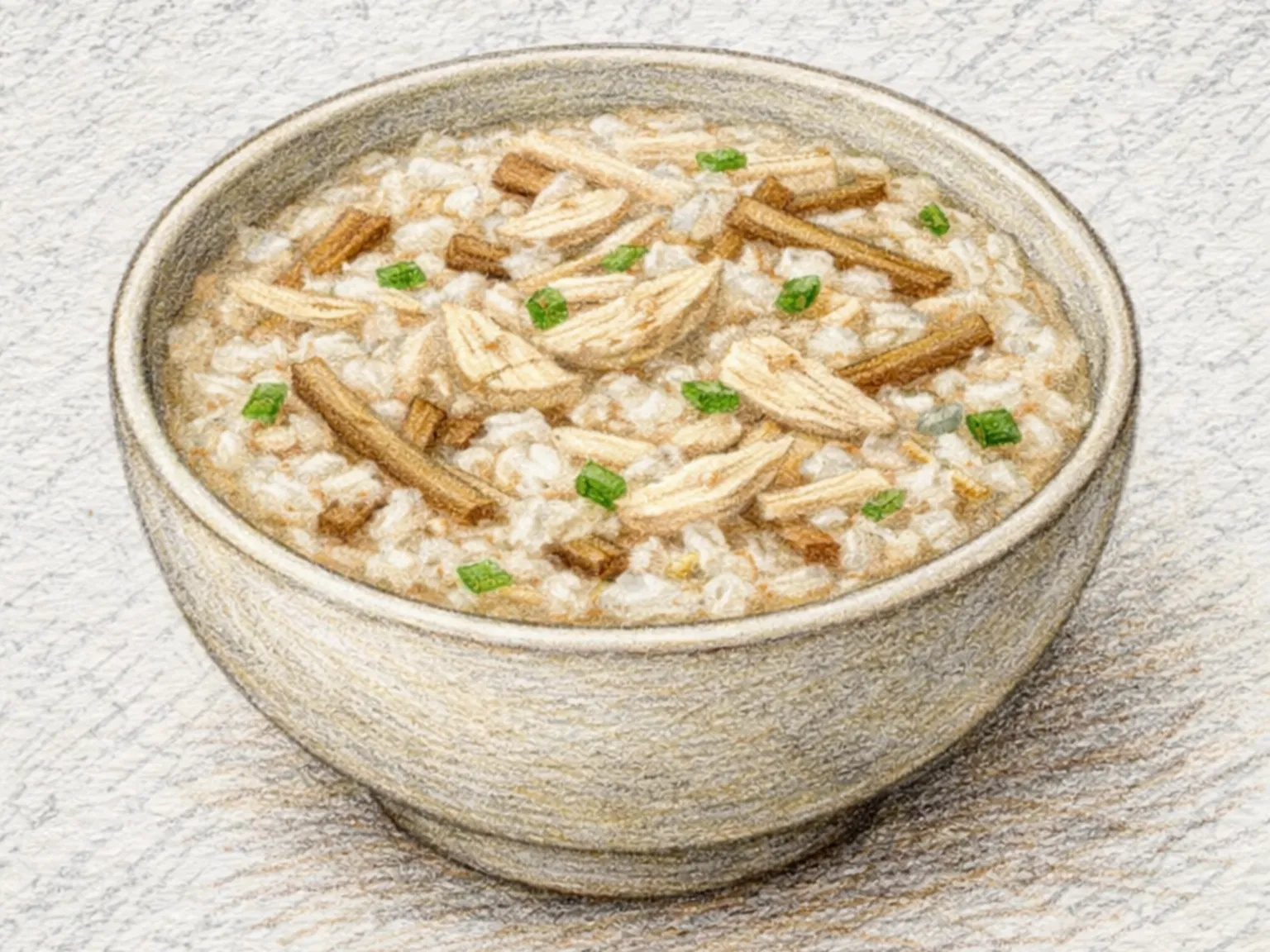
Shredded chicken tenderloin and julienned burdock root are simmered together in a long, slow cook until the porridge turns thick and smooth.
What makes this special
- Ueong dak juk balances shredded chicken with julienned burdock for a clean, mild porridge.
- Burdock soaked in vinegar water removes astringency before sautéing
- Pulled chicken tenderloin layered onto chicken-stock base doubles the depth
Key ingredients
Core cooking flow
- 1 Rinse 280 g short-grain rice until the water runs mostly clear, soak it for 30 minutes, then drain well.
- 2 Trim any tough tendon from 260 g chicken tenderloin, then shred it along the...
- 3 Set a heavy pot over medium heat and warm 1.5 tablespoons sesame oil.
Shredded chicken tenderloin and julienned burdock root are simmered together in a long, slow cook until the porridge turns thick and smooth. The chicken releases a clean, mild broth that forms the base flavor, while the burdock contributes a subtle earthy aroma and slight crunch that adds dimension. Toasting the rice in perilla oil before adding liquid deepens the nuttiness and gives the porridge a silkier body. The result is a gentle, nourishing bowl that sits easy on the stomach. The main ingredients are Short-grain rice, Chicken tenderloin, Burdock root, and Carrot, and the recipe depends on careful handling of rice moisture and the order of toppings.
Instructions
Read the steps as a cooking flow: prep, heat, seasoning, doneness control, and finish.
- 1Control
Rinse 280 g short-grain rice until the water runs mostly clear, soak it for 30 minutes, then drain well.
Julienne 140 g burdock root, soak it in vinegar water for 5 minutes, and rinse to reduce bitterness.
- 2Heat
Trim any tough tendon from 260 g chicken tenderloin, then shred it along the grain or slice it thinly so it cooks evenly.
Cut 70 g carrot and 80 g onion into small dice that will soften into the porridge.
- 3Control
Set a heavy pot over medium heat and warm 1.5 tablespoons sesame oil.
Add 10 g minced garlic, the onion, and burdock, then sauté for about 3 minutes until fragrant and the onion starts to look translucent.
- 4Control
Add the drained rice and carrot, then stir over medium heat for 2 more minutes.
When the edges of the rice grains look slightly translucent, pour in 1400 ml chicken stock and bring it to a boil over high heat.
- 5Control
Once it boils, reduce to medium-low heat and simmer for about 20 minutes, stirring along the bottom so the rice does not stick.
When the porridge thickens and the grains bloom, add the chicken tenderloin.
- 6Control
Season with 2 tablespoons soup soy sauce and 3 g salt, then simmer for 8 more minutes.
Turn off the heat when the chicken is opaque and cooked through, and the porridge still flows slightly loose before serving.
After the steps
Pick a recipe that fits this dish.
Continue with shared ingredients, meal pairings, or a similar method.
Recipes That Go Well With This
More Rice →Based on shared ingredients and meal pairing
Korean Chicken Breast Perilla Porridge
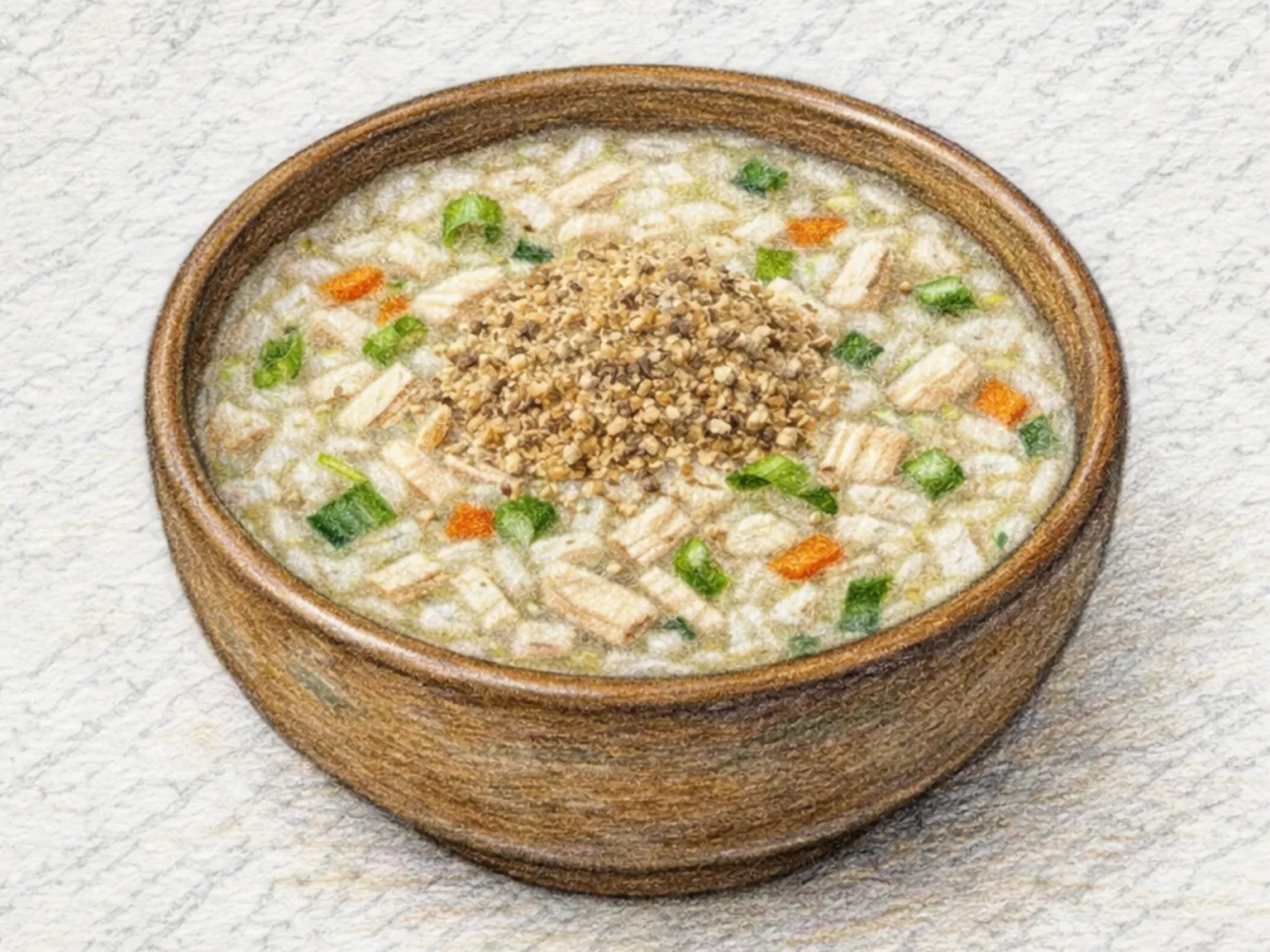
Dakgaesal deulkkae juk is a traditional style of Korean porridge that utilizes shredded chicken breast alongside finely chopped onions and carrots as its primary components. The preparation begins by stir-frying these ingredients together, after which they are simmered slowly with a combination of soaked rice and chicken stock. As the cooking process nears its conclusion, perilla seed powder is incorporated into the pot. This specific ingredient dissolves thoroughly into the liquid to produce a final texture that is notably thick and creamy. The aroma produced by the perilla seeds is deeply nutty and serves as the most prominent characteristic of the dish. While sesame seeds are known for a sharp and roasted quality, perilla seeds offer a flavor that is more round and carries an herbaceous nuttiness. This gives the porridge a unique profile that is common in Korean cuisine. The inclusion of shredded chicken breast provides a source of lean protein that does not feel heavy, ensuring the meal remains nourishing and simple for the body to digest. Because of these qualities, this porridge is often used as a recovery meal for individuals after they have finished exercising or for anyone whose energy levels feel low. It also serves as a functional choice when a gentle meal is required for a sensitive stomach. Adjusting the final result is possible by increasing the quantity of perilla powder, which results in a more intense fragrance and an even thicker consistency for people seeking a richer bowl.
Korean Dried Radish Greens Chicken Porridge
This porridge combines shredded poached chicken breast with siraegi (dried radish greens) and rice for a clean, protein-rich bowl. The siraegi lends a grounding earthiness to the porridge base, while the hand-torn chicken provides a fibrous, lean texture in every spoonful. Rice is first stir-fried in sesame oil to add a nutty layer before water is poured in and everything simmers slowly until the grains dissolve into a thick, smooth consistency. Scallion and garlic build aromatic depth, and a splash of light soy sauce ties the flavors together without heaviness. Low in fat and easy to digest, this is a restorative meal that feels light on the stomach while still delivering substance and warmth.
Korean Dried Pollock Hangover Soup
Buk-eo Haejang-guk is a traditional Korean soup frequently consumed in the morning to soothe the digestive system. It relies on dried pollock strips as the primary ingredient. Before beginning the cooking process, the dried pollock requires a brief soaking period in cold water lasting approximately five minutes. This step is necessary to soften the texture while ensuring that the inherent flavors of the fish are not washed away. Keeping the soaking time to a strict minimum prevents the fish from becoming overly soft or weakening the resulting broth. The prepared fish is first stir-fried in sesame oil. This initial sautéing step functions to neutralize any lingering fishy aromas and establishes a toasted, nutty foundation for the liquid. Once the fish is fragrant, soybean sprouts and minced garlic are added to the pot to simmer for fifteen minutes. The addition of soybean sprouts introduces a clean and refreshing quality to the soup. For seasoning, soup soy sauce is used to achieve a clear and balanced flavor profile. Just before the pot is removed from the heat, a thin stream of whisked egg is poured into the simmering liquid along with sliced green onions. People preferring a more intense savory profile can mix a small spoonful of fermented soybean paste, known as doenjang, into the base to deepen the flavor. The final result is a mild soup that has long been used as a restorative morning-after remedy in Korea.
Korean Sesame Oil Abalone Porridge
Both abalone flesh and innards are used together with a generous two tablespoons of sesame oil to maximize nuttiness in this porridge. The innards carry a concentrated brininess unique to abalone, and sauteing them with minced garlic in sesame oil infuses the fat with both marine and roasted flavors simultaneously, forming the aromatic foundation for the entire pot. Soaked rice is stirred into that same seasoned oil and cooked until each grain turns translucent, a step that coats the starch in fat and gives the porridge a fuller, rounder flavor. Water is then added and the mixture simmers for 25 minutes while the grains slowly dissolve their starch into a naturally thick consistency. Stirring regularly throughout this stage prevents the rice from settling and scorching on the pot floor. Soup soy sauce and salt are added at the finish, their saltiness anchoring the nuttiness of the sesame oil rather than competing with it. Chopped chives provide both color and a light onion fragrance. An extra drizzle of sesame oil just before serving deepens the aroma and gives the surface a subtle sheen.
Serve with this
Korean Young Radish Kimchi Stew
This recipe introduces a Korean kimchi stew made with young radish kimchi, called chonggak kimchi, instead of the traditional cabbage version. Ponytail radish pieces are unique because they retain their firm, crunchy bite even after long simmering. The preparation starts by sauteing pork shoulder with a portion of the kimchi brine for three minutes to eliminate gamey odors and keep the broth clear. Next, the sliced chonggak kimchi, water, and the remaining brine are added to simmer for fifteen minutes until the radish turns translucent. Onion, gochugaru, and minced garlic are then stirred in to deepen the red color and tanginess. Thick tofu slices and green onions are placed on top in the final three minutes of cooking. This stew combines the sourness of fermented radish and the savory richness of pork for a hearty meal.
Korean Green Laver Pancake
Parae-jeon is a Korean pancake that features 80 grams of fresh green laver folded into a pancake-mix batter alongside sliced onion and chopped green chili. Rinsing the laver two to three times removes sand and grit without stripping its briny ocean aroma. Keeping the batter on the thick side concentrates the seaweed flavor, preventing it from washing out during cooking. Pan-fried over medium heat for two to three minutes per side, the pancake develops crisp, golden edges while the interior stays tender and fragrant. Cutting it into bite-size pieces immediately after cooking preserves the crunch before steam softens the crust.
Korean Radish Greens Kimchi
Mucheong kimchi is made from the leafy greens and stems of Korean radish, cut into 5 cm lengths, salted in coarse brine, then coated in a paste of sweet rice flour, gochugaru, anchovy fish sauce, minced garlic, ginger, and onion. The thick, fibrous stems grip the seasoning and hold up through fermentation without turning mushy, keeping a firm chew even after weeks in the refrigerator. Sweet rice flour acts as a glue that prevents the coating from sliding off the stems as the kimchi ages. Anchovy fish sauce lays down a deep seafood umami as the base layer, while onion moderates the chili heat with natural sweetness. The greens are a practical use of the entire radish rather than just the root, and the finished kimchi works beyond the banchan role: torn into pieces and added to siraegi soup, it enriches the broth; stirred into doenjang jjigae, it deepens the fermented soybean flavor with another layer of fermented complexity.
Similar recipes
Korean Braised Chicken with Burdock
Ueong dak jorim is a Korean braised dish that simmers boneless chicken thigh and burdock root together in soy sauce, sugar, and ginger juice until the liquid reduces and the glaze thickens around each piece. Soaking the burdock in vinegar water draws out the astringent bitterness that raw burdock carries, and marinating the chicken in cooking wine and ginger beforehand removes any lingering gamey odor. Once both are added to the pot, low heat does the work over at least eighteen minutes, bringing the braising liquid down by half and building a glossy, clinging sauce. A final drizzle of sesame oil at the end ties the aroma together and rounds out the flavor. The finished dish sets the crisp yet slightly chewy texture of burdock against the moist tenderness of chicken thigh, with a sweet-savory profile that makes it a reliable companion to steamed rice.
Korean Abalone Mung Bean Porridge
Jeonbok nokdu juk is a Korean restorative porridge that soaks and simmers mung beans alongside rice to build a thickened base, then incorporates abalone for a combination of nutty creaminess and ocean flavor. Mung beans break down considerably during cooking, giving the finished porridge a noticeably denser and more velvety consistency than standard abalone porridge made with rice alone. Abalone innards are sauteed with garlic in sesame oil before joining the porridge, a step that draws out a deep, toasty aroma and forms the flavor backbone of the dish. Replacing plain water with kelp stock adds a layer of clean umami to the liquid base and enriches the overall taste. The abalone flesh is added during the final five minutes only to prevent overcooking, which would tighten the muscle and make it tough rather than springy. Throughout the long cooking, the porridge must be stirred regularly over low heat so the mung beans and rice dissolve completely into a smooth, uniform texture without catching on the bottom of the pot. Chopped scallion scattered over the finished bowl introduces a pop of green color and a fresh, bright fragrance that lightens the rich porridge.
Korean Chicken Radish Soup
Dak mu-guk is a Korean chicken and radish soup that produces a clear, deeply flavored broth from two simple main ingredients. Chicken thigh meat, cut into bite-sized pieces, is blanched for one minute in boiling water before the main simmer - this step removes impurities and blood, which is the most reliable way to achieve a transparent broth rather than a cloudy one. Onion and ginger then build the aromatic backbone over twenty minutes of gentle, low heat, allowing the chicken's natural depth to develop without aggressive boiling. The radish is cut into thin, flat squares rather than thick slabs; this shape turns translucent within ten minutes and releases its clean sweetness into the liquid quickly and evenly. Soup soy sauce and salt season the broth, and diagonally sliced green onion goes in just before the heat is turned off to preserve its color and mild bite. The result balances the richness of chicken stock against the cool, vegetal sweetness of radish in a soup that is light enough to eat when recovering from illness yet satisfying as an everyday meal.