Waldorf Salad
Quick answer
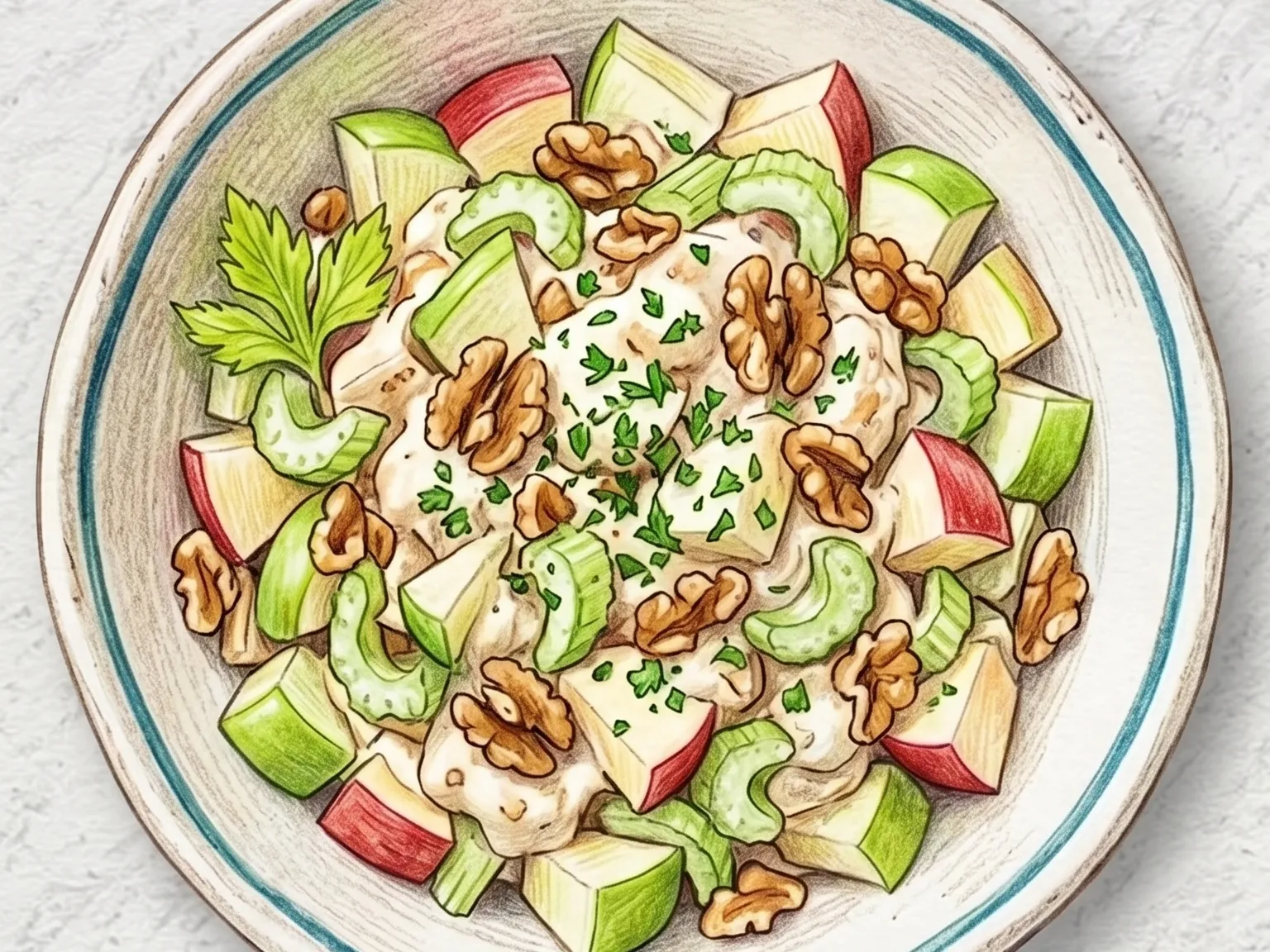
The Waldorf Salad is a classic dish combining apples, celery, walnuts, and grapes coated in a mayonnaise-based dressing.
What makes this special
- Tart apple cubes, crunchy celery, and toasted walnuts toss in creamy mayonnaise for a Waldorf Salad.
- Lemon juice keeps apple cubes bright through 30-minute chill
- Walnut bitterness balances the sweetness of mayo dressing
Key ingredients
Core cooking flow
- 1 Rinse and dry 2 apples, then cut them into bite-size cubes.
- 2 Trim 2 celery stalks and peel away any tough strings if they are noticeable, then slice thinly.
- 3 Break only the large pieces of 60 g walnuts so the salad keeps texture.
The Waldorf Salad is a classic dish combining apples, celery, walnuts, and grapes coated in a mayonnaise-based dressing. To prepare it, fresh apple cubes are immediately tossed with lemon juice to prevent browning and maintain their color. The dressing is made by whisking mayonnaise with a small amount of sugar until smooth. Celery stalks are thinly sliced, and grapes are halved and seeded to provide a refreshing texture. The walnuts are toasted in a dry pan over low heat for two minutes to enhance their earthy flavor, which balances the sweetness of the mayonnaise. All the ingredients are gently folded together to prevent the fruit from releasing excess juices, which would make the salad watery. Chilling the salad in the refrigerator for thirty minutes allows the flavors to integrate while keeping the ingredients crisp.
Instructions
Read the steps as a cooking flow: prep, heat, seasoning, doneness control, and finish.
- 1Prep
Rinse and dry 2 apples, then cut them into bite-size cubes.
Toss them right away with 1 tsp lemon juice so the cut surfaces stay bright and do not brown while the other ingredients are prepared.
- 2Prep
Trim 2 celery stalks and peel away any tough strings if they are noticeable, then slice thinly.
Halve 100 g grapes and remove seeds if present, keeping the pieces similar in size for easy eating.
- 3Control
Break only the large pieces of 60 g walnuts so the salad keeps texture.
Warm them in a dry pan over low heat for about 2 minutes, just until fragrant, then cool before mixing.
- 4Season
In a large bowl, stir 4 tsp mayonnaise with 0.5 tsp sugar first so the sugar dissolves evenly.
Add any lemon juice left from the apples and mix until the dressing looks smooth and lightly glossy.
- 5Season
Add the apples, celery, grapes, and cooled walnuts to the dressing.
Fold from the bottom upward with a spatula, coating everything lightly without pressing hard, because crushed fruit releases juice and turns the salad watery.
- 6Control
Cover the bowl and chill the salad for 30 minutes so the flavors settle and the texture stays crisp.
Stir once just before serving, then check that the dressing still coats the fruit without pooling.
After the steps
Pick a recipe that fits this dish.
Continue with shared ingredients, meal pairings, or a similar method.
Recipes That Go Well With This
More Western →Based on shared ingredients and meal pairing
Kale Apple Walnut Salad
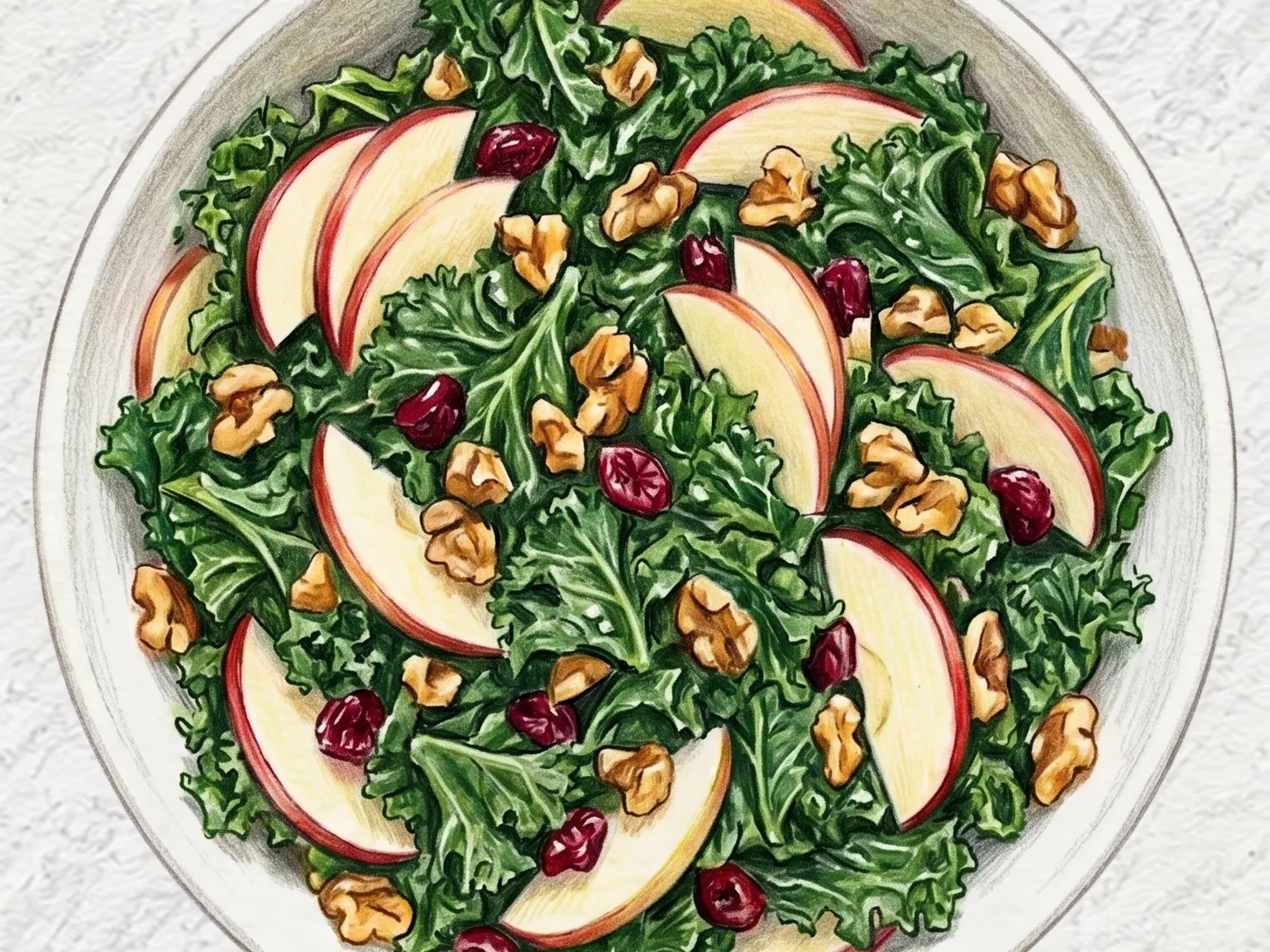
Kale apple walnut salad strips kale leaves from their stems, tears them small, and massages them with part of a lemon-honey dressing to soften the tough fibers before adding thinly sliced apple, roughly chopped walnuts, and dried cranberries with the remaining dressing. Raw kale has a coarse, chewy texture that can feel rough on the palate, but massaging it with the acidic dressing breaks down the cell walls, reducing volume and turning the leaves tender. The lemon juice pulls double duty - it tempers the kale's bitterness and prevents the apple slices from browning. Olive oil and honey round out the acid with a smooth richness and gentle sweetness. Toasting the walnuts in a dry pan for just one minute brings their oils to the surface, roughly doubling the nutty aroma, while pockets of dried cranberries add tart-sweet bursts throughout.
Classic Wedge Salad
Classic Wedge Salad features crisp iceberg lettuce wedges topped with a rich blue cheese dressing, crispy bacon, and cherry tomatoes. Preparing this dish requires cutting the lettuce into four wedges while leaving the core intact to hold the leaves together. The dressing is made by mixing half of the blue cheese with sour cream, mayonnaise, and lemon juice, leaving a few small cheese chunks, while the rest is kept for topping. Washing the lettuce and shaking out any water between the layers is essential to prevent the dressing from thinning. The bacon is cooked until crisp and drained well on paper towels. The salad is assembled by placing the cold wedges on a plate, pouring the dressing over, and topping with the bacon, halved tomatoes, remaining blue cheese, and sliced chives.
Coleslaw
Coleslaw is built from finely shredded cabbage and carrot tossed in a mayonnaise-based dressing sharpened with apple cider vinegar and Dijon mustard. A small amount of sugar keeps the acidity in check without making the salad noticeably sweet, and the mustard adds a subtle, savory bite that keeps the dressing from tasting flat. Resting the dressed slaw in the refrigerator for at least 30 minutes allows the vegetables to soften slightly and absorb the dressing more evenly, resulting in a more cohesive texture than eating it immediately after mixing. Coleslaw is one of the most common side dishes in American cooking, pairing naturally with barbecue, fried chicken, and pulled pork sandwiches. If the cabbage has high water content, a brief salt cure before dressing draws out excess moisture and prevents the sauce from becoming watery.
Classic Apple Pie
Apple pie has been baked in America since the colonial era, though its origins lie in 14th-century English and Dutch recipes where apples were enclosed in pastry as a way to cook fruit without a proper oven. The filling is built from tart baking apples - Granny Smith or Braeburn - tossed with sugar, cinnamon, nutmeg, a squeeze of lemon, and a spoonful of flour or cornstarch to thicken the juices as they cook. The double crust is made from cold butter cut into flour until the dough resembles wet sand, producing flaky, shattering layers when baked. As the pie bakes, the apples soften and release their juice, which the starch captures into a syrupy glaze that holds the filling together when sliced. The top crust turns deep golden and pulls away slightly from the filling, creating a hollow where steam escapes. Served warm with a scoop of vanilla ice cream - a la mode - or a slice of sharp cheddar in the New England tradition, apple pie is as much a cultural symbol as it is a dessert.
Serve with this
Citrus Espresso Tonic with Orange
Espresso tonic is a carbonated coffee drink built by slowly pouring espresso over chilled tonic water to form two distinct layers. The tonic must be thoroughly cold to maintain stable carbonation throughout; cooling the espresso for about thirty seconds before pouring it over a spoon produces a clean separation between the two liquids. The quinine bitterness in the tonic water meets the espresso's roast bitterness, creating a balanced interplay rather than one-note sharpness. Orange slices and lemon peel garnish the glass, releasing citrus oils that rise with the bubbles. Specialty espresso with pronounced fruit acidity works particularly well here, harmonizing with the tonic's effervescence and lending natural sweetness without added sugar. Pre-chilling the glass with ice before adding the tonic helps preserve carbonation. The drink gained popularity in Scandinavian coffee culture during the 2010s before spreading worldwide.
Real Pineapple Sherbet
This refreshing fruit dessert is prepared by scooping out the flesh of a mini pineapple and using its hollowed shell as a serving vessel. The fruit pulp is blended until smooth to prevent icy lumps, then mixed with sugar, lemon juice, and oligosaccharide syrup to achieve a sweet and tangy flavor. After pouring the mixture back into the shell and covering it with the top lid, it is frozen for at least four hours. Stirring the mixture occasionally during freezing breaks up ice crystals, resulting in a smoother texture. The active bromelain enzyme present in the fresh fruit provides a subtle tingly sensation on the tongue. Serving the sherbet directly inside the pineapple skin minimizes juice loss and keeps the dessert cold. Letting it stand for five minutes before scraping and topping with fresh apple mint leaves makes it ready to serve.
Kimchi Bacon Mac and Cheese
Kimchi bacon mac and cheese layers aged kimchi's lactic tang and smoky bacon into a classic American cheddar cheese sauce over elbow macaroni. A butter-flour roux forms the base, with milk whisked in to build a béchamel before cheddar is melted into a thick, clinging sauce. Crisp bacon pieces add salt and crunch throughout, while chopped ripe kimchi introduces fermented acidity that counteracts the richness of the cheese. A pinch of gochugaru runs underneath with mild, warming heat. The tubular macaroni shape traps sauce inside and out, ensuring each forkful carries the full spectrum of creamy, tangy, and smoky flavors.
Similar recipes
Muffuletta Sandwich (New Orleans Italian Olive Salad Sandwich)
Muffuletta sandwich starts with a round Italian loaf split horizontally and hollowed slightly, then spread generously on both cut sides with olive salad - a mix of chopped green and black olives dressed in olive oil. Layers of salami, ham, mortadella, and provolone cheese are stacked inside, and the sandwich is wrapped tightly and pressed for at least 20 minutes so the olive oil soaks into the bread and melds the flavors together. The briny, tangy olive salad is what distinguishes the muffuletta from other deli sandwiches, cutting through the richness of the cured meats and aged cheese. Making it ahead and refrigerating allows the flavors to deepen further. No cooking is involved - just assembly and pressing - making it an ideal choice for picnics and gatherings.
Pork Chops with Apple Cider Pan Sauce
Apple Cider Pork Chops represent a traditional American one-pan cooking method where thick-cut pork loin chops are cooked in a single skillet to create a deep golden exterior crust. The preparation involves a pan sauce that utilizes the flavorful fond left behind in the skillet after searing the meat. For the best results, the pork chops should sit at room temperature for approximately thirty minutes before they are placed in the pan. This step is important because it allows the heat to penetrate the meat evenly from the outer edges to the center. It is also essential to use a paper towel to pat the surface of the pork until it is completely dry, which facilitates the chemical reaction needed for thorough browning. Once the pork has been seared and removed from the heat, finely chopped shallots and garlic are added to the rendered pork fat and sautéed until they become fragrant. Apple cider is then poured into the hot skillet to deglaze the surface, loosening the caramelized bits that remain attached to the bottom. The liquid is simmered and reduced until the natural sugars and acidic components of the cider become more concentrated and intense. To build additional layers of flavor, Dijon mustard is whisked into the reduction to provide a sharp and slightly peppery character. The final texture of the sauce is achieved by swirling in a piece of cold unsalted butter at the very end of the cooking process, which creates a glossy appearance and a smooth consistency. A whole sprig of fresh thyme is included during the simmering stage to provide an herbal element that connects the flavor profiles of the apple cider and the pork meat.
Classic Beef Burger
A classic beef burger shapes seasoned ground beef into a thick patty and sears it over high heat until a deep brown crust forms on the outside while the interior stays juicy. The Maillard reaction on the hot surface concentrates the beef flavor into that crust, and a slice of cheddar melted on top adds a salty, creamy layer. Crisp lettuce and a thick tomato slice bring moisture and freshness, while pickle slices cut through the richness with vinegar acidity. A brioche bun absorbs the rendered juices and condiments without falling apart, holding the stack together so every bite delivers all the components at once.