Wild Rice Crispy Seaweed Salad
Quick answer
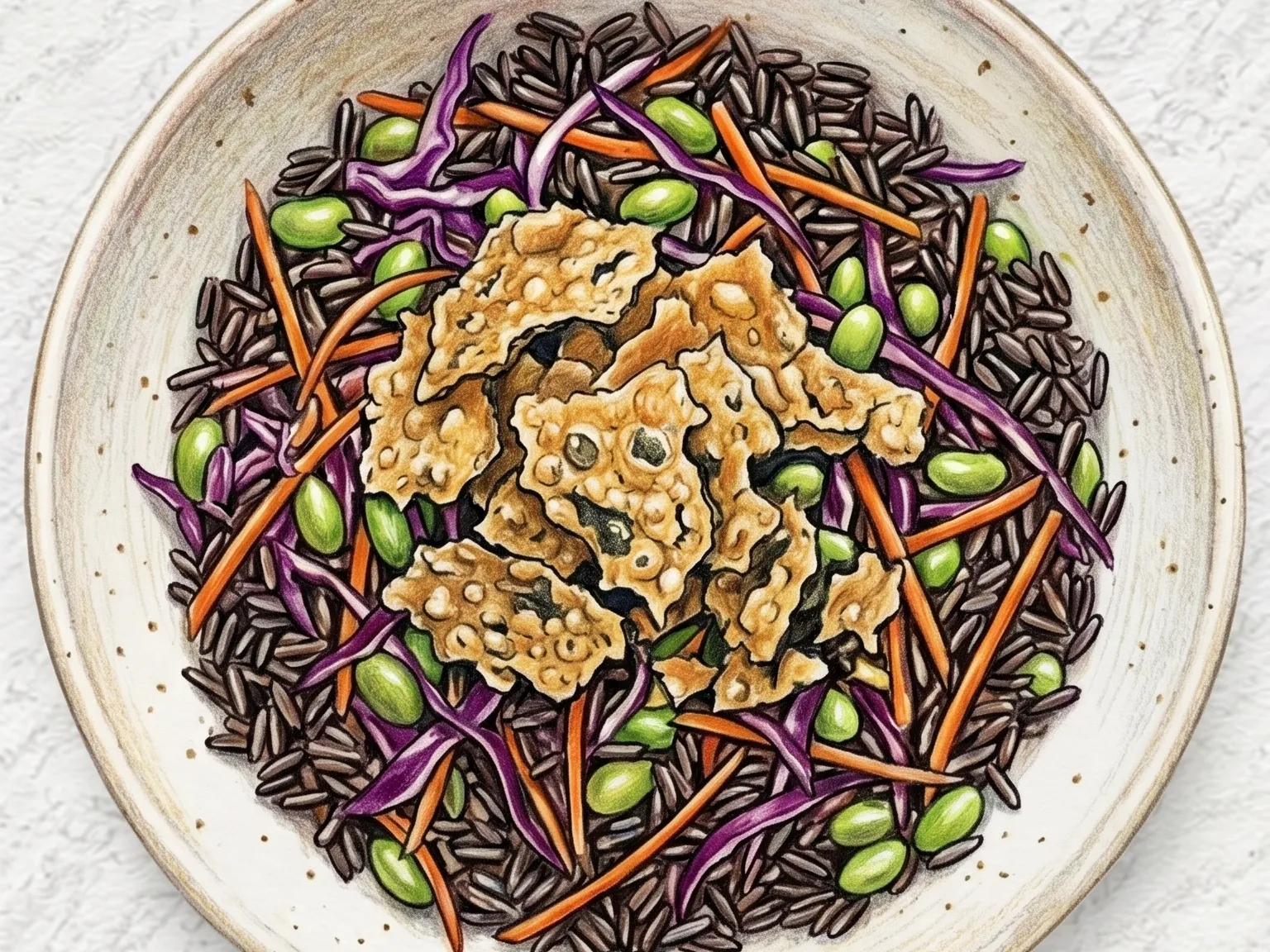
Wild rice crispy seaweed salad combines cooked and cooled wild rice with julienned red cabbage, carrot, and thawed edamame, dressed in soy sauce, brown rice vinegar, sesa...
What makes this special
- Chewy grains and crispy seaweed chips meet in a savory, soy-based wild rice salad.
- Wild rice's tough hull needs longer cooking than white rice to achieve chewiness
- Gim bugak must go on just before serving to stay crisp
Key ingredients
Core cooking flow
- 1 Rinse 180 g wild rice in cold water until the water runs mostly clear.
- 2 Drain the cooked wild rice very well, then spread it out so it cools completely.
- 3 Julienne 120 g red cabbage and 80 g carrot into thin, similar lengths so they mix evenly.
Wild rice crispy seaweed salad combines cooked and cooled wild rice with julienned red cabbage, carrot, and thawed edamame, dressed in soy sauce, brown rice vinegar, sesame oil, and minced garlic, then topped with crispy seaweed chips. Wild rice takes longer to cook than regular rice due to its tough hull, but cooling it completely is essential - warm grains clump together and lose their distinct chewy bite. The dressing layers soy saltiness and garlic depth over a gentle vinegar acidity and sesame richness, elevating the mild grain base. Edamame contributes soft protein while the raw vegetables provide a crisp, fresh contrast to the chewy rice. The seaweed chips must be added just before serving to preserve their crunch and concentrated umami.
Instructions
Read the steps as a cooking flow: prep, heat, seasoning, doneness control, and finish.
- 1Heat
Rinse 180 g wild rice in cold water until the water runs mostly clear.
Cook it according to the package directions, and stop when many grains split open and show a tender center.
- 2Heat
Drain the cooked wild rice very well, then spread it out so it cools completely.
Do not dress it while warm, because the grains can clump and lose their distinct chewy texture.
- 3Season
Julienne 120 g red cabbage and 80 g carrot into thin, similar lengths so they mix evenly.
Thaw 100 g edamame, then pat it dry to keep extra moisture from diluting the salad.
- 4Season
Whisk 1.5 tablespoons soy sauce, 1 tablespoon brown rice vinegar, 1 tablespoon sesame oil, and 0.5 teaspoon minced garlic first.
Mix until the garlic is dispersed and the dressing looks glossy.
- 5Step
Put the cooled wild rice, red cabbage, carrot, and edamame in a large bowl, then pour the dressing around the sides.
Toss from the bottom upward gently so the raw vegetables stay crisp.
- 6Finish
Let the salad stand for about 5 minutes so the dressing seasons the grains evenly, then plate it and sprinkle with 1 teaspoon sesame seeds. Add 25 g seaweed chips only at the last moment.
After the steps
Pick a recipe that fits this dish.
Continue with shared ingredients, meal pairings, or a similar method.
Recipes That Go Well With This
More Salads →Based on shared ingredients and meal pairing
Bean Sprout Bulgur Seaweed Salad
Bulgur wheat brings a plump, nutty chew that pairs naturally with briefly blanched bean sprouts, building a hearty Korean grain salad with satisfying texture and substance. The dressing - soy sauce, apple cider vinegar, sesame oil, and minced garlic - mirrors the classic Korean namul seasoning profile exactly, tying grain and vegetable together without anything feeling out of place. Julienned carrot contributes sweetness and color, while thinly sliced scallion sharpens the finish with a mild, lingering onion bite. Roasted seaweed flakes are folded in just before serving to preserve their crunch and the oceanic salinity plays off the earthy grain in a pairing that reads as distinctly Korean. Bean sprouts should be rinsed in cold water immediately after blanching to keep their snap intact.
Korean Chwinamul Pot Rice
Chwinamul sotbap is a Korean pot rice made by layering lightly seasoned wild chwinamul greens over soaked rice and cooking everything together in kelp stock until done. The greens release their distinctively herbal, faintly bitter fragrance directly into the rice as it steams, filling the room with an earthy mountain scent when the lid is lifted. Mixed at the table with a soy-sesame sauce, the initial bitterness softens into a pleasant background that makes each spoonful layered and grounding. It is best prepared in spring when chwinamul is freshly picked, offering the sharpest aroma and the most tender stems. Dried chwinamul, soaked and squeezed before use, extends the recipe across all four seasons, though the fresh version carries a vitality and brightness that dried leaves cannot fully replicate.
Korean Cabbage Tuna Jeon (Crispy Shredded Cabbage Tuna Pancake)
Finely shredded cabbage, drained canned tuna, and thinly sliced onion are folded into a light batter of Korean pancake mix, egg, and salt, then spread thin in an oiled pan. As the cabbage cooks, it releases moisture and develops a natural sweetness that balances the tuna's salty, savory character. Spreading the batter thin ensures crisp edges throughout, and making smaller pancakes simplifies flipping. High in protein and relatively low in calories, this jeon doubles as a quick standalone meal or a diet-friendly option, finished with a scattering of chopped green onion on top.
Salmon Salad (Seared Salmon over Greens with Soy Vinaigrette)
Salmon salad sears a salmon fillet skin-side down until the exterior is crisp and the interior stays moist, then places it over lettuce, shredded red cabbage, sliced avocado, and peppery radish sprouts, dressed with soy sauce, vinegar, minced garlic, and olive oil. Patting the salmon completely dry and seasoning with black pepper five minutes before cooking prevents the skin from sticking to the pan and allows it to crisp evenly - four minutes skin-side down and two minutes flipped produces a center that retains a pale pink translucency for maximum moisture. The avocado's creamy fat harmonizes with the salmon's omega-3 richness, while radish sprouts add a sharp, mustard-like bite that energizes the bowl. The dressing's combination of soy sauce, vinegar, and garlic creates a salty-tangy base that cuts cleanly through the oily fish.
Serve with this
Kimchi Lentil Ragu Tagliatelle
Kimchi lentil ragu tagliatelle is a plant-forward pasta where lentils simmer with tomato puree, wine, and finely diced onion, carrot, and celery for 35 minutes, breaking down into a thick sauce with a meaty texture that contains no actual meat. The Korean-inflected soffritto builds the aromatic base, and as the lentils cook through they release starch that naturally thickens the ragu without any additional binder. Fermented kimchi is added late in the process, preserving its sharp acidity and keeping the fermented flavor present and distinct rather than cooked away. A small amount of sugar smooths the combined tartness of tomato and kimchi so neither dominates. The wide, flat tagliatelle ribbons hold the heavy sauce well, and every strand picks up the full depth of the braise. Without a gram of meat, the dish delivers genuine richness and staying power.
Soybean Paste Stew with Clams
Doenjang jjigae with clams is one of the most frequently made stews in Korean households, built on the combination of fermented soybean paste's deep, earthy flavor and the clean briny umami of manila clams. The clams are purged of sand before being added to a pot of doenjang-laced broth, where they open and release their salty, seawater-flavored liquor directly into the soup. The result transforms the base from something merely savory into something distinctly oceanic and complex. Zucchini softens in the bubbling broth and contributes a natural sweetness as it breaks down, while blocks of soft tofu act as sponges, soaking up the seasoned liquid and releasing it in a burst of hot, flavorful broth when bitten into. Sliced cheongyang chili peppers are added to interrupt the heaviness of the fermented paste and sharpen the overall flavor. The stew is typically served in an earthenware pot while still bubbling, alongside rice. Many Koreans ladle the broth directly over their bowl of rice. The recipe adapts to any season: assembled with leftover summer vegetables from the refrigerator for a lighter version, or cooked piping hot in a stone pot through winter.
Salade Niçoise
Salade Nicoise is a classic salad from Nice in southern France that arranges tuna, soft-boiled eggs, olives, anchovies, tomatoes, and blanched green beans in separate sections on a plate, finished with a vinaigrette of olive oil, lemon juice, and Dijon mustard. The traditional presentation keeps each ingredient in its own zone rather than tossing everything together. Soft-boiling the eggs for six minutes yields a runny yolk that acts as a natural dressing when broken. The salty depth of anchovies and the oily richness of olives add complexity over the mild tuna, while the mustard vinaigrette brightens and ties the whole plate together with its acidity.
Similar recipes
Multigrain Salad
Brown rice, barley, and lentils are each boiled separately and cooled before being combined, so that every grain contributes its own distinct size and texture to the finished bowl. The brown rice stays chewy, the barley holds a thick bite, and the lentils offer a soft give that rounds out the contrast. Julienned cucumber and red onion introduce crunch and a mild sharpness that keep the heavier grains from feeling dense. Halved cherry tomatoes release juice as a natural supplement to the dressing, and a mixture of perilla oil and apple cider vinegar ties the bowl together with nuttiness and clean acidity. Adding sliced red chili or diced bell pepper extends the color and sweetness without changing the character of the dish. It holds well at room temperature, which makes it practical for meal prep and packed lunches. The combination of dietary fiber and plant protein means a moderate portion keeps hunger at bay for several hours.
Tofu Salad (Pan-Seared Tofu on Fresh Greens)
Dubu salad is made by pressing firm tofu to remove excess moisture, then pan-searing it until the outside turns golden and crisp while the inside stays soft and tender. The seared tofu is placed over a bed of baby greens, sliced cucumber, and cherry tomatoes. Wrapping the tofu in two layers of paper towels and setting a weight on top for twenty to thirty minutes draws out enough water so the surface browns properly in the pan without steaming. A dressing of soy sauce, sesame oil, lemon juice, and olive oil moves easily between Korean and Western flavor profiles. The salad is high in plant protein and low in fat, making it a practical and satisfying option when a light, clean-tasting meal is the goal.
Korean Seaweed Jangjorim Rice Bowl
Beef eye of round is simmered slowly in soy sauce, sugar, and garlic until deeply seasoned throughout, then pulled apart by hand along the grain and braised again with quail eggs so they absorb the concentrated braising liquid. The jangjorim is spooned generously over warm white rice and finished with a heavy crumble of gamtae seaweed, whose crisp, ocean-fresh fragrance contrasts sharply with the salty-sweet braised meat beneath. Gamtae is a winter seaweed harvested from Korean coasts that carries a toasty, sesame-adjacent aroma when dried, and its papery crunch disappears quickly once exposed to moisture, making timing essential. The braising liquid left over in the pot is too flavorful to discard and can be repurposed as a mixing sauce for bibimbap or used to season blanched greens. Adding the gamtae at the very last moment before eating, rather than during plating, preserves both its texture and its fragrance. The bowl layers salt, sweetness, deep umami from the soy-reduced meat, and the clean smell of the sea into a compact, satisfying combination.