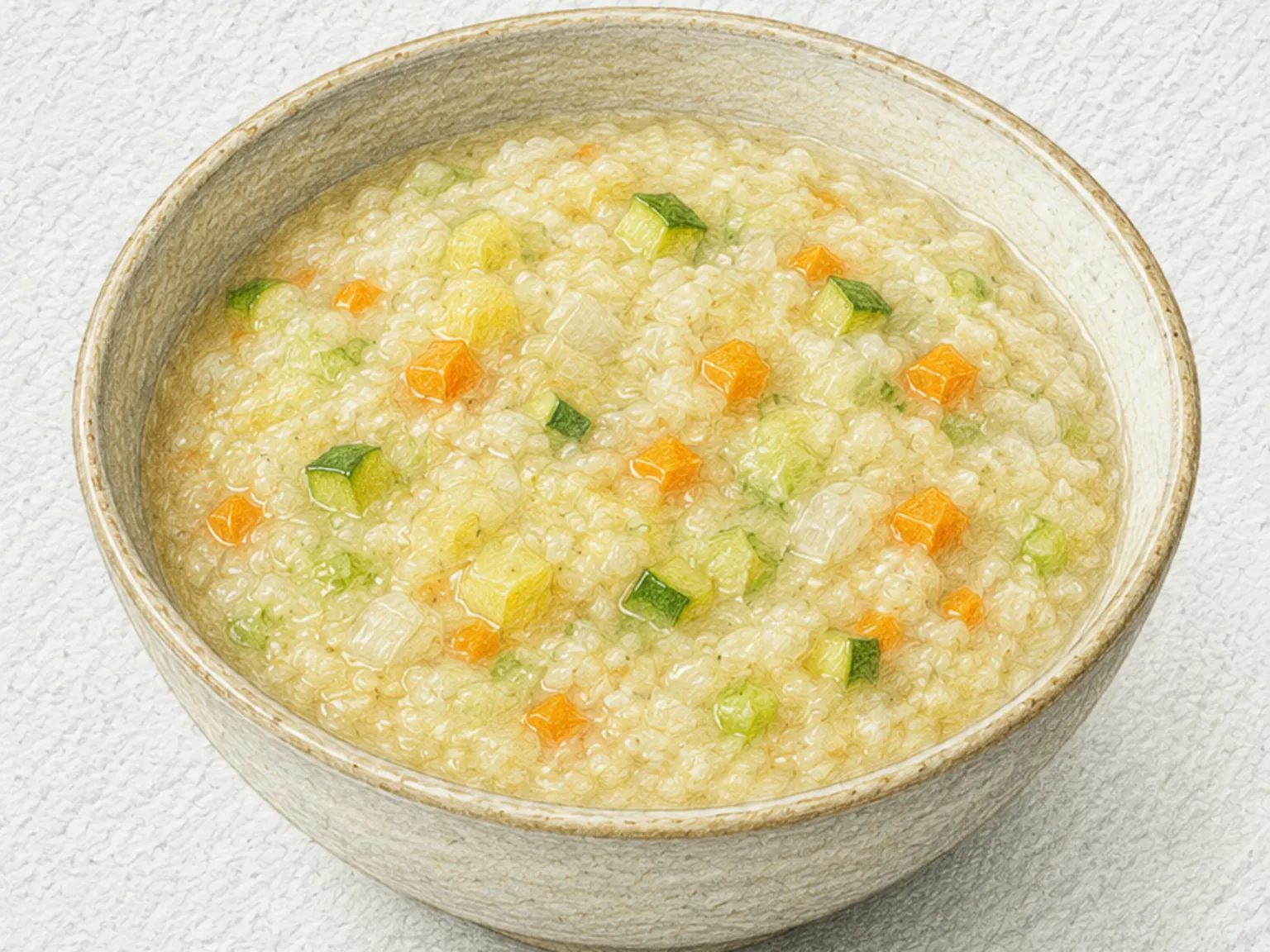
Korean Vegetable Porridge (Yachae Juk)
Stir 1 cup drained soaked rice in 1 tbsp sesame oil over medium-low heat for about 2 minutes, until lightly glossy but not browned, then add the finely diced vegetables and stir for about 1 minute. Pour in 4 cups water, bring to a boil over high heat, and simmer on low with the lid slightly ajar for 25 to 30 minutes, stirring down to the bottom every 3 to 4 minutes. Season with 1/2 tsp salt and 1 tsp soup soy sauce once the potato is soft enough to crush easily.
Quick answer
- Total time
- 50 min
- Level
- Easy
- Servings
- 2 servings
- Ingredients
- 9
About this dish
Potato, zucchini, carrot and shiitake are minced very fine and toasted in sesame oil with the soaked rice, then simmered in water over low heat for 30 minutes.
Read more
A little soup soy sauce and salt at the end leave room for the sweetness the vegetables give off. By the time it is done, the potato is soft enough to mash along with the rice.
Ingredients
Instructions
- 1
Finely dice 1/2 zucchini, 1/4 carrot, 2 shiitake mushrooms, and 1/2 potato as evenly as possible.
Small, even pieces soften at the same pace and keep the porridge texture smooth.
- 2
Warm 1 tablespoon sesame oil in a heavy pot over medium-low heat.
Add 1 cup drained soaked rice and stir for about 2 minutes, until the grains look lightly glossy but not browned.
- 3
Add all the diced vegetables and stir over medium heat for about 1 minute.
If the rice or potato begins sticking to the bottom, lower the heat right away and keep the ingredients moving.
- 4
Pour in 4 cups water and bring it to a boil over high heat.
Once it bubbles strongly, skim off any foam, reduce to low heat, and leave the lid slightly ajar.
- 5
Simmer over low heat for 25 to 30 minutes, stirring down to the bottom every 3 to 4 minutes.
The rice should bloom and the potato should be soft enough to crush easily.
- 6
Lower the heat before the porridge becomes too thick and scrape the bottom often.
Stir in 0.5 tsp salt and 1 tsp soup soy sauce, then serve warm.
Use-up ingredient planner
Turn these ingredients into two more meals
The overlap excludes basic seasonings. Open the next recipe and your selected dishes will stay with you.
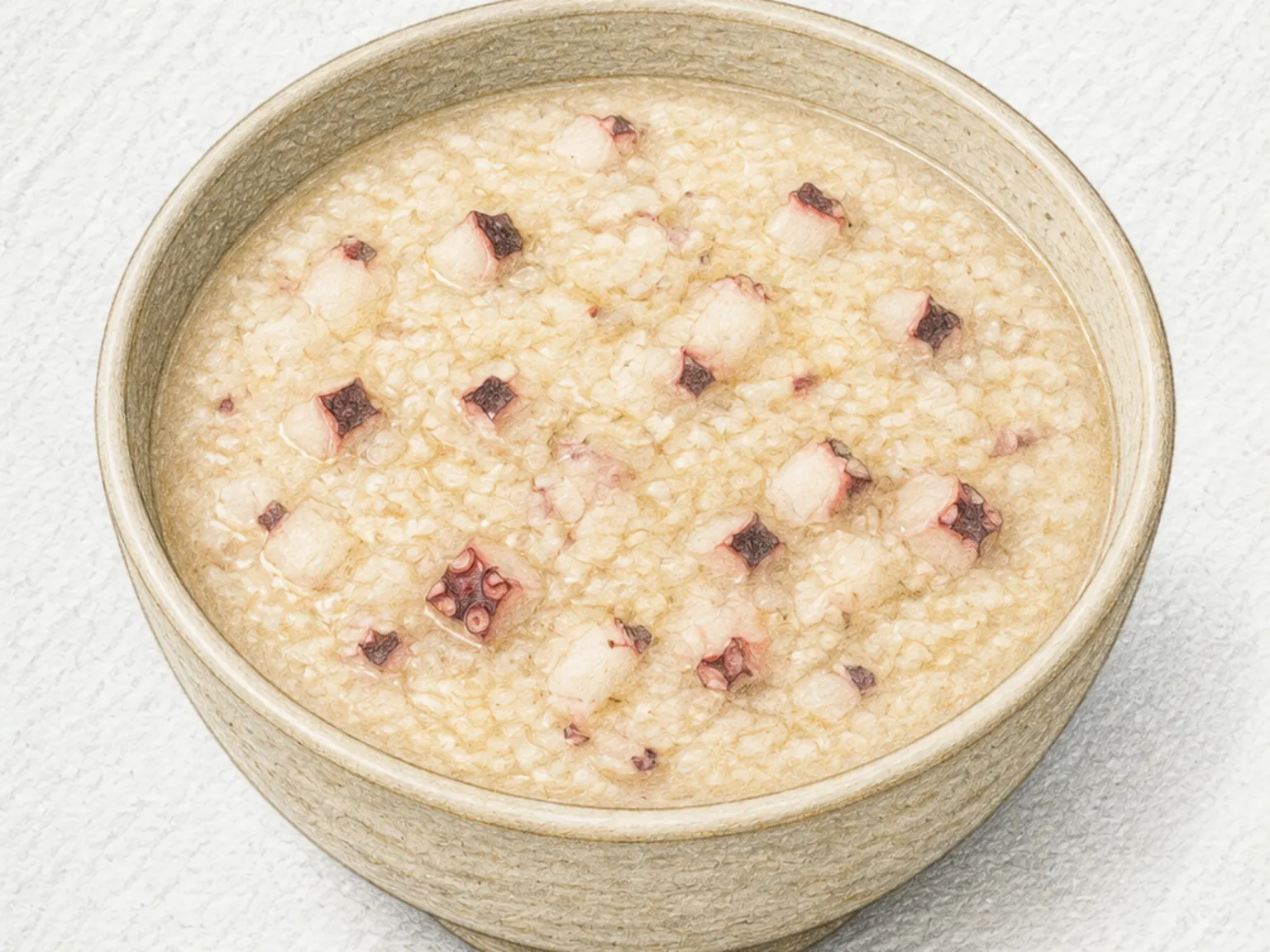
Octopus Rice Porridge
soaked rice, zucchini
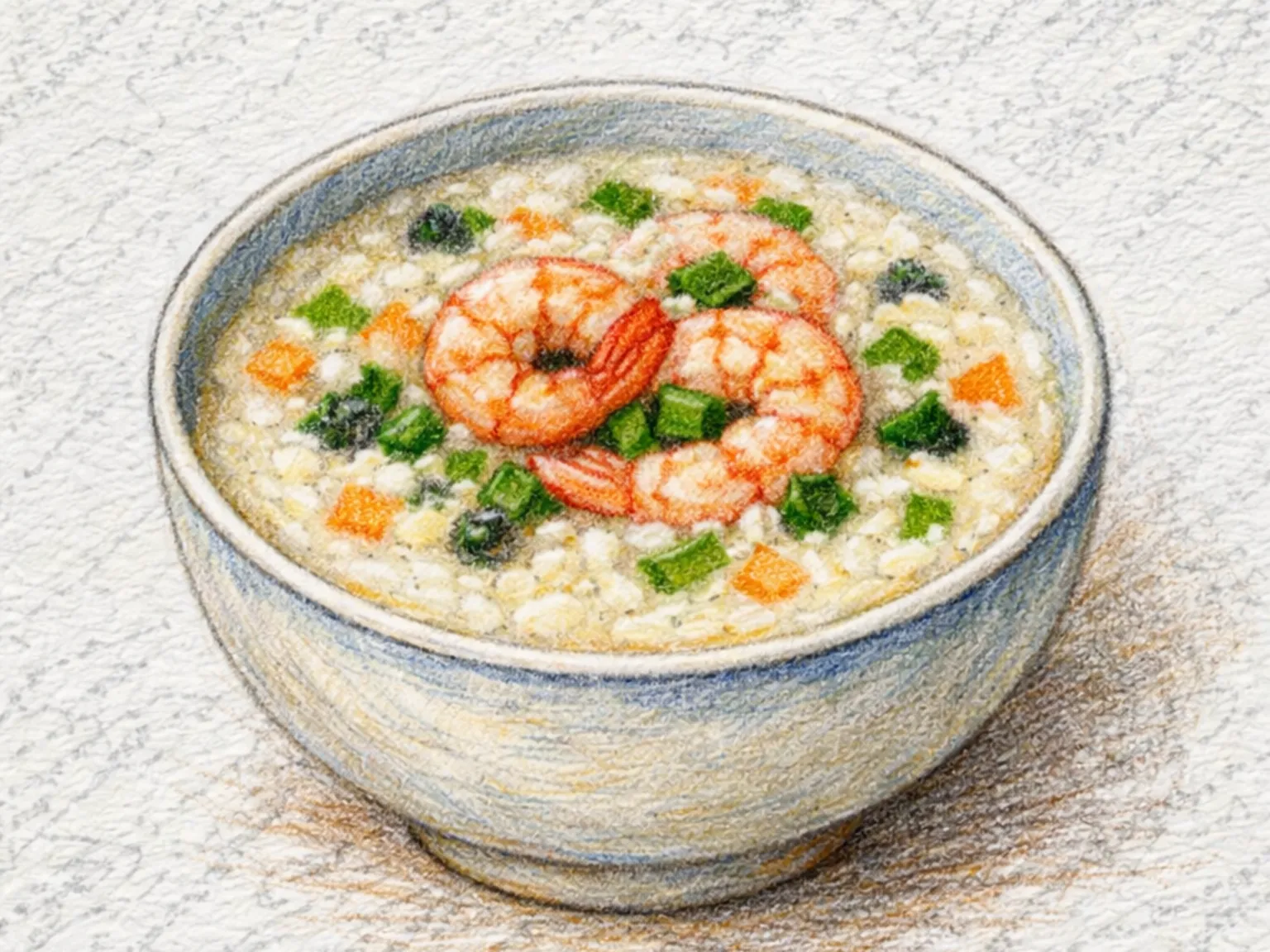
Korean Shrimp Porridge (Creamy Rice Porridge with Shrimp Broth)
soaked rice, zucchini
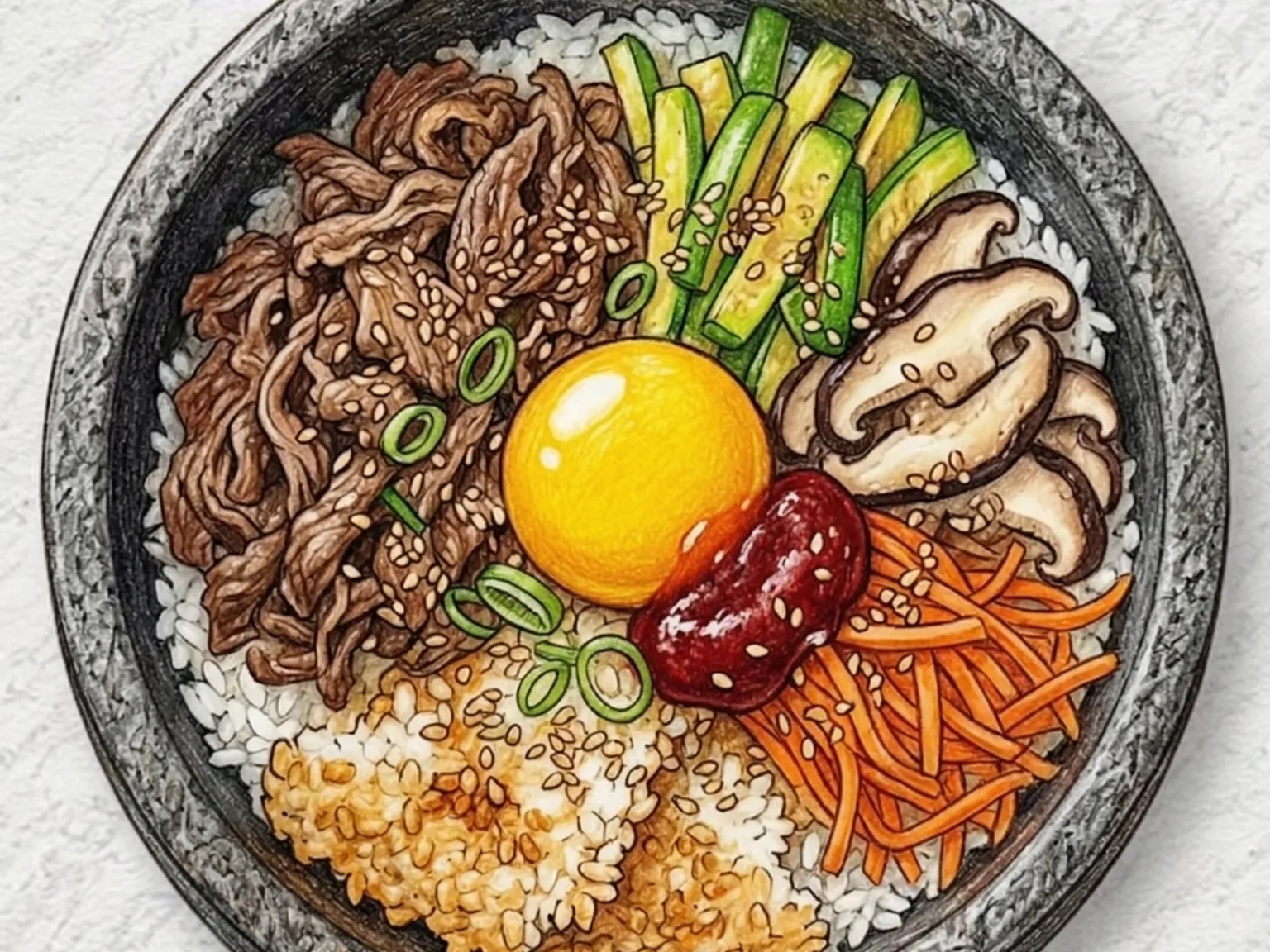
Korean Dolsot Bulgogi Bibimbap
zucchini, carrot