Yakitori Rice Bowl (Soy-Mirin Glazed Grilled Chicken over Rice)
Quick answer
Direct heat and a repetitive glazing process define the preparation of this chicken skewer bowl.
What makes this special
- Yakitori don builds a lacquered glaze on grilled chicken through repeated layers of tare sauce.
- Tare sauce applied in thin layers while grilling builds a lacquered glaze
- Thigh fat keeps the meat moist under direct-heat without drying out
Key ingredients
Core cooking flow
- 1 Pat 260 g boneless chicken thigh dry, then cut it into bite-size pieces so t...
- 2 Mix 2 tablespoons soy sauce, 1.5 tablespoons mirin, and 1 tablespoon sugar u...
- 3 Thread chicken and green onion alternately onto skewers, leaving tiny gaps s...
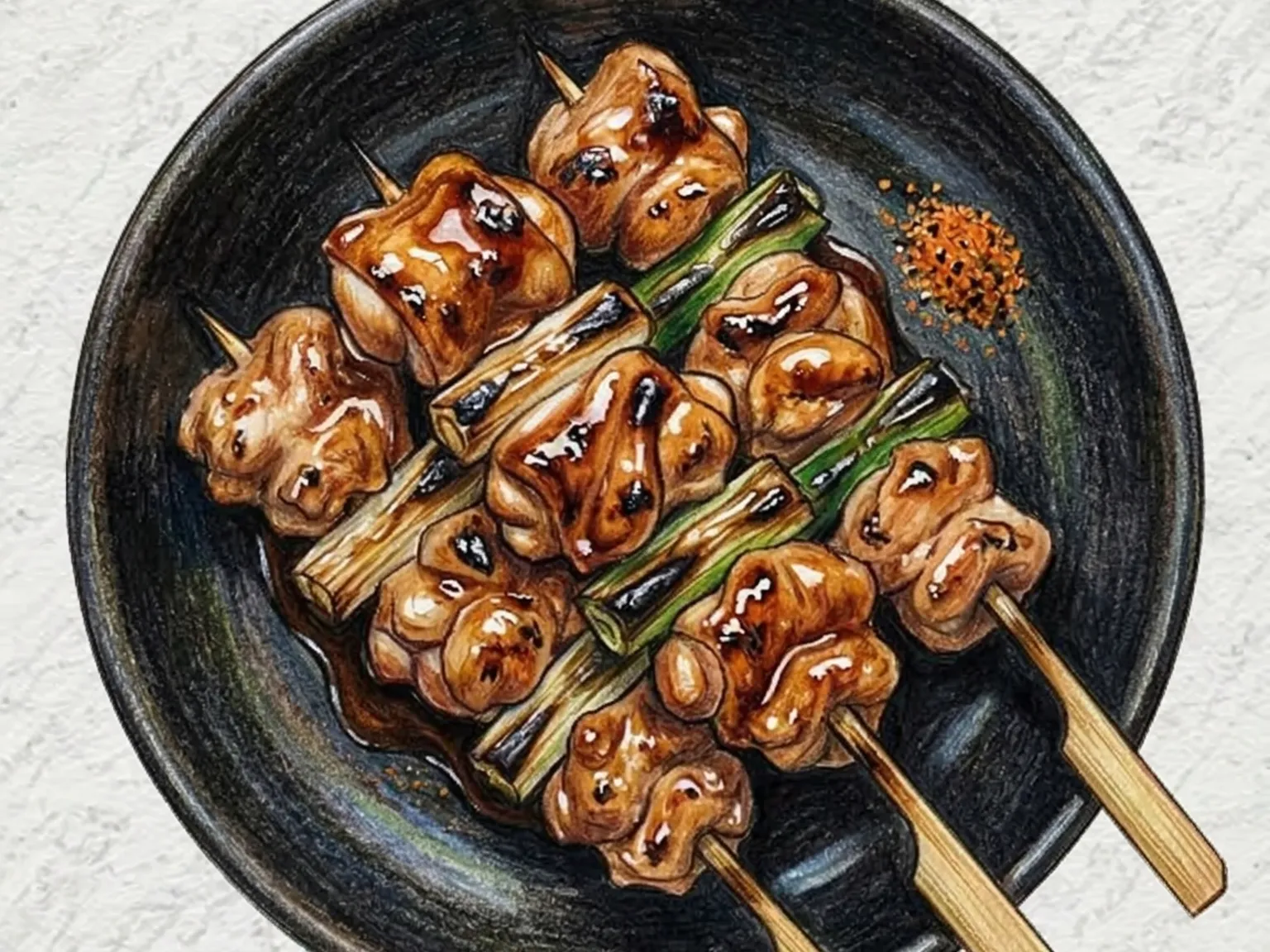
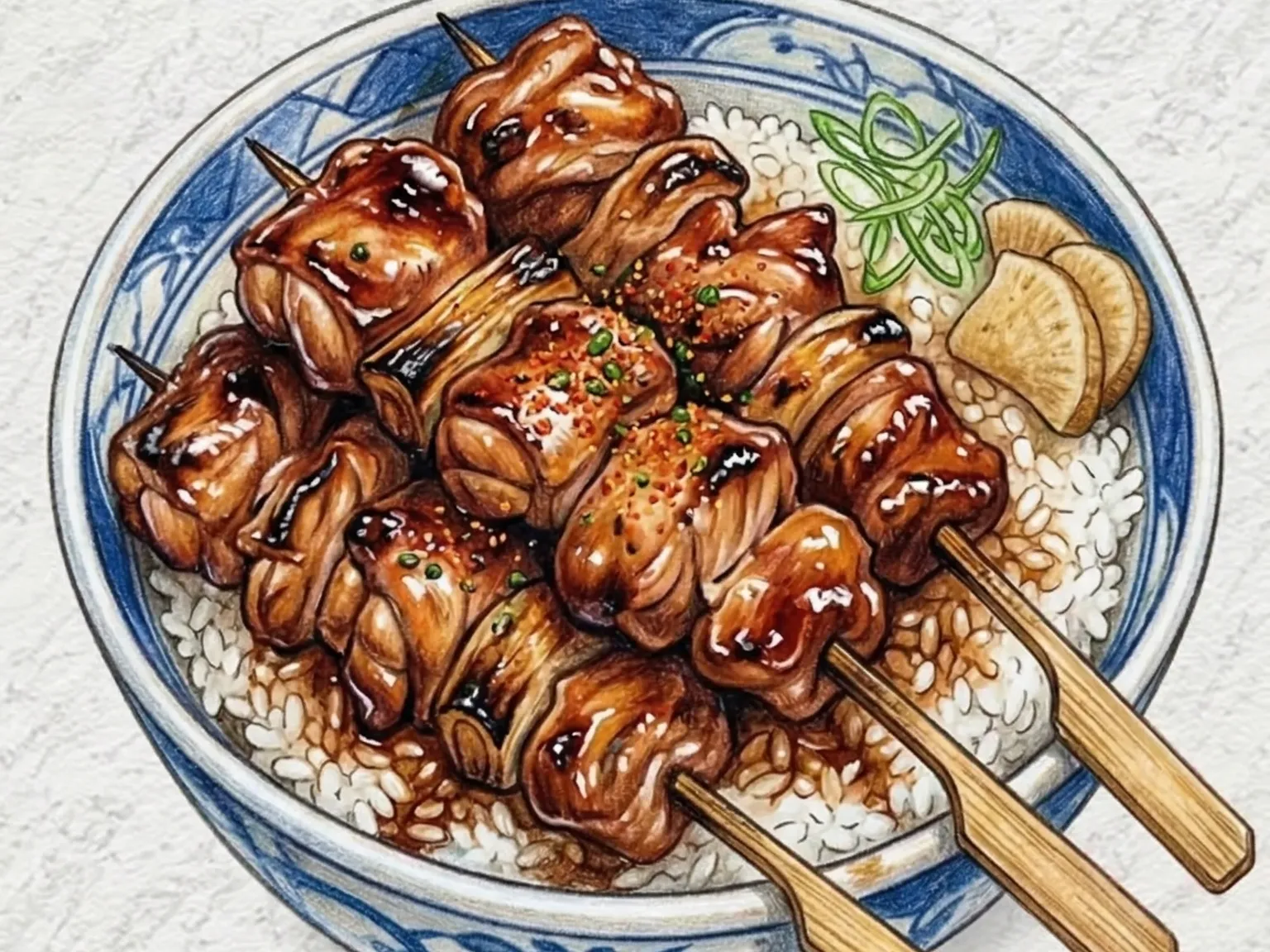
Direct heat and a repetitive glazing process define the preparation of this chicken skewer bowl. Small pieces of chicken thigh are secured onto skewers and grilled over a flame while a mixture of soy sauce, mirin, and sugar is applied in thin, sequential layers. This technique builds a lacquered surface through caramelization, which directs the sweet and salty flavors to the exterior of the meat. Applying the sauce too heavily in a single pass often leads to burning and an uneven crust. Because chicken thigh contains natural fats, the meat remains moist and tender even under high temperatures. When the cooked pieces are removed from the skewers and placed onto the rice, the excess glaze permeates the grains to provide sufficient seasoning. Sprinkling shichimi togarashi or sansho powder introduces a sharp or citrus-like contrast to the sweetness of the chicken. While chicken breast serves as a leaner alternative, it requires a longer marinating period and a shorter time on the grill to prevent the meat from drying out. The tare sauce can be prepared in advance and stored in the refrigerator for several weeks. Adding a halved soft-boiled egg or sliced scallions provides different textures and prevents the meal from feeling repetitive.
Instructions
Read the steps as a cooking flow: prep, heat, seasoning, doneness control, and finish.
- 1Prep
Pat 260 g boneless chicken thigh dry, then cut it into bite-size pieces so the surface browns instead of steaming.
Cut 80 g green onion into 4 cm lengths, keeping the pieces thick enough to stay on the skewers.
- 2Season
Mix 2 tablespoons soy sauce, 1.5 tablespoons mirin, and 1 tablespoon sugar until the sugar fully dissolves.
Scrape the bottom of the bowl once or twice, since undissolved sugar can burn quickly in the pan.
- 3Heat
Thread chicken and green onion alternately onto skewers, leaving tiny gaps so heat reaches the sides of each piece.
Keep 2 cups cooked rice warm in serving bowls, because the glaze tastes better when it soaks into hot grains.
- 4Control
Heat 1 teaspoon cooking oil in a pan over medium-high heat.
Add the skewers and sear about 2 minutes per side, turning only after browned patches appear so the chicken releases cleanly.
- 5Heat
Lower the heat to medium and brush on a thin layer of tare, then turn the skewers.
Repeat for about 4 minutes, adding light coats instead of one heavy pour, until the glaze looks glossy and the chicken is cooked through.
- 6Finish
When the remaining tare thickens, turn off the heat before it becomes too salty or starts scorching.
Place the skewers over the warm rice, spoon over the sauce, and finish with 1 teaspoon sesame seeds.
After the steps
Pick a recipe that fits this dish.
Continue with shared ingredients, meal pairings, or a similar method.
Recipes That Go Well With This
More Rice →Based on shared ingredients and meal pairing
Chicken and Egg Rice Bowl
Oyakodon simmers bite-size chicken thigh and sliced onion in a soy-mirin broth, then binds everything with a soft-set egg before sliding it over steamed rice. The name means 'parent and child,' referring to the chicken and egg sharing the same bowl. Onion goes into the broth first to release its natural sweetness, followed by the chicken, which cooks just until tender. Beaten eggs are poured in a circular motion and the lid goes on briefly, leaving the egg custardy rather than fully set. That half-cooked egg absorbs the savory-sweet broth and coats each grain of rice. Despite using only a handful of ingredients, the layered umami from soy sauce and mirin gives the dish a satisfying depth.
Yakitori (Japanese Charcoal-Grilled Chicken Skewers)
Yakitori is a traditional Japanese chicken skewer dish where bite-sized pieces of chicken thigh and leek are threaded onto bamboo sticks and grilled. The cooking process involves repeatedly brushing the skewers with a sweet soy-based glaze made of soy sauce, mirin, sugar, and sake. This builds a glossy, caramelized coating that pairs with the smokiness from the grill. Threading the ingredients with small gaps allows heat to circulate, ensuring the meat cooks through evenly. As they grill, the leek segments soften and sweeten, balancing the savory glaze. While the glazed version is common, yakitori can also be seasoned simply with salt, a style known as shio, which highlights the natural juiciness of the chicken thigh. The skewers are served hot as a casual dining item.
Korean Stir-Fried Sweet Potato Stems
Goguma julgi - sweet potato stems - are the above-ground vines of the sweet potato plant, a byproduct that Korean cooks transform into a summer namul rather than discarding. The most labor-intensive step is peeling each stem by hand, pinching the outer skin with a fingernail and pulling it away to reveal the tender core beneath. After blanching for two minutes and rinsing in cold water, the stems are stir-fried in perilla oil with garlic and seasoned with soup soy sauce. Perilla powder stirred in at the end thickens the remaining liquid into a nutty glaze. In season during summer, the stems are harvested from sweet potato fields before the tubers themselves are dug up.
Chicken Soboro Rice Bowl (Ground Chicken and Scrambled Egg over Rice)
Soboro-don is a Japanese-style rice bowl that tops steamed rice with two side-by-side mounds: savory minced chicken and sweet scrambled egg. The chicken is seasoned with soy sauce, sugar, mirin, and ginger juice, then stirred constantly with chopsticks over medium heat until it breaks into fine, crumbly grains that are individually coated in glaze. The egg is treated the same way - beaten, poured into a pan, and stirred into soft, fluffy curds. Arranged half-and-half on the rice, the brown chicken and bright yellow egg create a visual contrast that makes the bowl inviting. Both toppings share a gentle sweetness balanced by soy umami, and their fine, loose texture means every bite blends effortlessly with the rice beneath.
Serve with this
Korean Spicy Fermented Squid Jeotgal
Ojingeo jeotgal is a Korean fermented squid preserve made by salting cleaned, finely chopped squid for one hour to firm the flesh and extract moisture, then dressing it in a paste of gochugaru, minced garlic, ginger, fish sauce, and corn syrup. The salt cure intensifies the squid's natural chewiness, and cutting the pieces small accelerates seasoning absorption during the two-to-three-day cold fermentation. Chili flakes coat every surface in a deep red layer that delivers steady heat, while corn syrup adds gloss and a mild sweetness that prevents the salt from dominating. Spooned over steamed rice, each piece offers a firm, springy chew followed by a wave of fermented umami. Mixing in a touch of sesame oil before serving softens the saltiness and adds a nutty fragrance that rounds out each mouthful.
Korean Namhae-Style Clam Broth
Namhae-jogae-tang is a southern coastal Korean clam soup that relies on an abundance of clams and minimal interference to produce a broth of startling clarity and depth. The clams are purged in salted water, then cooked in water spiked with rice wine, which tempers any raw ocean smell. As the shells pop open, they release their natural liquor - briny, faintly sweet, and concentrated - which becomes the soup's defining flavor. Sliced green and red chilies add gentle heat and color without overwhelming the shellfish, while garlic and green onion contribute a quiet aromatic layer. Salt is added cautiously, since the clams themselves bring significant salinity. The result is a transparent, intensely flavored bowl that tastes like the sea distilled into its purest form, and it is traditionally enjoyed as both a drinking companion and a light meal.
Korean Octopus Soft Tofu Stew
Nakji-sundubu-jjigae is a Korean stew that pairs silky soft tofu with small octopus in a deeply spiced anchovy broth. The broth is built from anchovy and kelp stock seasoned with gochugaru, which gives it a bright red color and a layered heat that comes from the fermented pepper rather than raw chili alone. Soft tofu is dropped in large, undisturbed spoonfuls so it holds together during cooking instead of crumbling into the broth. The octopus is cut into manageable pieces and added last, once the broth is at a full boil, and should be cooked for no more than 90 to 120 seconds before the heat is cut. Octopus contracts and toughens quickly when overcooked, so adding it after every other ingredient is ready is essential for keeping it springy and tender. A cracked egg is dropped in at the end and the lid is closed for 30 seconds, which lets the yolk set partially before it dissolves into the broth, adding richness and a gentle smoothness to the heat. The contrast between the yielding, almost liquid texture of sundubu and the firm chew of the octopus is what defines the experience of the dish, with the spiced broth pulling both elements together. Serving in a stone pot keeps the stew at eating temperature through the entire meal.
Similar recipes
Pork Rice Bowl (Sweet-Salty Glazed Pork over Rice)
Butadon is a Japanese pork rice bowl that originated in Obihiro, Hokkaido, where thin slices of pork belly or shoulder are simmered with onion in a glaze of soy sauce, mirin, and sugar, then laid over a bowl of steamed rice. The soy salt and sugar sweetness balance precisely as the meat absorbs the sauce, while the onion dissolves gradually into the cooking liquid, contributing a natural sweetness that deepens the glaze. Where the pork meets the pan, the edges caramelize into a slightly charred coating that adds a roasted dimension to the otherwise clean, saucy topping. Hokkaido pork, with its firm texture and higher fat content, is traditional, though any well-marbled cut works. The preparation is genuinely simple - one pan, one sauce, no elaborate knife work - which is exactly why it became a staple weeknight meal across Japan.
Steak Rice Bowl (Seared Beef with Soy-Garlic Glaze over Rice)
A thick-cut beef steak is seared at high heat until a deep brown crust forms, then sliced and fanned over a bowl of hot rice. A glaze of soy sauce, garlic, and mirin is spooned over the slices, coating them in a glossy, caramelized finish. As the warm rice absorbs the pan juices, each spoonful carries the full weight of the beef's seared flavor. A runny fried egg or a small dab of wasabi on the side balances the richness with creaminess or heat. Controlling resting time and grain texture helps the ingredients cook evenly while keeping the final seasoning balanced.
Unadon (Japanese Grilled Glazed Eel Rice Bowl)
Unadon is a classic Japanese rice bowl dish featuring grilled freshwater eel brushed with a caramelized soy glaze. The preparation begins by drying the eel fillet and letting it rest at room temperature to ensure even cooking. The eel is first placed skin-side down in the pan to render its natural fat and create a tender texture. A rich tare sauce made by simmering soy sauce, mirin, sake, and sugar is repeatedly brushed onto the fish during the final stages of cooking. This process coats the eel in a glossy, sweet, and savory glaze. The cooked eel is served over a bowl of warm steamed rice drizzled with a spoonful of the sauce. Finely chopped chives and a dusting of ground sansho pepper are added at the end, providing a tingly citrus aroma that balances the richness of the fish.