Korean-Style Cabbage Pickle
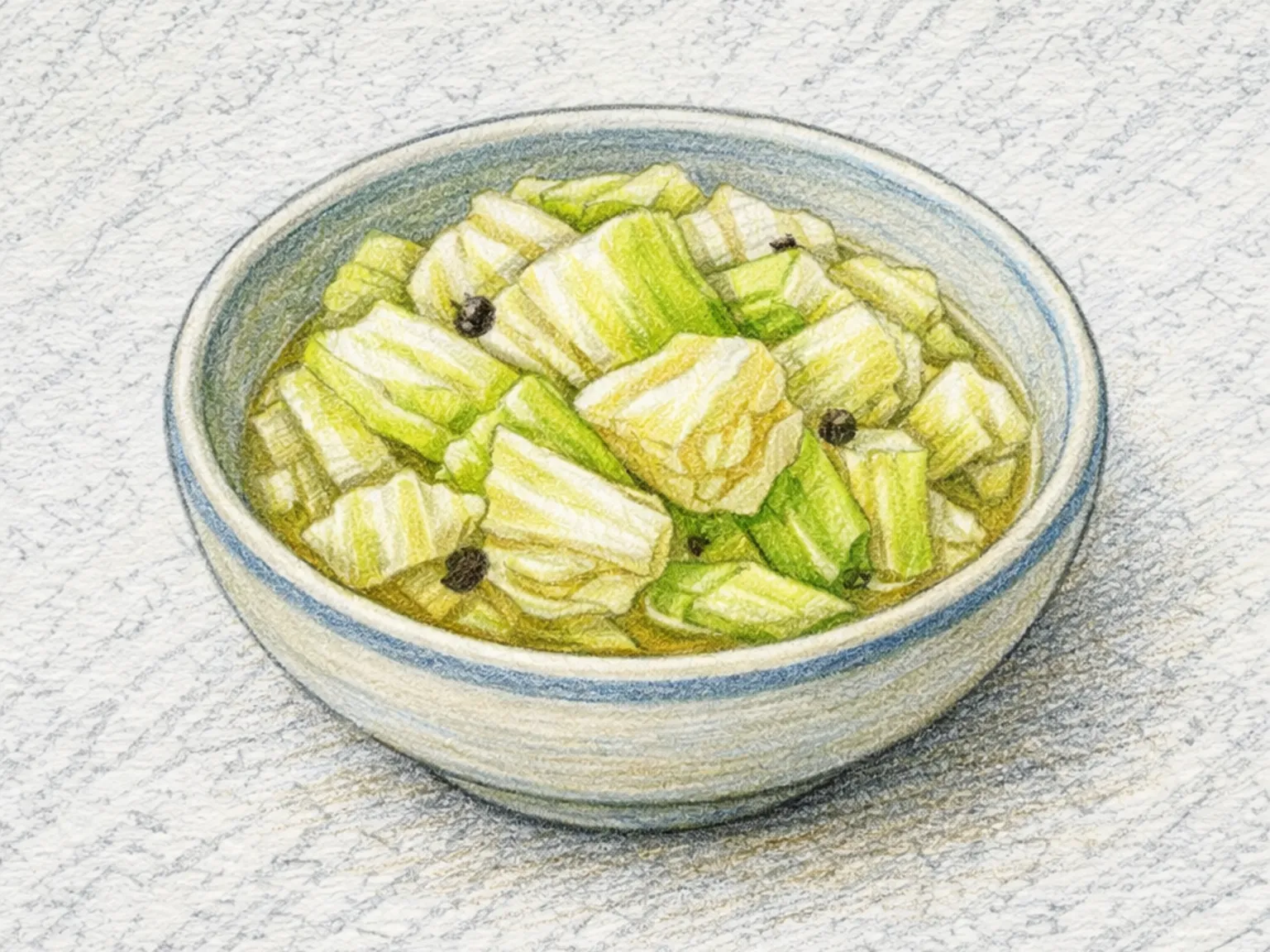
Yangbaechu pickle is a quick Korean-style vinegar pickle made by pouring a hot brine of vinegar, sugar, salt, and whole peppercorns over bite-sized cabbage and carrot pieces. The hot liquid slightly wilts the vegetables while they retain a firm, crisp crunch. Whole black peppercorns add a subtle spiced note that gives the pickle more dimension than a plain vinegar soak. Ready after just one day of refrigeration, it is commonly served alongside fried cutlets, burgers, or other rich dishes to cut through greasiness. Best consumed within a week for peak crunchiness.
Adjust Servings
Instructions
- 1
Cut cabbage and carrot into bite-size pieces.
- 2
Pack the vegetables tightly into a jar.
- 3
Boil vinegar, water, sugar, salt, and peppercorns.
- 4
Pour the hot brine directly over the vegetables.
- 5
Cool completely, then seal and refrigerate.
- 6
Serve from the next day and consume within one week.
As an Amazon Associate, we may earn from qualifying purchases.
Tips
Nutrition (per serving)
More Recipes

Korean Soy Pickled Beet (Vinegar Soy Brine Jangajji)
Beet jangajji is a Korean soy-pickled beet prepared by slicing beets thin and submerging them in a cooled brine of soy sauce, vinegar, and sugar. The vinegar cuts through the beet's earthy undertone, leaving a clean sweetness sharpened by acidity, while onion adds a mellow depth to the pickling liquid. As the brine cools, the beet's vivid red pigment bleeds into the liquid, creating a striking appearance. After at least a day of pickling, the flavor penetrates fully, making this a crisp, refreshing side dish alongside rice or grilled meats.

Korean-Style Cucumber Pickle
Oi pickle is a Korean-style vinegar-brined cucumber pickle where one-centimeter-thick cucumber rounds are briefly salted, then submerged in a hot brine of vinegar, water, sugar, salt, bay leaf, and whole black peppercorns. The hot brine contracts the cucumber surface on contact, locking in crunch that persists through days of refrigeration. As the pickle sits, the vinegar's sharp acidity mellows and merges with the sugar into a balanced sweet-sour profile. Bay leaf contributes a quiet herbal undertone, and peppercorns add a whisper of heat at the finish that elevates the pickle beyond plain vinegar sourness. Ready after twelve hours of chilling, these pickles are a natural companion to fried or fatty dishes, cutting through richness with clean acidity.

Korean Pickled Radish Wraps
Ssam-mu is a Korean sweet-and-sour pickled radish made by slicing Korean radish into very thin two-millimeter rounds and submerging them in a warm brine of water, vinegar, sugar, salt, and bay leaves. The slices must be thin enough to wrap around grilled meat without tearing, and the brine is cooled to lukewarm before pouring - boiling hot liquid would cook the radish and destroy its crunch. Ready after one day of refrigeration, the pickle reaches its peak on day three when the vinegar tang and sugar sweetness have fully penetrated each slice. Adding a lemon slice to the jar introduces a fresh citrus note. Wrapped around a piece of grilled pork belly or fried chicken, the sweet-sour radish provides an immediate contrast that lifts the fatty richness of each bite.

Korean Melon Pickle (Korean Melon Soy Vinegar Brine)
Chamoe jangajji is a Korean summer pickle made from firm Korean melon, seeded and sliced into thin half-moons, then cured in a brine of soy sauce, vinegar, and sugar. Salting the melon slices for fifteen minutes draws out excess moisture and prevents the brine from becoming diluted, helping the fruit hold its crunch over time. Sliced ginger added to the jar layers a warm, spicy note beneath the melon's naturally cool, sweet fragrance. After two days of refrigeration the sweet-sour-salty balance settles in, making this a refreshing seasonal banchan that works well on its own with rice or as a tangy topping for summer salads.

Korean Quick Pickled Daikon
Mu-pickle - Korean quick-pickled daikon - is the yellow pickled radish that arrives alongside every order of Korean fried chicken, forming an inseparable trio with the chicken and cola. Radish is cut into cubes or half-moons and submerged in a boiled brine of vinegar, sugar, salt, and water. Though edible within thirty minutes, overnight refrigeration allows the sweet-sour brine to penetrate fully to the core. The bright yellow color of commercial chicken-mu comes from gardenia or turmeric extract - home versions skip the dye without affecting taste. The vinegar-to-sugar ratio is the critical variable: too much vinegar and the acidity overwhelms; too much sugar and it tastes like candied fruit. A 1:1 ratio is the reliable baseline. When eating greasy fried chicken or donkatsu, a single piece of mu-pickle acts as a palate reset - the vinegar's sharpness cuts through the oil and refreshes the mouth between bites. Stored refrigerated, the pickles maintain their crunch for over two weeks.

Crispy Mushroom Tangsu (Sweet & Sour)
Double-fried oyster mushrooms with a shattering crust, drizzled in tangy sweet-and-sour sauce - a crowd-pleasing Korean tangsu that rivals the meat version. Coated in potato starch batter, they fry at 170°C, rest, then refry at 180°C for maximum crunch. A separate sauce of soy, vinegar, and sugar simmers with onion, bell pepper, and carrot, thickened with starch slurry. Poured over just before serving - or kept aside to preserve crunch.