Charim

2686 Korean & World Recipes

2686+ Korean recipes, clean and organized. Ingredients to instructions, all at a glance.

Korean Young Radish Barley Bibimbap
Rice Easy

Korean Young Radish Barley Bibimbap

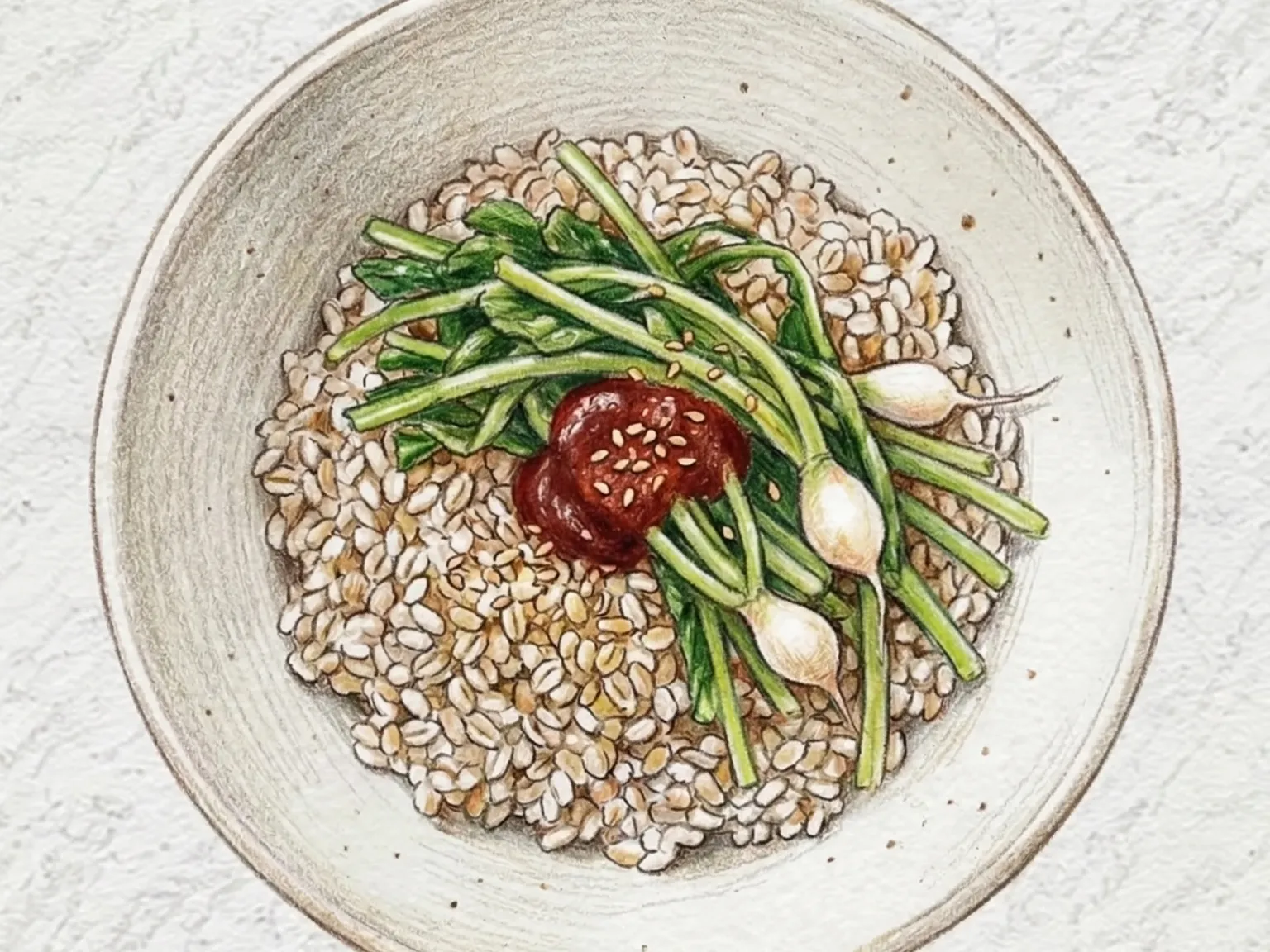
Barley-mixed rice has a hearty, popping texture and a nutty flavor that pairs naturally with the crisp, tart bite of freshly made young radish kimchi. The crunchy stems of the kimchi contrast with the chewy barley grains, and stirring in gochujang ties the tangy, spicy, and sweet elements together into a cohesive bowl. A spoonful of sesame oil folded in at the end adds a roasted fragrance that lifts the overall depth of flavor. This bibimbap is especially refreshing in the summer months as a cooling, appetite-stimulating meal.

Prep 18min Cook 22min 2 servings

Adjust Servings

2servings
servings

Instructions

  1. 1

    Prepare warm barley rice and cut young radish kimchi into 3 cm pieces.

  2. 2

    Julienne cucumber and roughly slice lettuce, chill briefly in water, then drain.

  3. 3

    Mix gochujang, vinegar, plum syrup, and sesame oil to make the sauce.

  4. 4

    Place barley rice in bowls and top with kimchi, cucumber, and lettuce.

  5. 5

    Add halved boiled eggs and spoon sauce to taste.

  6. 6

    Mix thoroughly right before eating for best freshness.

🛒Shop Ingredients on Amazon

As an Amazon Associate, we may earn from qualifying purchases.

Tips

Add 1 tbsp kimchi brine for extra umami.
Warm cold barley rice for 1 minute in the microwave for easier mixing.

Nutrition (per serving)

Calories
470
kcal
Protein
13
g
Carbs
80
g
Fat
10
g

More Recipes

Korean Young Radish Kimchi
Side dishesMedium

Korean Young Radish Kimchi

Young radish greens and their slender stems are salted briefly, dressed in a gochugaru-based paste, and fermented into a kimchi synonymous with Korean summer. The greens are more delicate than mature radish, absorbing the seasoning quickly while retaining a refreshing crunch that lasts well into fermentation. Gochugaru and anchovy fish sauce form the backbone of the paste, delivering heat and deep umami in equal measure, while garlic lends a pungent undercurrent that mellows as the fermentation progresses. Once dressed, the radish greens release their own moisture, creating a naturally occurring brine that becomes the hallmark of yeolmu kimchi: a tangy, chili-flecked liquid that can be spooned over cold noodles or rice. Even half a day at room temperature kicks off the fermentation, introducing a sharp, fizzy acidity that signals the kimchi is alive. Transferring it to the refrigerator slows the process and stabilizes the flavor at a bright, appetizing sourness. Draped over bibim-guksu or naengmyeon, it brings a cooling, spicy bite that defines the Korean summer table.

🏠 Everyday
Prep 30min4 servings
Korean Young Radish Water Kimchi
KimchiMedium

Korean Young Radish Water Kimchi

Yeolmu mul-kimchi is a water kimchi in which salted young radish greens are submerged in a clear broth infused with garlic, ginger, scallions, and sliced radish. The garlic and ginger are squeezed through cloth rather than added directly, producing a transparent, clean-tasting liquid. Plum syrup contributes a natural sweetness and acidity that develops further during fermentation. After eight hours at room temperature and twelve more in the refrigerator, the brine becomes effervescent and refreshingly tart, making it ideal to serve cold alongside bibim guksu or steamed rice in summer. Using filtered cold water ensures the cleanest possible flavor.

🥗 Light & Healthy🍱 Lunchbox
Prep 30min4 servings
Korean Young Radish Cold Noodles
NoodlesEasy

Korean Young Radish Cold Noodles

Yeolmu mul guksu is a Korean cold noodle soup where the broth comes directly from yeolmu kimchi liquid mixed with cold water or light stock. The fermented, tangy kimchi brine serves as the soup base, eliminating the need for separate seasoning. Chilled somyeon noodles sit in the broth, topped with crunchy yeolmu kimchi pieces and often a few ice cubes. A halved boiled egg and sesame seeds are standard garnishes. The dish takes about 25 minutes to prepare and is straightforward as long as yeolmu kimchi is available.

🏠 Everyday
Prep 15minCook 10min2 servings
Korean Kimchi Acorn Jelly Rice Bowl
RiceEasy

Korean Kimchi Acorn Jelly Rice Bowl

Acorn jelly (dotorimuk) is sliced into strips, placed over rice, and drenched in a chilled broth made from kimchi juice, cold water, and a touch of sugar. The jelly's slippery, bouncy texture contrasts with the crunch of chopped kimchi, while the tangy broth refreshes the palate with every spoonful. A light toss of sesame oil on the rice provides a nutty base, and roasted seaweed flakes add an ocean-like finish. Adding ice cubes makes it even more bracing - a distinctly Korean way to beat summer heat with a cold, brothy rice bowl.

🥗 Light & Healthy🏠 Everyday
Prep 20minCook 10min2 servings
Korean Mixed Rice Bowl (Colorful Vegetables & Gochujang)
RiceMedium

Korean Mixed Rice Bowl (Colorful Vegetables & Gochujang)

Bibimbap is one of Korea's most iconic one-bowl meals, built by arranging individually seasoned vegetables - spinach, bean sprouts, zucchini, and carrots - alongside marinated beef and a fried egg over steamed rice, then mixing everything together with gochujang. Each component keeps its own texture and flavor until the moment you stir, creating a lively medley of crisp, soft, and spicy in every spoonful. It works well as a weeknight dinner using whatever leftover namul you have on hand, and when prepared in a hot stone pot, the rice forms a golden, crunchy crust at the bottom that adds another layer of enjoyment.

🏠 Everyday
Prep 20minCook 15min2 servings
Korean Bossam Kimchi Rice Bowl
RiceMedium

Korean Bossam Kimchi Rice Bowl

Bossam kimchi deopbap is a Korean rice bowl that repurposes leftover bossam - tender boiled pork and well-fermented bossam kimchi - by stir-frying them with onion in a sweet-spicy gochujang sauce and serving it all over hot rice. The tangy crunch of the kimchi plays off the moist, savory pork, while the sauce ties every element together with warmth and depth. It is a practical and satisfying meal that needs no side dishes, making it an efficient way to transform bossam leftovers into an entirely new dish. The contrast between the soft, slow-cooked pork and the sharp acidity of fermented kimchi keeps each bite lively, and the gochujang glaze adds just enough heat to make you want more.

🏠 Everyday
Prep 15minCook 20min2 servings
More Rice →