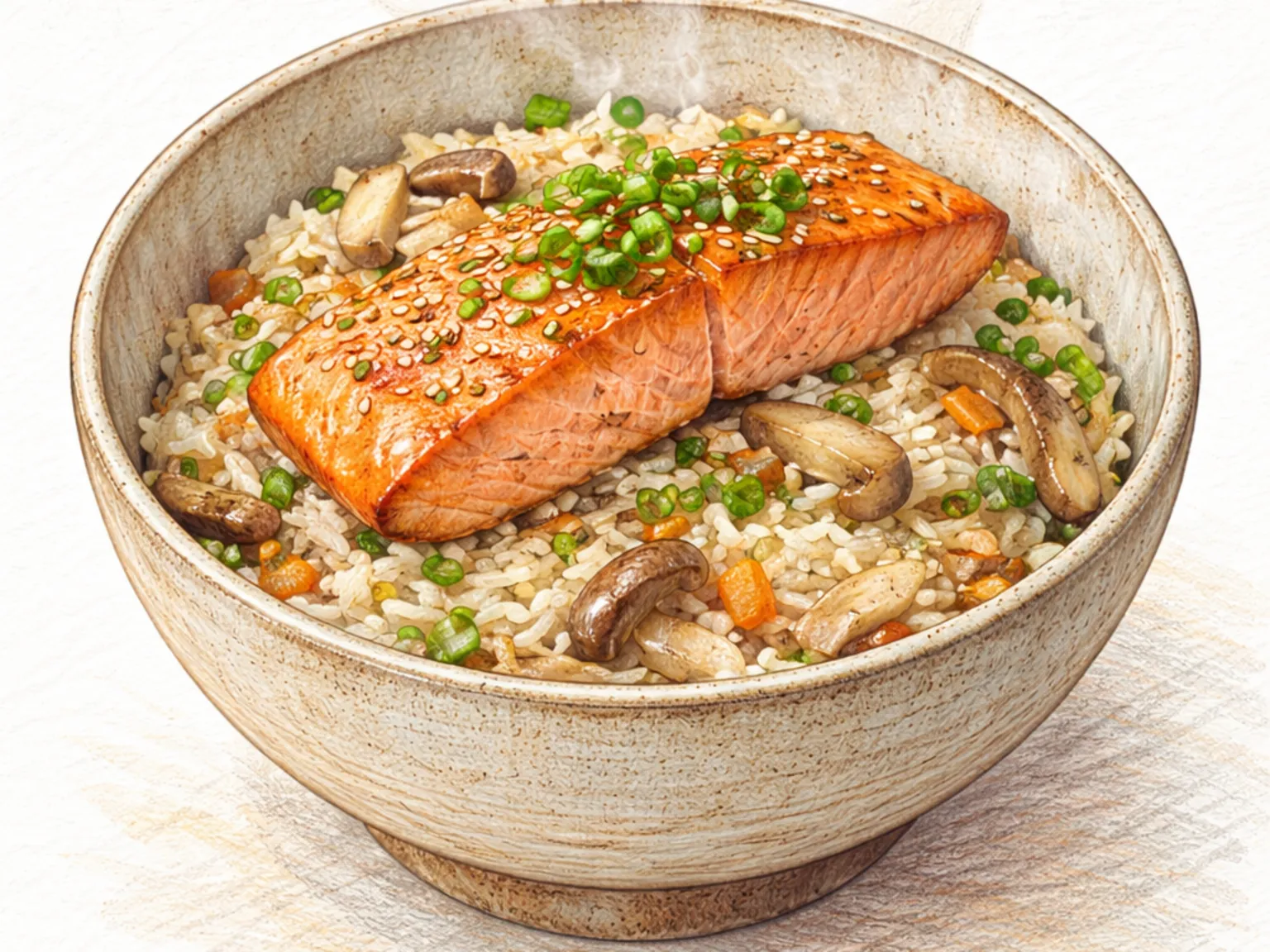
Korean Salmon Pot Rice (Salmon Fillet Steamed Directly on Rice)
A whole salmon fillet is placed directly on top of rice in a heavy pot before cooking begins. As the rice steams, the salmon's oils melt downward and seep between the grains, lending a natural richness and sheen without any added fat. During the resting stage the fish finishes cooking gently, turning tender enough to flake apart with chopsticks and mix evenly through the rice. A soy-wasabi sauce drizzled over the bowl and stirred in adds a sharp, salty kick that carries through to the last spoonful.
Adjust Servings
Instructions
- 1
Wash rice and soak for 30 minutes.
- 2
Sprinkle cooking wine on salmon and marinate 5 minutes to remove fishy smell.
- 3
Place soaked rice and water in a pot, lay salmon on top.
- 4
Bring to a boil, reduce to low, cook 15 minutes, steam 5 minutes.
- 5
Flake salmon into the rice, add soy sauce, butter, and lemon juice; toss.
- 6
Garnish with green onion.
As an Amazon Associate, we may earn from qualifying purchases.
Tips
Nutrition (per serving)
More Recipes

Korean Cutlassfish Pot Rice
Galchi sotbap is a Korean pot rice where marinated cutlassfish sits atop soaked rice with sliced radish and shiitake mushroom, all cooked together in a single vessel. The fish, seasoned with soy sauce and ginger, releases its rich, clean oils into the rice as it steams, infusing every grain with a delicate marine savoriness. Radish softens during cooking and contributes a gentle sweetness that supports the fish flavor without competing with it. Ginger neutralizes any fishiness, keeping the overall taste bright and clear. Shiitake mushroom adds an earthy umami layer and a pleasantly chewy texture. When the lid comes off, the combined aroma of soy-glazed fish and steamed rice fills the room. A soy-sesame dipping sauce is served alongside for mixing in, adding salt and nuttiness to each bite. The dish is at its finest in autumn when cutlassfish from the waters around Jeju and Korea's southern coast are at peak fat content.

Korean Octopus Pot Rice (Chewy Octopus Ocean-Scented Grain Pot)
Chewy octopus tentacles are placed on top of rice in a heavy pot and cooked together so the briny aroma penetrates every grain. Thin radish slices line the bottom of the pot, preventing sticking while adding natural sweetness, and cooking the octopus alongside radish helps tenderize the meat. The pot starts on high heat to bring it to a boil, then drops to low for a gentle cook that keeps the octopus from becoming rubbery. A dipping sauce of soy sauce, sesame oil, cheongyang chili, and green onion adds a spicy, clean finish.

Korean Truffle Mushroom Pot Rice
Shiitake and king oyster mushrooms are generously added to a pot of rice and cooked so their released moisture and earthy fragrance infuse every grain. The shiitake stays chewy while thick-sliced king oyster offers a meaty, substantial bite. Once the rice is done, a few drops of truffle oil are drizzled over the top, layering the mushrooms' natural earthiness with the truffle's deep, aromatic intensity. Mixing in a soy-seasoned sauce adds a salty edge that brings the whole bowl into balance.

Korean Fish Roe Rice Bowl
Albap - fish roe rice bowl - is a casual Korean dish that likely evolved from sushi-bar culture, where tobiko (flying fish roe) was always on hand and cooks needed a quick staff meal. Warm rice is first tossed with sesame oil and a knob of butter, which gives each grain a glossy, slightly nutty coating. The toppings are arranged in sections on top: bright orange flying fish roe that pops between the teeth, stir-fried kimchi with its fermented tang, diced pickled radish for crunch and sweetness, and a shower of shredded seaweed. Everything gets mixed together at the table, and the warmth of the rice slightly softens the roe, releasing its briny juice into the buttered grains. Scallion scattered on top adds a fresh bite. It is a ten-minute lunch that delivers a surprising range of textures and flavors from simple ingredients.

Korean Fish Soup (White Fish and Radish Clear Broth)
Saengseon-guk is a traditional Korean fish soup made with white-fleshed fish and radish in a clear broth. The radish simmers first, building a base of natural sweetness, before garlic and soup soy sauce are added for depth. The fish goes in once the radish is halfway cooked, and timing matters - it should cook only until the flesh turns opaque and begins to flake, as prolonged boiling would break it apart and cloud the broth. Tofu and sliced Korean chili peppers join near the end, adding soft texture and a mild kick. Green onion finishes the bowl with a fresh note. The result is a light, transparent soup where the fish's own clean, marine flavor does most of the work. It is the kind of straightforward home cooking that appears on Korean dinner tables throughout the year, requiring little more than fresh fish and basic pantry staples.

Korean Rice Ball (Sesame Rice Balls with Tuna Mayo Filling)
Jumeokbap are Korean rice balls made by seasoning warm rice with sesame oil, salt, and sesame seeds, then adding a tuna-mayonnaise filling with finely diced carrot and cucumber and shaping everything into rounds using plastic wrap. The sesame oil coats each grain for a nutty fragrance and helps the rice hold together firmly. Inside, the salty tuna and creamy mayonnaise meld while the carrot and cucumber provide crunchy bites of freshness. They require no cooking equipment to assemble and serve well as a packed lunch or picnic food.