Korean Lotus Root Chicken Porridge
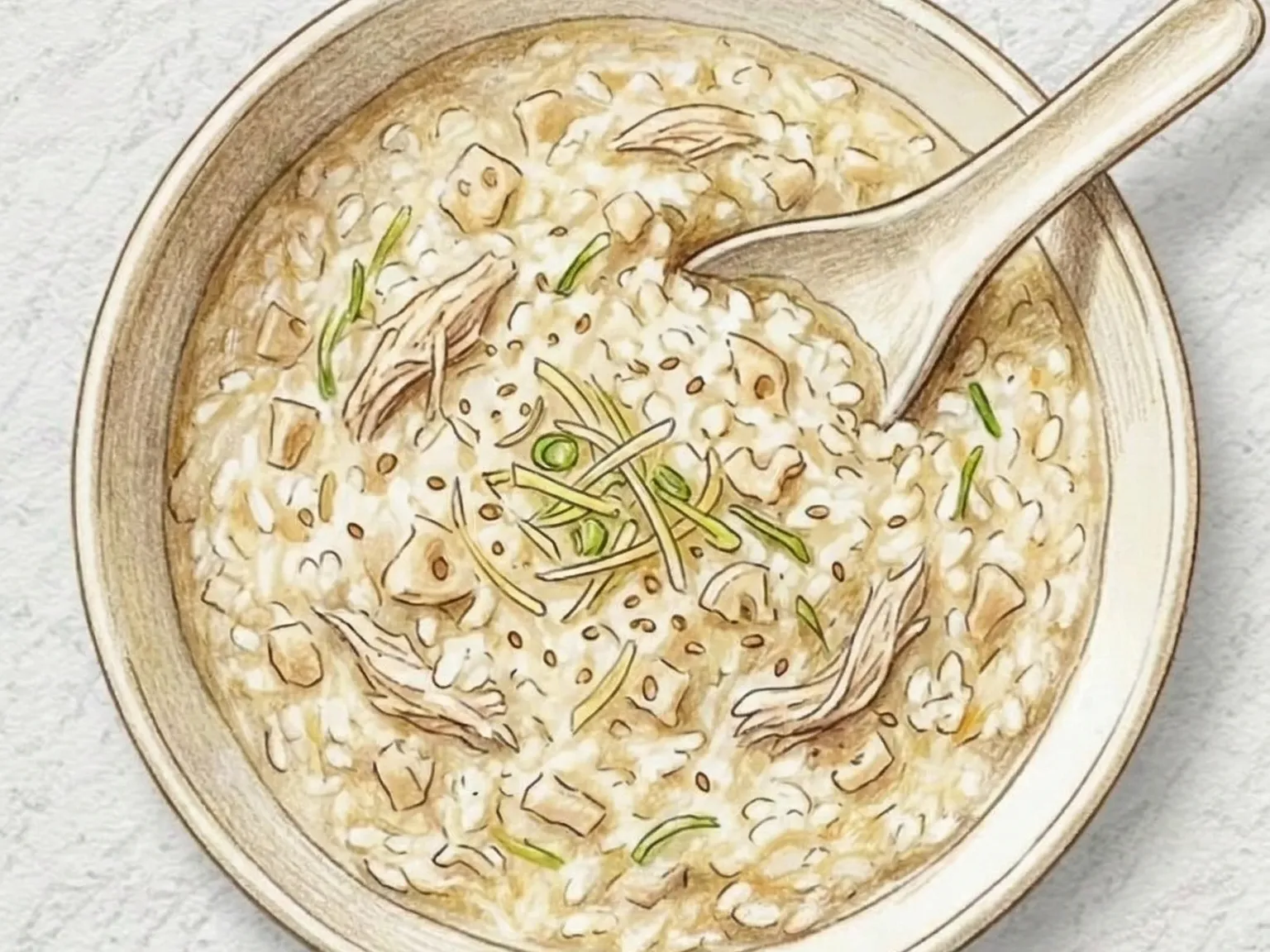
Yeongeun-dak-juk is a Korean porridge that simmers diced lotus root and shredded chicken breast in a rice base. The finely chopped lotus root introduces small pockets of crunch throughout the otherwise creamy porridge. Green onion and ginger remove any gaminess from the chicken while adding a clean aroma. Since the porridge uses chicken stock as its foundation, it carries depth of flavor without heavy seasoning. The result is a light yet filling bowl suited to mornings or recovery meals.
Adjust Servings
Instructions
- 1
Rinse and soak rice for 30 minutes; peel and finely dice lotus root.
- 2
Poach chicken breast with green onion and ginger for 12 minutes, then shred.
- 3
Heat sesame oil and sauté garlic, lotus root, and soaked rice for 3 minutes.
- 4
Add chicken stock; once boiling, simmer on low for 25 minutes, stirring often.
- 5
Add shredded chicken, cook 5 more minutes, then season with salt and pepper.
- 6
Turn off heat, let it rest 2 minutes, and serve.
As an Amazon Associate, we may earn from qualifying purchases.
Tips
Nutrition (per serving)
More Recipes

Korean Kimchi Porridge (Fermented Kimchi Pork Rice Porridge)
Well-fermented napa kimchi is chopped, stir-fried with ground pork in sesame oil, then slow-simmered with soaked rice and water for thirty minutes. Extended cooking softens the raw heat of the chili while spreading the fermentation tang evenly through the porridge, and the pork builds a savory backbone. Soup soy sauce adjusts the salt, and a scatter of sesame seeds adds a final nutty note. The more sour the kimchi, the more complex the finished juk becomes - a traditional Korean porridge meant to warm and soothe when appetite or digestion needs a gentle reset.

Korean Chicken Rice Porridge
Dakjuk is a Korean chicken rice porridge built from a simple foundation: a whole chicken breast poached in water until tender, then shredded along the grain and returned to the broth with soaked rice. The rice is first sauteed briefly in sesame oil with minced garlic to coat each grain before the stock goes in, which adds a subtle nuttiness to the finished porridge. As the rice simmers and breaks down over twenty-five minutes of patient stirring, it releases starch that thickens the liquid into a smooth, flowing consistency. The chicken contributes lean protein without heaviness, and the garlic mellows into a gentle warmth rather than a sharp bite. Sliced green onion scattered on top provides a fresh contrast. Dakjuk has been a go-to restorative meal in Korean households for generations - eaten when the body is recovering, when the stomach needs rest, or simply when a warm, undemanding breakfast is what the morning calls for.

Korean Beef Porridge (Sesame Oil-Toasted Rice with Minced Beef)
Sogogi-juk is a Korean beef porridge that begins by stir-frying minced beef and soaked rice together in sesame oil, building a savory, nutty foundation before water is added. As the beef renders in the oil, its umami dissolves into the fat, and the rice grains pick up that flavor as they toast alongside the meat. Slow simmering over low heat allows the rice to break down gradually into a thick, silky porridge while the beef broth permeates every spoonful. Finely diced carrot and onion can be added for a touch of natural sweetness that softens the overall flavor profile. Widely relied on as a recovery food after illness and as a warming breakfast, this porridge is gentle on the stomach yet deeply satisfying in its quiet, meaty richness.

Korean Ueong Dak Juk (Burdock Chicken Porridge)
Shredded chicken tenderloin and julienned burdock root are simmered together in a long, slow cook until the porridge turns thick and smooth. The chicken releases a clean, mild broth that forms the base flavor, while the burdock contributes a subtle earthy aroma and slight crunch that adds dimension. Toasting the rice in perilla oil before adding liquid deepens the nuttiness and gives the porridge a silkier body. The result is a gentle, nourishing bowl that sits easy on the stomach.

Korean Braised Lotus Root
Lotus root rounds are simmered in soy sauce, sugar, and corn syrup until each slice glistens with a translucent, caramel-colored glaze. Cooking activates the starch in the lotus root, turning the exterior smooth and the interior pleasantly sticky, a texture unique to this root vegetable. As the soy sauce permeates the flesh, the ivory color deepens into a clear amber that signals the seasoning has reached the center. A splash of vinegar at the start prevents discoloration and introduces a faint tartness that prevents the sweetness from becoming cloying. The corn syrup reduces over low heat for fifteen to twenty minutes, forming a glass-like coating that catches the light on every surface. Because the liquid seeps through the root's hollow channels, every bite delivers consistent flavor regardless of angle. The finished jorim retains its crunch at the core while the outer layer yields with a gentle chew, and refrigerated in a sealed container the dish stays good for well over a week.

Lotus Root Persimmon Salad
Blanched lotus root delivers a clean crunch that pairs with sweet persimmon slices to capture autumn's character in a single plate. The dressing keeps to olive oil, honey, and lemon juice, letting the produce speak without distraction. Crumbled feta introduces a salty, tangy dairy note that sharpens the fruit's sweetness. Walnuts, toasted briefly in a dry pan, add earthy fat and a crisp contrast to the softer persimmon. Baby greens form the base layer for color, and splitting the dressing between two additions - tossing two-thirds with the salad, drizzling the rest on top - ensures seasoning reaches every component.