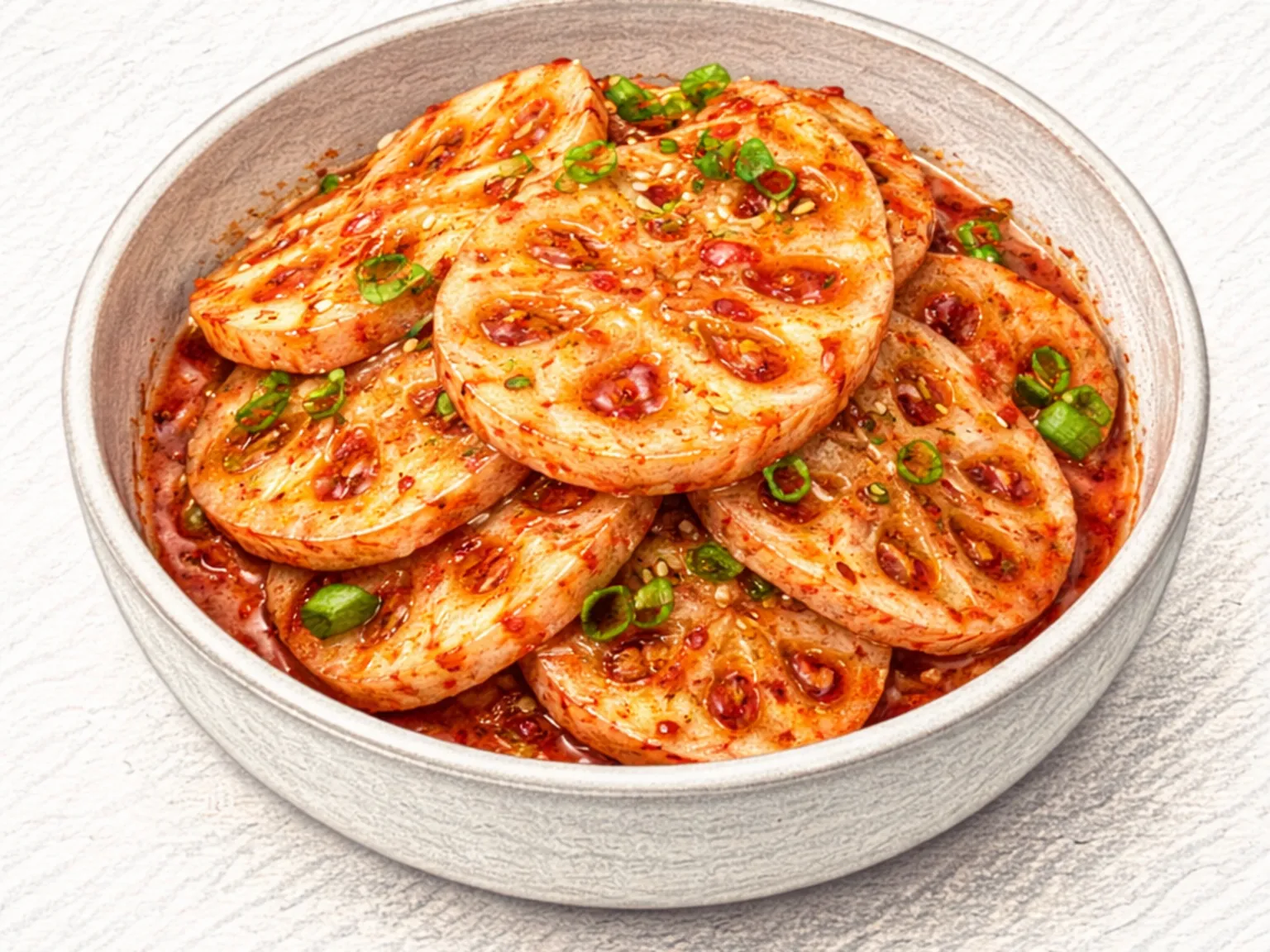
Korean Lotus Root Kimchi (Crunchy Spiced Root Kimchi)
Lotus root loses its crunch if it blanches longer than 2 minutes. Slice 450 g into even 3 mm half-moons, blanch in boiling water with 20 ml vinegar, cool at once in cold water, then salt with 18 g coarse salt for 15 minutes, rinse lightly, and drain very well. Toss with the seasoning and 40 g scallions, and refrigerate for 1 day before serving.
Quick answer
- Total time
- At least 1 day 17 min
- Level
- Medium
- Servings
- 4 servings
- Ingredients
- 8
About this dish
Starting with sliced lotus root boiled in vinegar water helps remove bitterness while keeping the vegetable pale and crisp.
Read more
The seasoning combines gochugaru, minced garlic, and anchovy fish sauce with the addition of fresh pear juice. This pear juice provides natural sugars and necessary moisture so the chili paste coats each slice evenly without becoming dry or clumping. Even after the fermentation process begins, the lotus root maintains its signature firm and crunchy texture. Sliced scallions are tossed in to add a fresh aromatic quality that balances the spicy garlic paste. One full day of refrigeration allows the flavors to settle into the flesh before serving. Because the seasoning gets trapped inside the characteristic holes of the root, the paste should remain thick rather than watery to ensure consistent flavor. When left to ferment for a few more days, the developing acidity helps cut through the richness of grilled meats or fried dishes.
Ingredients
Instructions
- 1
Peel 450 g lotus root and slice it into even 3 mm half-moons.
Keep the thickness consistent so the pieces blanch at the same speed and stay crisp rather than turning soft in spots.
- 2
Add 20 ml vinegar to boiling water and blanch the lotus root for only 2 minutes.
Cool it immediately in cold water to stop cooking, keep the color pale, and protect the firm bite.
- 3
Sprinkle the cooled lotus root with 18 g coarse salt and let it sit for 15 minutes.
Rinse lightly so it does not become too salty, then drain very well before seasoning.
- 4
In a bowl, mix 28 g gochugaru, 16 g minced garlic, 22 ml anchovy fish sauce, and 40 ml pear juice.
Let the mixture thicken briefly so the chili coats instead of falling off.
- 5
Add the lotus root and 40 g scallions cut into 4 cm pieces to the seasoning.
Toss gently so the paste reaches the holes in each slice without breaking the crisp pieces.
- 6
Pack the kimchi into an airtight container, pressing lightly to remove gaps, and refrigerate for 1 day.
Serve it chilled once the seasoning has settled and the lotus root still feels crunchy.
Use-up ingredient planner
Turn these ingredients into two more meals
The overlap excludes basic seasonings. Open the next recipe and your selected dishes will stay with you.
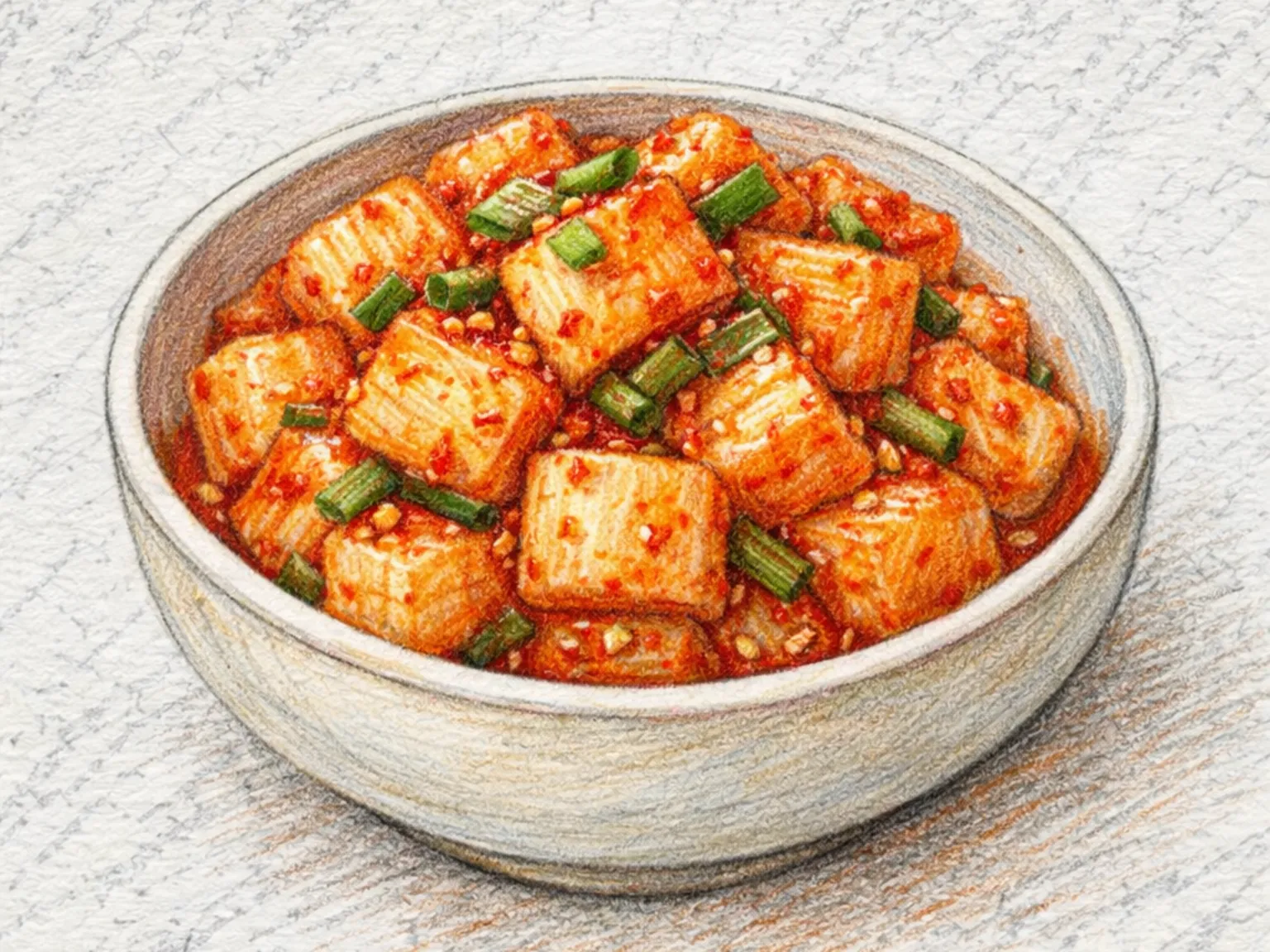
Korean Restaurant-Style Kkakdugi
coarse salt, anchovy fish sauce
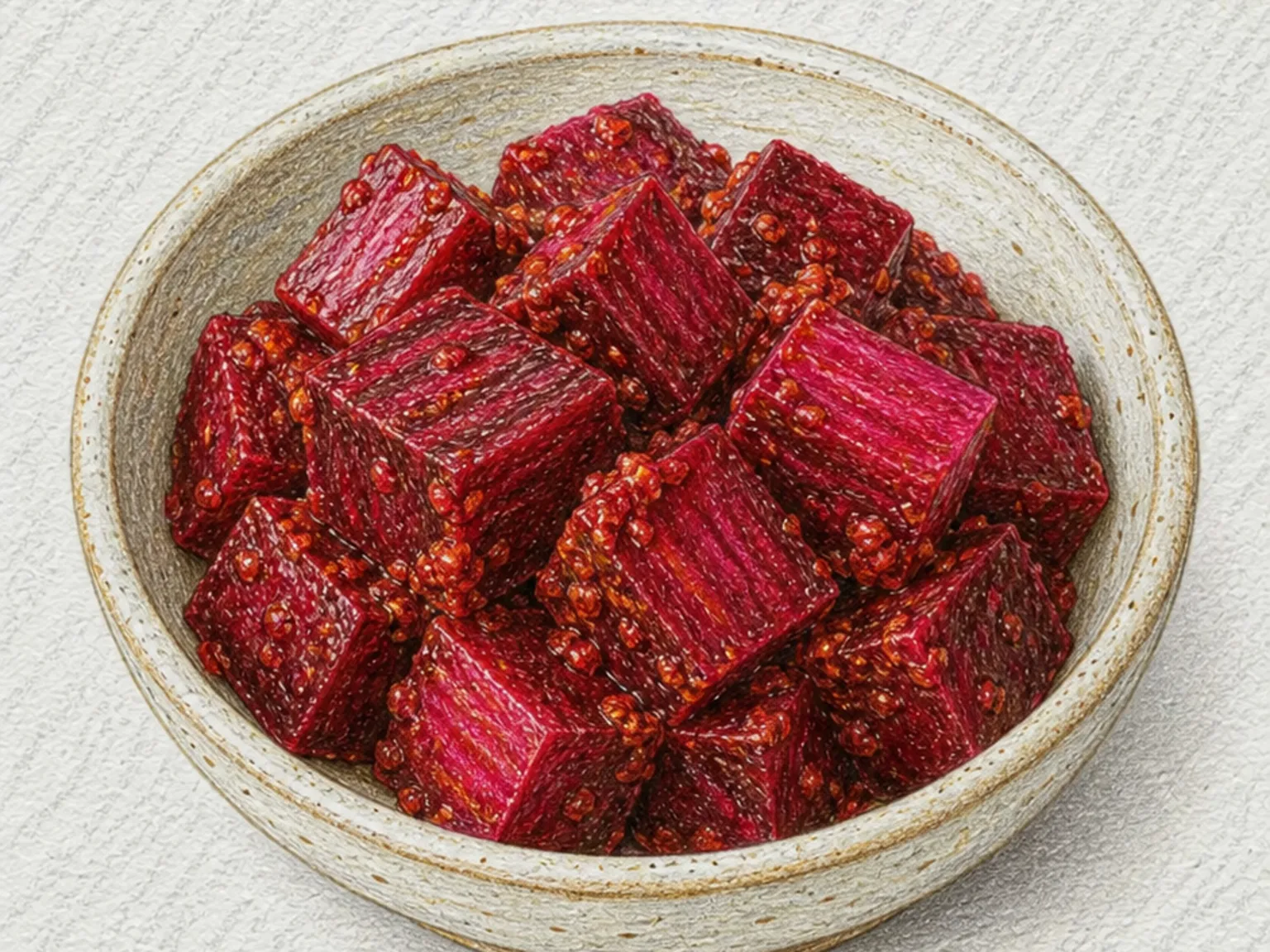
Beet Kimchi
coarse salt, anchovy fish sauce
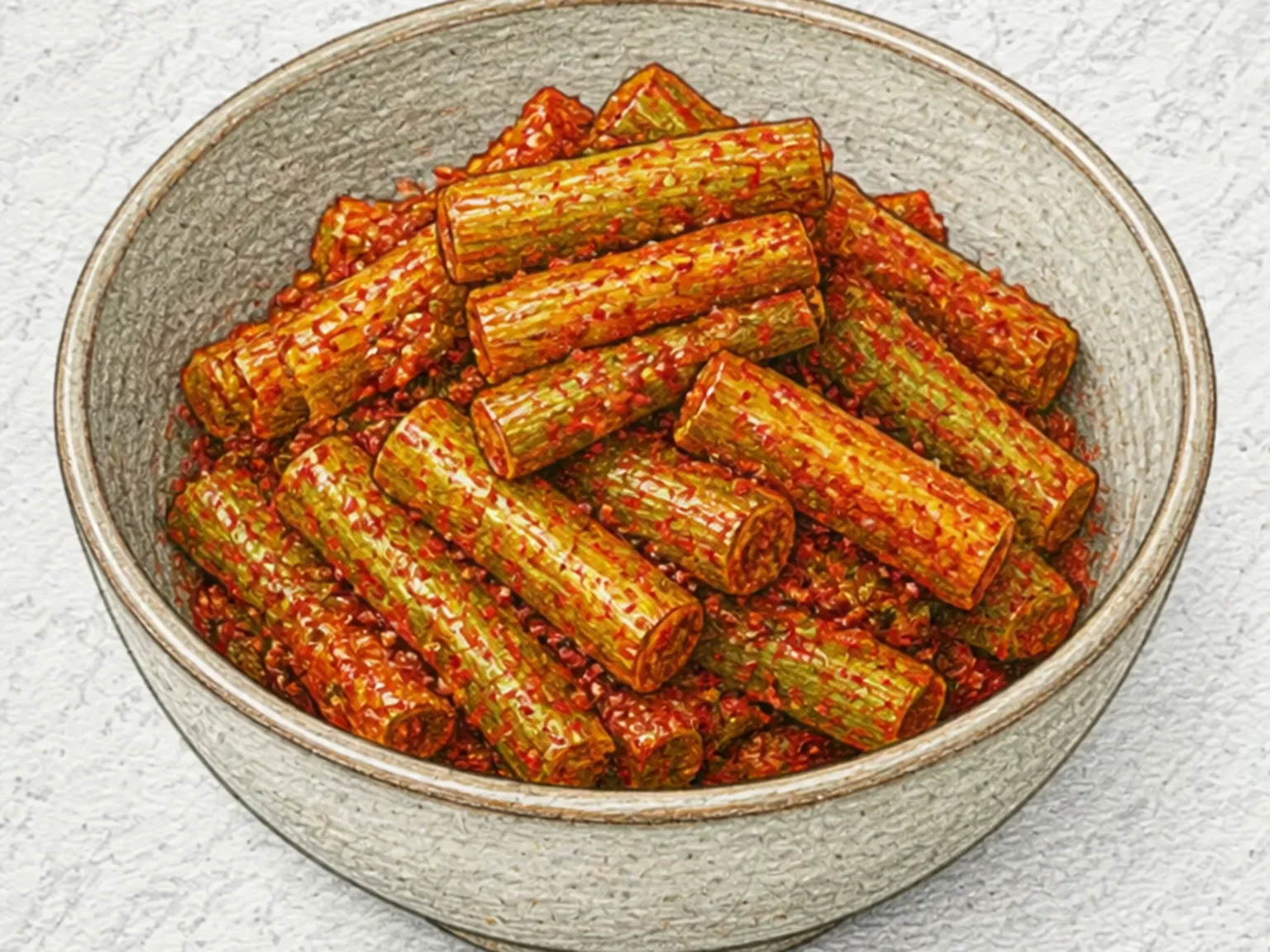
Butterbur Stem Kimchi
coarse salt, anchovy fish sauce