Charim

2686 Korean & World Recipes

2686+ Korean recipes, clean and organized. Ingredients to instructions, all at a glance.

Yu Sheng Prosperity Salad

Yu Sheng Prosperity Salad

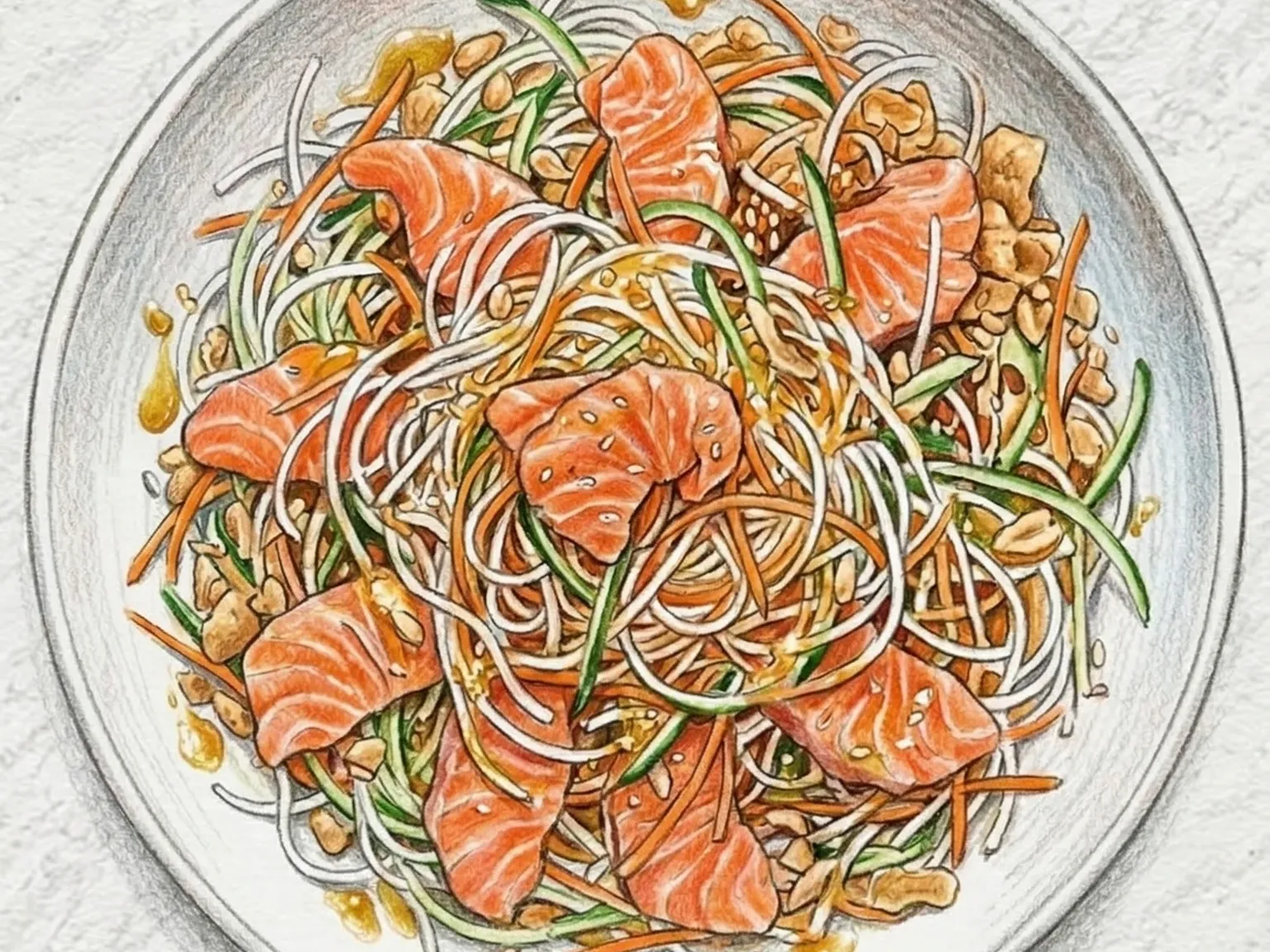
Yu sheng prosperity salad arranges thinly sliced sashimi-grade salmon and finely julienned daikon, carrot, and cucumber in a ring on a large platter, dressed with plum sauce, lemon juice, and sesame oil, then tossed vigorously just before eating. The salmon must be sashimi-grade for food safety, and patting it dry before slicing thin allows the sweet-tart plum sauce to cling more effectively to the fish surface. Cutting all vegetables as finely as possible maximizes the surface area in contact with the dressing, ensuring every chopstick-full carries the full spectrum of flavors. Keeping the prepared vegetables chilled maintains the freshness of the raw fish once assembled. Sesame seeds sprinkled on top add a nutty aroma that layers over the fruity plum sauce, completing the festive character of the dish.

Prep 30min 0 4 servings

Adjust Servings

2servings
servings

Instructions

  1. 1

    Pat dry sashimi salmon, slice thinly, and keep chilled.

  2. 2

    Julienne daikon, carrot, and cucumber into thin strips and chill.

  3. 3

    Mix plum sauce, lemon juice, and sesame oil for the dressing.

  4. 4

    Arrange vegetables in a ring on a platter and place salmon in the center.

  5. 5

    Drizzle dressing, sprinkle sesame, and toss thoroughly right before eating.

🛒Shop Ingredients on Amazon

As an Amazon Associate, we may earn from qualifying purchases.

Tips

Use only sashimi-grade fish for food safety.
Cut vegetables very finely for the best texture.

Nutrition (per serving)

Calories
230
kcal
Protein
18
g
Carbs
13
g
Fat
11
g

Goes Well With

Lion's Head Meatballs (Chinese Braised Large Pork Meatballs with Cabbage)
AsianMedium

Lion's Head Meatballs (Chinese Braised Large Pork Meatballs with Cabbage)

Lion's head meatballs are a hallmark of Huaiyang cuisine from eastern China. Each meatball is shaped to the size of a fist from a loose mixture of ground pork, minced water chestnuts, and aromatics - the water chestnuts keeping the interior moist and giving it a subtle crunch even after long braising. The meatballs nestle into napa cabbage leaves in a clay pot, then simmer gently in a light soy and ginger broth until the cabbage wilts into silky ribbons and the pork turns spoon-tender. The name comes from how the cabbage wraps around each ball like a lion's mane. Served with steamed rice, the mild broth doubles as a soup course.

🎉 Special Occasion
Prep 25minCook 35min4 servings
Gazpacho
WesternEasy

Gazpacho

The secret to an authentic gazpacho lies in the interaction between stale bread and fresh garden vegetables. While tomatoes, cucumbers, and red bell peppers form the base, the addition of water-soaked bread creates a thick, velvety consistency that distinguishes this Andalusian specialty from a simple puree. Blending these ingredients with red onion, garlic, extra virgin olive oil, and red wine vinegar produces a smooth texture where the oil emulsifies the vegetable juices and the vinegar sharpens the natural sugars of the tomatoes. Patience is required after the blending is complete; the soup must rest in the refrigerator for at least two hours to allow the flavors to settle and integrate, a process that does not occur effectively at room temperature. Serving requires a final touch of drizzled olive oil and a handful of finely diced vegetables to create a crisp contrast against the liquid base. For the most refined results, passing the mixture through a fine-mesh sieve ensures a silky finish. Using fully ripened summer tomatoes provides the ideal acidity levels, and storing the leftovers in the fridge for a day or two often leads to a more developed profile.

🥗 Light & Healthy🎉 Special Occasion
Prep 20min4 servings
Chamnamul Walnut Pesto Trofie
PastaEasy

Chamnamul Walnut Pesto Trofie

Chamnamul walnut pesto trofie is a fusion pasta that coats twisted trofie in a pesto made from Korean chamnamul (wild parsley), walnuts, Parmigiano, and olive oil. Chamnamul has a lighter, more herbaceous quality than basil, with a faintly bitter finish that gives the pesto a distinctly Korean aromatic character. Walnuts contribute a heavier, more assertive nuttiness than pine nuts, thickening the sauce and anchoring the savory depth together with the aged cheese. The spiral grooves of trofie hold the pesto in every ridge, releasing an even concentration of flavor with each bite. Adding sufficient olive oil during blending slows oxidation and prevents the chamnamul's green color from darkening too quickly. The pasta is best eaten immediately after tossing, when both the color and fragrance are at their peak.

🥗 Light & Healthy🎉 Special Occasion
Prep 15minCook 12min2 servings
Korean Mung Bean Pancake (Traditional Bindaetteok with Pork and Kimchi)
GrilledMedium

Korean Mung Bean Pancake (Traditional Bindaetteok with Pork and Kimchi)

Nokdu-jeon is a traditional Korean mung bean pancake made by soaking dried mung beans for at least six hours, grinding them into a thick, starchy batter, and mixing in ground pork, mung bean sprouts, squeezed kimchi, and scallions before pan-frying in oil. The extended soaking is critical because undersoaked beans leave gritty particles that no amount of blending will smooth out, and the natural starch in the batter holds the pancake together without flour or egg. Kimchi must be thoroughly squeezed of its liquid before chopping fine, or the excess moisture thins the batter and prevents a proper crust from forming. Cooking over medium heat for three to four minutes per side caramelizes the mung bean starch into a crackly golden crust, while the pork juices and kimchi's tang settle into the earthy, slightly sweet flavor of the bean itself. Using enough oil and sliding a spatula fully under the pancake in one motion prevents tearing during the flip, and keeping the heat steady ensures even browning across the surface.

🍺 Bar Snacks🎉 Special Occasion
Prep 50minCook 20min4 servings

More Recipes

Chinese Red-Braised Fish (Hong Shao Yu)
SteamedMedium

Chinese Red-Braised Fish (Hong Shao Yu)

Hong shao yu is a Chinese braised fish dish made by pan-searing white fish until golden, then pouring over a sauce of soy sauce, sugar, ginger, green onion, and Shaoxing wine and simmering over medium heat until the liquid reduces to a glaze. Searing the fish first firms up the surface so the flesh holds together during braising, and the browning from the sear adds a savory depth to the final sauce that straight braising cannot achieve on its own. Sugar softens the saltiness of the soy sauce into a sweet-savory balance, while ginger neutralizes any fishiness and contributes a sharp, clean aroma throughout the braise. As the sauce reduces it coats each piece of fish in a glossy, dark glaze well suited to spooning over steamed rice. The dish comes together in under thirty minutes, and thicker white fish holds moisture better through the braise than thin fillets. Patting the fish thoroughly dry before placing it in the pan prevents oil splatter and ensures the surface browns evenly rather than steaming.

🎉 Special Occasion
Prep 20minCook 25min4 servings
Suan Cai Yu (Sichuan Pickled Mustard Greens Fish Stew)
AsianMedium

Suan Cai Yu (Sichuan Pickled Mustard Greens Fish Stew)

Suan cai yu is a Sichuan fish stew that draws its defining character from pickled mustard greens-fermented vegetables whose sharp acidity provides the tangy backbone of the dish. The cooking starts with chili oil, garlic, ginger, and dried chilies sizzled together to create a pungent, aromatic base. The rinsed pickled greens go in next, their sour bite mellowing slightly as they simmer in stock for ten minutes, releasing a complex fermented depth into the broth. Thin slices of white fish, lightly dusted with starch to protect their delicate texture, are added at the very end and cooked for only a few minutes so they remain silky and intact. The finished bowl is a study in contrasts: the broth is simultaneously sour from the pickled greens, spicy from the chili oil, and savory from the stock, while the fish offers a clean, mild counterpoint. It is a deeply satisfying dish that showcases Sichuan cuisine's mastery of bold, layered flavors.

🎉 Special Occasion
Prep 20minCook 25min4 servings
Cantonese Steamed Fish
AsianEasy

Cantonese Steamed Fish

Cantonese steamed fish - ching jing yu - is the clearest expression of the Cantonese philosophy of letting premium ingredients speak for themselves with minimal interference. The technique requires the freshest possible whole fish - sea bass, grouper, or pomfret are the standard choices - because steaming conceals nothing. Any fish that is even slightly past its peak will betray itself the moment it comes off the heat. The fish is scored on both sides to allow even heat penetration, placed on a plate with thin ginger slices tucked underneath and inside the cavity to neutralize any fishiness, then steamed over vigorously boiling water for exactly eight to ten minutes depending on thickness. Even one minute of overcooking transforms the silky, translucent flesh into something dry and dull - timing is the entire technique. The moment the fish leaves the steamer, all accumulated liquid on the plate must be poured off immediately, because that liquid carries concentrated fishiness that would spoil the clean finish. A generous pile of julienned scallion and fresh ginger is arranged on top, then a ladle of oil heated until just beginning to smoke is poured directly over the aromatics. The sizzling releases their fragrance in a single burst that infuses the fish. Seasoned soy sauce and a few drops of sesame oil complete the dish. In Cantonese banquet culture, the steamed fish course is typically the most expensive item on the table, with guests selecting a live fish directly from the restaurant tank.

🥗 Light & Healthy
Prep 15minCook 12min2 servings
Shui Zhu Yu (Sichuan Poached Fish in Fiery Chili Oil Broth)
AsianHard

Shui Zhu Yu (Sichuan Poached Fish in Fiery Chili Oil Broth)

Shui zhu yu - literally 'water-boiled fish' - is one of Sichuan cuisine's most dramatic presentations, despite its modest name. Thin slices of white fish are coated in a light starch slurry and poached in a broth loaded with doubanjiang chili bean paste and Sichuan peppercorns. The fish cooks gently so each slice remains silky and intact. A wide bowl is lined with blanched bean sprouts, celery, and tofu, then the poached fish is laid on top. Dried chilies and whole Sichuan peppercorns are scattered over the surface, and smoking-hot oil is poured over them tableside - the sizzle sends a plume of chili-laced steam into the air. The resulting pool of fiery red oil looks intimidating, but the fish beneath is mild and buttery, creating a contrast between the numbing, tingling broth and the delicate flesh that defines the dish.

🎉 Special Occasion
Prep 25minCook 20min4 servings
Beijing Zhajiangmian (Northern Chinese Fermented Bean Paste Noodles)
AsianMedium

Beijing Zhajiangmian (Northern Chinese Fermented Bean Paste Noodles)

Beijing zhajiangmian is the northern Chinese ancestor of Korean jajangmyeon, though the two have diverged significantly in flavor and presentation. The sauce is built from ground pork stir-fried with huangjiang, a fermented soybean paste darker and saltier than miso, until the fat separates and the paste turns glossy. Thick hand-pulled or machine-cut wheat noodles form the base, and an array of raw garnishes - julienned cucumber, radish sprouts, bean sprouts, and shredded scallion - are arranged neatly on top. The dish is meant to be tossed vigorously at the table so the sauce coats every strand. The contrast between the warm, intensely savory paste and the cool, crisp vegetables defines the eating experience. In summer, the noodles are often rinsed in cold water before serving.

🏠 Everyday🎉 Special Occasion
Prep 20minCook 25min4 servings
Cantonese Steamed Seabass
SteamedMedium

Cantonese Steamed Seabass

Qingzheng seabass is a Cantonese steamed fish preparation in which a whole seabass is scored, rubbed with julienned ginger and rice wine, then cooked over high heat in a steamer for ten to twelve minutes. Once the fish comes off the steam, a restrained dressing of soy sauce and sugar is poured evenly over the flesh, a generous pile of shredded scallions is laid on top, and smoking-hot oil is drizzled over everything. The oil hits the cold scallions with an audible sizzle and instantly volatilizes their aromatic compounds, filling the kitchen with a concentrated burst of allium fragrance that coats the entire dish. The steamed flesh stays moist with its natural flake intact, and the light soy dressing is calibrated so that the seabass's own clean, delicate flavor remains the centerpiece rather than being buried under seasoning. The finishing pour of hot oil simultaneously cooks the scallions and disperses their fragrance, a technique central to Cantonese cooking. The dish embodies the Cantonese philosophy that the quality of the ingredient, not the intensity of the seasoning, defines the outcome.

🎉 Special Occasion
Prep 20minCook 15min2 servings
More Salads →