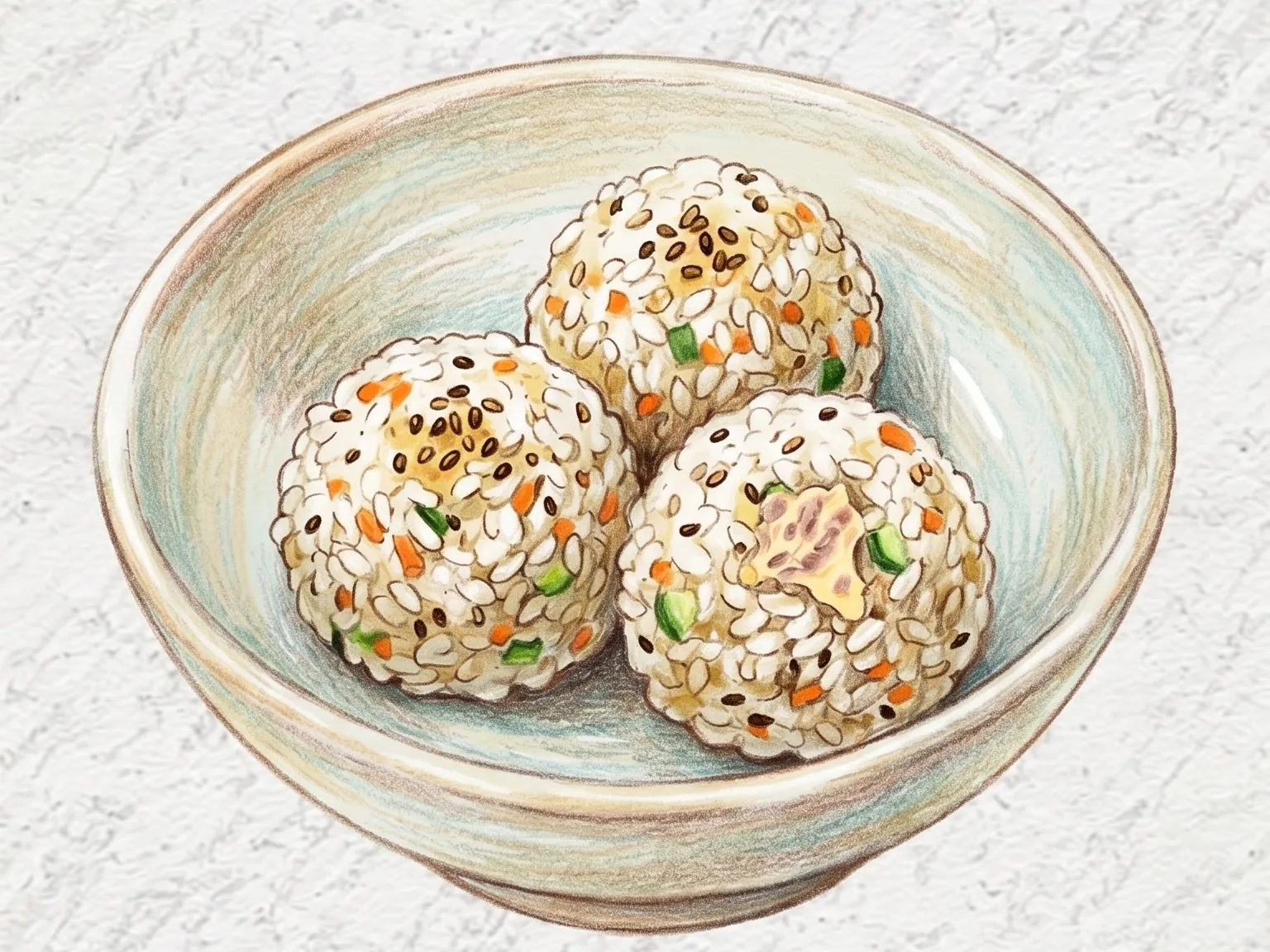
Korean Seasoned Tofu Pouch Sushi (Yubu Chobap)
Yubu chobap fills sweet-savory braised tofu pockets with vinegared sushi rice. The tofu skin absorbs the braising liquid, so each bite releases a light burst of seasoned juice. Finely diced carrot and cucumber mixed into the rice add crunch and color. Sesame oil and whole sesame seeds boost the nuttiness of the rice filling. Each piece is bite-sized and easy to eat by hand, which has made it a long-standing favorite for packed lunches, snacks, and picnic spreads in Korea.
Adjust Servings
Instructions
- 1
Mix warm rice with vinegar, sugar, salt, and sesame oil to make sushi rice.
- 2
Finely dice carrot and cucumber.
- 3
Mix diced vegetables and sesame seeds into the sushi rice.
- 4
Open each tofu pouch and stuff with an appropriate amount of sushi rice.
- 5
Shape neatly and arrange on a plate.
As an Amazon Associate, we may earn from qualifying purchases.
Tips
Nutrition (per serving)
Goes Well With

Korean Sweet Stir-Fried Anchovies
Sweet stir-fried anchovies coat tiny dried anchovies in a glossy soy-syrup glaze without any chili heat, making it the classic lunchbox banchan for Korean children who cannot yet tolerate spice. The anchovies must be dry-toasted in an ungreased pan for about two minutes before any seasoning is added: this drives off residual moisture, raises a nutty aroma, and sets up the crispy texture that separates a well-made batch from a soggy, fishy-smelling one. Soy sauce, rice syrup or oligosaccharide, and sugar are then stirred in over low heat, and the single most important moment in the recipe is when the syrup first begins to bubble. The heat must drop immediately at that point, because syrup that overcooks transforms into a brittle, tooth-cracking candy once it cools. Generous sesame seeds tossed in at the end add nuttiness and a visual finish, and once the batch cools completely, the anchovies clump lightly together into loose clusters that are easy to pick up in one or two bites. Although made from the exact same ingredient, this sweet glaze version has a completely different character from the spicy gochujang version of the same dish, and many Korean households keep both prepared simultaneously, rotating between them throughout the week.

Korean Garlic Scape Soy Pickles
Maneul jong jangajji is a Korean garlic scape pickle made by cutting fresh scapes into 5 cm lengths, packing them into a sterilized jar along with cheongyang chili peppers, and pouring over a freshly boiled brine of soy sauce, vinegar, sugar, and dried kelp. The scapes' sharp garlic bite melds gradually with the soy's salty, savory depth to produce a flavor that builds with every chew, while the kelp dissolves a subtle seaweed umami into the brine over the course of steeping. The vinegar keeps the salt in check so the overall taste stays clean rather than heavy, and the cheongyang chili adds a slow, lingering warmth at the end of each bite that prevents the pickle from tasting one-dimensional. Reboiling the brine and pouring it back over the scapes after two days is an important step for both preservation and even pickling, and repeating this process once more ensures the scapes absorb flavor uniformly throughout. Handled this way, the finished banchan keeps reliably for over a month in the refrigerator.

Korean Young Napa Soybean Paste Soup
Eolgari doenjang-guk is a soybean paste soup that uses rice-rinse water as its base liquid rather than plain water. The starch left in the rinse water tempers the sharpness of doenjang, softening the broth and adding a mild, rounded sweetness that plain water cannot replicate. Young napa cabbage is added near the end of cooking, just long enough to wilt slightly while retaining its fresh, lightly grassy flavor and a faint crunch. Anchovy powder is stirred in early to establish a quiet savory foundation, while a sliced cheongyang chili introduces a gentle, building heat that lingers on the finish. A finishing handful of sliced green onion adds aroma and rounds out the bowl, producing a broth that is simultaneously simple and satisfying alongside steamed rice.

Korean White Kimchi Tofu Stew
Baek kimchi dubu jjigae is a mild Korean stew where the gentle tang of white kimchi takes the place of regular red kimchi as the flavor anchor. Anchovy-kelp stock forms the umami foundation, and finely chopped white kimchi is added so its lactic fermentation acidity gradually dissolves into the broth, creating a refreshingly clean and clear flavor that diverges sharply from the bold heat of standard kimchi jjigae or the earthy weight of doenjang jjigae. Thick tofu slabs are added after the broth comes to a full boil so the blocks hold together rather than crumbling, and enoki mushrooms go in during the final two minutes to preserve their delicate texture. Guk-ganjang adjusts the salinity carefully, since the white kimchi itself already carries a noticeable saltiness from the brining process. Adding a sliced cheongyang chili introduces a measured spicy note into the otherwise gentle broth without overwhelming its clean character. Unlike the intense, opaque red broth of standard kimchi jjigae, this version stays transparent, lightly tart, and nearly fat-free, making it noticeably easy on the stomach. White kimchi is fermented without gochugaru, preserving all the lactic sourness while eliminating the heat and pigment, which makes it particularly well suited as a braising base for delicate ingredients like tofu and enoki.
More Recipes

Korean Mushroom Soft Tofu Porridge
Shiitake mushrooms and sliced onion are sauteed in perilla oil until their edges soften and the oil takes on a faint herbal fragrance, then soaked rice and kelp stock go into the same pot. The mixture simmers until the grains break down into a smooth, cohesive porridge. At that point, the heat is lowered and spoonfuls of silken tofu are dropped in without stirring - preserving the soft, pillowy clusters that give the bowl its characteristic texture variation. Kelp stock brings a clean, moderate umami that anchors the dish without heaviness, and perilla oil contributes a slightly bitter, grass-like finish that differentiates this porridge from sesame-based versions. Soup soy sauce provides the seasoning, and chopped scallion goes on last. The result is gentle enough for a sensitive stomach yet complete enough to serve as a full meal.

Korean Chicken Rice Porridge
Dakjuk is a Korean chicken rice porridge built from a straightforward foundation: a whole chicken breast poached in water until tender, then shredded along the grain and returned to the broth with soaked short-grain rice. The rice and minced garlic are first sauteed briefly in sesame oil so each grain takes on a faint nuttiness before the stock is added, which carries through into the finished porridge. As the rice simmers and slowly breaks down over twenty-five or more minutes of regular stirring, it releases starch that thickens the liquid into a smooth, flowing consistency without turning gluey. The chicken adds lean protein without weighing the dish down, and the garlic mellows from sharp to a quiet warmth. Sliced green onion scattered on top provides a fresh, grassy contrast to the mild, savory base. Dakjuk has been a household staple in Korea for generations, reached for when the body needs recovery, when the stomach asks for something gentle, or when a warm and undemanding breakfast is simply the right start to the morning.

Korean Kimchi Fried Rice (Kimchi Bokkeumbap)
Finely chopped aged kimchi is stir-fried together with ground pork until the fermentation tang of the kimchi and the fat rendered from the pork combine into a deep, layered umami base. Kimchi juice is added to the pan along with gochujang and a measured touch of sugar, glazing the rice in a spicy-sweet coating. High heat throughout the stir-fry is what keeps each grain separate and lightly crisp rather than soft and clumped; the pan also needs to be fully heated before the ingredients go in, or the rice will stick. A soft-fried egg placed on top lets the runny yolk temper the heat when it is broken and mixed in, and using well-fermented, deeply soured kimchi noticeably shifts the depth of the flavor. Adding spam or canned tuna are equally common household variations, and the dish adapts readily to whatever is available. A drizzle of sesame oil just before serving lifts a toasty, nutty fragrance over the finished bowl.

Korean Water Dropwort Tofu Soup
Minari-dubu-guk is a mild, clear Korean soup pairing soft tofu with water dropwort, an herb prized for its bright, celery-like fragrance. The broth is built on a simple anchovy-kelp stock, into which the tofu goes first and simmers gently until warmed through. Water dropwort is added only in the final moments before the heat is turned off, a deliberate timing choice that preserves the herb's volatile aromatic compounds and keeps the hollow stems slightly crisp rather than wilted. Adding it too early strips away the fragrance that makes this soup worth making. Seasoning stays minimal, soup soy sauce, garlic, and perhaps a pinch of salt, because restraint is the entire point: the clean stock, the herb's green perfume, and the pillowy tofu are meant to carry the bowl quietly. Firm tofu holds its shape through simmering and absorbs the broth more evenly than silken varieties, making it the better choice here. Spring is the ideal season, when water dropwort grows most tender and aromatic. Korean cooks often place this soup alongside richer, heavier dishes because the light broth cuts through fat and resets the palate between bites. It rarely draws attention at the table yet is reliably missed when absent.

Korean Radish Rice (Julienned Radish Steamed with Short-Grain Rice)
Mu-bap is Korean radish rice made by placing finely julienned radish directly on top of uncooked rice before steaming, so the radish releases its natural moisture and mild sweetness into each grain as it cooks. The result is rice that is slightly more moist and subtly sweeter than plain cooked rice, with softened radish distributed throughout. The dish is eaten with a seasoning sauce of soy sauce, sesame oil, sliced scallion, red pepper flakes, and sesame seeds mixed in right before eating, because adding it any earlier makes the rice clump and turn mushy. Cutting the radish into thin, uniform strips is not just about presentation: thin strips cook through in the same time as the rice, while thick pieces remain underdone when the rice is already ready. Winter radish contains more natural sugar than radish harvested at other times of year, so the same recipe tastes noticeably sweeter when made with winter produce. Served alongside fermented sides like kkakdugi or kimchi, the mild sweetness of the radish rice provides a clean, neutral contrast to the sharp acidity and salt of fermented foods.

Korean Dubu Kimchi Kkochi (Tofu Kimchi Skewers)
Dubu-kimchi-kkochi pan-sears firm tofu until the surface turns crisp and golden, then skewers it alongside stir-fried sour kimchi and ground pork. Before searing, pressing the tofu dry with paper towels is essential for an even crust that does not tear or stick to the pan. The kimchi and pork are cooked together so fermented tang and rendered pork fat merge, the fat tempering the kimchi's sharp edge while the kimchi's acidity brightens the pork. Threaded onto a skewer, each bite delivers the tofu's nutty seared exterior, the kimchi's tartness, and the pork's salt-rich savoriness at once. The soft interior of the tofu contrasts with its crisp shell, and juices from the stir-fried kimchi seep into the tofu to add another flavor layer. Despite straightforward ingredients, the skewer presentation makes it a naturally appealing side for drinks or a packed lunch.