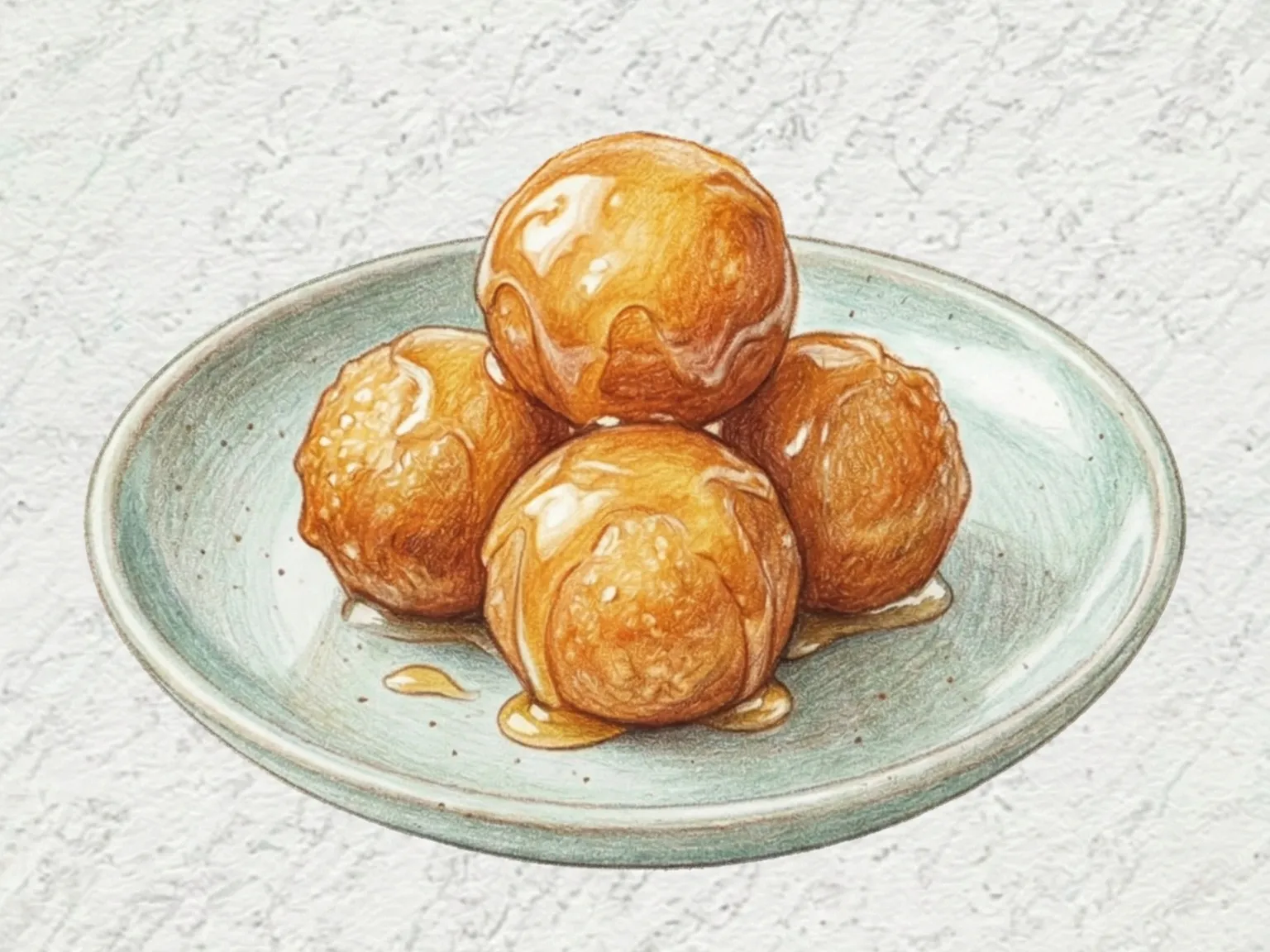
Honey Rice Puff Cookies (Korean Double-Fried Puffed Glutinous Rice)

Honey Rice Puff Cookies (Korean Double-Fried Puffed Glutinous Rice)

Quick answer

Yugwa is a traditional Korean rice puff cookie that is prepared using a base of glutinous rice flour mixed with makgeolli, which is a type of fermented Korean rice wine.

What makes this special

  • Yugwa honey rice puff cookies rely on makgeolli yeast to trigger explosive expansion during frying.
  • Makgeolli yeast creates micro-pores that explosively expand in the second hot fry
  • At least 2 hours drying is mandatory; residual moisture causes dangerous oil splatter
Total time
60 min
Level
Hard
Servings
4 servings
Ingredients
8
Calories
360 kcal
Protein
4 g

Key ingredients

glutinous rice flourmakgeollisaltneutral oilrice syrup

Core cooking flow

  1. 1 Add 0.25 teaspoon salt and 120ml makgeolli to 250g glutinous rice flour and...
  2. 2 Roll the dough to 1cm thickness, cut into 1x5cm sticks, place on a drying ra...
  3. 3 Fry in 140C oil for 5 to 7 minutes to cook through completely, then remove and drain on a rack.

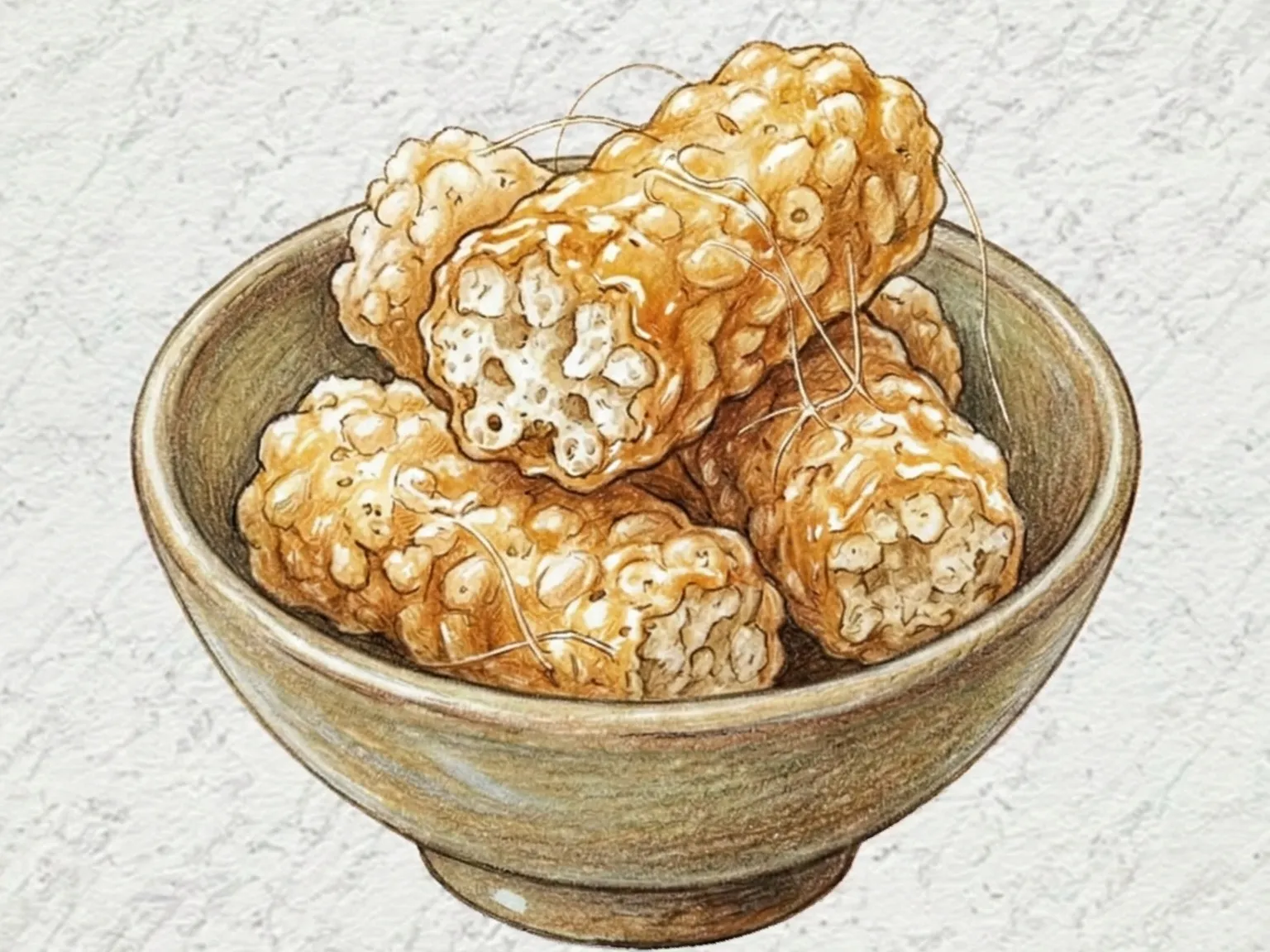
Yugwa is a traditional Korean rice puff cookie that is prepared using a base of glutinous rice flour mixed with makgeolli, which is a type of fermented Korean rice wine. This dough is shaped into individual pieces and then left to dry for a duration of at least two hours. This drying period is a mandatory step in the process because any residual moisture within the dough will lead to dangerous oil splattering when the pieces are placed into the frying fat. The cooking process requires a specific two-stage frying technique involving both low and high oil temperatures to facilitate a dramatic expansion of the dough. Tiny air pockets are created within the mixture by the yeast present in the makgeolli during the initial preparation stages. These pockets expand rapidly during the second frying stage at a higher heat, which results in the hollow internal structure that is the defining characteristic of the cookie. Once the frying is complete, the pieces are tossed in a warm glaze consisting of honey and rice syrup. This sticky coating serves to anchor a final layer of puffed rice to the exterior of the cookie. Ground cinnamon is incorporated into the recipe to provide a subtle warm spice that complements the nutty and fermented flavors of the glutinous rice. When consumed, the finished cookie shatters into light, airy shards, offering a texture that is nearly weightless compared to other varieties of Korean confections. Traditionally, yugwa is featured on tables during ancestral rites for the Chuseok and Seollal holidays and remains a common choice for gift-giving during these festive seasons.

Prep 35min Cook 25min 4 servings
Recipes by ingredient → honey

Instructions

Read the steps as a cooking flow: prep, heat, seasoning, doneness control, and finish.

6 steps
  1. 1
    Season

    Add 0.25 teaspoon salt and 120ml makgeolli to 250g glutinous rice flour and knead firmly for at least 10 minutes into a smooth, glossy dough; thorough kneading develops the structure needed for puffing.

  2. 2
    Prep

    Roll the dough to 1cm thickness, cut into 1x5cm sticks, place on a drying rack, and dry in a well-ventilated spot for at least 2 hours until the surface feels firm and slightly stiff.

  3. 3
    Heat

    Fry in 140C oil for 5 to 7 minutes to cook through completely, then remove and drain on a rack.

  4. 4
    Heat

    Raise the oil to 170C, return the par-fried yugwa, and fry for 30 to 60 seconds until they puff up and become crispy, then remove immediately.

  5. 5
    Control

    Warm 120ml corn syrup and 2 tablespoons honey in a pan over low heat until the syrup stretches into long threads when lifted, then add the yugwa and toss to coat evenly.

  6. 6
    Step

    Coat each piece with 80g puffed rice and 0.25 teaspoon cinnamon, spread on parchment paper, cool completely, then store in an airtight container.

After the steps

Pick a recipe that fits this dish.

Continue with shared ingredients, meal pairings, or a similar method.

Recipes That Go Well With This

More Desserts →

Based on shared ingredients and meal pairing

Honey Ginger Ribbon Cookies
Shared ingredient: rice syrup Desserts

Honey Ginger Ribbon Cookies

Maejakgwa are traditional Korean ribbon cookies made from a firm dough of wheat flour, sesame oil, and ginger juice, rolled to 2 mm thickness, slit lengthwise through the center, and twisted through the opening into a knot shape before frying. Slow-frying at 160 degrees Celsius turns them light golden and crisp all the way through without darkening the surface unevenly. A warm coating of honey blended with rice syrup is applied while the cookies are still hot, adding a glossy, sweet shell that sets as it cools. The ginger lends a subtle warm bite that sits behind the nuttiness of sesame oil rather than announcing itself upfront, and a final dusting of pine nut powder contributes a soft, buttery fragrance that completes the layering of flavor. Each piece shatters lightly when bitten, yet the syrup-soaked sections at the twisted edges carry a slight chewiness that gives the cookie a layered texture unusual for a fried dough confection. Maejakgwa appear regularly on ritual food tables at memorial ceremonies and are commonly prepared for Lunar New Year and Chuseok.

Black Sesame Tea Cookies (No-Bake Korean Pressed Cookies)
Shared ingredient: rice syrup Desserts

Black Sesame Tea Cookies (No-Bake Korean Pressed Cookies)

Heukimja dasik is a traditional Korean pressed tea cookie made by binding roasted black sesame powder and almond flour with honey and rice syrup, then pressing the mixture into a decorative wooden mold. No heat is applied at any point: the rich, toasty depth of the sesame and the fatty body of the almond combine within the sticky honey base to produce a crumbly, melt-in-the-mouth texture. A small measure of sesame oil improves binding, and dusting the mold with pine nut powder before pressing yields a sharply defined surface pattern. Resting the shaped cookies in an airtight container for thirty minutes allows them to firm up, resulting in bite-sized confections traditionally served alongside tea at a Korean tea table.

Yuja Madeleines (Brown Butter Citrus French Shell Cakes)
Serve together Baking

Yuja Madeleines (Brown Butter Citrus French Shell Cakes)

These yuja madeleines rely on brown butter for a deeply nutty base that elevates the batter beyond a standard madeleine. About 35 grams of yuja marmalade is folded directly into the mixture, distributing bright citrus oil and small shreds of peel throughout each shell-shaped cake. A 30-minute rest in the refrigerator helps develop the signature madeleine hump during baking. The two-stage bake - 3 minutes at 200 degrees Celsius followed by 8 to 9 minutes at 180 degrees - crisps the thin edges while keeping the center moist and springy. A small measure of lemon juice reinforces the yuja acidity, preventing the sweetness from becoming one-dimensional.

Honey Ginger Pastry (Korean Deep-Fried Layered Wheat Honey Cookie)
Similar recipe Desserts

Honey Ginger Pastry (Korean Deep-Fried Layered Wheat Honey Cookie)

Yakgwa is a traditional Korean honey pastry made from wheat flour rubbed with sesame oil, then mixed with rice wine, ginger juice, and rice syrup, folded and rolled repeatedly to build up laminated layers before frying. A two-stage frying method is essential to the texture: first at 140 degrees Celsius to cook the dough through slowly without coloring, then briefly at 170 degrees to develop a golden, crisp exterior over a layered, flaking interior. Soaking the fried pastries in a warm syrup of honey, water, and ground cinnamon for at least two hours allows the sweetness to penetrate deep between the laminated layers, saturating each piece with moist, fragrant honey flavor from edge to center. Ginger juice surfaces gently in the finish, providing just enough warmth to temper the concentrated sweetness and keep the flavor from feeling cloying. The sesame oil rubbed into the dough from the start adds a persistent nutty backbone that ties together the honey, spice, and wheat flavors into the complex, layered profile that defines well-made yakgwa. Pine nuts or jujubes placed as garnish add visual elegance, and the pastry pairs particularly well with Korean teas, where its sweetness finds proper balance.

Serve with this

Korean Chrysanthemum Bean Cakes
Street food Medium

Korean Chrysanthemum Bean Cakes

Gukhwa-ppang is a Korean winter street pastry baked in a chrysanthemum flower-shaped cast-iron mold, filled with sweet red bean paste at the center. The batter of flour, baking powder, sugar, milk, egg, and melted butter is stirred together with minimal mixing to keep gluten development low, then poured to fill only one-third of the mold before a spoonful of bean paste is placed in the middle and covered with more batter, ensuring the filling sits centered in the finished pastry. Cooking over medium-low heat for three to four minutes on each side produces a golden crust with sharply defined flower-petal ridges pressed into the surface, while the bean paste inside stays soft and flows when the pastry is broken apart. It is often grouped with bungeoppang as a sibling street food, but the dough ratio is heavier and the shell is noticeably thicker, giving it a stronger bread-forward flavor and a slightly smaller proportion of filling to outer crust. The pastry is best eaten immediately after cooking, while the exterior is still crisp and the paste still hot. In recent years vendors have begun filling gukhwa-ppang with cream, chocolate, and sweet potato paste as alternatives to the traditional red bean filling.

🧒 Kid-Friendly 🏠 Everyday
Prep 20min Cook 18min 4 servings
Korean Ssanghwa Herbal Tea
Drinks Hard

Korean Ssanghwa Herbal Tea

Ssanghwa-cha is a traditional Korean tonic tea made by slow-simmering astragalus root, angelica root, cinnamon bark, licorice, and jujube in approximately 1800 ml of water over low heat for more than fifty minutes. The prolonged extraction coaxes layered complexity from each herb, producing a brew that is simultaneously bitter, sweet, and warmly aromatic with cinnamon woven through every sip. Jujubes added during the simmer soften the sharpest herbal edges while contributing a mild natural sweetness that rounds the overall profile. Honey is stirred in after straining to let each person adjust the sweetness to taste. The tea is poured hot into a ceramic cup and finished with a small cluster of pine nuts whose oil blooms on contact with the steaming surface, releasing a gentle, nutty fragrance. The deep medicinal warmth lingers in the throat long after each sip, making the drink a reliable remedy for fatigue and cold weather.

🍺 Bar Snacks 🎉 Special Occasion
Prep 10min Cook 60min 4 servings
Swedish Meatballs
Western Medium

Swedish Meatballs

Swedish meatballs mix ground beef with sautéed onion, breadcrumbs, egg, and milk, shape the mixture into bite-size balls, brown them in butter, then simmer in a creamy gravy built in the same pan. The key to tender meatballs is minimal handling - overworking the mixture tightens the protein network and produces a tough, dense texture. Browning the meatballs leaves behind caramelized drippings on the pan floor, and these fond bits become the flavor base of the gravy when flour is whisked in to form a roux. Adding milk gradually while stirring prevents lumps, and a splash of Worcestershire sauce introduces a savory depth that rounds out the cream. The gravy's thickness is adjustable at the end - more milk loosens it, less keeps it rich - and serving over mashed potatoes lets nothing go to waste.

🎉 Special Occasion 🧒 Kid-Friendly
Prep 20min Cook 25min 4 servings

Similar recipes

Korean Rice Puff Confection
Baking Medium

Korean Rice Puff Confection

Gangjeong is a traditional Korean confection made from puffed glutinous rice bound together with warm grain syrup and pressed into molds to set. The production begins with glutinous rice that is soaked, steamed, dried thoroughly, and then deep-fried until each grain expands into a white, airy puff. The timing of the next step matters: the puffs must be turned through the hot grain syrup quickly, before the syrup cools, so that the coating bonds everything together evenly without sogginess. As the syrup cools, it hardens into a structure that feels solid when pressed but shatters cleanly under the teeth, then dissolves into a gentle sweetness on the tongue. The grain syrup is mild and naturally caramel-like, not aggressively sweet, so the toasted, nutty character of the puffed rice remains the dominant flavor. Black sesame seeds, pine nuts, or peanuts folded in before pressing add layers of nuttiness and a pleasant variation in texture. Brightly colored versions dyed with food coloring are a traditional fixture on Korean holiday tables. An oven-drying method that skips the deep frying step exists for those who want to reduce oil use, though the texture differs slightly. Stored in an airtight container away from humidity, gangjeong keeps its crunch for several days.

🎉 Special Occasion 🧒 Kid-Friendly
Prep 20min Cook 15min 4 servings
Korean Rice Puff Gangjeong
Street food Easy

Korean Rice Puff Gangjeong

Ssal-gangjeong is a traditional Korean confection made by binding puffed rice, roasted peanuts, sunflower seeds, and black sesame in a syrup of rice malt and sugar, then pressing the mixture into a mold to set. Controlling syrup temperature is essential: heating too high makes the bars rock-hard once cooled, so stopping when the syrup forms soft threads keeps the final texture crisp yet breakable. The airy crunch of puffed rice contrasts with the firm bite of whole nuts, while black sesame adds a lingering toasty undertone. Scoring the slab before it fully cools produces clean cuts, and storing in an airtight container preserves the crispness for several days.

🧒 Kid-Friendly 🏠 Everyday
Prep 20min Cook 15min 4 servings
Honey-Filled Rice Cakes (Steamed Glutinous Rice with Brown Sugar Syrup)
Desserts Easy

Honey-Filled Rice Cakes (Steamed Glutinous Rice with Brown Sugar Syrup)

Kkultteok are bite-sized Korean rice cakes made by kneading glutinous rice flour with hot water, wrapping each 20-gram round of dough around a filling of dark brown sugar, ground cinnamon, and chopped walnuts, then steaming for eight to ten minutes. After steaming, a light brush of sesame oil gives the surface a sheen and keeps the pieces from sticking together, and a final roll in roasted soybean powder adds a dry, nutty outer coating. Biting through the soft, chewy shell releases a pool of melted brown sugar syrup with cinnamon warmth, while the walnut fragments provide crunch against the sticky interior. The most critical step is pinching the dough seam shut as tightly as possible: if the seal fails during steaming, the molten brown sugar syrup leaks out and the rice cake ends up hollow and dry.

🎉 Special Occasion 🧒 Kid-Friendly
Prep 25min Cook 10min 4 servings

Tips

Insufficient drying causes splatter; dry dough pieces thoroughly.
Keep the second fry short for a clean flavor and light color.

Nutrition (per serving)

Calories
360
kcal
Protein
4
g
Carbs
54
g
Fat
14
g