Yuja Chicken Piccata Linguine
Quick answer
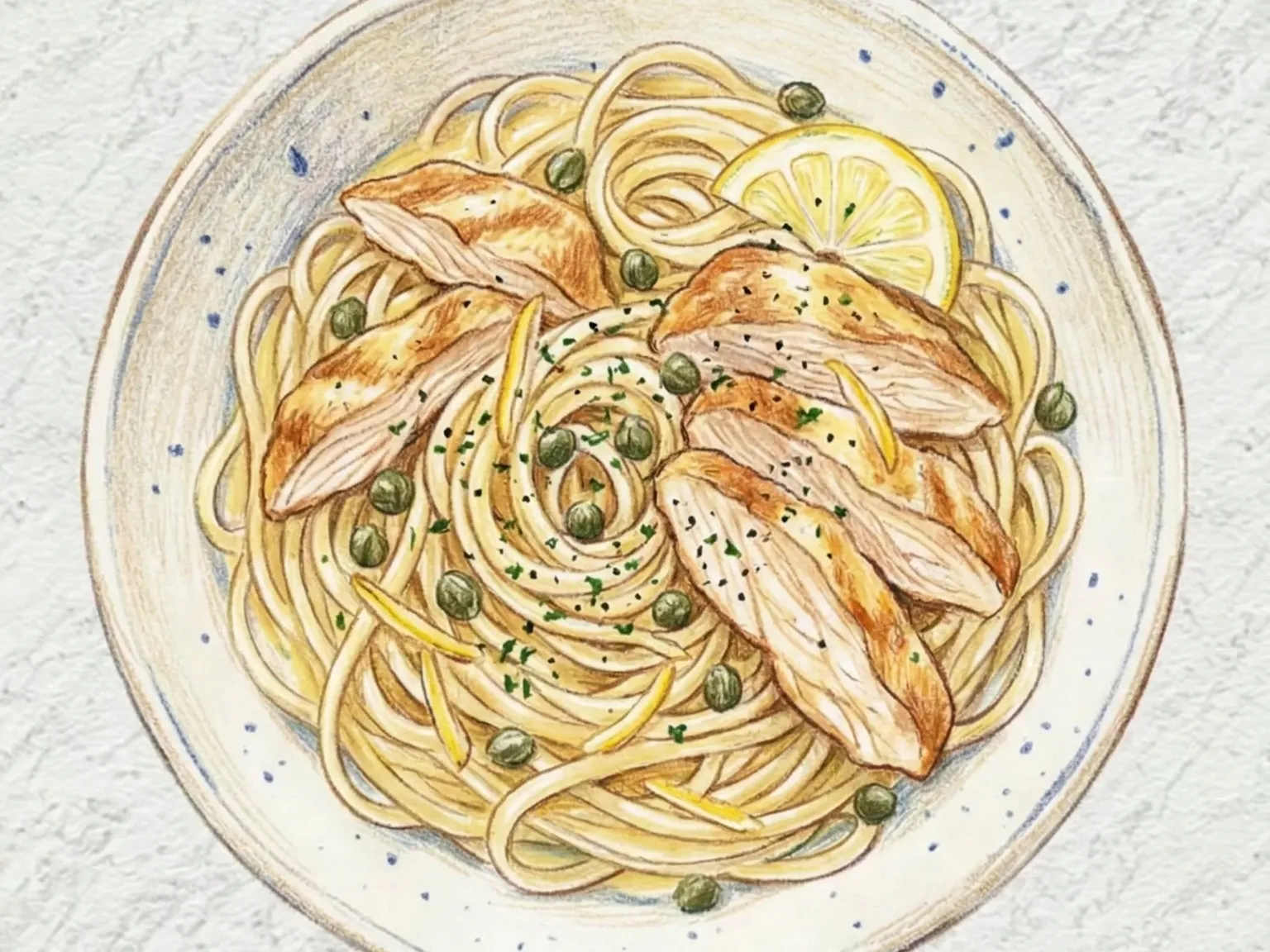
Yuja chicken piccata linguine pounds chicken breast thin, dusts it with flour, and pan-sears each side for 3 minutes until a golden crust forms on the outside while the i...
What makes this special
- Pounded chicken with a golden crust finishes in a bright yuja and lemon piccata sauce.
- Chicken pounded thin, floured, and pan-fried 3 minutes per side for crisp exterior
- Yuja marmalade sweetness and caper brine balance in the butter-emulsified sauce
Key ingredients
Core cooking flow
- 1 Pound 420 g chicken breast to an even 1 cm thickness, especially at the thic...
- 2 Cook 360 g linguine in well-salted boiling water for 1 minute less than the package time.
- 3 Heat a wide pan over medium heat, add 2 tablespoons olive oil, and lay in the chicken.
Yuja chicken piccata linguine pounds chicken breast thin, dusts it with flour, and pan-sears each side for 3 minutes until a golden crust forms on the outside while the interior stays moist. The same pan is deglazed with chicken stock, lemon juice, yuja marmalade, and capers, then simmered for 3 minutes to concentrate the sauce and lift every bit of fond from the pan bottom. Whisking in cold butter at the end emulsifies the liquid into a glossy, coating consistency that clings to each strand. The capers contribute a briny, bursting texture that plays off yuja's bittersweet citrus notes, building a layered acidity that neither ingredient produces on its own. The flat, wide surface of linguine picks up the sauce broadly so each forkful carries both the herb fragrance of scattered parsley and the bright citrus glaze. Because yuja marmalade varies in sweetness, the lemon juice quantity should be adjusted at the end to balance the final acidity.
Instructions
Read the steps as a cooking flow: prep, heat, seasoning, doneness control, and finish.
- 1Season
Pound 420 g chicken breast to an even 1 cm thickness, especially at the thick end, then pat the surface dry.
Season with salt and pepper, and dust with 2 tablespoons flour in a thin, even coat.
- 2Finish
Cook 360 g linguine in well-salted boiling water for 1 minute less than the package time.
Reserve 1 cup pasta water before draining, and keep the noodles slightly firm so they finish in the sauce.
- 3Control
Heat a wide pan over medium heat, add 2 tablespoons olive oil, and lay in the chicken.
Sear for about 3 minutes per side until golden, avoiding frequent flipping so the flour crust stays attached.
- 4Finish
Transfer the chicken to a plate, then pour 180 ml chicken stock into the same pan and scrape up the browned bits.
Add 2 tablespoons lemon juice, 1 tablespoon yuja marmalade at first, and 1.5 tablespoons capers.
- 5Control
Reduce the sauce gently over medium heat for about 3 minutes instead of hard-boiling it.
If it tastes sharp, add a little more yuja marmalade; if it is too sweet, correct it with extra lemon juice.
- 6Finish
Lower the heat and swirl in 20 g butter until the sauce looks glossy.
Add the linguine and chicken, loosen with pasta water as needed, toss for 1 to 2 minutes, then finish with 10 g chopped parsley and serve.
After the steps
Pick a recipe that fits this dish.
Continue with shared ingredients, meal pairings, or a similar method.
Recipes That Go Well With This
More Pasta →Based on shared ingredients and meal pairing
Pasta al Limone (Italian Lemon Butter Cream Pasta)
Pasta al limone is a pasta from southern Italy that relies entirely on lemon zest, lemon juice, butter, cream, and Parmesan for its sauce, with no tomato and no meat to complicate the flavor. The citrus oils drawn from the zest dissolve into warm butter and spread their aroma evenly through the fat before any liquid is added, which is what gives the finished sauce its rounded, lingering lemon character rather than a sharp acidic bite. A ladleful of starchy pasta water is then added to emulsify everything into a glossy, clingy coating that holds to each strand of linguine without pooling at the bottom of the plate. Cooking the sauce over low heat throughout is critical: cream added to high heat separates and loses its silky texture. Linguine cooked al dente provides enough resistance to stand up to the light sauce without the combination feeling heavy or cloying. Total preparation from filling a pot with water to plating takes roughly twenty minutes, making it a realistic weeknight option despite its refined result.
Chicken Marsala
Chicken Marsala pounds chicken breast thin, dredges it in flour, and pan-sears it to a golden crust before building a sauce from Marsala wine, sliced cremini mushrooms, chicken stock, and heavy cream. Pounding the breast to an even thickness ensures uniform heat transfer so the interior stays moist while the exterior browns quickly, and the flour coating creates the browned fond on the pan surface that becomes the sauce's flavor base. Deglazing with Marsala wine lifts that fond while the wine reduces, concentrating its sweetness, acidity, and characteristic walnut-like nuance into a deeply layered sauce. Mushrooms must be spread in a single layer and cooked until their moisture fully evaporates, otherwise they release liquid into the sauce and dilute its intensity. Heavy cream goes in at the end to give the sauce a velvety body, but the heat should be reduced before adding it to prevent the cream from breaking. Dry Marsala is essential here because sweet Marsala produces an excessively sugary sauce that masks the wine's complexity, turning a nuanced pan sauce into something that tastes more like a dessert glaze. Serve with mashed potatoes, pasta, or steamed rice and spoon the sauce generously over everything.
Veal Saltimbocca (Italian Veal Cutlets Dish)
To prepare veal saltimbocca, the process begins by pounding the veal cutlets until they reach a very thin consistency. Achieving this specific thickness is necessary because veal has a tendency to become tough quite rapidly when it is exposed to heat for an extended duration. To maintain a tender texture, the total cooking time for each individual piece should be kept strictly under two or three minutes. Each prepared cutlet is topped with one fresh sage leaf and a single slice of prosciutto, which are then pressed down firmly by hand. This manual pressure allows the layers to bond so that the prosciutto adheres to the veal without the requirement for toothpicks or other mechanical fasteners. The assembled cutlets receive a light dusting of flour before being placed into a preheated pan for searing. It is effective to begin the cooking process with the prosciutto side facing down in the pan, as the direct heat fuses the cured meat directly to the veal cutlet. After the meat has been quickly seared and removed from the pan, white wine is poured onto the hot surface. This liquid serves to lift the caramelized bits of fond from the bottom of the pan to create a flavor base. Incorporating butter into this wine reduction allows the liquid to emulsify into a sauce that has a glossy and light consistency. During the cooking, the sage leaf remains trapped between the meat and the prosciutto, infusing the veal with a distinct herbal fragrance that balances the saltiness of the cured ham.
Yuja Burrata Cherry Tomato Spaghetti
Yuja burrata cherry tomato spaghetti builds its base by slowly infusing olive oil with sliced garlic over low heat, then cooking cherry tomatoes on medium until they burst and release their juices into a loose, bright sauce. Yuja marmalade and yuja juice are stirred in for only 30 seconds to preserve the citrus volatiles before they are driven off by heat. The marmalade's considerable sweetness is balanced against the tomato's acidity and added gradually to taste. Tossing al dente spaghetti with a splash of reserved pasta water binds the starch into the sauce for a smooth, even coat on each strand. Burrata is torn open and placed on top just before serving so its creamy, milky interior melts across the hot pasta, producing a clear contrast between the sharp citrus and the rich dairy fat. The distinctive fragrance of yuja combined with the bright tomato sauce gives this Italian-format pasta a recognizably Korean sensibility.
Serve with this
Tomato Basil Juice
Tomato basil juice is a cold savory drink made by blending ripe tomatoes with fresh basil leaves and straining the result through a fine sieve to remove seeds and skins. The ripeness of the tomato determines much of the flavor: fully ripe tomatoes carry free glutamates that produce a natural umami depth, whereas underripe fruit tastes predominantly sour without the sweetness and savory body that makes the juice satisfying. Basil should be added to the blender immediately before blending rather than sitting cut or torn, because the volatile oils that produce its aroma begin oxidizing quickly once the leaves are damaged. After blending to a smooth consistency, passing the juice through a fine-mesh strainer or cheesecloth removes the solids and produces a texture smooth enough to drink without resistance. Salt and black pepper season the juice, and fresh lemon juice raises the acidity in a way that brightens the overall flavor rather than making it sour. A small addition of olive oil emulsifies into the juice and activates fat-soluble aromatic compounds in both the tomato and the basil, producing a fuller, rounder flavor than the unstrained version. The juice must be thoroughly chilled before serving, as warmth mutes the herbal freshness. It works well as a brunch drink, a light non-alcoholic aperitif, or a base for savory cocktails.
Sfogliatella (Neapolitan Layered Shell Pastry with Ricotta)
Sfogliatella is a Neapolitan pastry built from a lean flour-and-water dough that is stretched paper-thin, brushed with butter, and rolled into a tight cylinder to create hundreds of distinct layers. Slices of this cylinder are opened into a shell shape, filled with a mixture of ricotta cheese, sugar, cinnamon, and orange zest, then baked at high heat. In the oven, the butter between each layer turns to steam and forces the sheets apart, producing an exterior that shatters audibly at the first bite. Inside, the ricotta filling softens to a warm, fragrant cream with citrus and spice notes that contrast beautifully with the crisp shell. The thinner the dough is stretched before rolling, the more pronounced the layered effect becomes - professional bakers aim for near-transparency. Overfilling is the most common cause of failure, as excess moisture from the ricotta can burst through the delicate layers during baking. The ideal sfogliatella emerges from a 200-degree oven deeply golden on every ridge, with a filling that is just set and still slightly creamy in the center.
Roasted Vegetable Salad
Roasted vegetable salad cuts bell pepper, zucchini, eggplant, and onion into evenly sized pieces, roasts them at 200 degrees Celsius for 20 to 25 minutes, and serves them over peppery arugula with a drizzle of balsamic vinegar. At high oven heat the surface moisture evaporates rapidly, triggering both the Maillard reaction and caramelization simultaneously, so the vegetables develop concentrated natural sweetness alongside scattered charred edges that carry a smoky depth. The bitter, peppercorn-like bite of arugula provides a direct counterpoint to the caramelized sweetness of the roasted vegetables, keeping each forkful from feeling one-dimensional. Balsamic vinegar's thick, concentrated acidity pulls the disparate flavors together into a single coherent whole. Maintaining a thickness of 1.5 to 2 centimeters for each piece is important because thinner cuts dry out completely in the oven's dry heat and turn leathery, losing the interior moisture that makes roasted vegetables satisfying. Shaving Parmigiano-Reggiano over the top or scattering pine nuts adds a savory, nutty layer that makes the salad more substantial.
Similar recipes
Buchu Vongole Spaghetti (Korean Garlic Chive and Clam Pasta)
Buchu vongole spaghetti takes the Italian vongole format and finishes it with a fistful of Korean garlic chives, combining a briny shellfish sauce with the sharp, vegetal fragrance that buchu brings. Garlic slices and dried chili flakes are first infused in olive oil until fragrant, then white wine goes in and the alcohol burns off quickly, leaving only the wine's fruity character in the base. Manila clams added to the pan steam open in two to three minutes under a lid, releasing their liquor into the oil and wine. That clam broth carries enough salinity and umami to season the entire sauce - no added salt required at any point. A ladleful of pasta water stirred in while shaking the pan hard creates an emulsion that bonds the clam broth with the olive oil and coats every strand. The garlic chives are added off heat so they stay bright green and fragrant rather than going soft and losing their character. A scatter of chopped Italian parsley over the finished bowl adds a last note of herbal freshness.
Mala Chicken Alfredo Fusilli
Mala chicken Alfredo fusilli is a fusion pasta that brings Sichuan mala sauce -- built on the numbing tingle of Sichuan peppercorn and the heat of dried chili -- into a cream-and-Parmesan Alfredo base. Chicken thigh is cut into bite-sized pieces and pan-seared to build a browned crust, then garlic and onion are sautéed in the residual fat to form the aromatic foundation. The Alfredo sauce is assembled from heavy cream, milk, and Parmigiano-Reggiano, with mala sauce stirred in to layer the peppercorn numbness against the dairy's richness. The amount of mala sauce added can be adjusted freely, making it straightforward to dial the level of tingling heat to preference. Fusilli's spiral ridges trap the thick sauce deep into their grooves so each piece delivers an even coating of flavor, and butter acts as a bridge between the cream base and the assertive spice, pulling both into a cohesive, glossy whole.
Tofu Ricotta Spinach Ravioli
Tofu ricotta spinach ravioli is a pasta dish featuring a filling made from firm tofu that has been thoroughly pressed, combined with ricotta cheese, blanched spinach, Parmigiano Reggiano, and a measured amount of nutmeg, all of which are enclosed within sheets of fresh pasta. The inclusion of tofu serves to diminish the heavy richness often associated with ricotta, although it ensures that the internal mixture maintains a consistency that is both smooth and creamy. The nutmeg provides a warm spice element that functions to bridge the flavor gap between the earthy qualities of the spinach and the various dairy ingredients. It is essential to press the tofu until the vast majority of its liquid content has been removed. Failure to eliminate this excess water will result in a filling that is too thin, which subsequently makes it difficult to achieve a clean and effective seal on the pasta sheets. To prevent the ravioli from opening or splitting during the boiling process, the edges of the pasta must be crimped firmly using a fork. This technique establishes a tight seal capable of withstanding the three to four minutes of cooking time required for the dish. Once the ravioli has been drained, it should be immediately transferred into brown butter infused with sage and tossed for approximately thirty seconds. This specific step prevents the exterior surface of the pasta from becoming dry and ensures that every piece is evenly coated in a layer of herb-scented fat. Since the boiling period is quite short, the subtle and delicate flavors contained within the filling are successfully preserved. This recipe is designed to yield four servings, which makes the dish a suitable option for a dinner event where the visual presentation of the food is a priority.