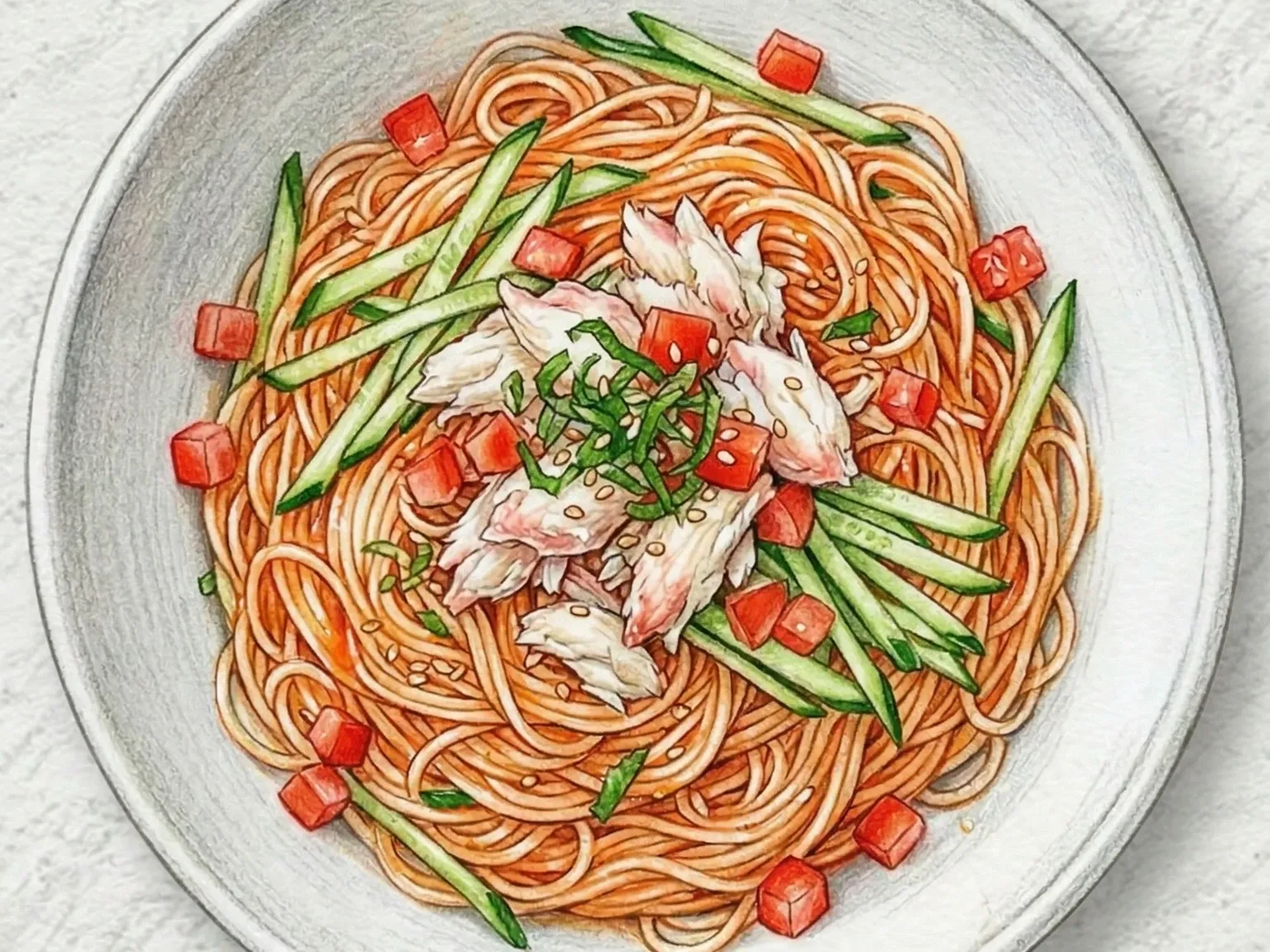
Chogochujang Kkotge Cold Capellini (Spicy-Sour Crab Angel Hair)
Pasta Medium

Chogochujang Kkotge Cold Capellini (Spicy-Sour Crab Angel Hair)

Quick answer

Chogochujang crab cold capellini is a chilled pasta dressed with chogochujang, a Korean condiment made by blending gochujang with rice vinegar and sugar until the paste b...

What makes this special

  • Chilled capellini tossed in sweet-tart chogochujang dressing features tender crab and vinegar.
  • Chogochujang dressing layers vinegar tang and sweetness over heat
  • Ice-water chilled capellini coats thinly with cold dressing
Total time
30 min
Level
Medium
Servings
2 servings
Ingredients
10
Calories
520 kcal
Protein
24 g

Key ingredients

capellinicrab meatcucumbercherry tomatoeschogochujang

Core cooking flow

  1. 1 Julienne 80g cucumber into thin, even strips and halve 100g cherry tomatoes.
  2. 2 In a mixing bowl, combine 3 tablespoons chogochujang, 1.5 tablespoons olive...
  3. 3 Bring salted water to a strong boil over high heat, then add 160g capellini.

Chogochujang crab cold capellini is a chilled pasta dressed with chogochujang, a Korean condiment made by blending gochujang with rice vinegar and sugar until the paste becomes a pourable, sweet-tart, spicy dressing. The sauce layers capsaicin heat beneath an acidic brightness that makes it exceptionally well-suited to cold noodles, cutting through any residual starchiness and keeping each strand distinct. Blue crab meat contributes a delicate natural sweetness and a salinity that anchors the entire dish, while julienned cucumber adds crisp, water-rich crunch that lightens the overall texture. Capellini is among the finest pasta shapes available, measuring roughly 0.9mm in diameter, which means it overcooks almost instantly and must be shocked in ice water the moment it finishes boiling to halt cooking and preserve its springy elasticity. At room temperature, the strands begin to clump within minutes, so keeping them submerged in ice water until just before plating is the standard approach. Fresh tomato adds a burst of cool acidity that tempers the dense chogochujang dressing and prevents the dish from feeling heavy, making this a well-balanced warm-weather plate.

Prep 20min Cook 10min 2 servings

Instructions

Read the steps as a cooking flow: prep, heat, seasoning, doneness control, and finish.

6 steps
  1. 1
    Step

    Julienne 80g cucumber into thin, even strips and halve 100g cherry tomatoes.

    Keep them refrigerated with the crab meat so every topping stays cold and crisp until the pasta is ready to dress.

  2. 2
    Season

    In a mixing bowl, combine 3 tablespoons chogochujang, 1.5 tablespoons olive oil, 1 tablespoon lemon juice, 1 teaspoon minced garlic, and 1 teaspoon sugar. Stir until the oil no longer floats in separate streaks.

  3. 3
    Control

    Bring salted water to a strong boil over high heat, then add 160g capellini.

    Stir continuously for the first 30 seconds so the very fine strands separate instead of sticking together.

  4. 4
    Heat

    Cook for about 3 minutes, just until the firm center is nearly gone, then transfer immediately to ice water for 30 seconds.

    The pasta is ready when it feels fully cold to the touch.

  5. 5
    Season

    Drain the noodles thoroughly in a sieve and press lightly to remove trapped water.

    Toss first with half of the dressing so the sauce clings to the strands instead of becoming diluted.

  6. 6
    Season

    Fold in 120g crab meat, the chilled cucumber, and the cherry tomatoes, then add the remaining dressing.

    Refrigerate for 5 minutes, taste, and adjust the salt only at the end before serving cold.

After the steps

Pick a recipe that fits this dish.

Continue with shared ingredients, meal pairings, or a similar method.

Recipes That Go Well With This

More Pasta →

Based on shared ingredients and meal pairing

Kongguksu-Style Cold Linguine
Shared ingredient: cucumber Pasta

Kongguksu-Style Cold Linguine

Kongguksu-style cold linguine reinterprets Korea's chilled soy noodle soup using Italian linguine in place of traditional wheat noodles. Unsweetened soy milk is blended with toasted sesame seeds and peanut butter into a thick, nutty cold broth poured directly over the pasta at serving. The linguine is cooked al dente and immediately shocked in ice water to firm up the texture and chill it completely before the broth goes on. Julienned cucumber and halved cherry tomatoes scatter on top for fresh crunch and color. Salt and sugar are adjusted at the end to balance the broth's natural bean flavor against the richness from the peanut butter. The full preparation takes about ten minutes, with stovetop time limited strictly to boiling the pasta, which makes it one of the more practical cold dishes to assemble in summer heat. Adding more peanut butter thickens the broth further, while extra sesame seeds push the nuttiness higher.

Korean Spicy Mixed Cold Noodles
Shared ingredient: cucumber Noodles

Korean Spicy Mixed Cold Noodles

Cold, chewy naengmyeon noodles are tossed in a sauce of gochujang, chili flakes, vinegar, sugar, and sesame oil. The noodles' characteristically tough, springy texture grips the bold sauce rather than letting it slide off, which creates an intensely textured bite. The single most critical preparation step is rinsing the boiled noodles thoroughly under cold water multiple times - removing the surface starch and squeezing out excess moisture keeps the sauce from diluting as it sits. Julienned cucumber and thin-sliced Korean pear cut through the heat, bringing refreshing crunch and a light fruitiness to each mouthful. Half a boiled egg placed on top tempers the chili's sharpness and brings the overall balance into line.

Bellflower Root, Chestnut & Perilla Salad
Serve together Salads

Bellflower Root, Chestnut & Perilla Salad

Doraji chestnut perilla salad brings together blanched bellflower root, boiled chestnuts, and Korean pear in a combination that captures the flavors of Korean autumn. Blanching doraji tempers its raw bitterness to a clean, gentle edge and softens its crunch just enough to make it pleasant to eat without cooking out its character entirely. Boiled chestnut contributes a starchy warmth and sweetness that is entirely different from fruit sugars - it is dense and slightly powdery, more comforting than bright. Korean pear introduces cool juice and a delicate crunch that refreshes the palate between bites of root and nut. Ground perilla seeds tie the ingredients together with a nutty, faintly grassy aroma rooted in their omega-3 fatty acid content, a flavor profile that cannot be replicated by sesame alone. The dressing is built from apple cider vinegar for fruit acidity, honey for sweetness, and olive oil to emulsify and smooth the transitions between components. Both bellflower root and chestnuts peak in autumn, so the salad is at its most rewarding when made with freshly harvested seasonal ingredients. The color combination of ivory doraji, cream-colored chestnut, and pale pear gives the bowl a quiet, autumnal visual quality.

Korean Octopus Chogochujang Buckwheat Noodles
Similar recipe Noodles

Korean Octopus Chogochujang Buckwheat Noodles

Muneo chogochujang memilmyeon is a Korean cold noodle dish featuring thinly sliced boiled octopus on chilled buckwheat noodles, dressed in chogochujang - a sauce made by combining gochujang with vinegar, sugar, garlic, and sesame oil. Patting the octopus dry after boiling helps the sauce adhere to each slice, and cooking the buckwheat noodles thirty seconds under the package time prevents them from breaking during the cold water rinse. The sweet-sour tang of the chogochujang complements the mild, clean flavor of the octopus without overpowering it. Shredded cabbage and perilla leaves contribute crunch and herbal fragrance, while a finishing sprinkle of sesame seeds adds nuttiness that ties the cold noodles and seafood together.

Serve with this

Korean Ssanghwa Herbal Tea
Drinks Hard

Korean Ssanghwa Herbal Tea

Ssanghwa-cha is a traditional Korean tonic tea made by slow-simmering astragalus root, angelica root, cinnamon bark, licorice, and jujube in approximately 1800 ml of water over low heat for more than fifty minutes. The prolonged extraction coaxes layered complexity from each herb, producing a brew that is simultaneously bitter, sweet, and warmly aromatic with cinnamon woven through every sip. Jujubes added during the simmer soften the sharpest herbal edges while contributing a mild natural sweetness that rounds the overall profile. Honey is stirred in after straining to let each person adjust the sweetness to taste. The tea is poured hot into a ceramic cup and finished with a small cluster of pine nuts whose oil blooms on contact with the steaming surface, releasing a gentle, nutty fragrance. The deep medicinal warmth lingers in the throat long after each sip, making the drink a reliable remedy for fatigue and cold weather.

🍺 Bar Snacks 🎉 Special Occasion
Prep 10min Cook 60min 4 servings
Yuja Madeleines (Brown Butter Citrus French Shell Cakes)
Baking Easy

Yuja Madeleines (Brown Butter Citrus French Shell Cakes)

These yuja madeleines rely on brown butter for a deeply nutty base that elevates the batter beyond a standard madeleine. About 35 grams of yuja marmalade is folded directly into the mixture, distributing bright citrus oil and small shreds of peel throughout each shell-shaped cake. A 30-minute rest in the refrigerator helps develop the signature madeleine hump during baking. The two-stage bake - 3 minutes at 200 degrees Celsius followed by 8 to 9 minutes at 180 degrees - crisps the thin edges while keeping the center moist and springy. A small measure of lemon juice reinforces the yuja acidity, preventing the sweetness from becoming one-dimensional.

🧒 Kid-Friendly 🎉 Special Occasion
Prep 25min Cook 12min 4 servings
Spinach Ricotta Cannelloni
Western Hard

Spinach Ricotta Cannelloni

Spinach ricotta cannelloni fills tube-shaped pasta with a mixture of sautéed spinach, ricotta cheese, garlic, and Parmesan, then bakes them in tomato sauce topped with mozzarella. Removing as much moisture from the spinach as possible is the most important step - excess water thins the filling and causes the tubes to split during baking. Half the Parmesan goes into the filling for depth, while the rest is scattered on top with mozzarella to build a golden, bubbling crust. Baking covered at 190 degrees Celsius for the first 25 minutes lets the sauce steam the pasta through, and uncovering for the final 10 minutes crisps the cheese surface. Resting the dish for 10 minutes after it comes out of the oven allows the sauce to thicken and the filling to set, producing cleaner portions when sliced.

🎉 Special Occasion 🍺 Bar Snacks
Prep 25min Cook 35min 4 servings

Similar recipes

Korean Spicy Chewy Noodles
Noodles Easy

Korean Spicy Chewy Noodles

Jjolmyeon is a Korean cold noodle dish built around unusually thick, springy wheat noodles that were accidentally invented at an Incheon noodle factory in the 1970s. The noodles are boiled, rinsed in ice water to firm up their chewy texture, then dressed in a sweet-sour-spicy sauce made from gochujang, vinegar, sugar, soy sauce, and sesame oil. Shredded cabbage and julienned cucumber are chilled separately and piled on top, giving each bite a crisp contrast to the bold sauce. A halved boiled egg adds a creamy counterpoint to the heat. The dish is served cold and eaten after thorough mixing, making it a go-to summer meal and late-night snack across Korea.

🌙 Late Night ⚡ Quick
Prep 10min Cook 10min 2 servings
Korean Dongchimi Buckwheat Noodles
Noodles Easy

Korean Dongchimi Buckwheat Noodles

Dongchimi makguksu is a Gangwon-do cold noodle dish of buckwheat noodles in the broth of well-fermented dongchimi, a white water kimchi of salted radish. The broth is strained clean and chilled in the freezer until a thin layer of ice crystals forms on the surface, which sharpens the tangy, lactic acidity to its fullest. Buckwheat noodles are rinsed thoroughly in cold water after cooking to strip away all surface starch, keeping the broth clear and clean around each strand. Julienned Korean pear contributes fruit sweetness and a juicy texture against the chewy noodles. Korean mustard, stirred in at the table, delivers a sharp nasal heat that punctuates each cold sip. The bowl contains no fat at all, making it one of the lighter noodle dishes in Korean cuisine and a natural palate-cleanser after rich, oily meat such as samgyeopsal or suyuk.

🏠 Everyday ⚡ Quick
Prep 20min Cook 10min 2 servings
Korean Dongchimi Cold Naengmyeon
Noodles Medium

Korean Dongchimi Cold Naengmyeon

Dongchimi naengmyeon is a cold noodle dish built around the fermented brine of dongchimi, a water-based winter kimchi made with whole radish. The brine is blended with chilled beef or chicken stock, creating a broth that looks deceptively simple but carries a layered complexity from months of fermentation. The lactic acidity of the dongchimi water is not sharp or aggressive - it is long and clean, acquired through slow fermentation rather than vinegar shortcut. At very cold temperatures, just at the point of forming a thin skin of ice on the surface, the radish-derived fragrance in the broth becomes most vivid and refreshing. Thin slices of boiled beef add a lean, meaty backbone that anchors the acidity without competing with it. Julienned Korean pear brings gentle sweetness and crunch, and half a boiled egg rounds out the bowl with richness. Cutting the noodles several times with scissors before placing them in the bowl keeps them from clumping in the cold and allows the broth to reach every strand from the first bite.

🏠 Everyday 🌙 Late Night
Prep 20min Cook 10min 2 servings

Tips

Drain pasta thoroughly so the sauce does not become watery.
Adjust salt at the end because chogochujang saltiness varies.

Nutrition (per serving)

Calories
520
kcal
Protein
24
g
Carbs
66
g
Fat
18
g