Yuja Mustard Chicken Naengchae Salad

Yuja Mustard Chicken Naengchae Salad

Quick answer

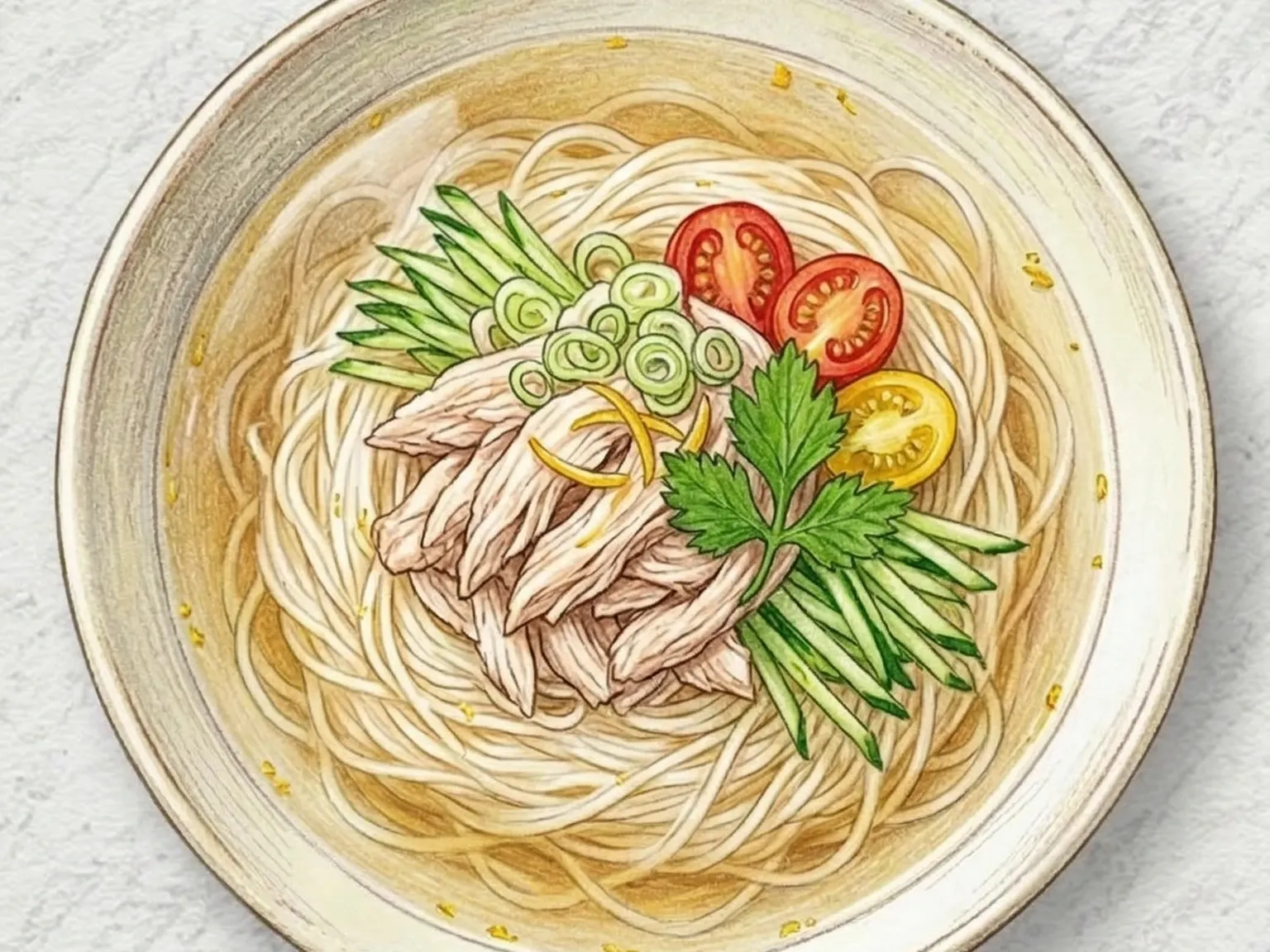
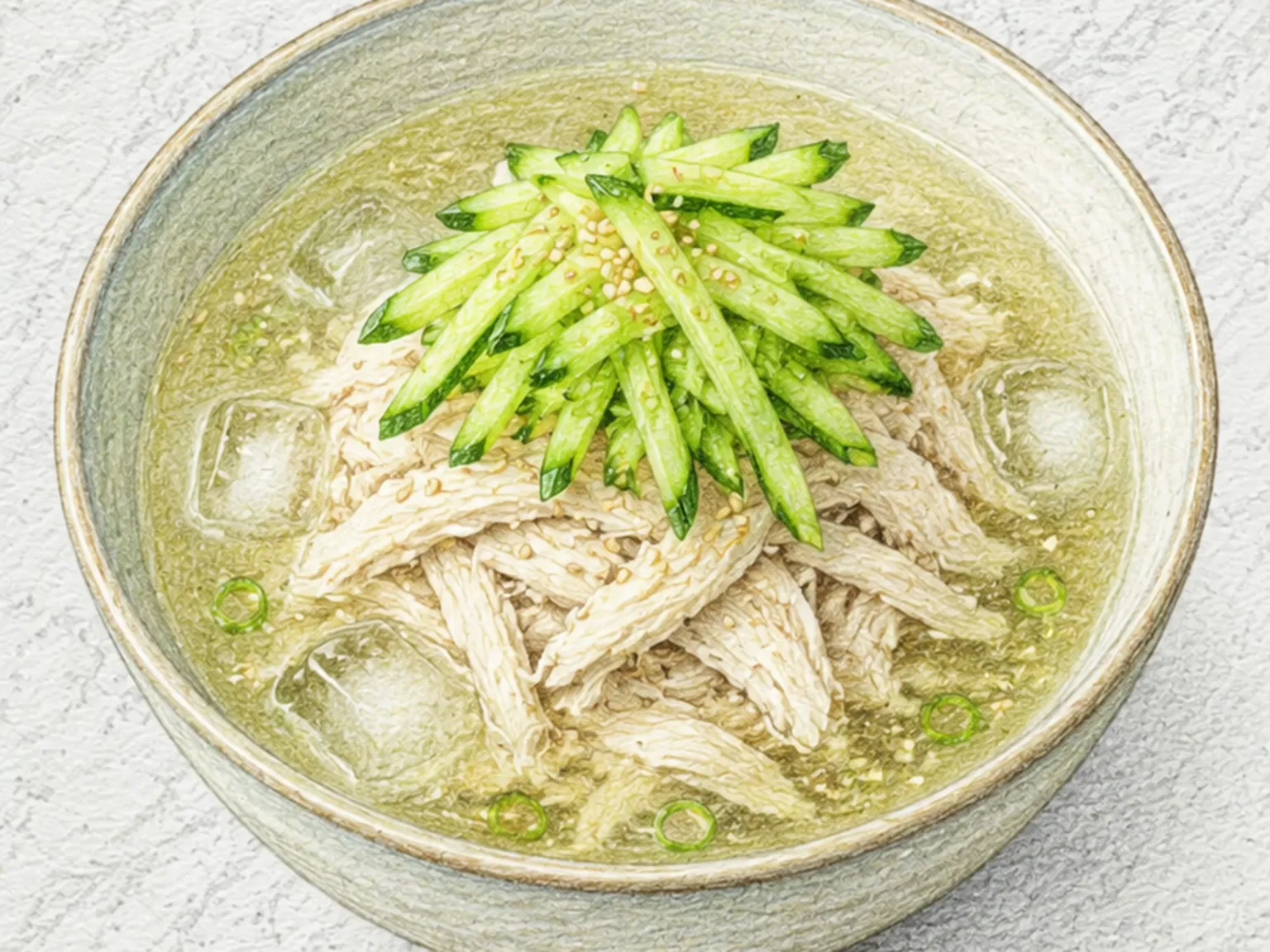
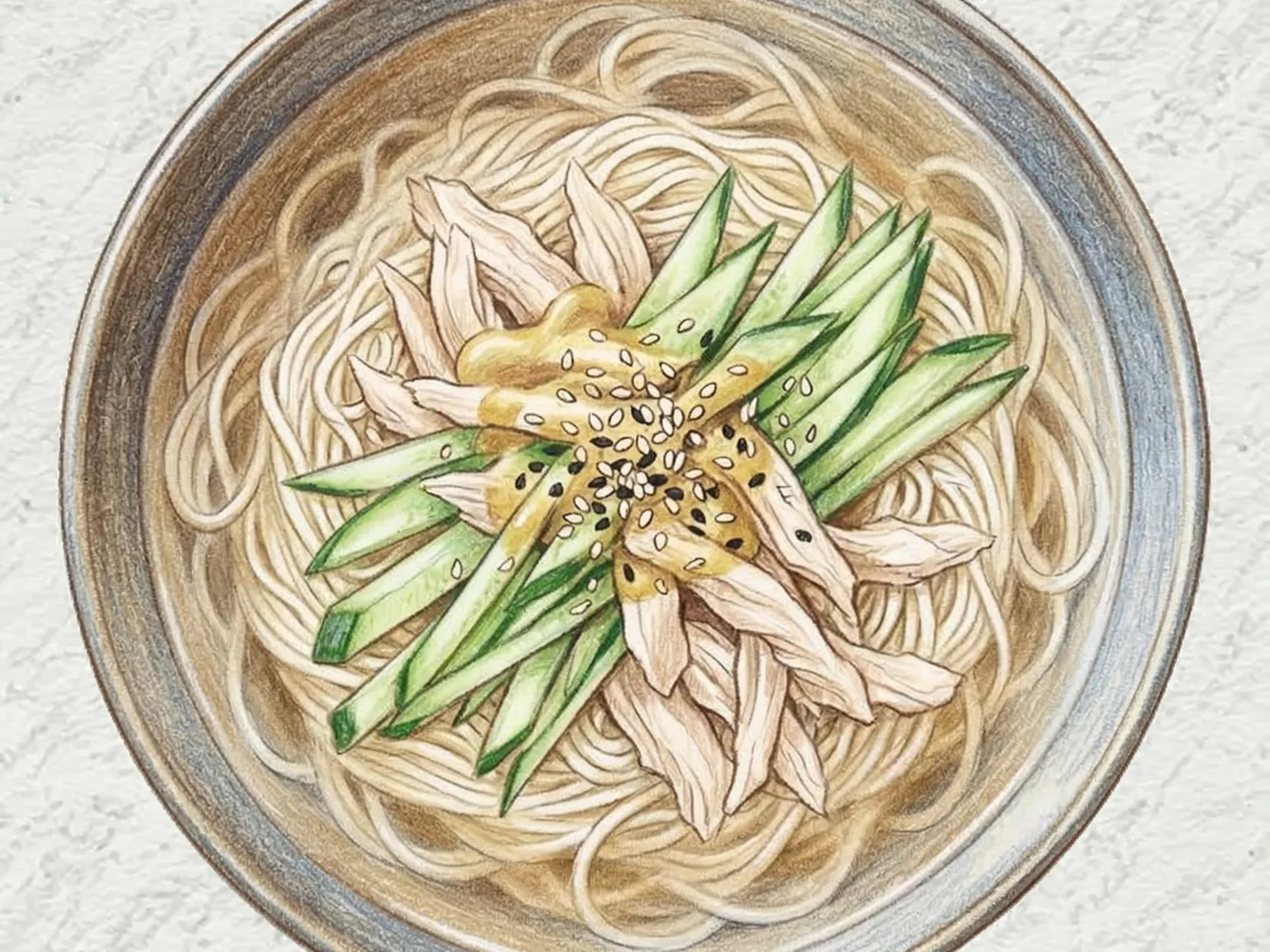
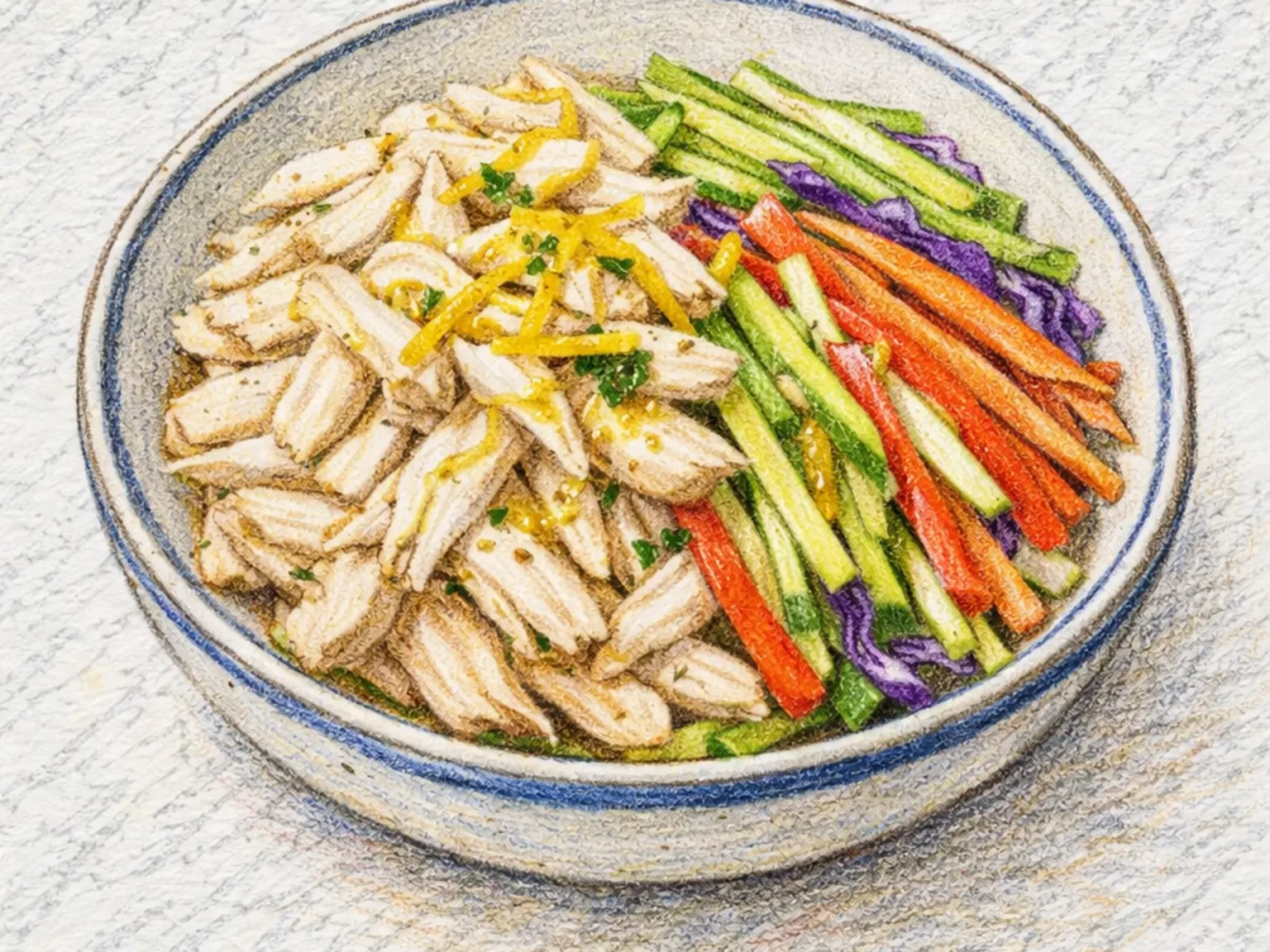
Yuja mustard chicken naengchae salad shreds boiled chicken breast along the grain and tosses it with julienned cucumber, Korean pear, bell pepper, and cabbage in a dressi...

What makes this special

  • Yuja Mustard Chicken Naengchae Salad combines moist pulled breast with a zesty citrus dressing.
  • 10-minute brine before poaching keeps the chicken breast moist when pulled apart
  • Yuja marmalade's citrus and mustard's sinus-clearing sharpness form a piercing dressing
Total time
30 min
Level
Easy
Servings
2 servings
Ingredients
10
Calories
295 kcal
Protein
33 g

Key ingredients

chicken breastcucumberKorean pearred onionbell pepper

Core cooking flow

  1. 1 Soak 280 g chicken breast in lightly salted water for 10 minutes.
  2. 2 Let the cooked chicken cool briefly before shredding, instead of pulling it while very hot.
  3. 3 Julienne 120 g cucumber, 80 g bell pepper, and 90 g cabbage as thinly as possible for a crisp texture.

Yuja mustard chicken naengchae salad shreds boiled chicken breast along the grain and tosses it with julienned cucumber, Korean pear, bell pepper, and cabbage in a dressing of yuja marmalade, Korean mustard paste, vinegar, and sesame oil. Soaking the chicken breast in lightly salted water for ten minutes before boiling helps the muscle fibers retain moisture, keeping the shredded meat tender rather than dry. The yuja marmalade brings a bright citrus fragrance, and the Korean mustard delivers a sharp, nasal heat - vinegar binds these two strong personalities into a cohesive dressing. Slicing the pear just before serving preserves its juice and crisp sweetness. Adding two-thirds of the dressing first, then tasting and adjusting, prevents the acidity from overwhelming the delicate balance of the salad.

Prep 18min Cook 12min 2 servings

Instructions

Read the steps as a cooking flow: prep, heat, seasoning, doneness control, and finish.

6 steps
  1. 1
    Control

    Soak 280 g chicken breast in lightly salted water for 10 minutes.

    Drain it, then add it to boiling water and cook over medium heat for 10 to 12 minutes, until the center turns fully white.

  2. 2
    Heat

    Let the cooked chicken cool briefly before shredding, instead of pulling it while very hot.

    Tear it along the grain into long strands so it breaks less and absorbs the dressing evenly.

  3. 3
    Step

    Julienne 120 g cucumber, 80 g bell pepper, and 90 g cabbage as thinly as possible for a crisp texture.

    Soak 50 g red onion in cold water for 5 minutes, then drain well to mellow its sharpness.

  4. 4
    Prep

    Mix 2 tablespoons yuja marmalade, 1.5 tablespoons vinegar, and 1 teaspoon sesame oil first.

    Add 1 tablespoon Korean mustard paste gradually, whisking until no lumps remain and checking the pungency before adding more.

  5. 5
    Prep

    Place the shredded chicken and prepared vegetables in a large bowl, then pour in only two-thirds of the dressing.

    Toss by lifting with chopsticks or tongs so the vegetables stay crisp instead of being crushed.

  6. 6
    Finish

    Julienne 100 g Korean pear right before serving and add it last so it stays juicy.

    Taste, adjust acidity with the remaining dressing, mound the salad on a plate, chill for 5 minutes, and serve immediately.

After the steps

Pick a recipe that fits this dish.

Continue with shared ingredients, meal pairings, or a similar method.

Recipes That Go Well With This

More Salads →

Based on shared ingredients and meal pairing

Korean Herb Citrus Chicken Salad
Shared ingredient: chicken breast Salads

Korean Herb Citrus Chicken Salad

Chamnamul yuja chicken salad starts with chicken breast salted for ten minutes before boiling, then pulled apart along the grain for a lean, clean protein base. Chamnamul stems are trimmed of tough ends and cut to five centimeters to preserve the herb's sharp, grassy mountain scent. The dressing combines yuja-cheong, soy sauce, olive oil, and minced garlic - the bittersweet citrus sharpness balances the salty, savory soy. Romaine adds crunch and volume. Cherry tomatoes are halved and blotted dry to prevent the greens from getting soggy. Sesame seeds go on last for a toasted, nutty finish that rounds out the clean, bright flavors of the salad.

Buchu Beef Mustard Salad (Seared Beef & Chive Mustard Salad)
Shared ingredient: asian pear Salads

Buchu Beef Mustard Salad (Seared Beef & Chive Mustard Salad)

Buchu beef mustard salad sears lean beef round over high heat to char the surface while keeping the center pink, then slices it thick over a bed of garlic chives and shredded red cabbage. Hot mustard dissolved into a soy-vinegar dressing produces a sharp nasal heat that cuts directly through the beef fat with each bite. Julienned Korean pear adds a crisp, clean sweetness that balances the salt and acidity of the dressing, while the garlic chives contribute their pungent, onion-forward aroma as a defining note. Slicing the beef at least 1 cm thick prevents it from toughening as it cools, and resting the seared meat for five minutes before cutting keeps the juices in. The salad comes together in the time it takes the beef to rest.

Chamnamul Walnut Pesto Trofie
Serve together Pasta

Chamnamul Walnut Pesto Trofie

Chamnamul walnut pesto trofie is a fusion pasta that coats twisted trofie in a pesto made from Korean chamnamul (wild parsley), walnuts, Parmigiano, and olive oil. Chamnamul has a lighter, more herbaceous quality than basil, with a faintly bitter finish that gives the pesto a distinctly Korean aromatic character. Walnuts contribute a heavier, more assertive nuttiness than pine nuts, thickening the sauce and anchoring the savory depth together with the aged cheese. The spiral grooves of trofie hold the pesto in every ridge, releasing an even concentration of flavor with each bite. Adding sufficient olive oil during blending slows oxidation and prevents the chamnamul's green color from darkening too quickly. The pasta is best eaten immediately after tossing, when both the color and fragrance are at their peak.

Naengi Scallop Yuja Salad
Similar recipe Salads

Naengi Scallop Yuja Salad

Scallops are seared in butter over high heat, touching the pan only long enough for the Maillard reaction to produce a caramelized crust on the outside while the center stays translucent and tender. That contrast between the browned exterior and the soft interior is the structural anchor of this salad. Blanched naengi, a spring herb with an earthy, faintly bitter character distinct to Korean wild greens, contrasts directly against the scallop's clean sweetness. Arugula brings a peppery sharpness that adds tension and depth to the overall flavor. The dressing is made by whisking yuja marmalade into white wine vinegar and olive oil, and the floral citrus note of yuja acts as a bridge between the seafood and the spring greens, unifying what could otherwise be a collection of unrelated ingredients. Orange segments placed on top add a layer of sweet acidity and vivid color. The finished plate is clean, bright, and aromatically precise, equally appropriate as a first course in a multi-dish meal or as the centerpiece of a casual guest dinner.

Serve with this

Korean Saeu Herb Sogeum Gui (Herb Salt Grilled Shrimp)
Grilled Easy

Korean Saeu Herb Sogeum Gui (Herb Salt Grilled Shrimp)

Saeu herb-sogeum-gui is Korean herb-salt grilled shrimp, where shell-on medium shrimp are deveined, tossed with olive oil, minced garlic, rosemary, thyme, and black pepper for ten minutes, then seared over high heat on a grill pan lined with a thin layer of coarse salt. Keeping the shells on prevents moisture loss during the intense heat, so the flesh stays moist while the shells themselves crisp into an edible, crunchy layer. Grilling on a salt bed distributes radiant heat evenly and draws surface moisture away from the shrimp, preventing the steaming effect that makes shellfish soggy. A finishing squeeze of lemon juice lifts the herb and garlic aromas while sharpening the shrimp's natural sweetness.

🍺 Bar Snacks 🥗 Light & Healthy
Prep 12min Cook 10min 2 servings
Gazpacho
Western Easy

Gazpacho

The secret to an authentic gazpacho lies in the interaction between stale bread and fresh garden vegetables. While tomatoes, cucumbers, and red bell peppers form the base, the addition of water-soaked bread creates a thick, velvety consistency that distinguishes this Andalusian specialty from a simple puree. Blending these ingredients with red onion, garlic, extra virgin olive oil, and red wine vinegar produces a smooth texture where the oil emulsifies the vegetable juices and the vinegar sharpens the natural sugars of the tomatoes. Patience is required after the blending is complete; the soup must rest in the refrigerator for at least two hours to allow the flavors to settle and integrate, a process that does not occur effectively at room temperature. Serving requires a final touch of drizzled olive oil and a handful of finely diced vegetables to create a crisp contrast against the liquid base. For the most refined results, passing the mixture through a fine-mesh sieve ensures a silky finish. Using fully ripened summer tomatoes provides the ideal acidity levels, and storing the leftovers in the fridge for a day or two often leads to a more developed profile.

🥗 Light & Healthy 🎉 Special Occasion
Prep 20min 4 servings
Soybean Paste Stew with Clams
Asian Easy

Soybean Paste Stew with Clams

Doenjang jjigae with clams is one of the most frequently made stews in Korean households, built on the combination of fermented soybean paste's deep, earthy flavor and the clean briny umami of manila clams. The clams are purged of sand before being added to a pot of doenjang-laced broth, where they open and release their salty, seawater-flavored liquor directly into the soup. The result transforms the base from something merely savory into something distinctly oceanic and complex. Zucchini softens in the bubbling broth and contributes a natural sweetness as it breaks down, while blocks of soft tofu act as sponges, soaking up the seasoned liquid and releasing it in a burst of hot, flavorful broth when bitten into. Sliced cheongyang chili peppers are added to interrupt the heaviness of the fermented paste and sharpen the overall flavor. The stew is typically served in an earthenware pot while still bubbling, alongside rice. Many Koreans ladle the broth directly over their bowl of rice. The recipe adapts to any season: assembled with leftover summer vegetables from the refrigerator for a lighter version, or cooked piping hot in a stone pot through winter.

🏠 Everyday
Prep 12min Cook 25min 2 servings

Similar recipes

Water Parsley & Beef Salad
Salads Medium

Water Parsley & Beef Salad

Beef marinated in soy sauce and pear juice is seared over high heat just long enough to develop a caramelized, deeply savory crust on the outside while the interior stays moist and tender. The cooked bulgogi is laid over a bed of fragrant minari and crisp lettuce, so each forkful carries both the warm, rich meat and the cool, crunchy vegetables. Thinly sliced red onion soaked in cold water to tame its bite then scattered through the bowl melds smoothly with the sweet-savory marinade coating the beef. A light toss of the remaining sesame oil from the pan coats the greens with a round, nutty aroma, and toasted sesame seeds sprinkled generously over the top complete the plate. Minari wilts quickly and loses its herbal fragrance once it is dressed, so it should only be combined with the other ingredients moments before the dish reaches the table. The warm meat against the cold greens creates a temperature contrast that makes each bite more dynamic. A spoonful of ssamjang dressing or a splash of yuzu vinegar can shift the flavor profile when variety is wanted.

🥗 Light & Healthy 🏠 Everyday
Prep 20min Cook 10min 2 servings
Korean Garlic Scape Chicken Breast Stir-fry
Stir-fry Medium

Korean Garlic Scape Chicken Breast Stir-fry

Maneuljjong dakgaseumsal bokkeum is a stir-fry where soy-marinated chicken breast is cooked through with ginger and garlic first, then joined by garlic scapes cut to five-centimeter lengths and julienned carrot for a quick blast over high heat before the whole pan is finished in an oyster sauce and soy sauce glaze. Chicken breast is naturally lean and can easily read as flat on its own, but the oyster sauce compensates by delivering concentrated umami and coating the surface of each piece with a lacquered sheen. The garlic scapes provide a dual texture that is both crisp and slightly chewy, setting up a direct contrast with the smooth, tight grain of the chicken breast. Julienned carrot adds a gentle sweetness that softens the saltiness of the soy and oyster sauce base. Ginger pulls double duty, eliminating any poultry odor while contributing the aromatic lift characteristic of well-executed stir-fry. The high-protein, low-fat profile makes this a practical everyday banchan for anyone managing calories, and it also works well spooned over rice in a deopbap format. Keeping the garlic scapes in the pan for as short a time as possible is essential to preserving their signature crunch.

🥗 Light & Healthy 🏠 Everyday
Prep 15min Cook 11min 2 servings
Korean Grilled Chicken Hearts
Grilled Easy

Korean Grilled Chicken Hearts

This recipe describes how to prepare chicken hearts by cleaning, seasoning, and searing them quickly over high heat. The process begins by splitting the hearts lengthwise to remove vessels and blood clots, which is necessary to ensure a pleasant texture. The hearts are soaked in cooking wine for ten minutes to neutralize any gamey smell, then patted dry. After a brief marinade with salt, black pepper, minced garlic, and neutral oil, they are added in a single layer to a very hot pan. Searing them without moving for three minutes colors the underside, after which they are flipped to cook for another two to three minutes. Keeping the total cooking time around six minutes prevents the chicken hearts from turning tough. The dish is finished with chopped scallions and is typically served warm as a side dish or drinking snack.

🍺 Bar Snacks 🏠 Everyday
Prep 25min Cook 10min 2 servings

Tips

Slice the pear right before serving to keep it crisp and juicy.
Add mustard gradually to control pungency without overpowering the salad.

Nutrition (per serving)

Calories
295
kcal
Protein
33
g
Carbs
17
g
Fat
10
g