Recipes with aburaage fried tofu

31 recipes. Page 1 of 2

Buy aburaage fried tofu

As an Amazon Associate, we may earn from qualifying purchases.

Aimaze (Simmered Root Vegetables with Vinegar)
Asian Medium

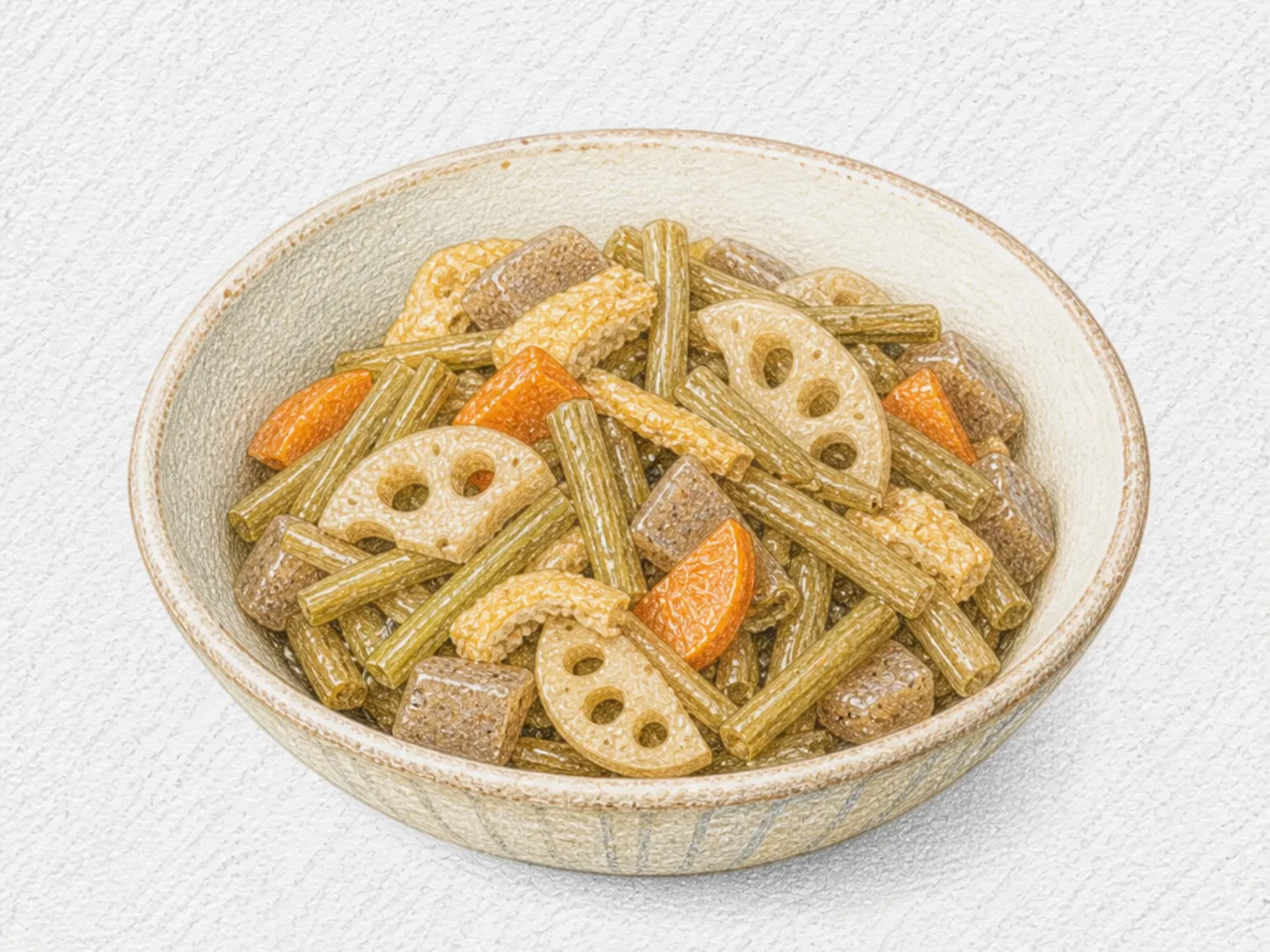
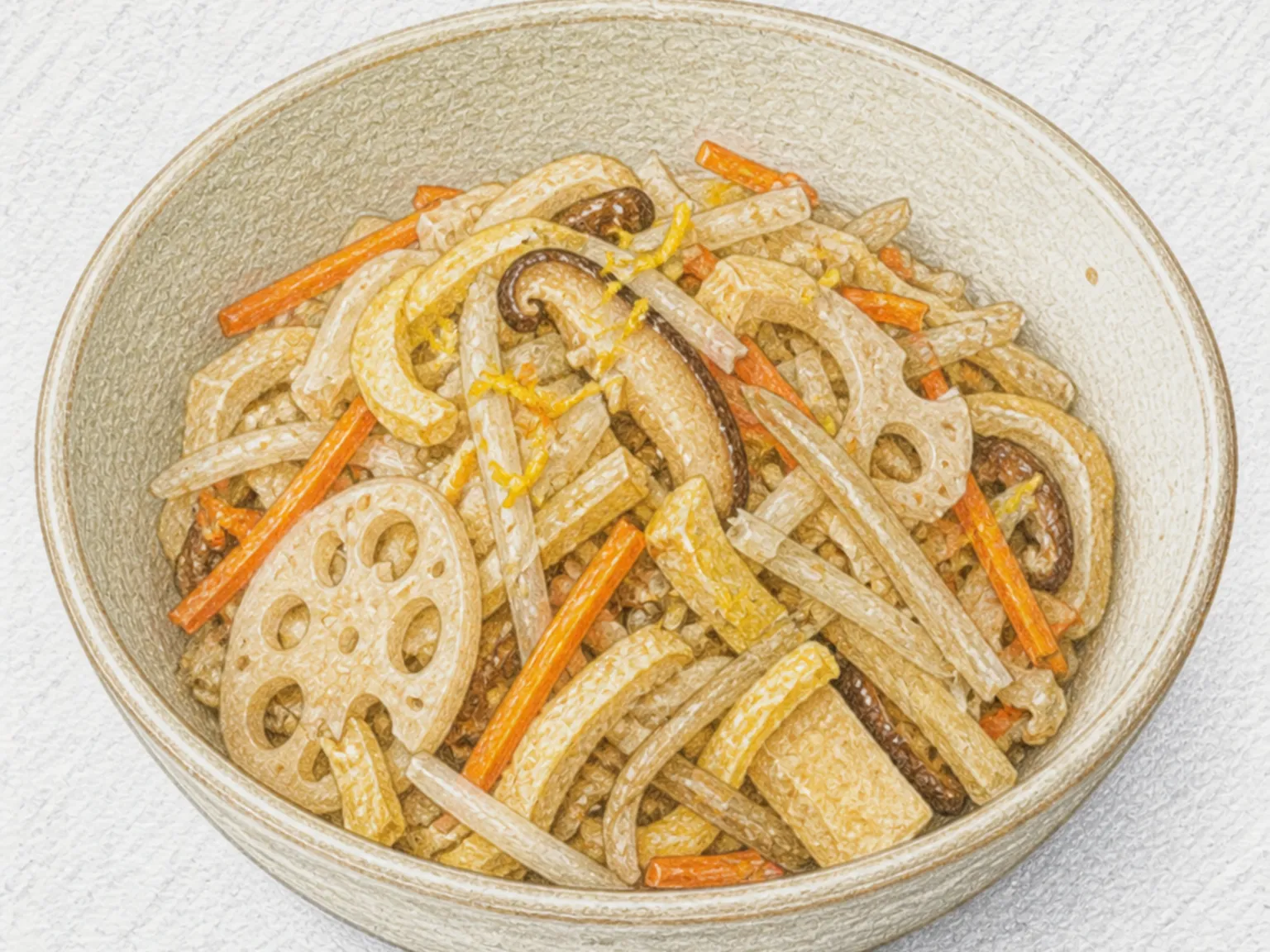
Aimaze (Simmered Root Vegetables with Vinegar)

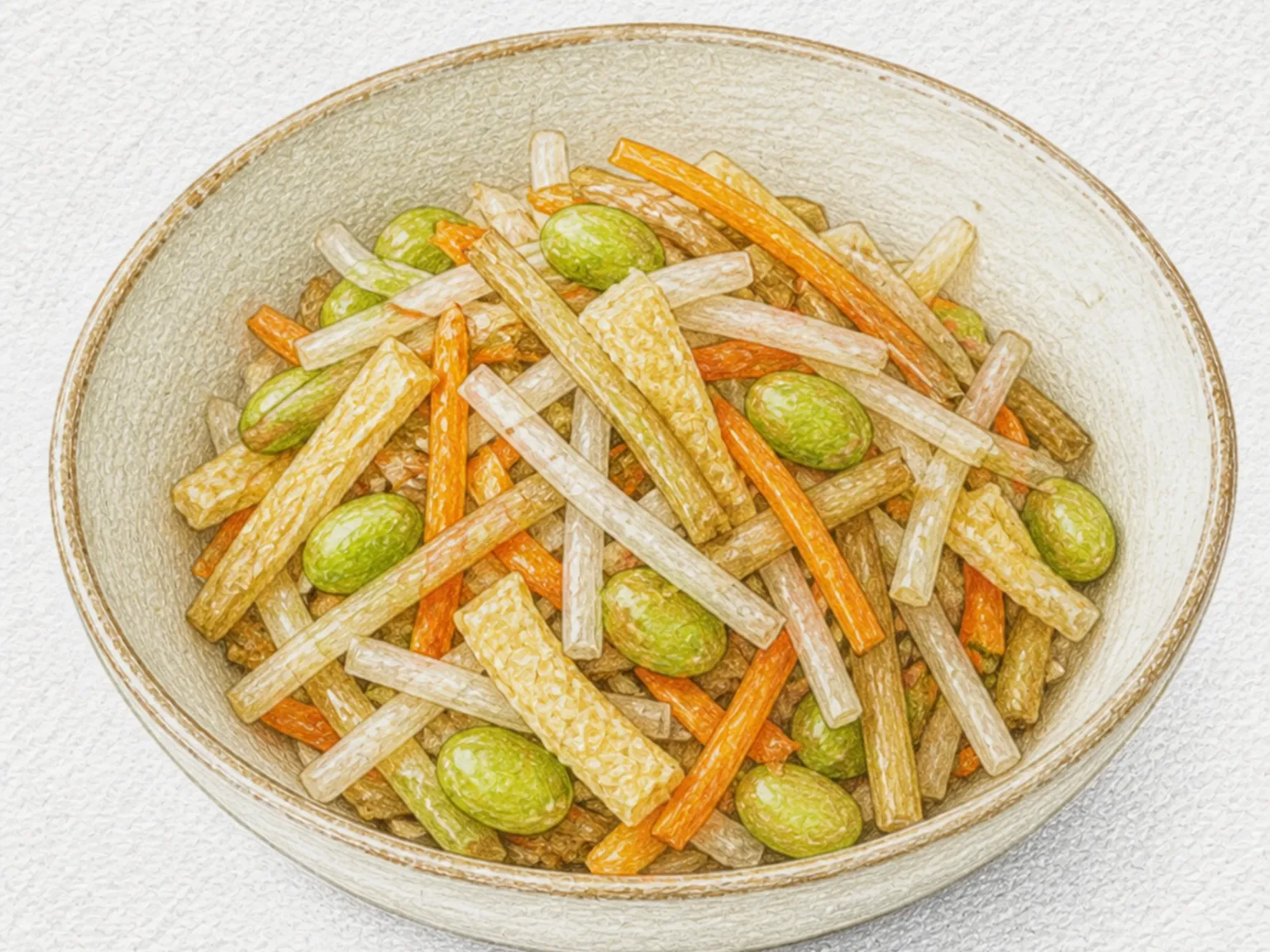
In the Noto area of Ishikawa, this root vegetable side dish is made for New Year and other special occasions. Flattened soybeans, burdock, and fried tofu simmer in sweetened soy, while daikon and carrot strips are blanched separately and folded in afterward, and each keeps its own texture. Vinegar layered over the soy seasoning puts it somewhere between a simmered dish and a dressed salad.

Prep 20min Cook 20min 4 servings
Funa-Meshi (Okayama Minced Crucian Carp Rice Bowl)
Rice Medium

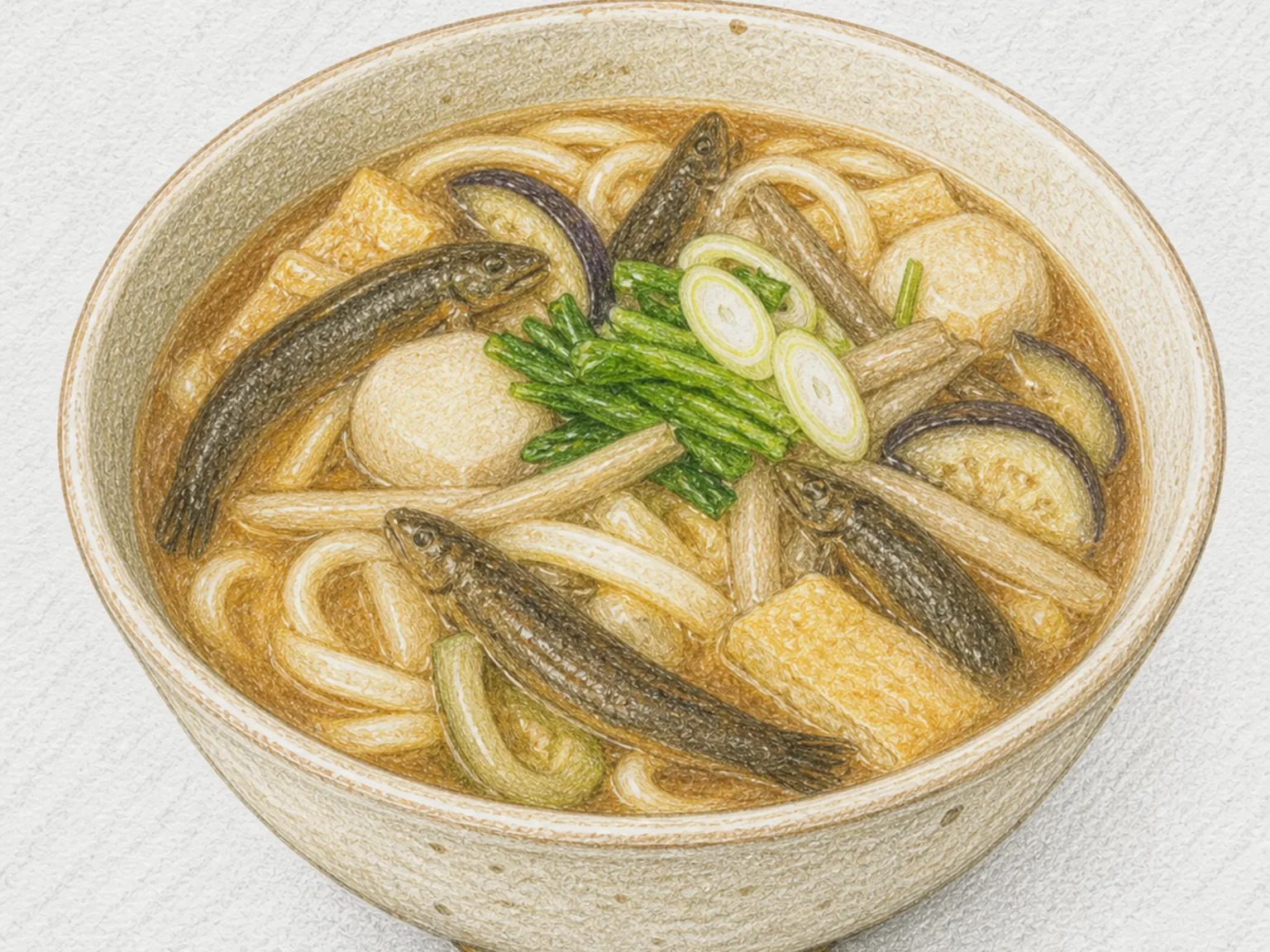
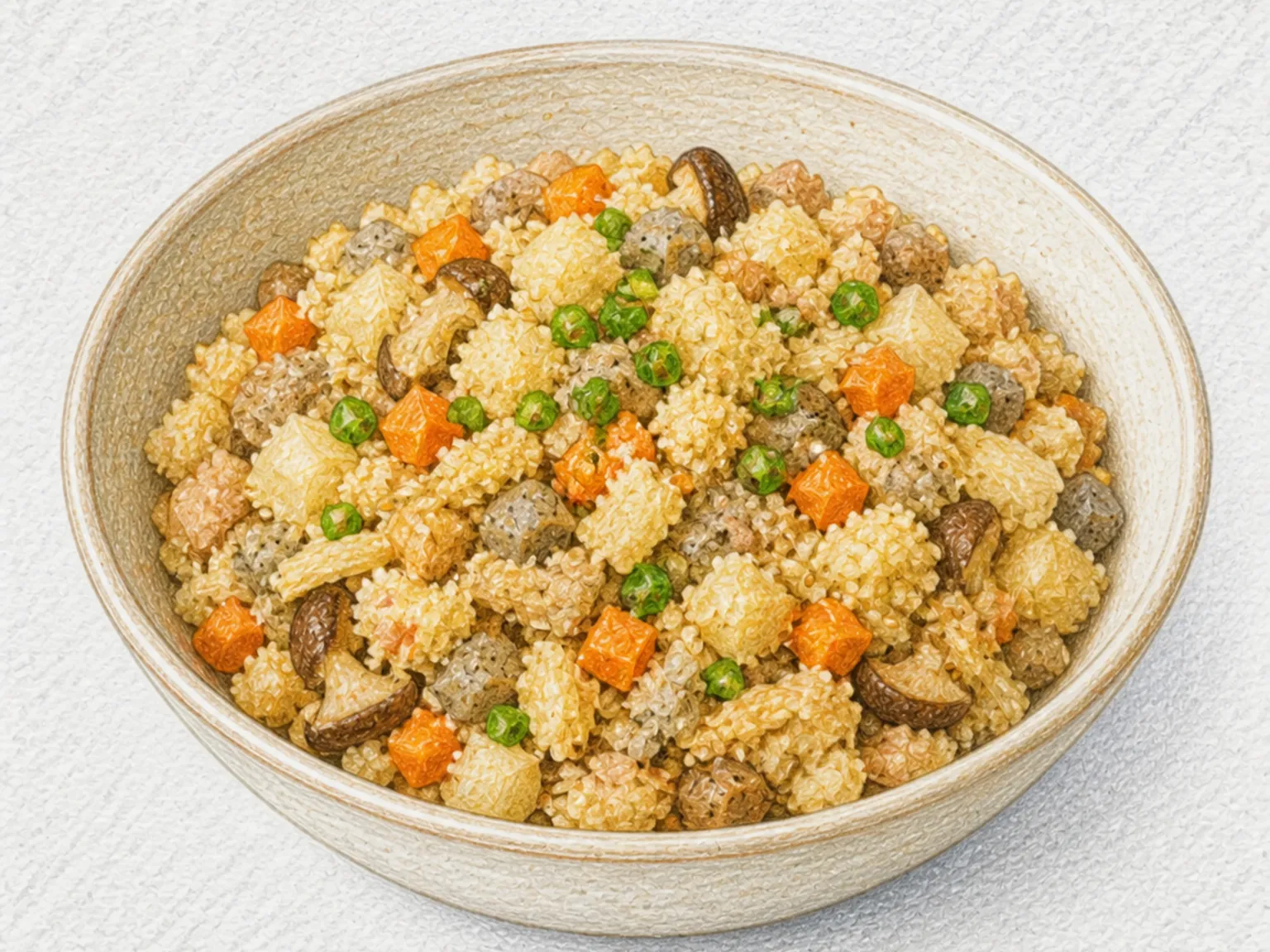
Funa-Meshi (Okayama Minced Crucian Carp Rice Bowl)

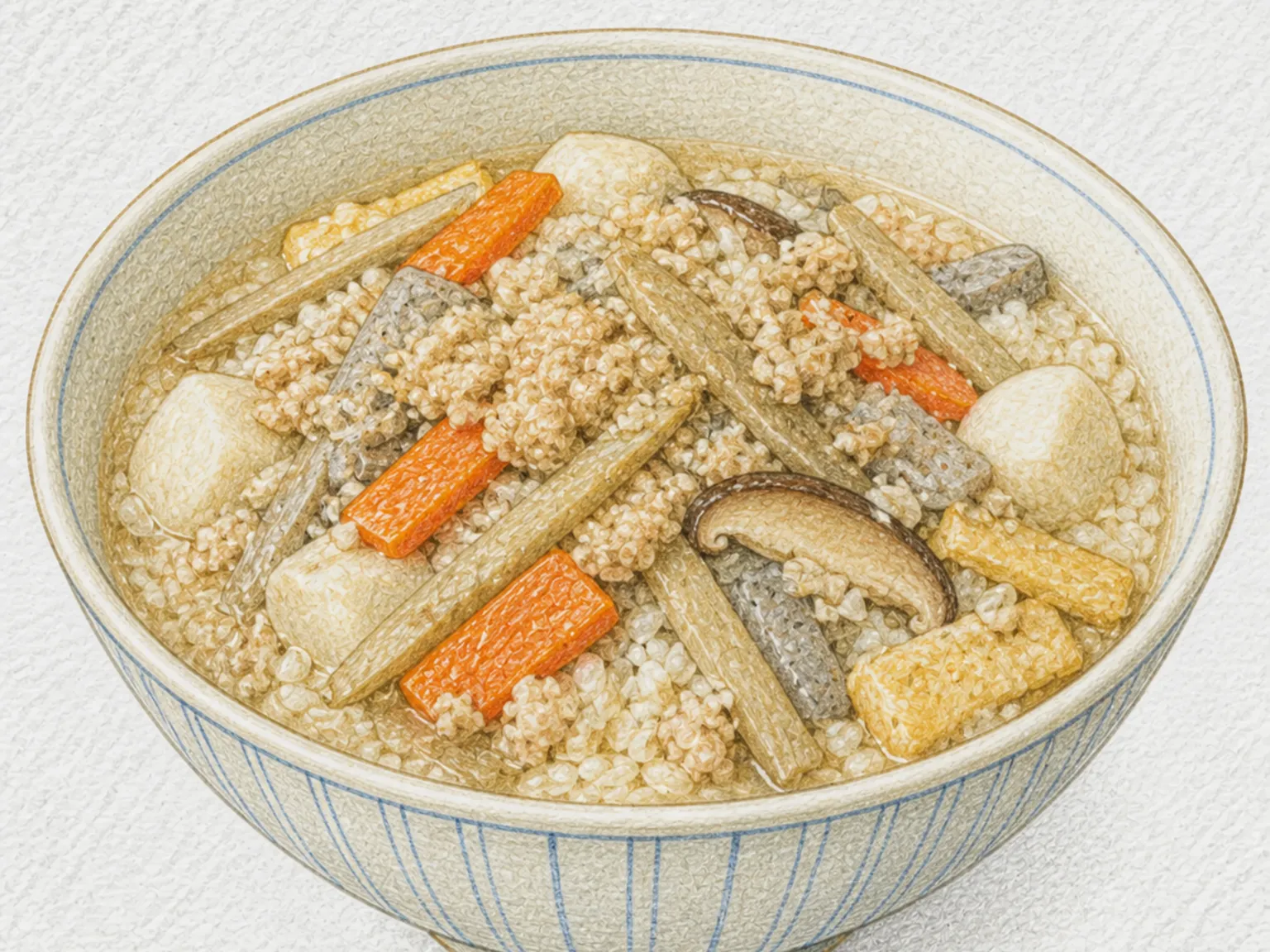
Minced crucian carp and root vegetables simmer in a sweet-salty dashi with two kinds of soy sauce, and the hot soup is ladled generously over rice, then topped with sliced green onion and torn nori. The dish grew up around the reclaimed land of Kojima Bay in southern Okayama, where rice paddies, canals, rivers, and Kojima Lake held plenty of winter carp. Its other names, tontoko-jiru and tontoko-meshi, echo the rhythmic chopping of fish on a board.

Prep 25min Cook 30min 4 servings
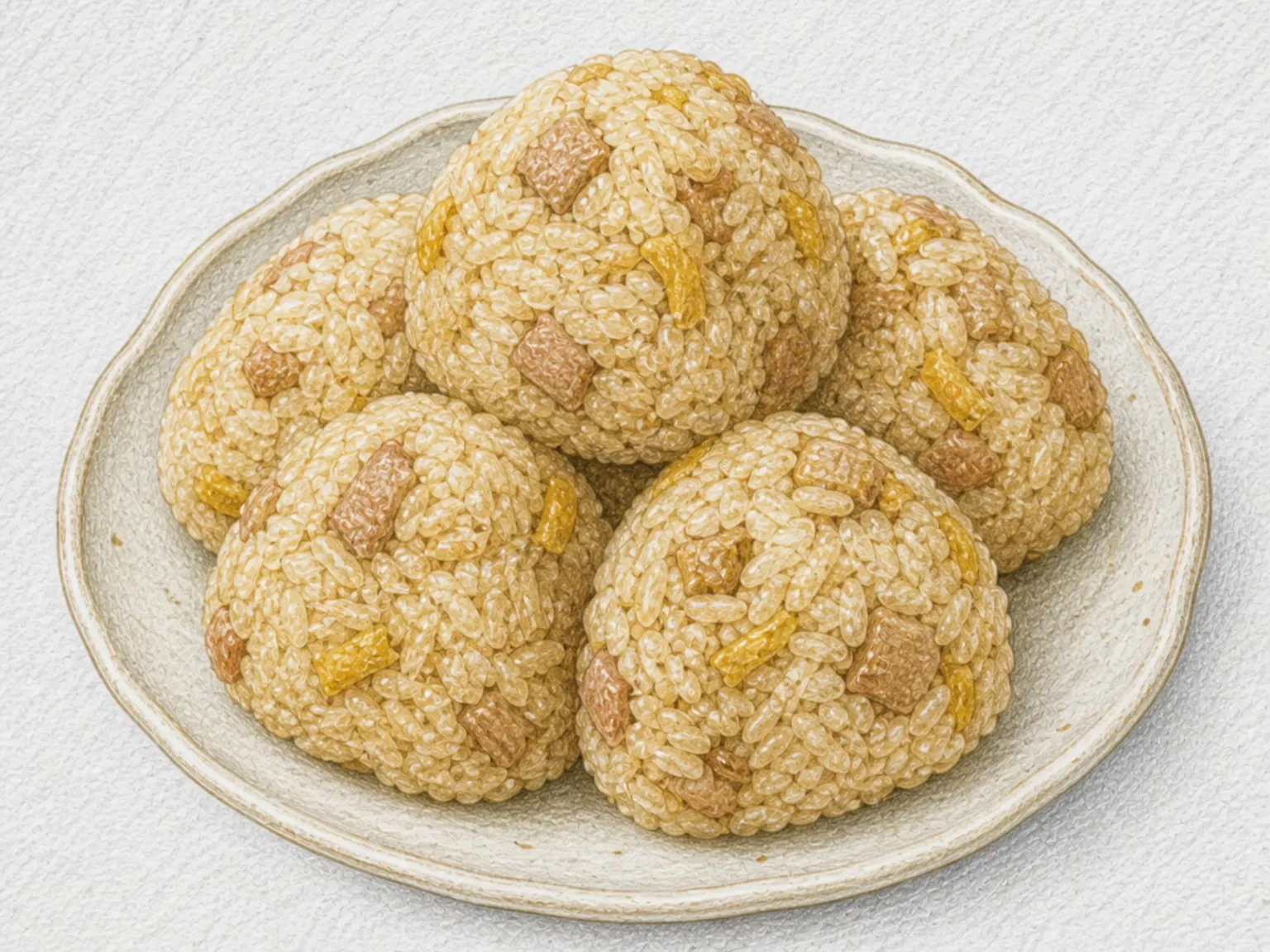
Karanamasu (Sardine and Okara Vinegar Salad)
Salads Medium

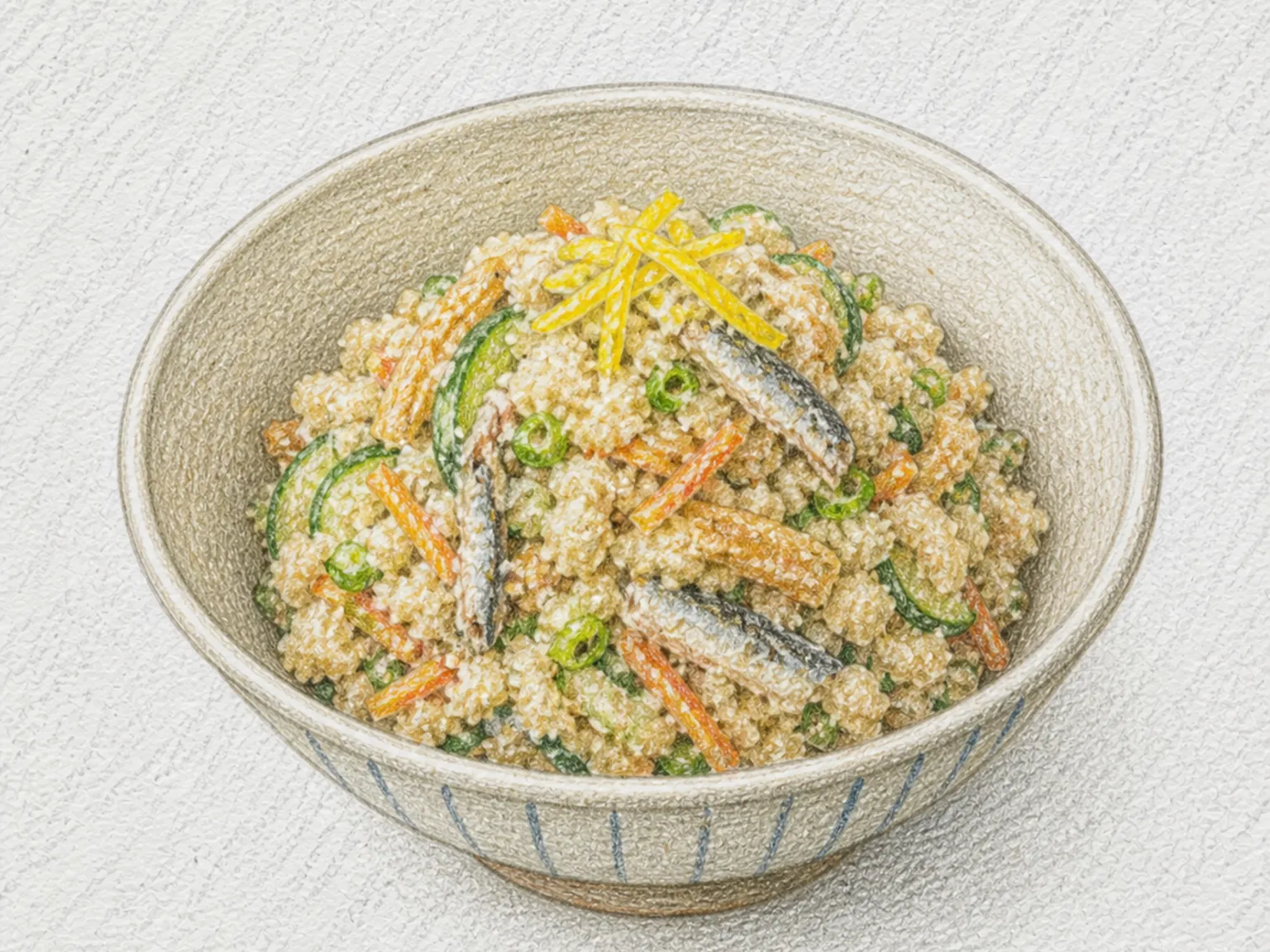
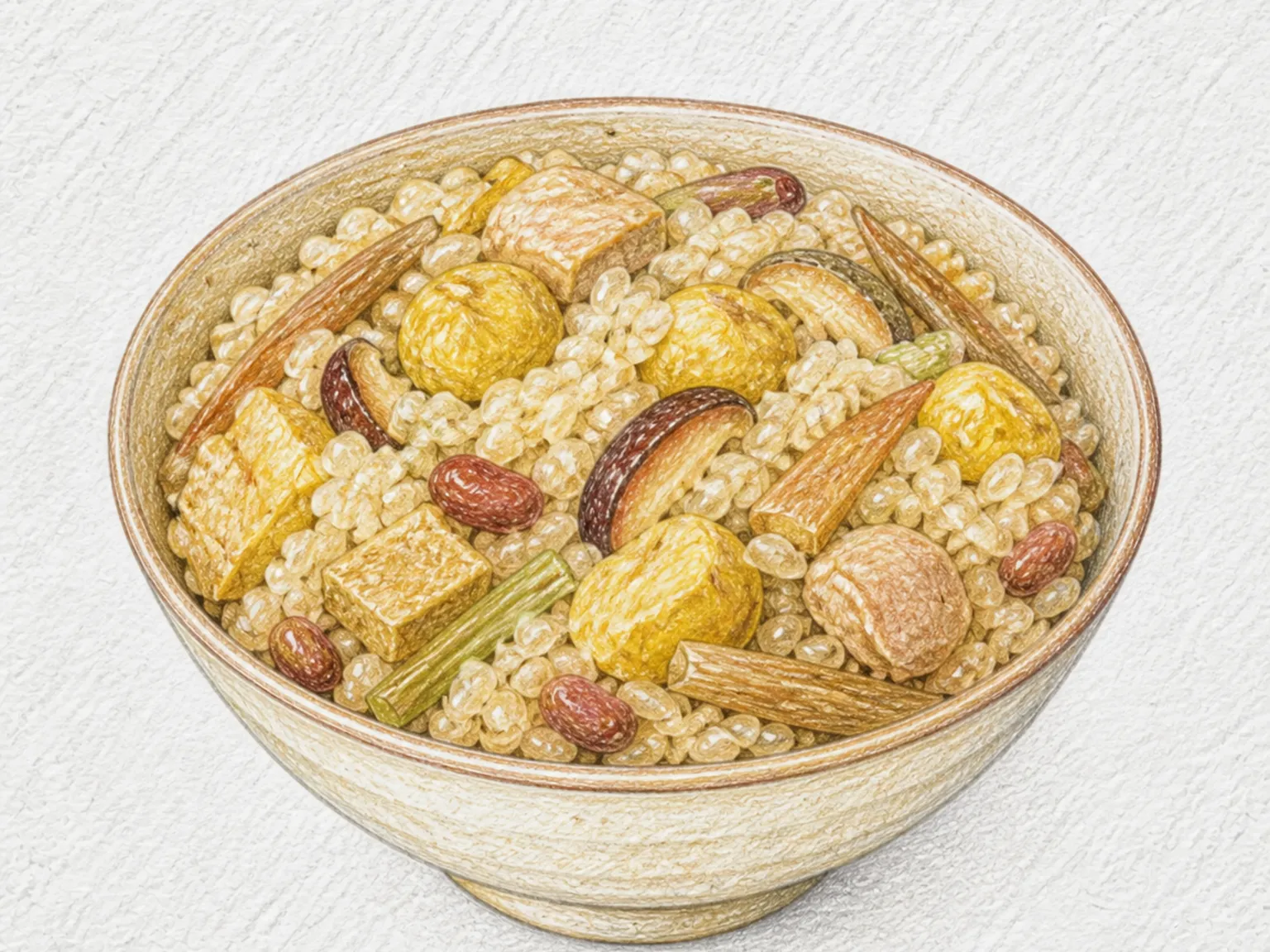
Karanamasu (Sardine and Okara Vinegar Salad)

Okara (soy pulp) is dry-toasted until crumbly, then mixed with vinegar-cured sardine, salted cucumber and carrot, and sweet simmered fried tofu, all held together by a thick peanut and miso dressing. The dish comes from the Boso coast of Chiba, and each portion is squeezed by hand into a small rice-bale shape. Store-bought okara added straight from the pack carries too much water and turns the mix soggy, which is why it is toasted first. The salted vegetables and the vinegar-rinsed sardine also need to be well drained, or the shaped bales slump. Toasty okara, salty fish, sweet vinegared miso and yuzu peel land in a single bite.

🥗 Lighter Meals
Prep 30min Cook 15min 4 servings
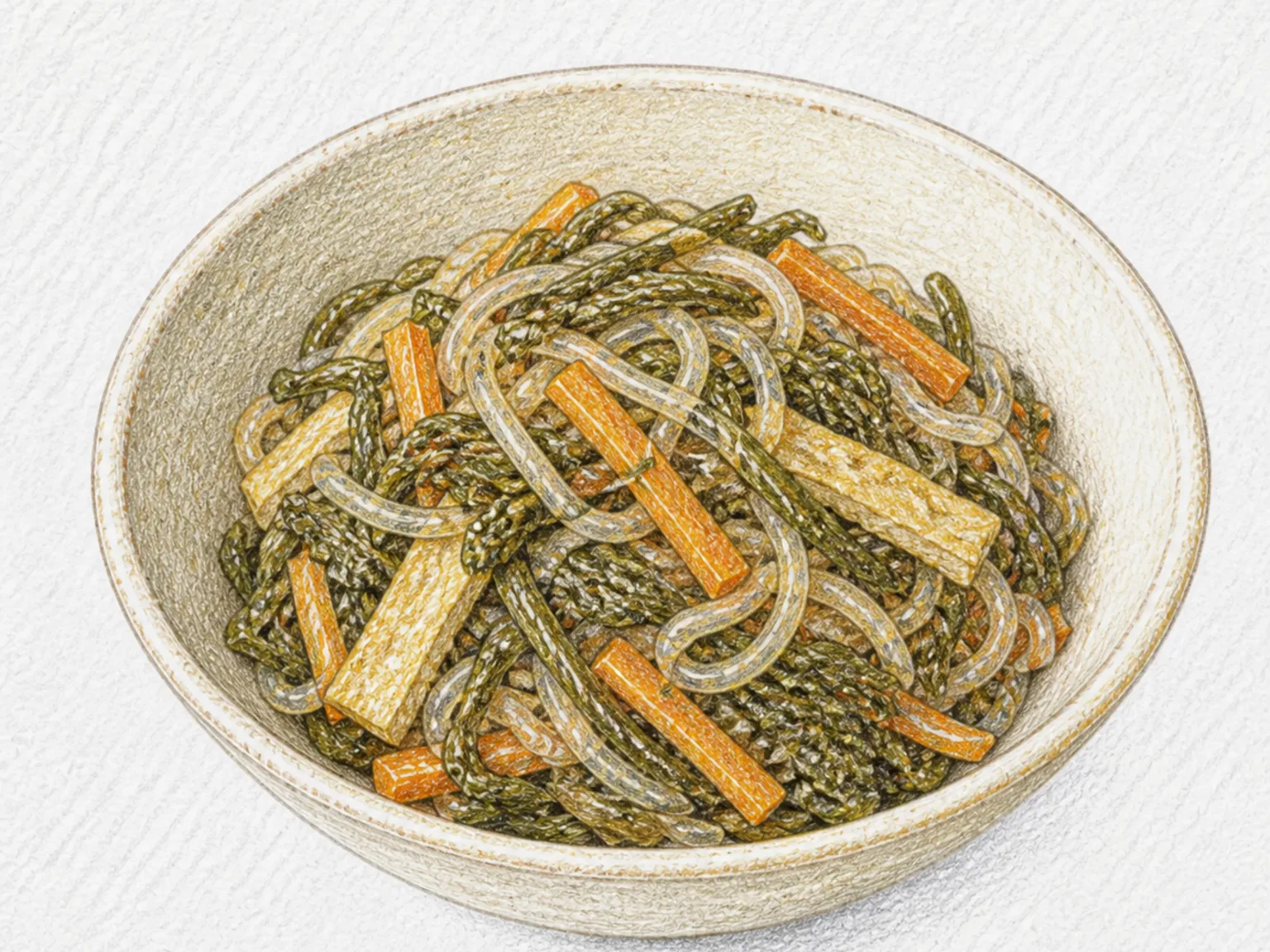
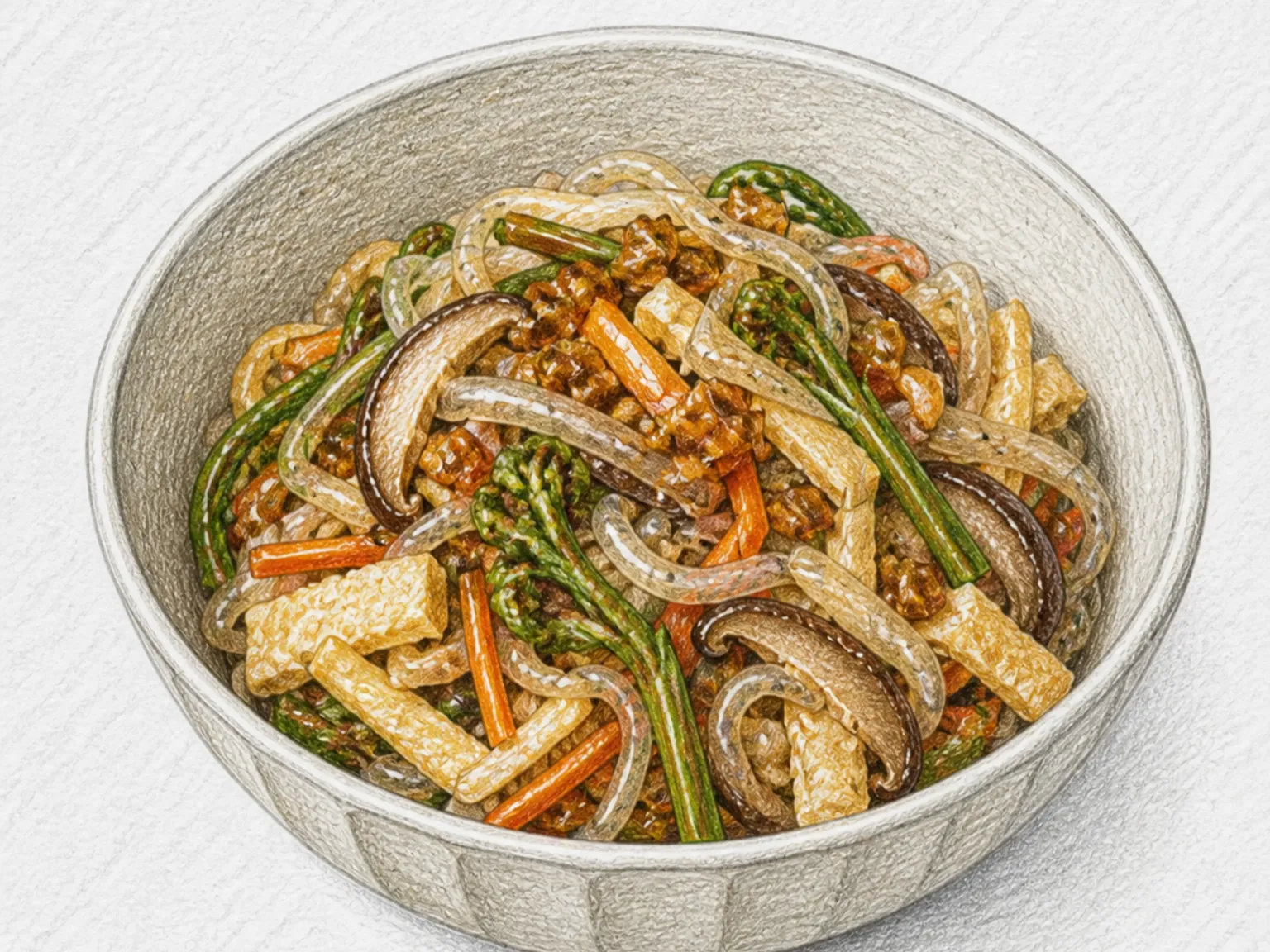
Hyoboshi no Nimono (Simmered Dried Purslane)
Asian Medium

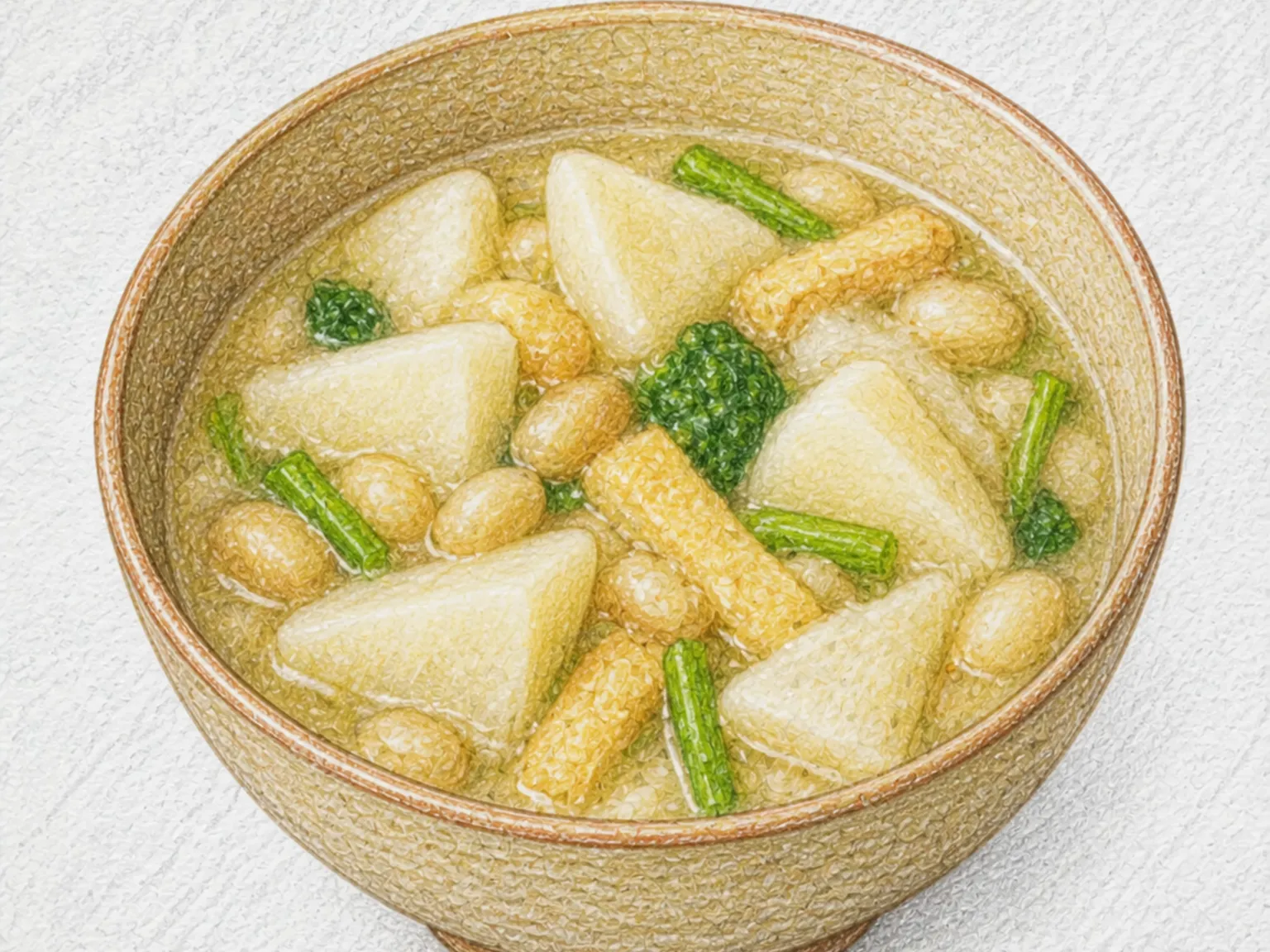
Hyoboshi no Nimono (Simmered Dried Purslane)

Purslane is blanched and dried in summer, then soaked in winter and stir-fried with shirataki, carrot and fried tofu before simmering in soy-based seasoning. In the snowy Murayama and Okitama areas of Yamagata, wild greens and vegetables were dried this way to eat through the winter. The soaked stems are soft but still have a little give when you bite. The purslane here is commercially made hyoboshi sold for eating, not something picked from a field.

Prep 35min Cook 35min 5 servings
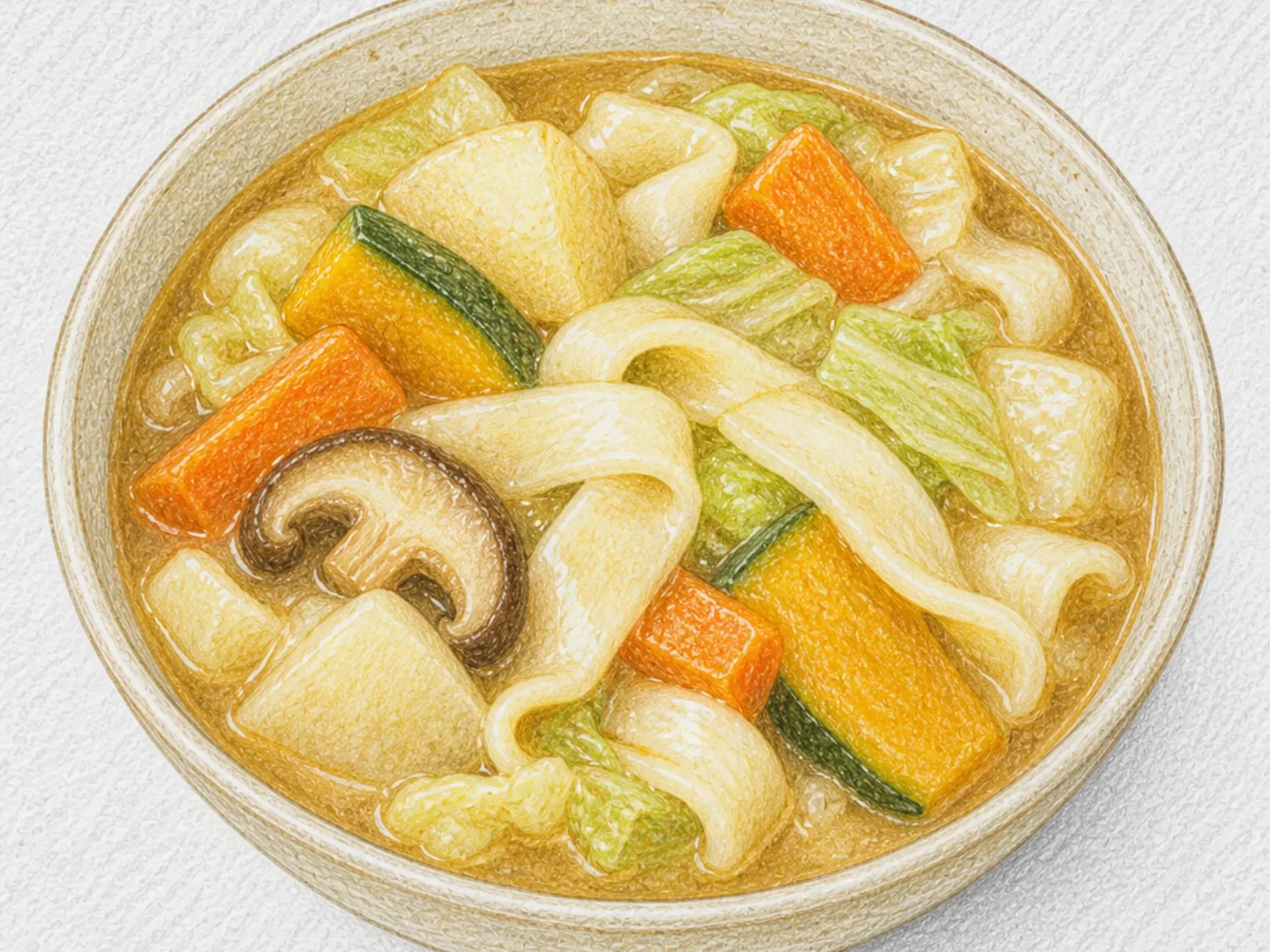
Houtou Pumpkin Miso Noodles
Noodles Medium

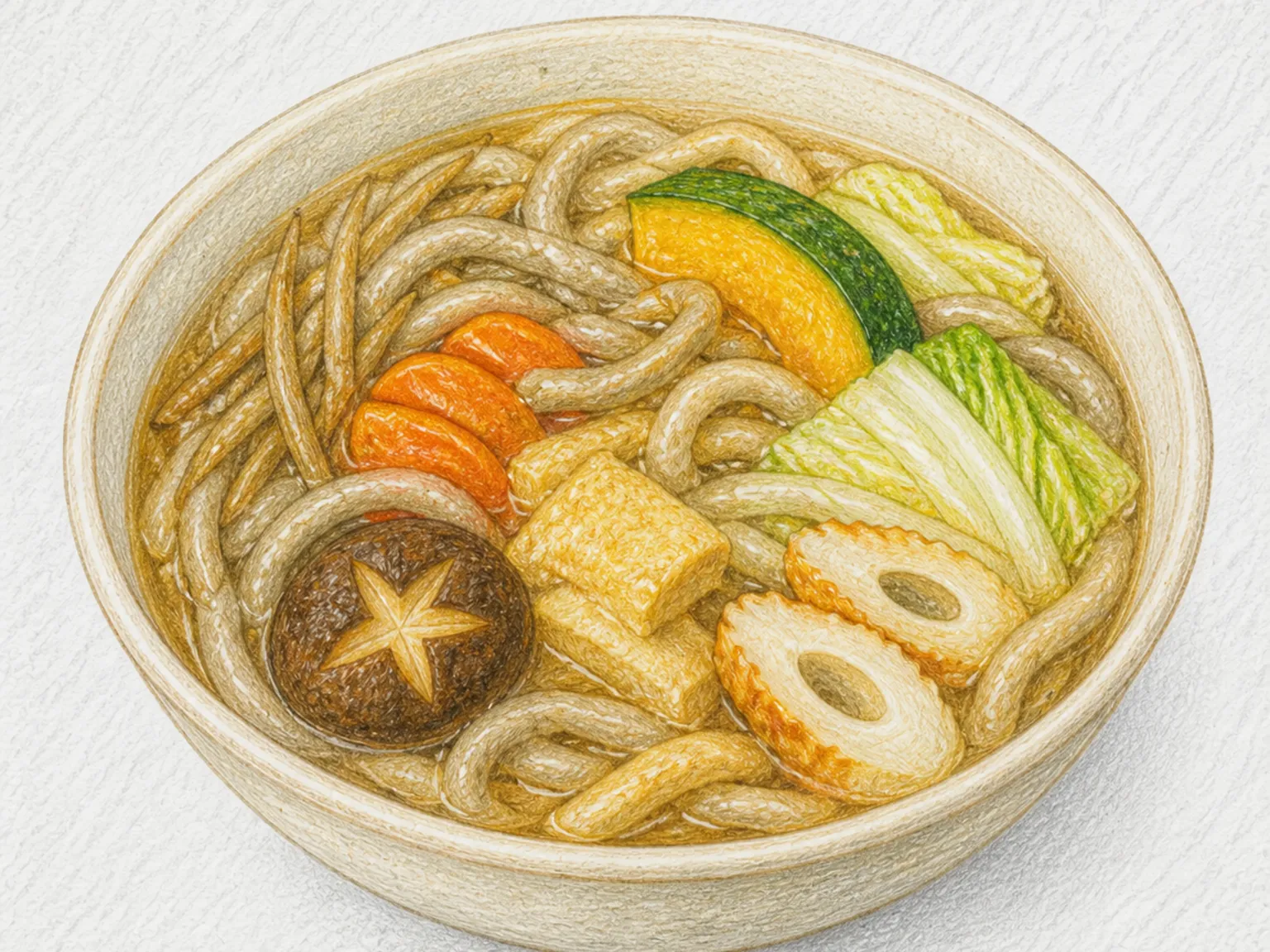
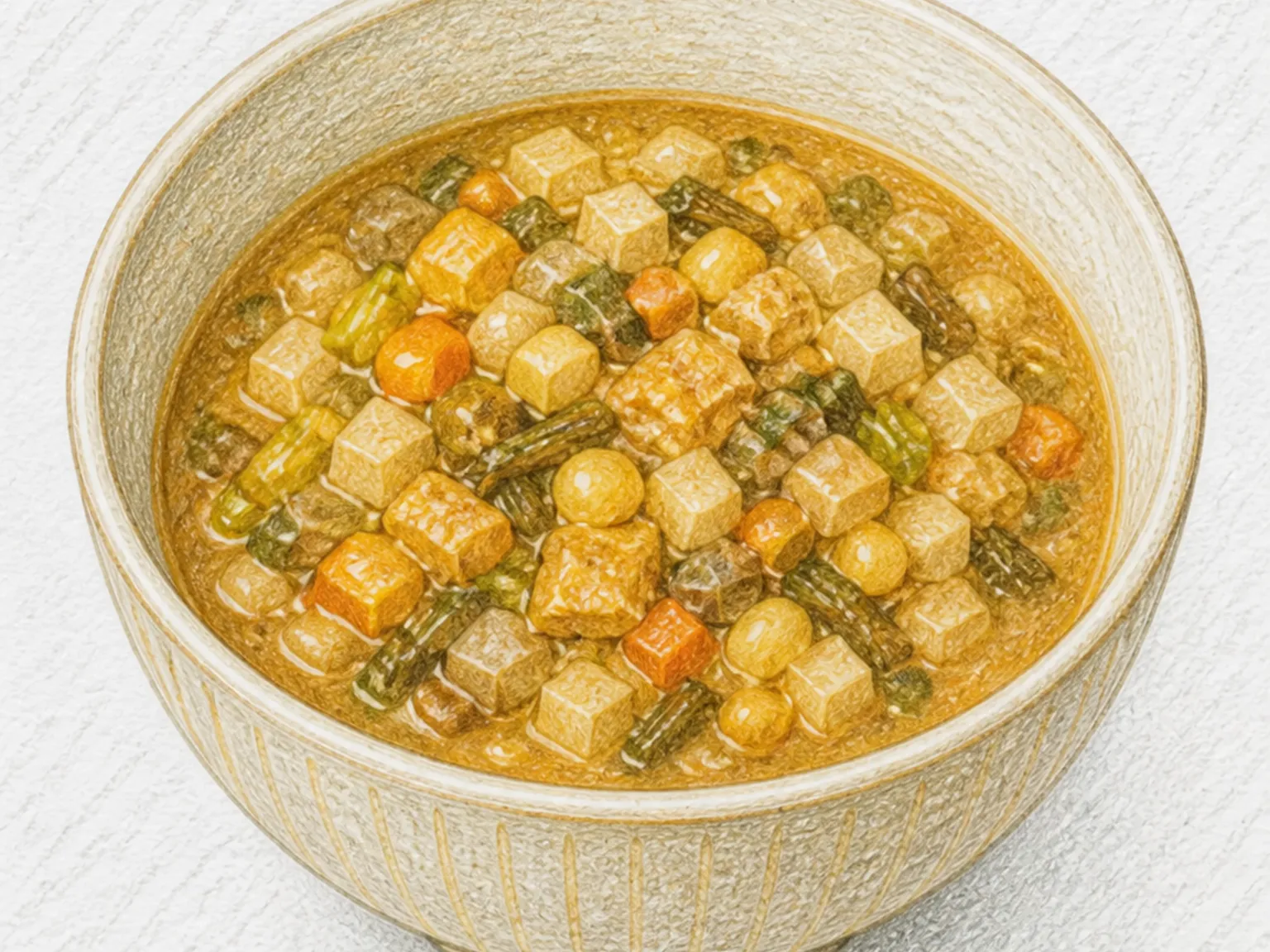
Houtou Pumpkin Miso Noodles

Wide flour noodles from Yamanashi simmer straight in miso broth with kabocha, potato, daikon, and napa cabbage, leaving the soup thick and slow to cool. In mountain areas poorly suited to rice, houtou long served as a staple, and its lasting warmth means it is eaten most often in winter. Unlike udon, the dough has no salt and the floured strips are never boiled on their own, which leaves their starch to thicken the pot.

Prep 50min Cook 35min 5 servings
Narae (Seven-Ingredient Vinegar Salad)
Salads Medium

Narae (Seven-Ingredient Vinegar Salad)

Daikon, carrot, lotus root, shiitake, fried tofu, burdock and koya-dofu (freeze-dried tofu) are cooked in three separate batches before meeting one sweet rice-vinegar dressing. Each group keeps its own texture: crunchy lotus root and burdock, tender daikon, and koya-dofu that holds stock like a sponge. Spreading the cooked pieces in a sieve until they stop dripping keeps the vinegar dressing from turning thin. The simmered koya-dofu cools in the sieve on its own, untouched: pressing it while hot would break it and squeeze out the stock it absorbed. White sesame and fine threads of yuzu peel are scattered on top, adding toastiness and a citrus lift.

🥗 Lighter Meals
Prep 35min Cook 25min 4 servings
Hiruzen Okowa
Rice Hard

Hiruzen Okowa

Barley grains and chestnuts dried for a day give chew to this steamed sticky rice, which also carries chicken, burdock, fuki, shiitake, and fried tofu glossed with soy seasoning. The dish came to the Hiruzen area of Maniwa in Okayama from Daisen okowa in Tottori, and barley entered the mix around 1972 through a local staple-food improvement campaign. Families served it at New Year, seasonal celebrations, and festivals. The liquid left from simmering the filling is kept and sprinkled over the grains partway through steaming.

Prep 510min Cook 75min 4 servings
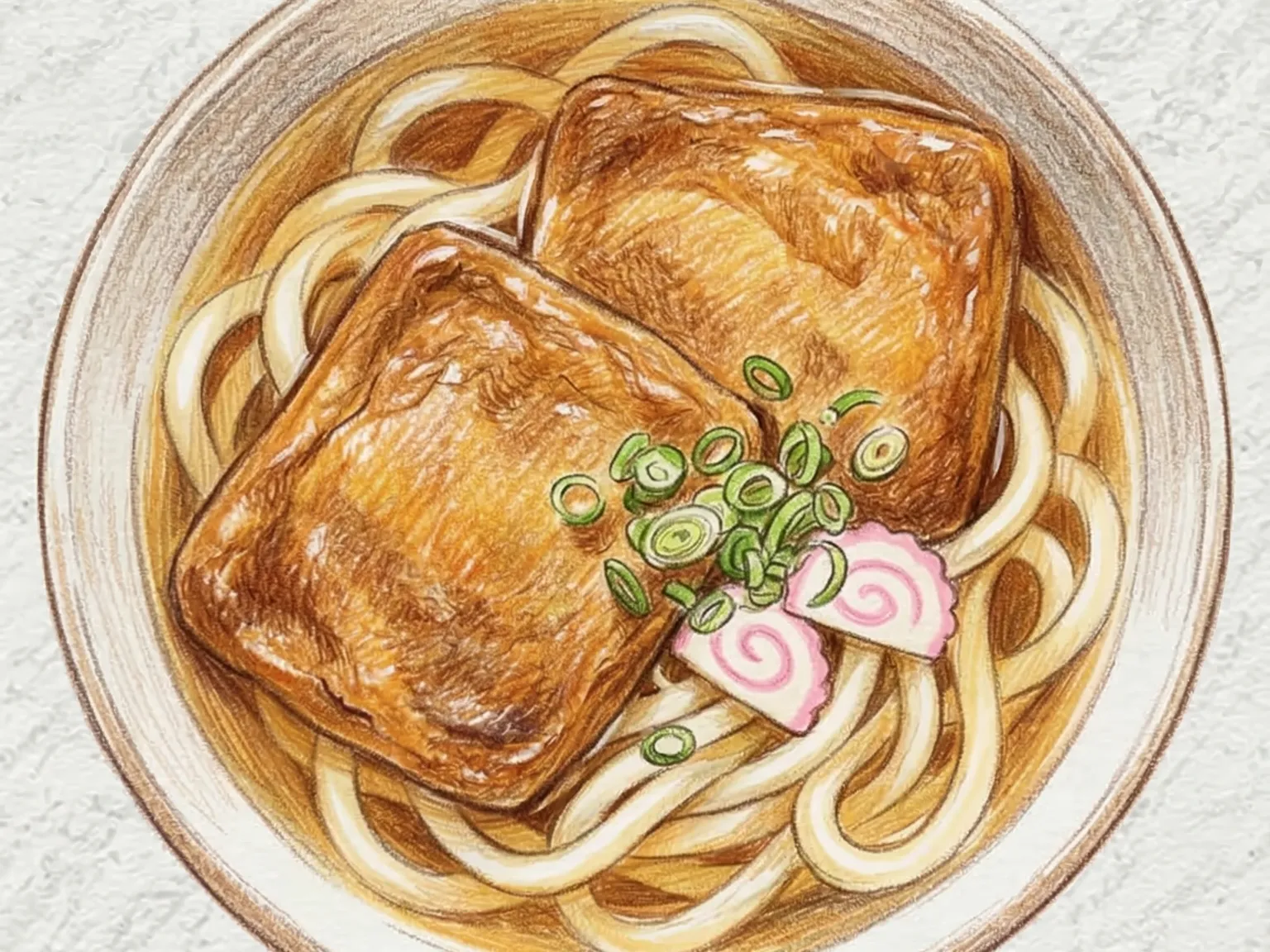
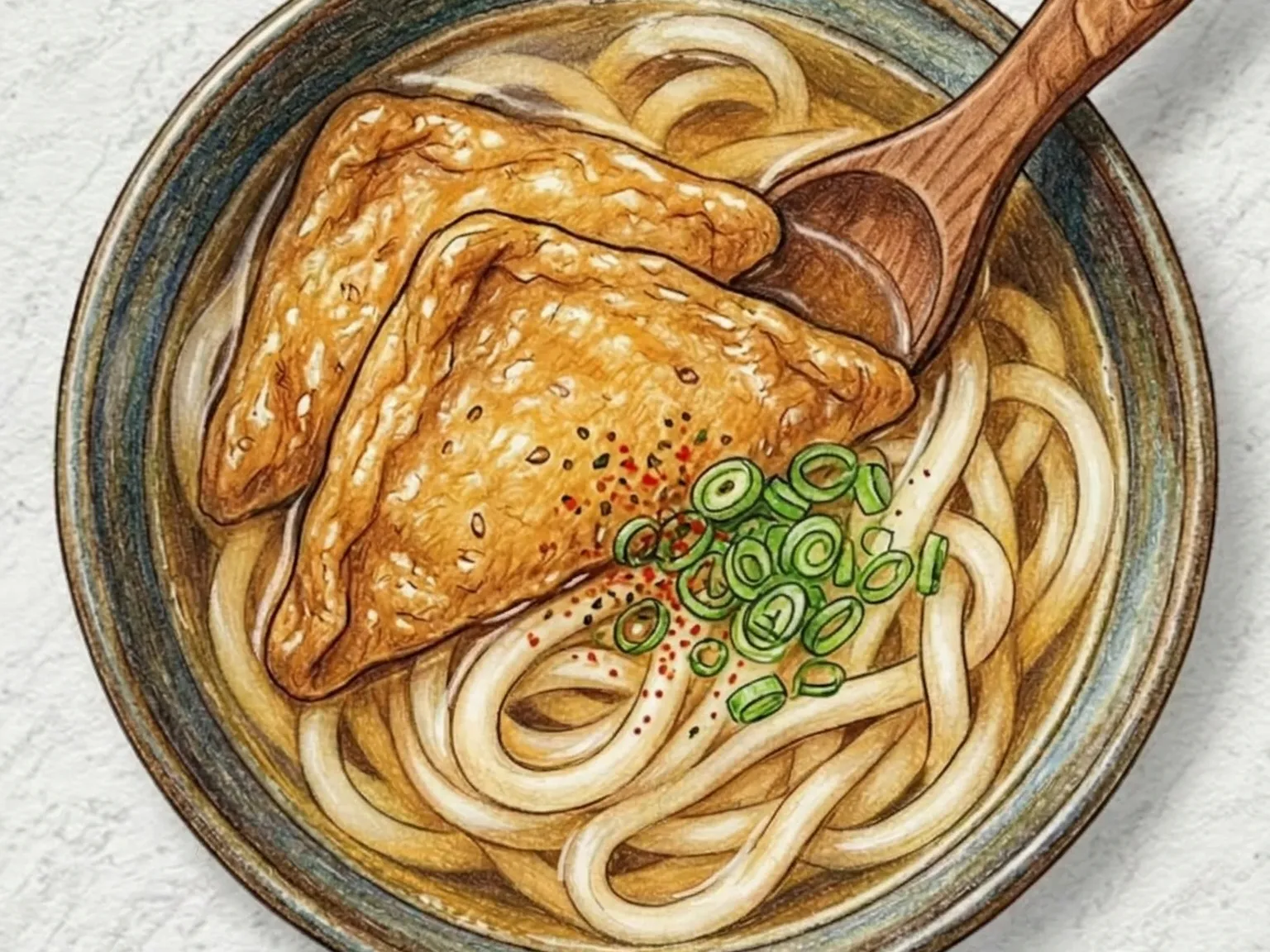
Udon with Seasoned Fried Tofu
Noodles Easy

Udon with Seasoned Fried Tofu

Sweet-savory simmered tofu pockets sit on a clear dashi broth and slowly release their syrup, and the soup grows a little sweeter as you eat. The broth starts out lightly seasoned to leave room for that sweetness and should not taste salty before the tofu goes on. Simmer the tofu until a little liquid remains and it stays moist, and making it a day ahead lets the flavor sink in further. Scallions and shichimi pepper add fragrance and a touch of heat.

Prep 12min Cook 18min 2 servings
Osaka Kitsune Udon (Thick Noodles with Sweet Fried Tofu in Dashi)
Noodles Easy

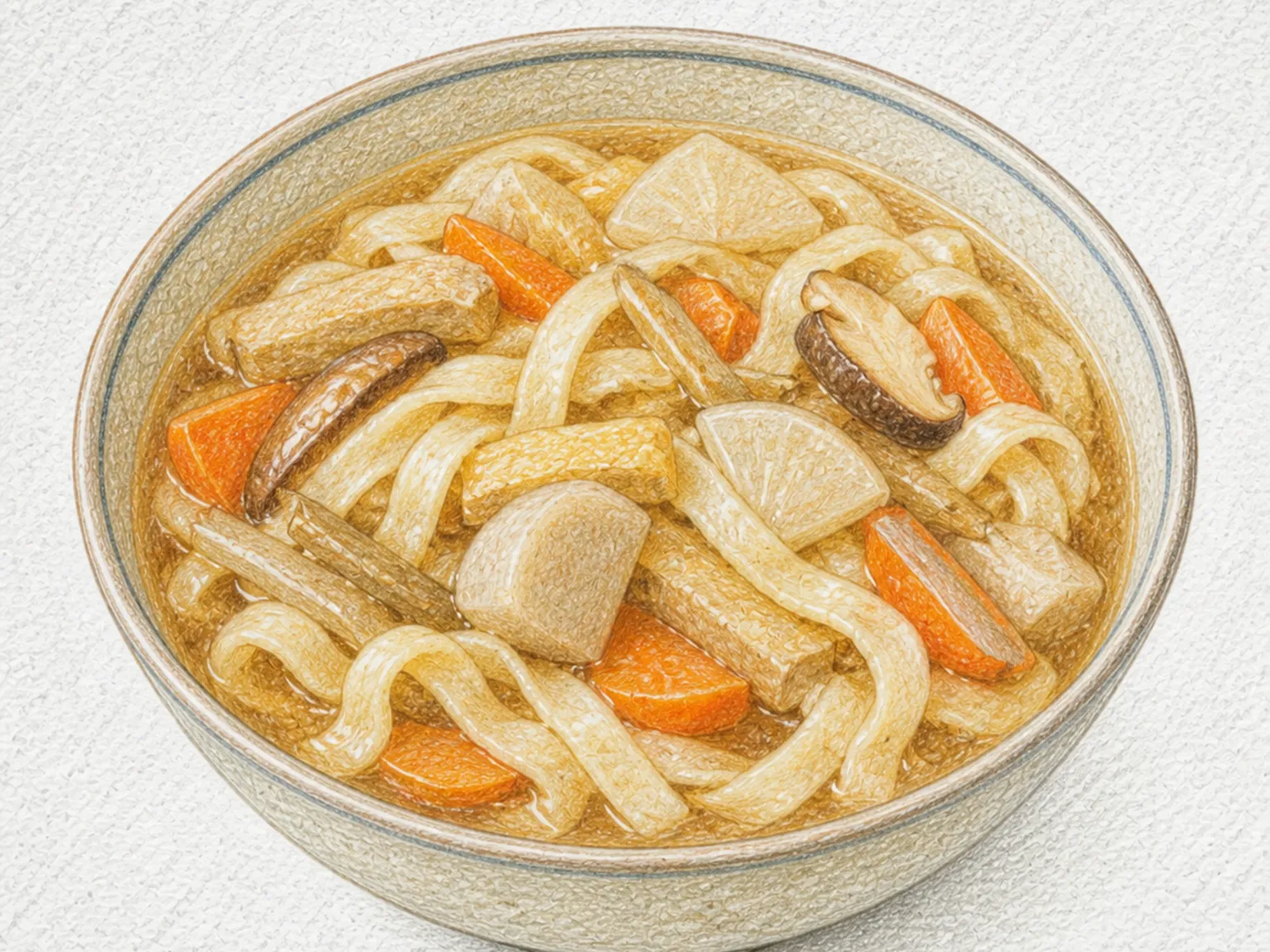
Osaka Kitsune Udon (Thick Noodles with Sweet Fried Tofu in Dashi)

A sheet of sweet, soy-simmered fried tofu sits on top of the bowl, and every bite squeezes its braising liquid out into the broth. That broth is a clear dashi made from kombu and bonito flakes, pale in color but full in flavor, in the Kansai style associated with Osaka. Reducing the tofu until its simmering liquid is nearly gone puts the sweetness inside the tofu rather than leaving it in the pot. It tastes best once it has soaked in the hot soup for a moment and gone soft. In Osaka this is everyday food, eaten as an early breakfast as readily as at lunch.

Prep 10min Cook 20min 2 servings
Niai (Sweet-Sour Simmered Root Vegetables)
Asian Medium

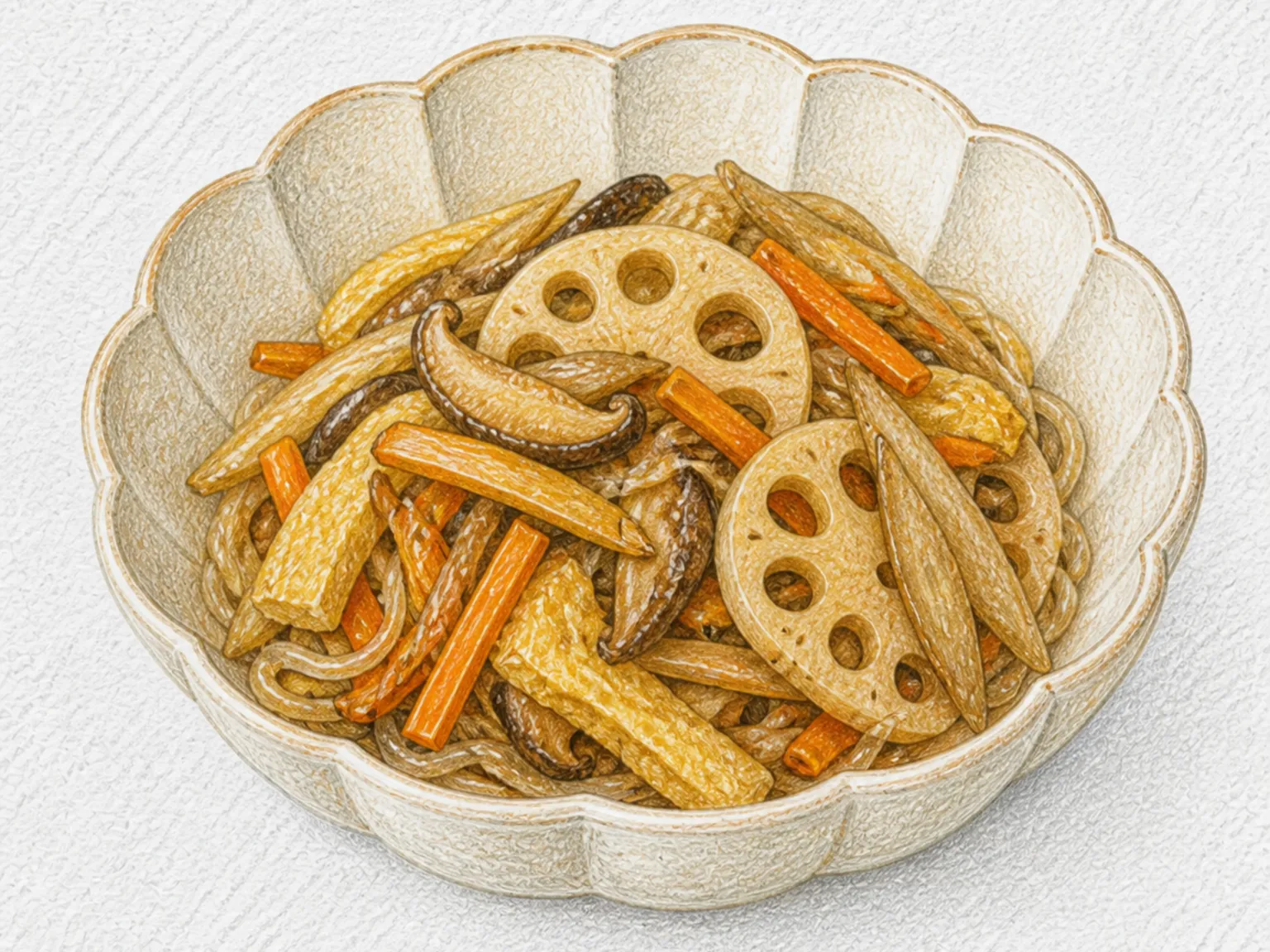
Niai (Sweet-Sour Simmered Root Vegetables)

Vinegar is added only at the very end, so a sweet soy simmer of burdock, carrot, lotus root, shiitake, shirataki, and fried tofu picks up a bright sour note while the lotus root keeps some crunch. It comes from around Mito in Ibaraki, and one theory traces the name to nite aeru, to simmer and then dress. Families made big batches for New Year and ceremonies and ate it the next day, and it still tastes best after a night in the refrigerator.

Prep 35min Cook 35min 4 servings
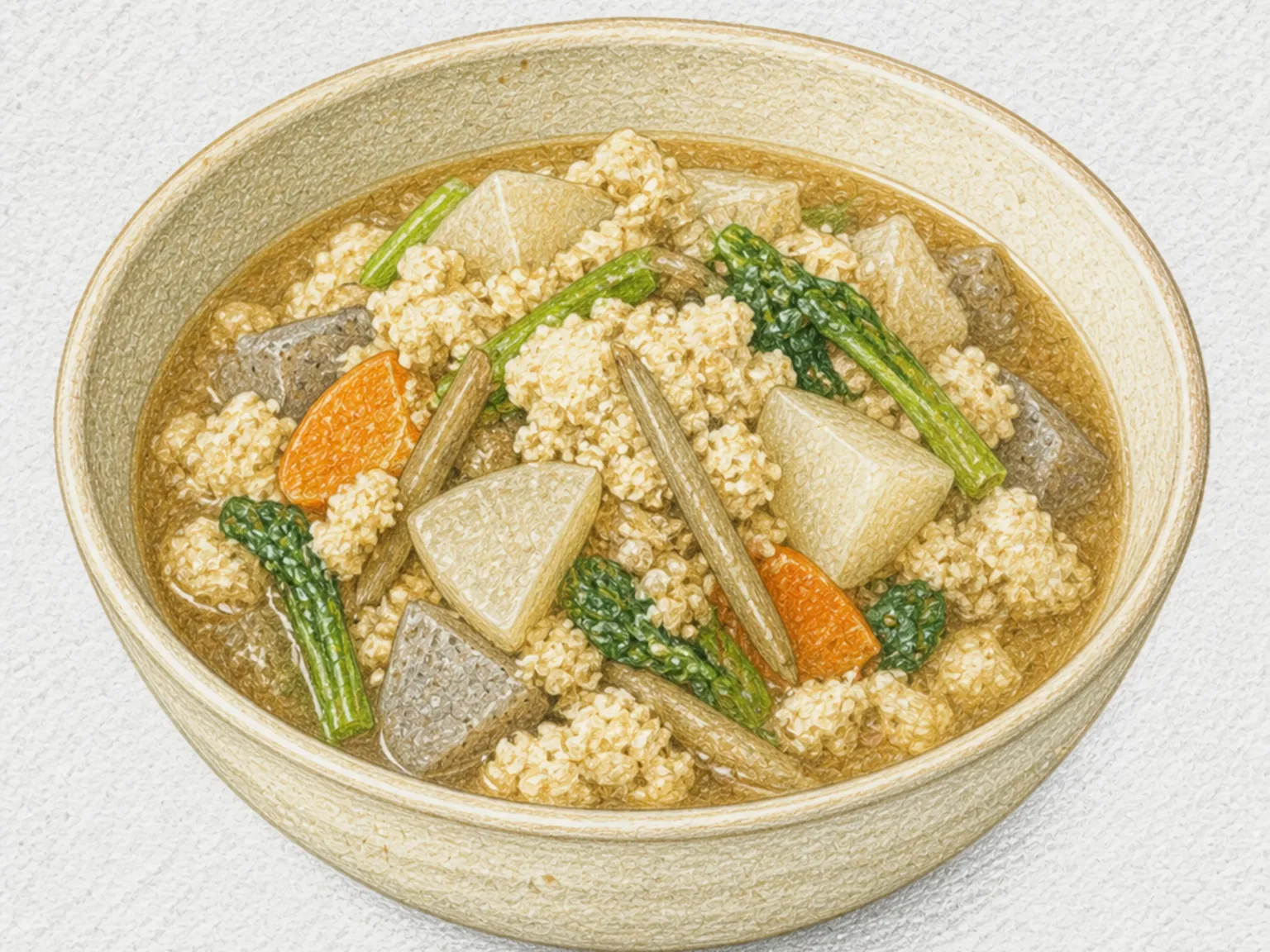
Nimiso Red Miso Vegetable Stew
Asian Medium

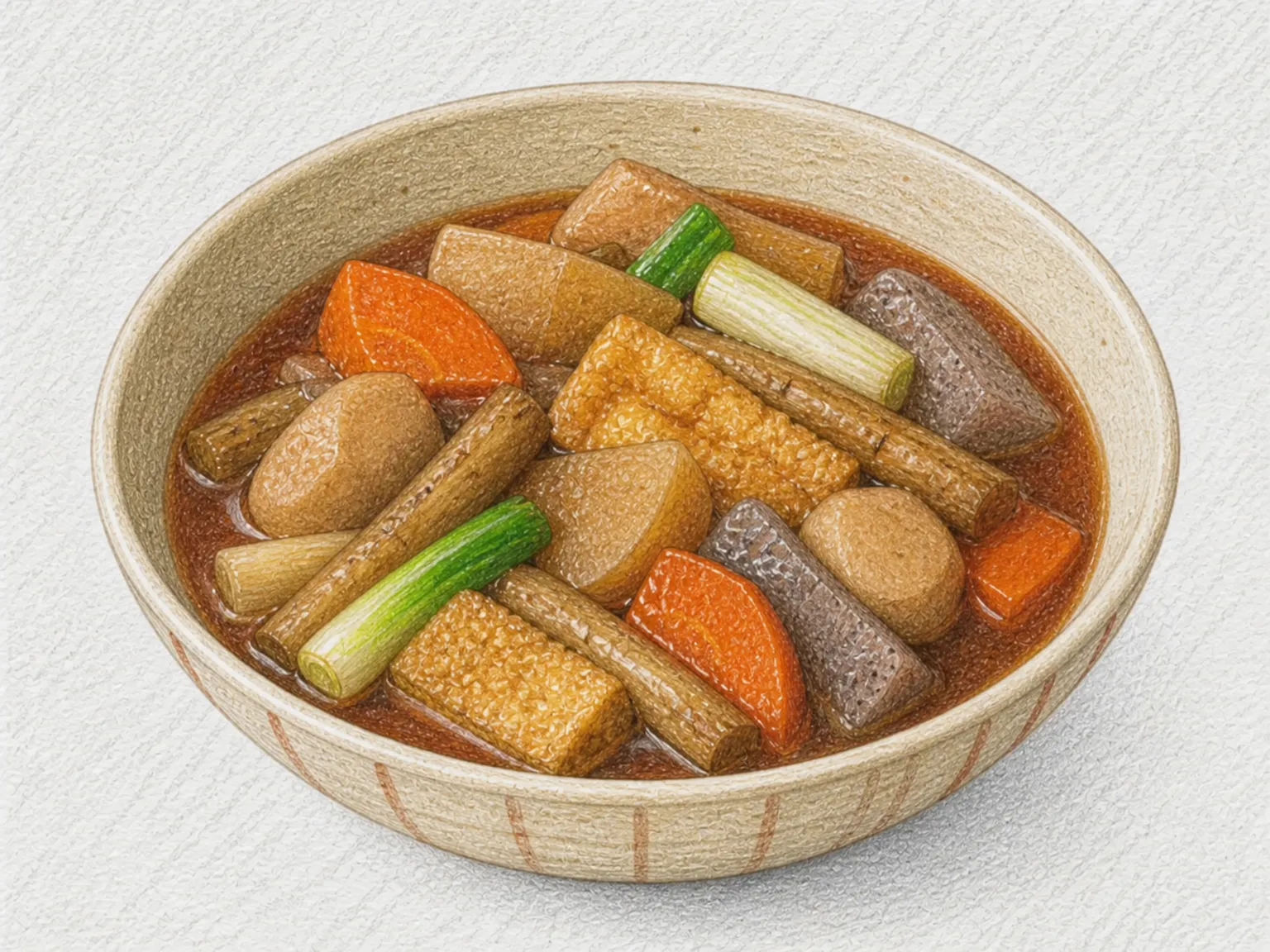
Nimiso Red Miso Vegetable Stew

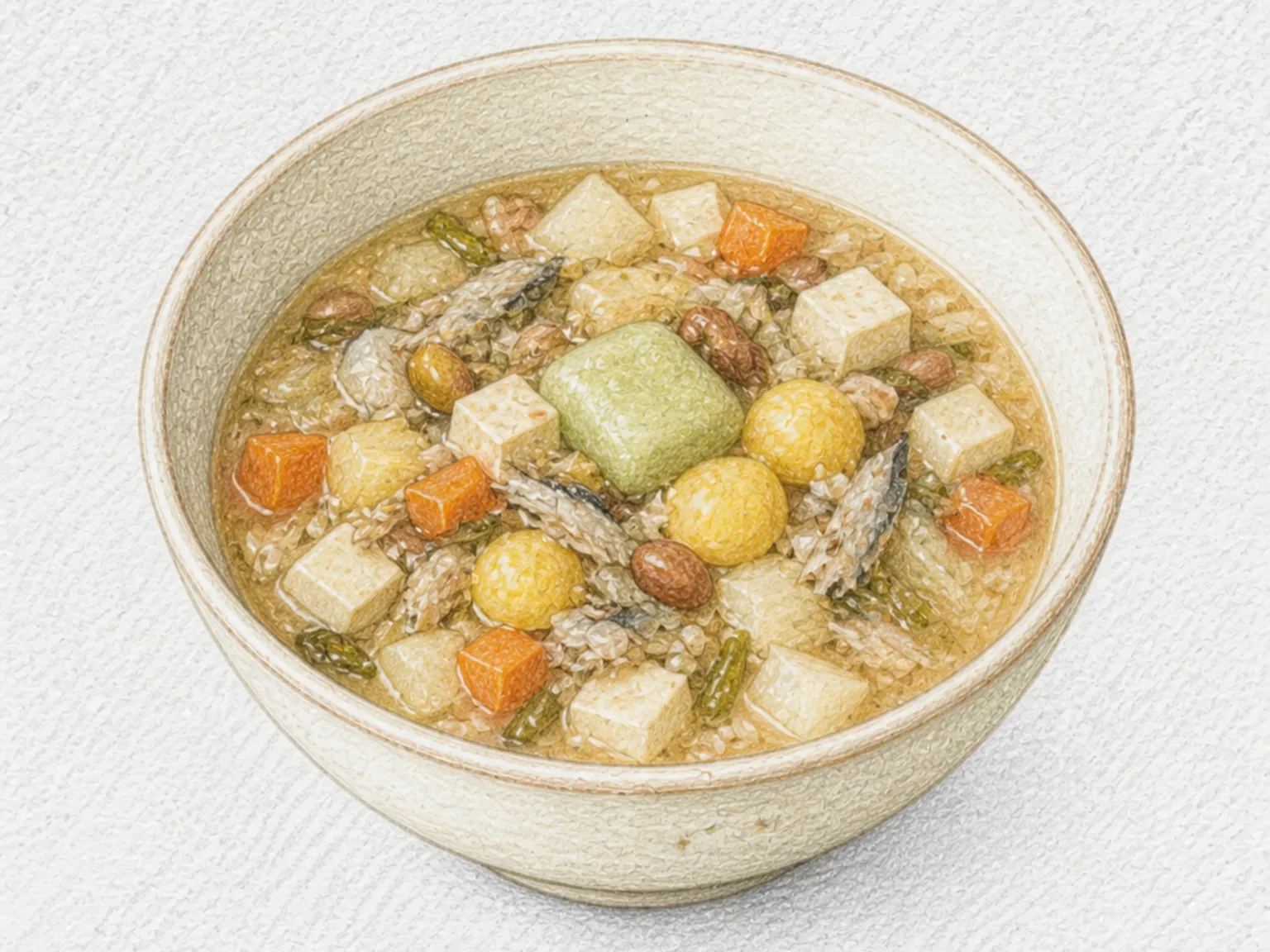
Red soybean miso, aged from a soybean koji, gives this Aichi stew a dark broth with deep savoriness, a little acidity, and a faint astringency. Also called misoni, it grew out of the soybean miso tradition best known through Hatcho miso. Every household loads the pot with daikon, carrot, burdock, taro, konnyaku, and fried tofu, but some keep plenty of broth and eat it like a hot pot while others cook it down to a thicker simmer.

Prep 30min Cook 45min 4 servings
Okuzukake (Thickened Vegetable and Umen Soup)
Noodles Medium

Okuzukake (Thickened Vegetable and Umen Soup)

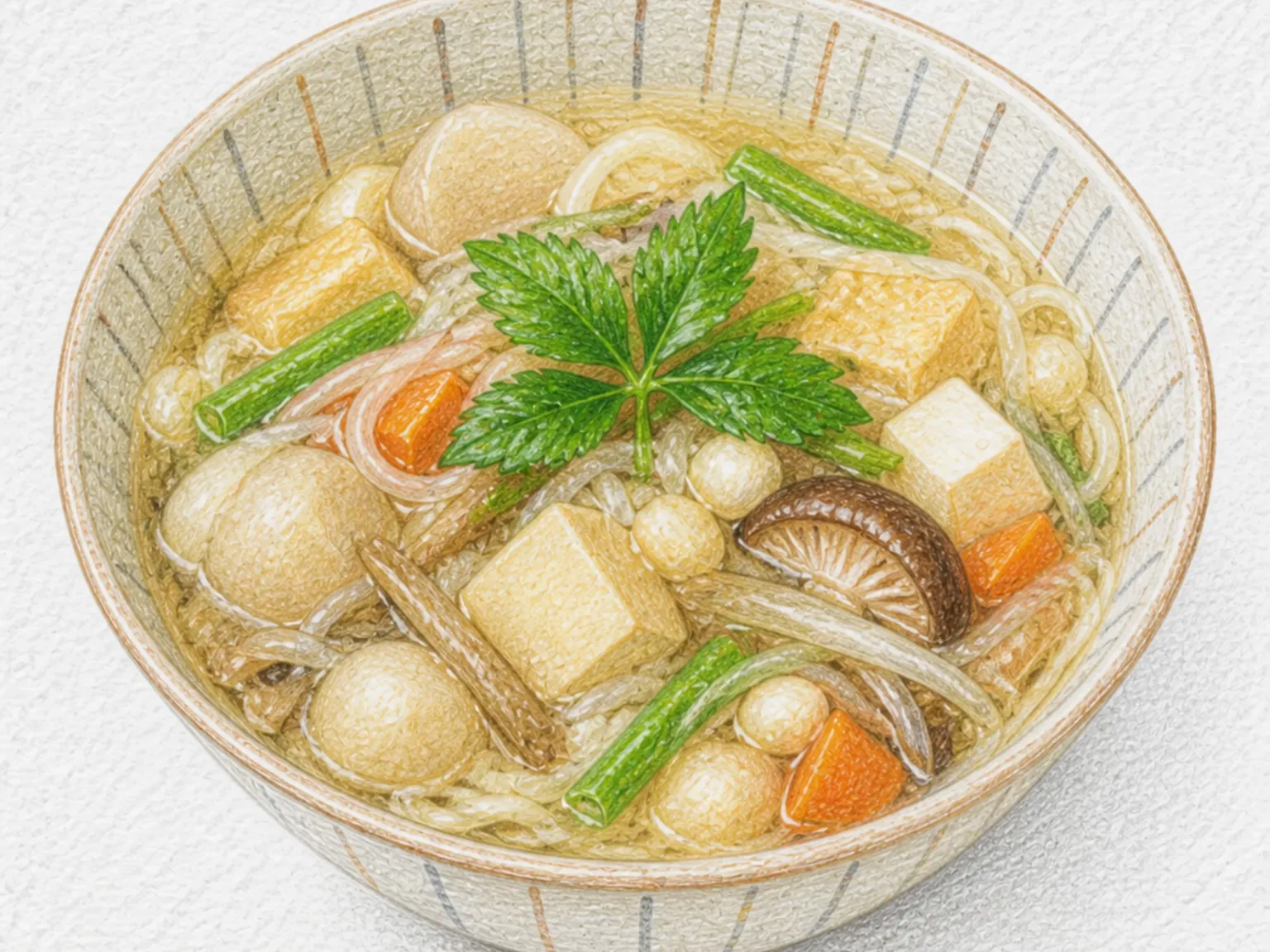
Soaking water from dried shiitake, with no meat or bonito, forms the broth for this Japanese vegetable soup, and potato starch thickens it just enough to coat a spoon. In southern Miyagi it is a Buddhist meatless dish served around the spring and autumn equinoxes, at Obon, and at memorial gatherings. That light body holds taro, burdock, carrot, tofu, and fried tofu in suspension, letting each spoonful bring up both broth and filling. The umen noodles are boiled in a separate pot, since cooking them in the soup would release enough starch to cloud and weigh it down. Shiraishi umen, shirataki, and small wheat gluten puffs (mame-fu) make it something between a soup and a noodle dish, and a scattering of mitsuba adds a fresh herbal note at the end.

Prep 30min Cook 25min 4 servings