Korean Stir-Fried Zucchini and Beef Brisket with Doenjang
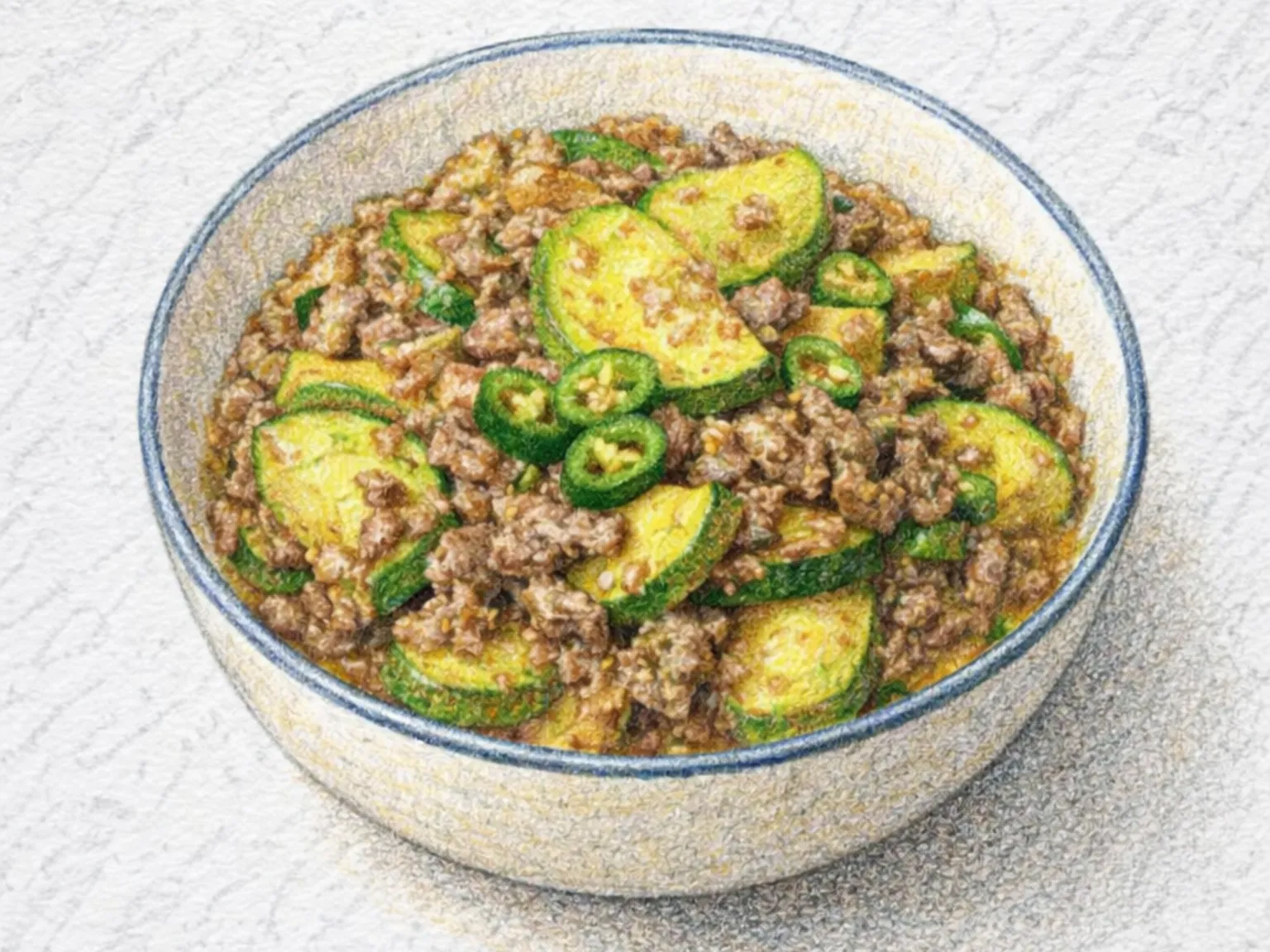
This dish pairs two everyday Korean ingredients - thinly sliced beef brisket and young zucchini - in a doenjang-based stir-fry that comes together in under fifteen minutes. Brisket goes into the hot pan first, rendering its fat into a cooking medium that carries the fermented paste's flavor into the vegetables. The doenjang and soup soy sauce create a funky, salty glaze that clings to each half-moon of zucchini as it softens but keeps a slight resistance at the center. Cheongyang chili sliced in at the end adds a sharp, clean heat that lifts the heaviness of the beef fat. A final drizzle of perilla oil off-heat gives an herbal finish. It is a weeknight banchan that packs enough protein to double as a main course over steamed rice.
Adjust Servings
Instructions
- 1
Slice zucchini into half-moons, onion into strips, and finely slice the chili.
- 2
Mix doenjang and soup soy sauce in a small bowl to make the seasoning paste.
- 3
Stir-fry brisket in a hot pan over medium-high heat for 2 minutes to render fat.
- 4
Add garlic and onion for 1 minute, then add zucchini.
- 5
Add the paste and stir-fry 2 minutes, then add chili and cook 1 minute more.
- 6
Turn off heat, drizzle perilla oil, toss briefly, and serve immediately.
As an Amazon Associate, we may earn from qualifying purchases.
Tips
Nutrition (per serving)
More Recipes

Korean Zucchini Shrimp Stir-fry
Hobak-saeu-bokkeum is a light Korean stir-fry of thinly sliced zucchini and shrimp seasoned simply with soy sauce, cooking wine, and garlic. The zucchini softens and releases natural sweetness as it cooks, while the shrimp stay plump with a quick sear. The dish relies on the clean flavors of its core ingredients rather than heavy seasoning, keeping it mild and grease-free. It comes together in minutes, making it a go-to side dish for weeknight dinners and packed lunches.

Korean Oi Dubu Bokkeum (Cucumber Tofu Stir-fry)
Oi-dubu-bokkeum stir-fries half-moon cucumber slices and cubed firm tofu with soup soy sauce, garlic, and a light touch of Korean chili flakes. The tofu is pan-fried to golden first to prevent crumbling, then set aside while garlic and onion build flavor in the same pan. Cucumber goes in for just 90 seconds - long enough to warm through but short enough to stay crisp and juicy. The tofu returns for a final toss with sesame oil, creating a dish defined by the contrast between cool, crunchy cucumber and warm, soft tofu under a clean soy-based seasoning.

Korean Tomato Dalgyal Bokkeum (Tomato Egg Stir-fry)
Tomato-dalgyal-bokkeum uses a two-stage cooking method: eggs are scrambled to about 70% doneness and set aside, then returned to the pan with seared tomatoes for a final quick toss. The tomatoes release a small amount of juice when cooked briefly with oyster sauce and sugar, and the partially set eggs absorb this liquid to stay soft and moist. Bright tomato acidity, mild egg richness, and oyster sauce umami layer together without any single flavor dominating. Sharing roots with Chinese tomato egg stir-fry (xihongshi chaodan), it crosses easily into Korean home cooking.

Korean Pork & Wild Chive Stir-fry
Dallae-dwaejigogi-bokkeum is a Korean springtime stir-fry of pork shoulder tossed in a gochujang and chili flake sauce, then topped generously with raw wild chives. The wild chives release a sharp, garlicky bite that cuts through the rich, spicy pork. Onions caramelize lightly during cooking, adding natural sweetness that rounds out the heat. The dish is cooked quickly over high heat to preserve the fresh aroma of the chives.

Korean Pan-fried Zucchini Jeon
Hobak-jeon is a Korean pan-fried zucchini pancake made by slicing Korean zucchini into even half-centimeter rounds, salting them for five minutes to draw out excess moisture, then dusting in flour, dipping in beaten egg, and frying over medium heat for two to three minutes per side. The salting step is essential-it removes water that would otherwise make the jeon soggy, and it simultaneously concentrates the zucchini's mild natural sweetness into a more pronounced flavor. The egg coating acts as a gentle heat buffer, keeping the interior soft and moist while the exterior develops a pale golden crust with a subtle nuttiness from the cooked egg. It is one of the most versatile banchan in Korean cooking, equally at home in a child's lunchbox, on an everyday dinner table alongside soup or stew, or stacked on a holiday platter.

Korean Beef & Shiitake Japchae
Japchae originated as a Joseon royal court dish of stir-fried vegetables - sweet potato noodles came later. This version pairs glass noodles with soy-marinated beef and sliced shiitake. Each component cooks separately: beef and mushrooms stir-fried with garlic, spinach blanched, carrots and onions sautéed. A final toss with sesame oil unifies everything. The noodles should be translucent and springy, carrying a sweet-salty glaze. A fixture on every Korean holiday table.