Korean Steamed Zucchini with Salted Shrimp
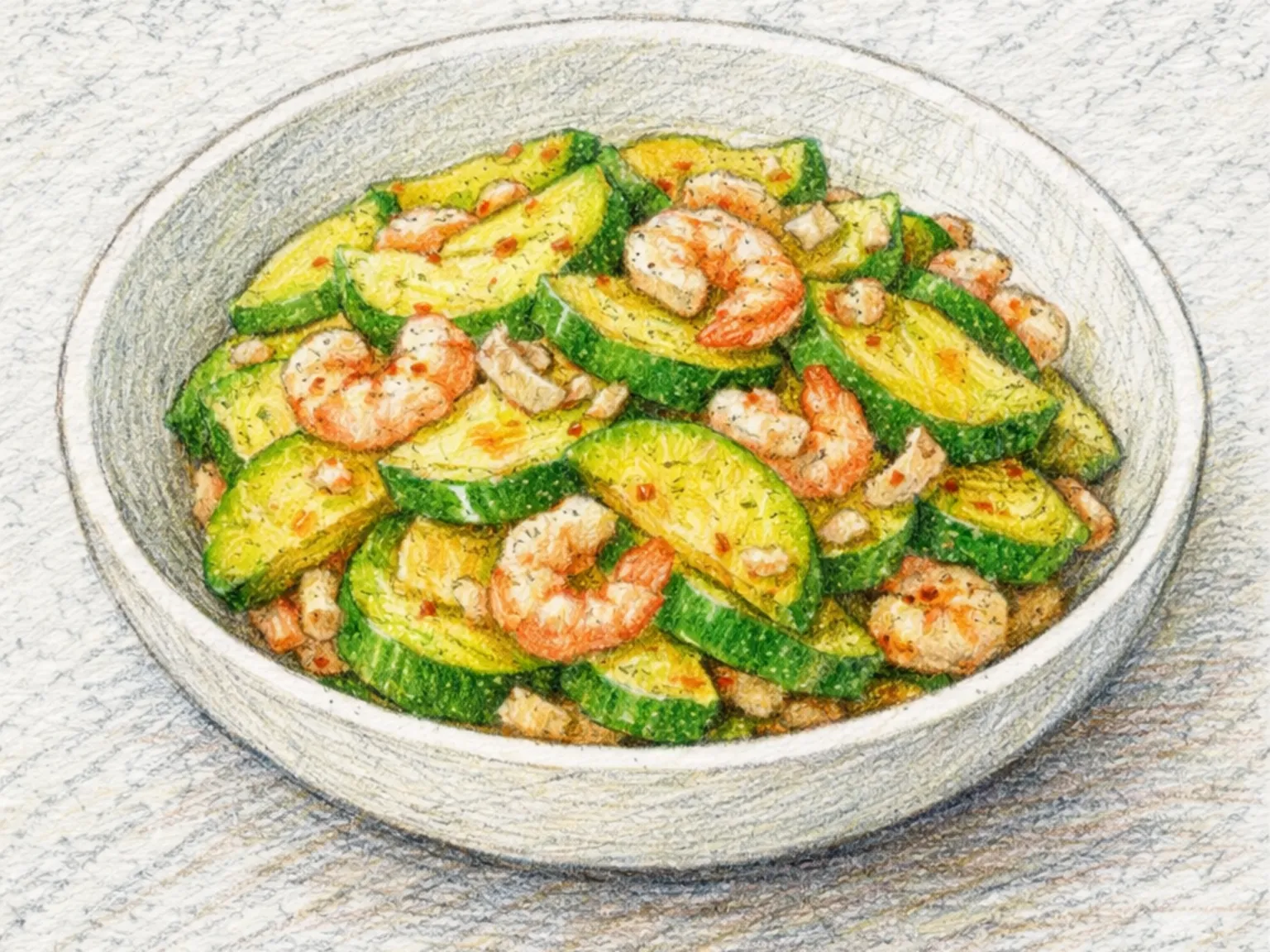
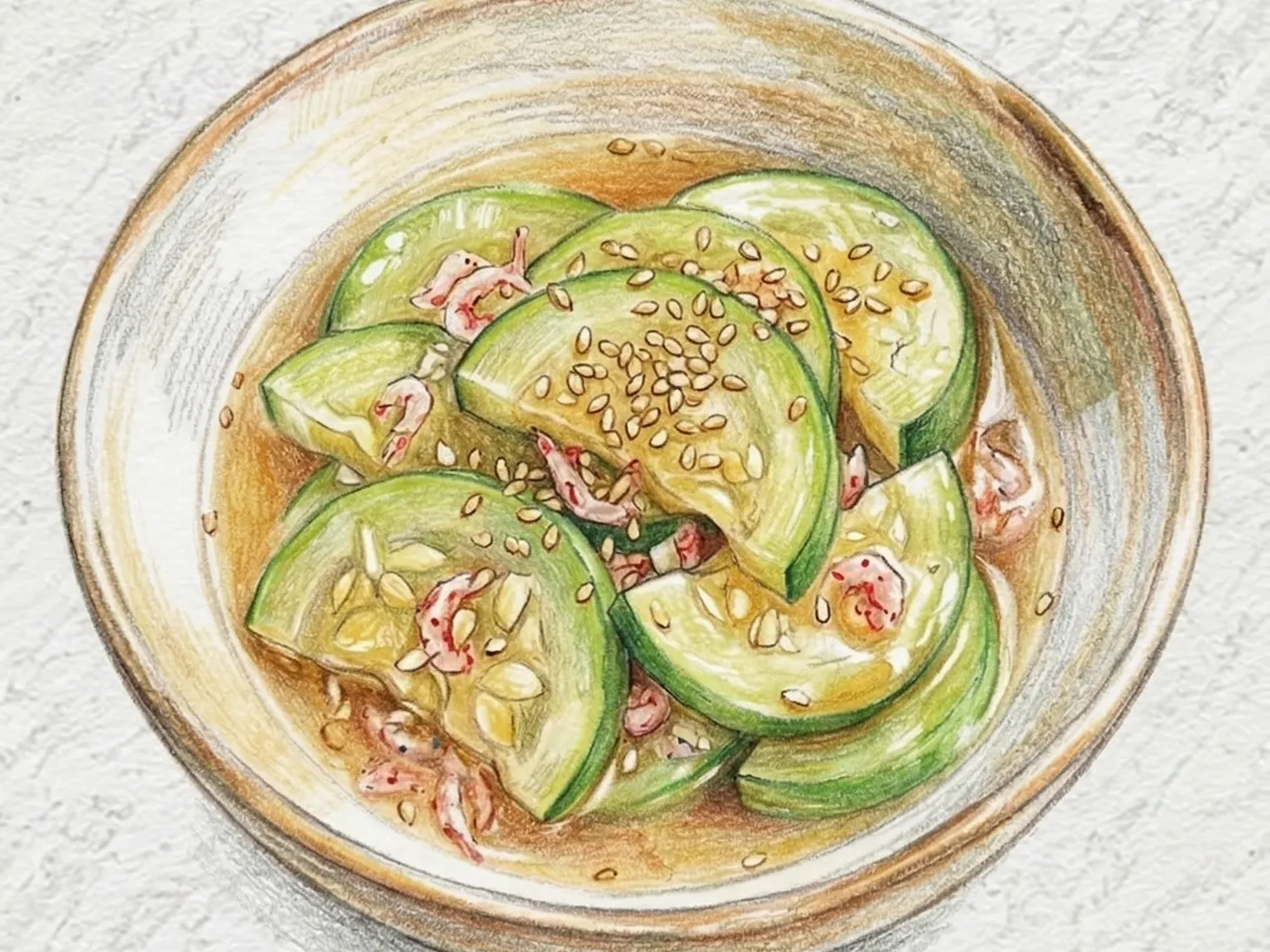
This gentle braise belongs to a family of Korean jjim dishes where vegetables are steam-cooked in minimal liquid seasoned with fermented ingredients. Salted shrimp - saeujeot - is the sole seasoning base, minced and dissolved into water with garlic to create a light broth. Half-moon slices of zucchini cook covered on medium-low heat, absorbing the shrimp's briny umami as they turn translucent. The technique produces something between steaming and braising: the zucchini stays moist and intact, never waterlogged. A finish of perilla oil and sesame seeds off-heat adds a nutty fragrance. This banchan traces to Korean countryside kitchens where salted shrimp was the primary seasoning before soy sauce became widely available. It pairs naturally with steamed rice and a stronger-flavored main dish.
Adjust Servings
Instructions
- 1
Slice zucchini into 0.7 cm half-moons and thinly slice onion.
- 2
Mince salted shrimp and mix with garlic and water to make the seasoning broth.
- 3
Arrange zucchini and onion in a pot, then pour in the seasoning broth evenly.
- 4
Cover and steam-braise over medium-low heat for 8 minutes, then stir gently once.
- 5
Add green onion and cook 3–4 more minutes until zucchini turns translucent.
- 6
Turn off heat, finish with perilla oil and sesame seeds, and serve immediately.
As an Amazon Associate, we may earn from qualifying purchases.
Tips
Nutrition (per serving)
More Recipes

Korean Steamed Thistle Greens with Perilla
Gondre deulkkae jjim is blanched thistle greens steamed with ground perilla seeds, perilla oil, and soup soy sauce. The greens are first seasoned with garlic and oil, then cooked covered so they absorb the liquid, and perilla powder is added late to build a thick, nutty broth without any chalky taste. The soft, fibrous thistle greens hold the seasoning well, delivering concentrated flavor in every bite. Finished with sliced green onion and an extra drizzle of perilla oil, this is a simple but deeply satisfying side dish often served over a bowl of rice.

Korean Steamed Eggplant with Seasoning
Gaji-jjim is a simple Korean steamed eggplant dish dressed with a soy sauce, gochugaru, and garlic seasoning. Steaming the eggplant whole preserves its moisture, resulting in a silky, melt-in-the-mouth texture once torn or sliced. The dressing-brightened with sesame oil and topped with sesame seeds and sliced green onion-soaks into the warm flesh quickly. With minimal ingredients and a short cooking time, this is a light vegetable banchan that appears frequently on Korean summer tables.

Korean Zucchini Pickles (Soy Vinegar Brine Jangajji)
Jangajji - Korean soy-pickled preserves - date back to a time before refrigeration, when vegetables were preserved in soy brine to last through lean months. This version uses young zucchini, sliced into thick half-moons and layered with onion, cheongyang chili, and whole garlic cloves in a sterilized jar. A boiling-hot brine of soy sauce, vinegar, sugar, and water is poured directly over the vegetables, partially cooking the outer edges while the centers stay crisp. The pickle is ready in 24 hours but deepens in flavor over three days as the sweet-sour-salty brine penetrates fully. Unlike fresh banchan that must be eaten the same day, jangajji keeps for two weeks in the refrigerator, making it a reliable side dish to pull out whenever the meal needs a bright, tangy counterpoint.

Korean Steamed Eggplant Namul
Gaji namul strips eggplant down to its quietest expression - steamed until completely soft, then dressed with just soy sauce, garlic, and sesame oil. No chili, no vinegar, no fermented paste. The eggplant is halved and steamed for seven minutes until the flesh is uniformly tender, then torn into long shreds by hand along its natural fibers. This tearing technique creates rough surfaces that grip the minimal seasoning better than knife-cut pieces would. The dressed namul has a glossy, dark sheen from the sesame oil and soy sauce soaking into the porous flesh. Among Korean namul dishes, gaji namul stands out for its exceptionally soft, almost melting texture - it practically dissolves when mixed into warm rice. A traditional banchan in Korean Buddhist temple cuisine, where simplicity is a principle rather than a limitation.

Korean Seasoned Salted Shrimp
Saeujeot-muchim seasons 70 grams of salted shrimp with chili flakes, minced garlic, chopped green onion, a pinch of sugar, and sesame oil to create an intensely savory condiment-style banchan. The shrimp are already heavily salted during fermentation, so no additional salt is needed - the sugar merely rounds off the sharp edges of the brininess. Larger shrimp pieces are snipped with scissors to ensure an even texture in every spoonful. A small amount placed on a bowl of steamed rice spreads a deep wave of umami across the palate, far disproportionate to the quantity used. It also pairs well with warm steamed tofu, where the bland creaminess of the tofu absorbs and softens the concentrated saltiness of the shrimp.

Korean Steamed Shishito Pepper Banchan
Kkwarigochu-jjim steams flour-dusted shishito peppers rather than frying them, yielding an oil-free banchan with a moist, tender bite. The wrinkled surface of shishito peppers catches flour naturally, and that thin coating traps steam during cooking to keep the flesh juicy - but too much flour causes the peppers to clump into a sticky mass, so the trick is to toss them in a sieve with a light dusting. Five to six minutes of steaming wilts the peppers and turns the flour coat translucent. A quick toss in soy sauce, gochugaru, garlic, and sesame oil layers savory-spicy seasoning over the pepper's own mild sweetness. Because no oil is used, the calorie count stays low, and the steaming method preserves more of the pepper's vitamin C compared to stir-frying. This is a go-to for anyone looking for a lighter approach to shishito pepper banchan.