Korean Spicy Fish Roe Braise
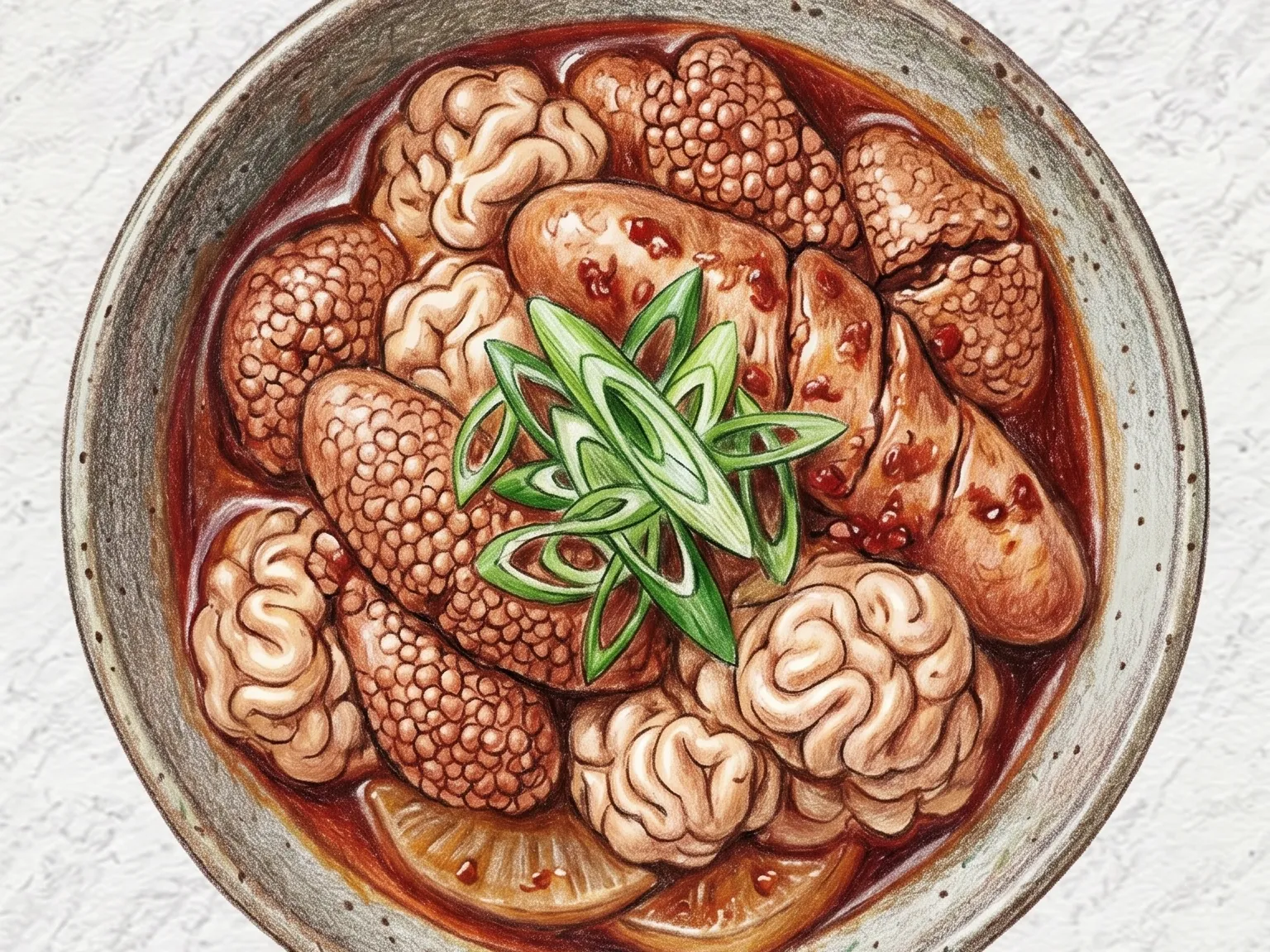
Al-jjim is a Korean fisherman's dish that turns the parts most people discard - pollock roe sacs and milt - into a rich, intensely flavored braise. The roe has a grainy, dense texture that firms up when heated, while the milt is creamy and custard-like, breaking apart into soft curds in the simmering sauce. Radish slices line the pot bottom, providing a sweet buffer that tempers the aggressive saltiness of the gochugaru-soy braising liquid. The dish cooks at low heat for fifteen minutes, during which the roe and milt release their marine oils into the sauce, creating a broth that is simultaneously spicy, briny, and rich. Green onion added in the final minutes brings a fresh sharpness. Al-jjim is a winter specialty in Korea's east coast fishing ports, where fresh roe is available during the pollack spawning season.
Adjust Servings
Instructions
- 1
Rinse the roe and milt lightly, then drain well.
- 2
Line the pot with radish and place roe and milt on top.
- 3
Mix chili flakes, soy sauce, garlic, and water; pour in and bring to a simmer.
- 4
Cook gently over low heat for 15 minutes.
- 5
Add green onion, cook 3 more minutes, and serve immediately.
As an Amazon Associate, we may earn from qualifying purchases.
Tips
Nutrition (per serving)
More Recipes

Korean Braised Pollock (Frozen Pollock with Radish in Spicy Sauce)
Dongtae-jjim is frozen pollock braised with Korean radish and bean sprouts in a sauce of gochugaru, soy sauce, garlic, and ginger. Using frozen rather than fresh pollock is traditional - the freezing-and-thawing process gives the flesh a firm, slightly spongy texture that holds up well in the spicy broth. Radish soaks up the chili-laced liquid and turns sweet against the heat, while bean sprouts contribute crunch and a clean, refreshing aftertaste. The sauce reduces to a shallow pool at the bottom, meant to be spooned over rice as a wintertime staple.

Korean Spicy Braised Semi-Dried Pollock
Kodari-jjim is a Korean braise of semi-dried pollock cooked with Korean radish and onion in a gochugaru and soy sauce seasoning. The drying process removes moisture and firms up the flesh, so the pollock absorbs the spicy sauce deeply while maintaining a chewy, dense bite. Radish mellows the chili heat and adds natural sweetness, and a small amount of doenjang in the sauce builds an extra layer of depth. When the liquid reduces to a thick, clinging consistency, it becomes the kind of sauce meant to be mixed directly into rice.

Korean Steamed Rockfish (Spicy Gochugaru Radish Braise)
Ureok-jjim is a Korean spicy steamed rockfish cooked with Korean radish, onion, and green onion in a gochugaru and soy sauce broth. Rockfish has firm, well-defined flesh that holds its shape through the cooking process, and scoring the skin lets the bold seasoning reach deep into the meat. Radish softens in the braising liquid and absorbs the chili heat while contributing natural sweetness, and ginger keeps the fish tasting clean. The remaining sauce is concentrated enough to spoon over rice, delivering a hit of spicy, salty flavor with every bite.

Korean Spicy Braised Pufferfish
Cleaned pufferfish fillets are steamed with bean sprouts and water dropwort in a spicy gochugaru and gochujang sauce. The pufferfish meat is lean with a firm, bouncy texture that holds up well under the bold chili seasoning. Bean sprouts add crunch and a refreshing counterpoint, while water dropwort contributes its distinctive herbal fragrance. Seasoned with soy sauce and garlic, this is a coastal Korean fish dish with considerable heat.

Korean Spicy Fish Roe Stew
Altang is a Korean stew built around pollock roe - the egg sacs prized in Korean coastal cooking for their briny, concentrated marine flavor. The dish has long been associated with Korea's east coast fishing towns, where fresh roe is available during winter spawning season and needs to be used quickly. Anchovy-kelp stock simmers first with radish to establish a clean, sweet base before the roe and tofu go in. The roe sacs release their eggs into the broth as they cook, turning the liquid cloudy and giving it a rich, oceanic body. Gochugaru and doenjang season the stew with a spicy-fermented edge that cuts through the fishiness. Crown daisy greens - ssukgat - are dropped in at the last moment, contributing a sharp, herbaceous perfume. A popular hangover remedy in Korean drinking culture, altang is often ordered steaming hot at the end of a long evening.

Korean Salted Pollock Roe Jeotgal
Myeongran jeotgal is a Korean salted pollock roe ferment where fresh roe sacs are cleaned of blood spots and membranes, brushed with rice wine to suppress fishiness, then coated in a curing blend of sea salt, gochugaru, and minced garlic before being sealed in a container with a piece of kelp. Over three to five days of cold fermentation, the salt extracts moisture from each tiny egg, concentrating the pop-and-burst texture while enzymatic breakdown generates a deep, briny umami. The chili flakes add a gentle warmth that complements rather than overwhelms the roe's natural flavor. Sliced thin and placed on hot steamed rice, the eggs release their salty, oceanic intensity with each bite.